
Mind map
PHYSICAL LANDSCAPES IN THE UK
Map content
PHYSICAL LANDSCAPES IN THE UK
UK Physical Landscape
- RELIEF = the height, steepness +shape of the landscape. = determained by geology
- LANDSCAPE = result from the interaction between natural / physical factors
- IN THE UK = N/W = upland more resistnat rock. = S/E = lowland weaker rocks.
Coastal Landscapes in the UK
- Constructive / Destructive
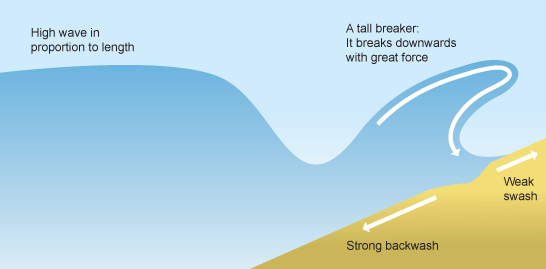
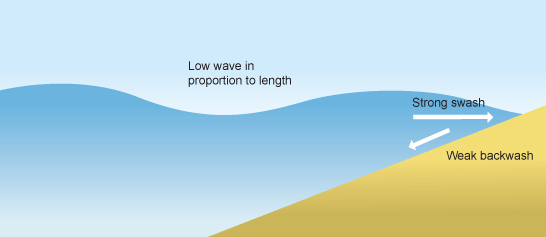
- CONSTRUCTIVE WAVE = formed by a storm often hundreds of km away. common in summer
- DESTRUCTIVE WAVE = formed by local storms close to the coast. common in winter
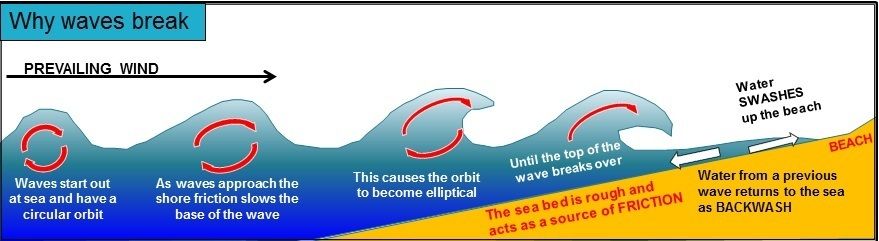
- How a wave is formed
- WEATHERING = the weakening / decay of rock due to the actions of weather, plants and animals
- MECHANICAL (physical) = the disintegration of rock
- eg: Freeze-thaw
- CHEMICAL = caused by chemical changes
- eg: Carbonation
- BIOLOGICAL = caused by the actions of flora and fauna
- eg. plants roots grow in rocks / animals burrow into weak rocks
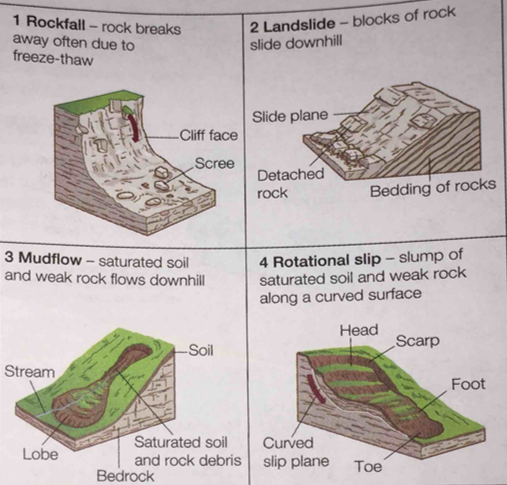
- TYPES OF MASS MOVEMENT = downward movement (sliding) of weathered material and rock
- Deposition - occurs when water slows down and waves lose their energy
- MECHANICAL (physical) = the disintegration of rock
- COASTAL EROSION
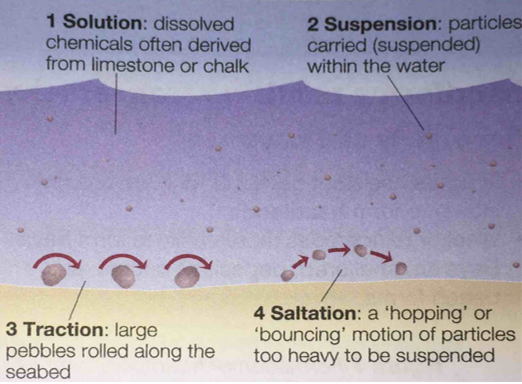
- Solution - Dissolving of soluble chemicals in rock
- Corrasion - rocks fragments picked up by the sea are thrown at the cliff. they scrape and wear away the rock
- Abrasion - the "sandpapering" effect of pebbles grinding over a rocky plateform
- Attrition - rocks fragments carried by the sea knock against each other becoming smaller / more rounded
- Hydraulic action - the power of the waves as they hit a cliff. trapped air is forced into cracks in the rock, eventually causing it to break up
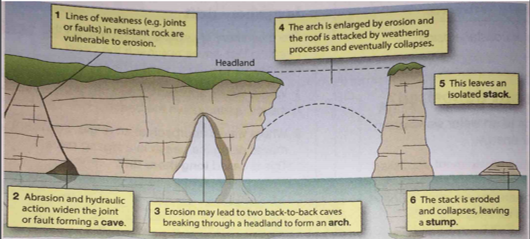
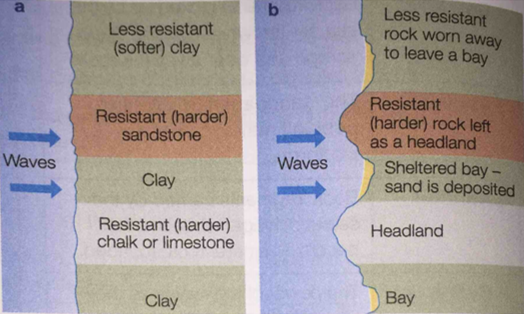
- Erosion Landforms
- Factor 1 = ROCK TYPE - some rocks are harder / softer than other so easier to erode
- Factor 2 = GEOLOGICAL STRUCTURE - the way the rocks has been folded / tilted. Faults (cracks) form lines of weakness.
- Transportation
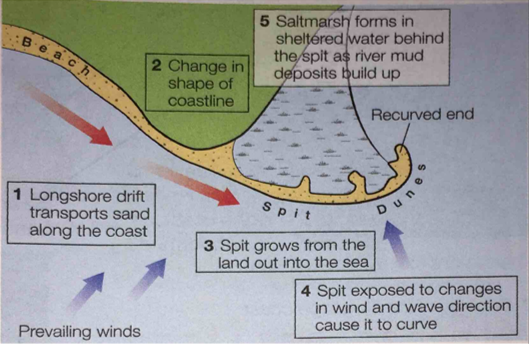
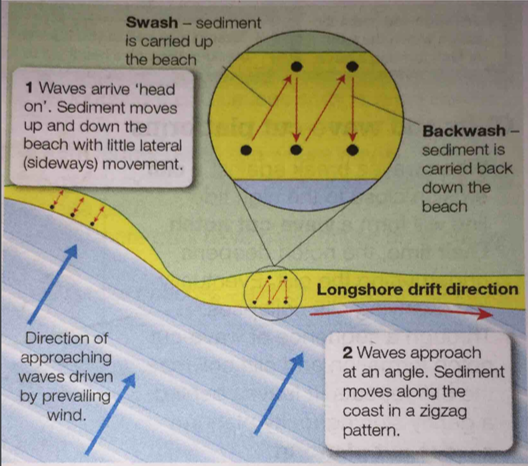
- Longshore Drift - the movement depends on the direction that waves approch the coast sue to prevailing wind direction
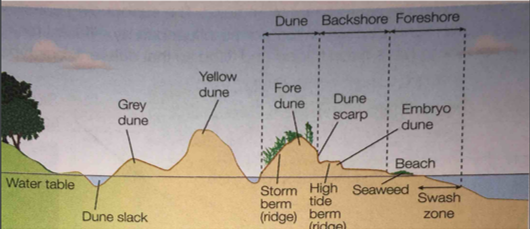
- Deposition Landforms
- SANDY beeches - mainly found in sheltered bays and are created by conservative waves
- Along high-energy coast sand is washed away leaving behind a PEBBLE beech
- Constructive / Destructive
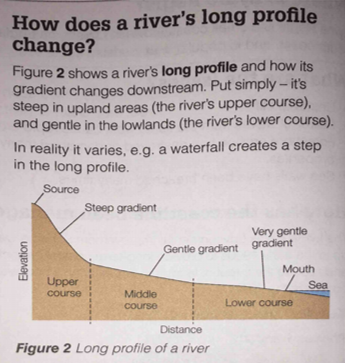
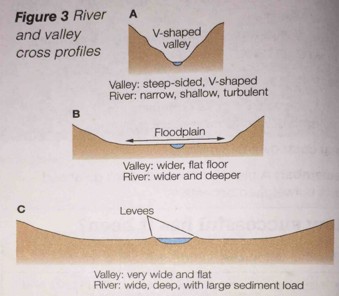
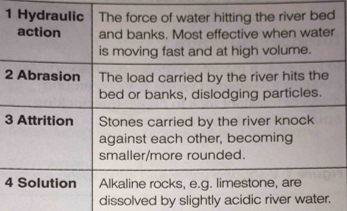
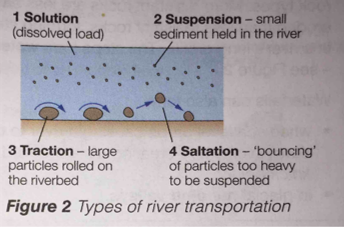
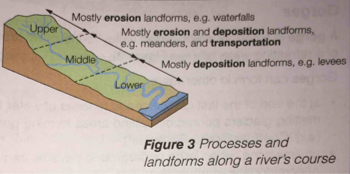
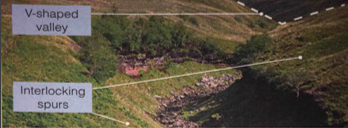
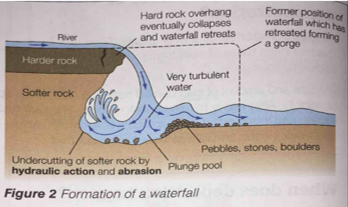
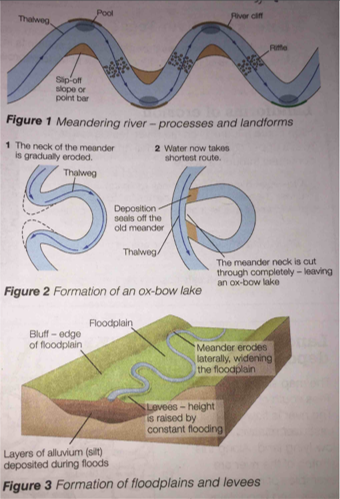
River Landscapes in the UK
Images and files in the map
Information
- Description
- Mind Map on PHYSICAL LANDSCAPES IN THE UK, created by Kelsey Clifford on 09/04/2018.
- Created by
- Kelsey Clifford
- Views
- 185
- Rating