
Mind map
2.1 Algorithms
Map content
2.1 Algorithms
computational thinking
- the thought process involved in formulating a problem and its solution(s), so that a computer human or machine can effectively carry out
- to effectively solve problems you need to...
- decompose
- abstract
- algorithmic thinking
- create algorithms
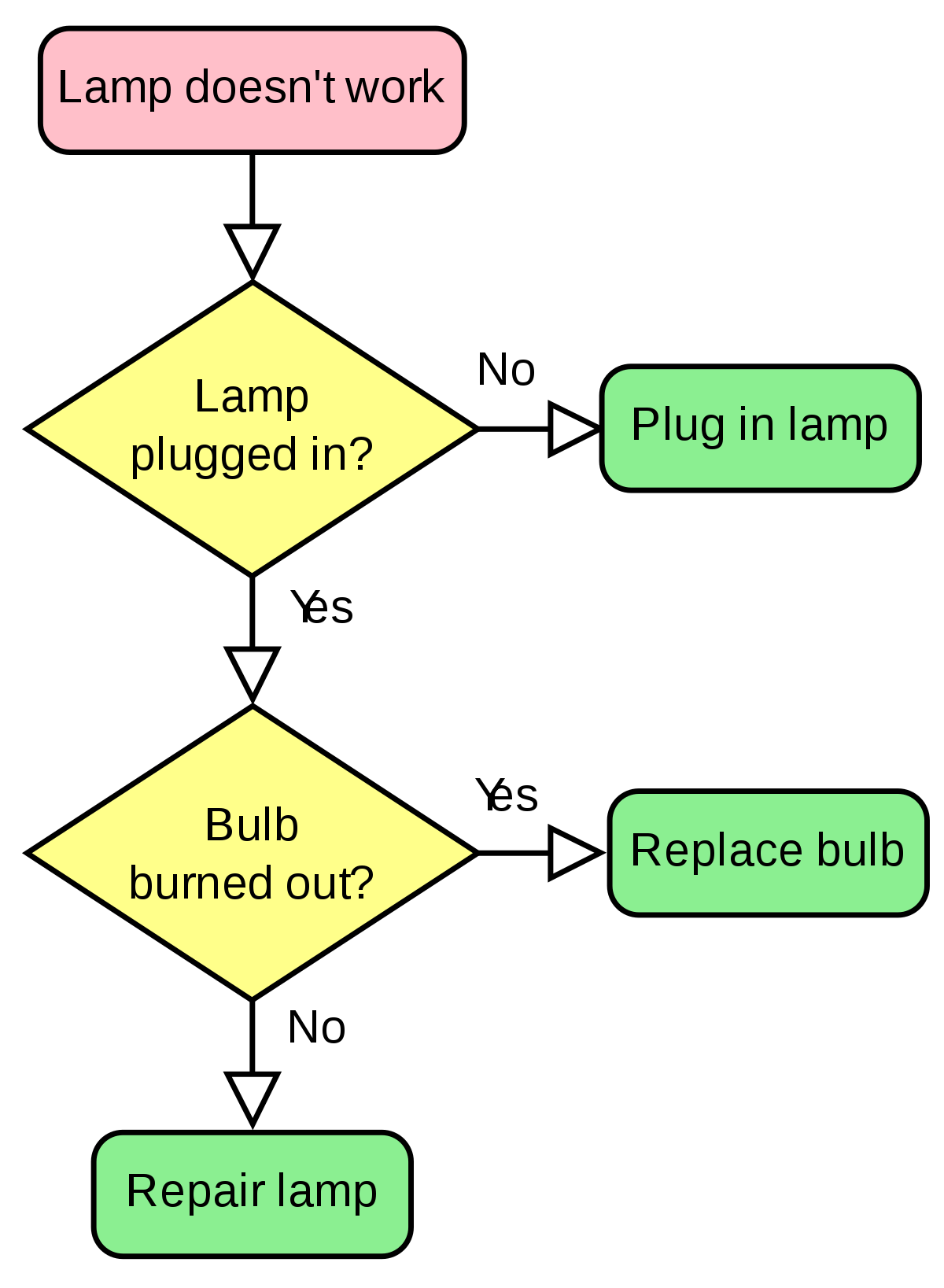
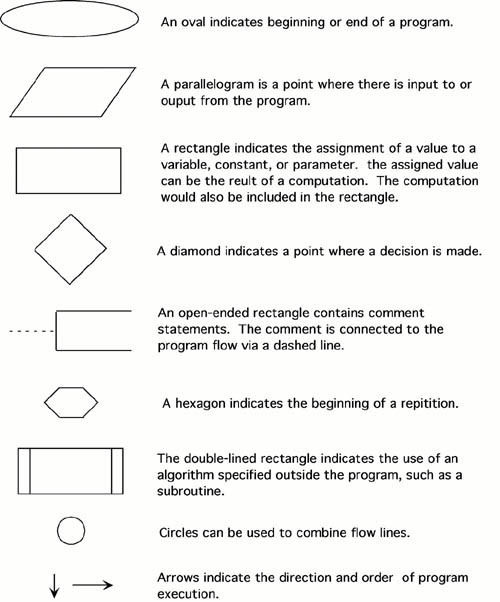
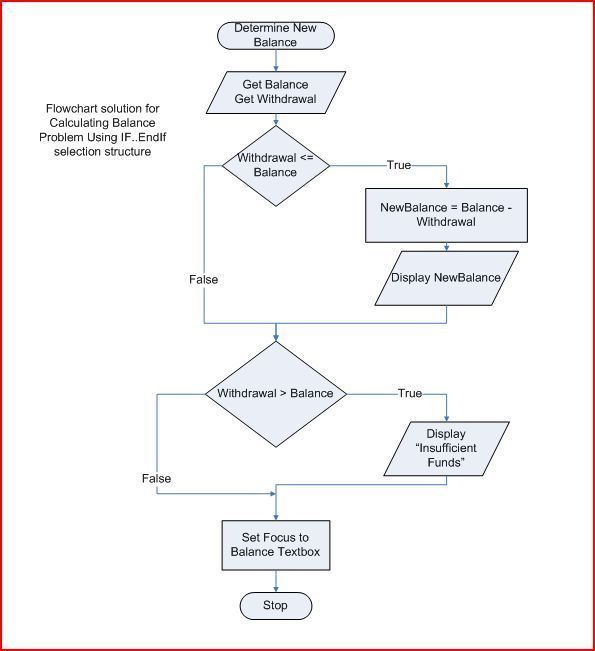
- flowcharts
- display an algorithm in diagram form using symbols and arrows to show to flow of information
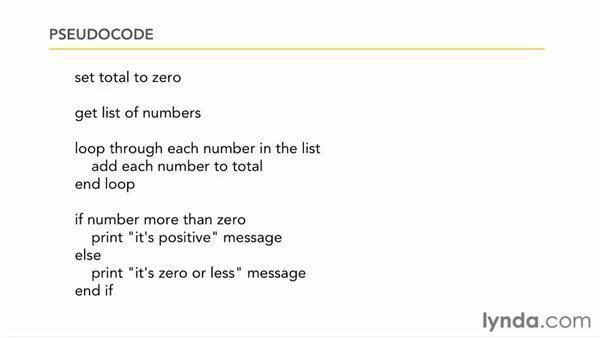
- pseudocode
- a structured use of English used to define the steps needed to solve a problem
- KEY TERMS
- algorithm
- steps to provide a solution to a problem, usually represented in flowcharts or pseudocode
- decompose
- breaking down a large problem into smaller sub-problems
- abstraction
- representing 'real world' problems in a computer using variables and symbols and removing unnecessary elements from the problem
- algorithmic thinking
- identifying the steps involved in solving a problem
- sequence
- completing steps in the order which they must happen
- selection
- where a choice is made in a program on a condition or outcome
- iteration
- act of repeating or looping specific sections of code
- algorithm
flowcharts
- flow diagrams visually represent the steps that make an algorithm
- a standard set of shapes are used to represent different types of step, such as running a sub-process or taking one path or another depending on a condition being met.
- the arrows in a flow diagram represent the flow of control through the algorithm.
- representing if/else if/else in flowcharts
- a selection structure is used when multiple conditions are to be tested resulting in a different thing happening each time
- these structures can be represented in flow diagrams using multiple decision diamonds flowing into each other from their ''no'' branches.
- representing switch-case structure can be used to check whether a single variable has been assigned one of any possible values
- switch case structures are neater than using if/if else when testing for a particular value of a single variable but they cannot test multiple conditions that involve different variables.
Pseudocode
- pseudocode uses English. It mimics how your code may look in the programming language BUT IT DOESN'T HAVE TO BE EXACT
- useful terms to use
- START
- IF
- ELIF
- ELSE
- FOR
- WHILE TRUE
- ENDIF
- END
- COMPARISON OPERATORS
- = EQUAL TO
- != not equal to
- < less than
- <= less than or equal to
- > greater than
- >= greater than or equal to
Images and files in the map
Information
- Description
- Mind Map on 2.1 Algorithms, created by Millie Robson on 15/02/2019.
- Created by
- Millie Robson · Feb 2019
- Updated
- Feb 15, 2019
- Views
- 0
- Rating