
Mind map
Physics P2 Topic 1
Map content
Physics P2 Topic 1
Static Electricity
- Uses and dangers
- Uses
- Insecticide spraying
- Nozzle of sprayer connected to electricity supply
- Droplets get same kind of static charge
- Droplets repel each other and the spray is spread out
- Droplets get same kind of static charge
- Nozzle of sprayer connected to electricity supply
- Paint sprayers
- Nozzle of sprayer connected to electricity supply
- Droplets get the same kind of charge so they spread out
- The object being painted given opposite charge
- The paint is attracted to the object so less paint is wasted
- The object being painted given opposite charge
- Droplets get the same kind of charge so they spread out
- Nozzle of sprayer connected to electricity supply
- Insecticide spraying
- Shocks and earthing
- You can build a charge of static electricity
- You may feel a shock when touching metal items
- This happens as electrons move to cancel out the charge on you
- It is called Earthing
- Electrons flow through you to the earth
- Lightning happens when charge of static electricity builds in clouds
- When charge grows big enough charged particles flow through air
- The energy released causes light and sound
- Lightning can damage or kill living things and destroy buildings
- The energy released causes light and sound
- When charge grows big enough charged particles flow through air
- You will now be discharged
- It is called Earthing
- This happens as electrons move to cancel out the charge on you
- When walking across a carpet or sitting on a chair
- You may feel a shock when touching metal items
- You can build a charge of static electricity
- Uses
- Electrostatic charges
- Electrons transferred from one material to another
- Insulating materials can be given an electrostatic by rubbing two materials together
- Material that has gained electrons has negative charge
- Materials that lose electrons have positive charge
- Equal charge size as negative material
- Materials that lose electrons have positive charge
- Electrons transferred from one material to another
- Atoms
- Nucleus containing protons and neutrons
- Electrons move around nucleus
- Atoms have same number of protons and electrons
- + and - are balanced so no charge
- Nucleus containing protons and neutrons
- Charging by induction
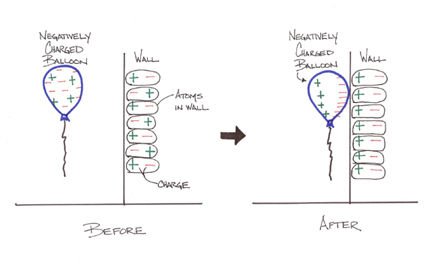
- A charged object can attract uncharged objects
- Happens because charged object induces a charge in the uncharged object
- Balloon has negative charge
- Electrons in wall are repelled and positive charge is left which attracts balloon
- Protons cannot move
- Electrons in wall are repelled and positive charge is left which attracts balloon
- A charged object can attract uncharged objects
- Uses and dangers
Electric currents
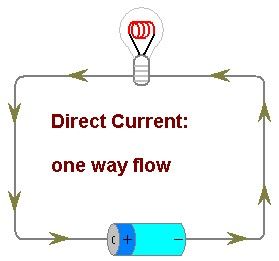
- Direct current
- An electrical current in a wire is flow of electrons
- Current supplied by cells and batterys
- This is direct current (d.c.)
- Electrons flow in same direction
- Electrons pushed out of one end of cell and flow around to other end, must be a complete current
- Electrons flow in same direction
- This is direct current (d.c.)
- Charge and current
- Size of current is measure of how much charge flows past a point each second
- It is rate of flow of charged particles
- Size of current is measure of how much charge flows past a point each second
- Direct current
Images and files in the map

Information
- Description
- GCSE Science (P2) Mind Map on Physics P2 Topic 1, created by Lydia C on 02/02/2015.
- Created by
- Lydia C
- Views
- 13
- Rating