
Mind map
MODAL VERBS FOR DEDUCTION PRESENT AND PAST
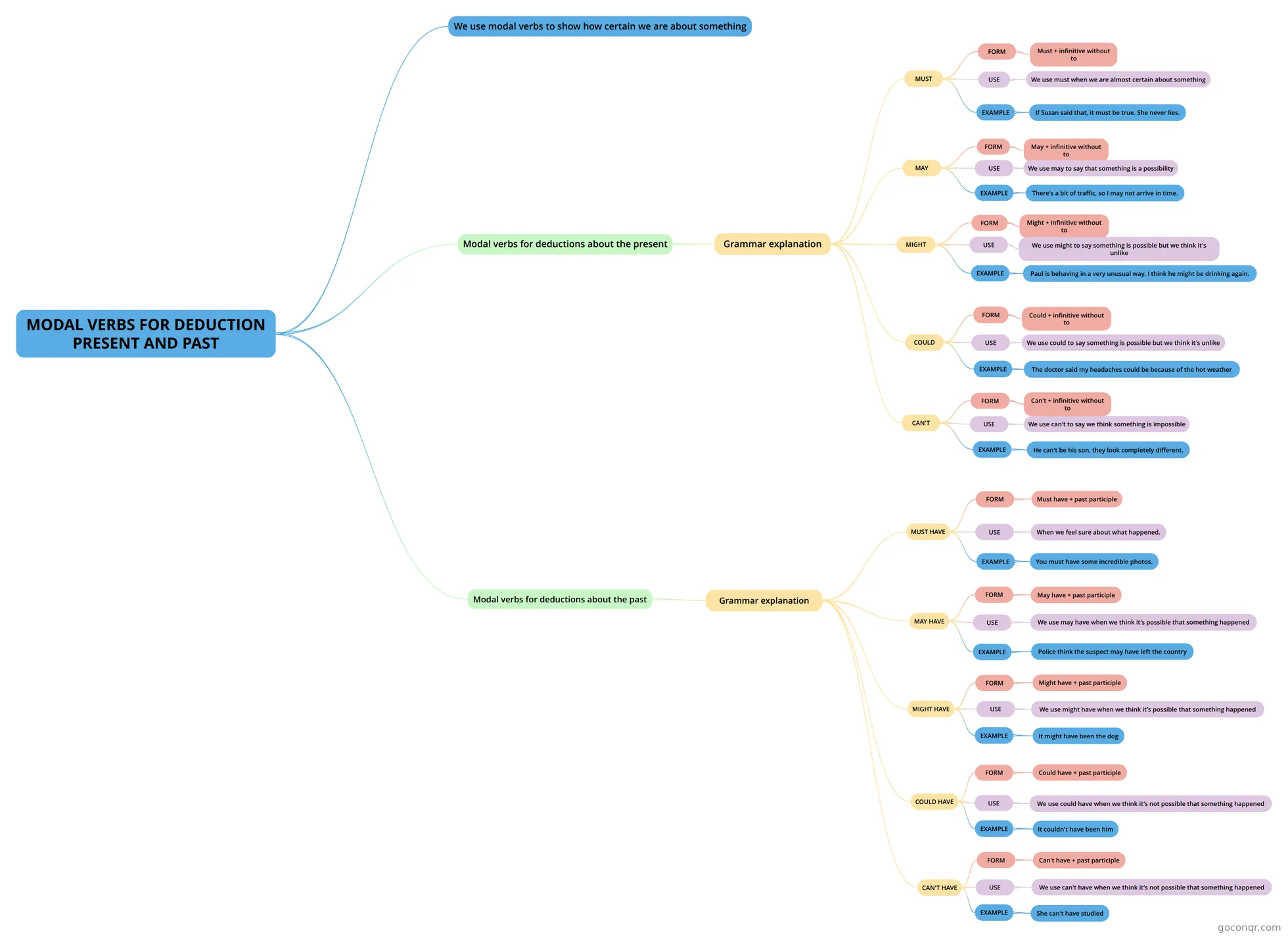
Mind map: Modal verbs for deduction present and past
Map content
MODAL VERBS FOR DEDUCTION PRESENT AND PAST
Modal verbs for deductions about the present
- Grammar explanation
- MUST
- FORM
- Must + infinitive without to
- USE
- We use must when we are almost certain about something
- EXAMPLE
- If Suzan said that, it must be true. She never lies.
- FORM
- MAY
- FORM
- May + infinitive without to
- USE
- We use may to say that something is a possibility
- EXAMPLE
- There's a bit of traffic, so I may not arrive in time.
- FORM
- MIGHT
- FORM
- Might + infinitive without to
- USE
- We use might to say something is possible but we think it's unlike
- EXAMPLE
- Paul is behaving in a very unusual way. I think he might be drinking again.
- FORM
- COULD
- FORM
- Could + infinitive without to
- USE
- We use could to say something is possible but we think it's unlike
- EXAMPLE
- The doctor said my headaches could be because of the hot weather
- FORM
- CAN'T
- FORM
- Can't + infinitive without to
- USE
- We use can't to say we think something is impossible
- EXAMPLE
- He can't be his son, they look completely different.
- FORM
- MUST
- Grammar explanation
Modal verbs for deductions about the past
- Grammar explanation
- MUST HAVE
- FORM
- Must have + past participle
- USE
- When we feel sure about what happened.
- EXAMPLE
- You must have some incredible photos.
- FORM
- MAY HAVE
- FORM
- May have + past participle
- USE
- We use may have when we think it's possible that something happened
- EXAMPLE
- Police think the suspect may have left the country
- FORM
- MIGHT HAVE
- FORM
- Might have + past participle
- USE
- We use might have when we think it's possible that something happened
- EXAMPLE
- It might have been the dog
- FORM
- COULD HAVE
- FORM
- Could have + past participle
- USE
- We use could have when we think it's not possible that something happened
- EXAMPLE
- It couldn't have been him
- FORM
- CAN'T HAVE
- FORM
- Can't have + past participle
- USE
- We use can't have when we think it's not possible that something happened
- EXAMPLE
- She can't have studied
- FORM
- MUST HAVE
- Grammar explanation
We use modal verbs to show how certain we are about something
Information
- Description
- Mind Map on MODAL VERBS FOR DEDUCTION PRESENT AND PAST, created by Paula Santiago on 30/04/2020.
- Created by
- Paula Santiago
- Views
- 0
- Rating