
Mind map
Types of contraction
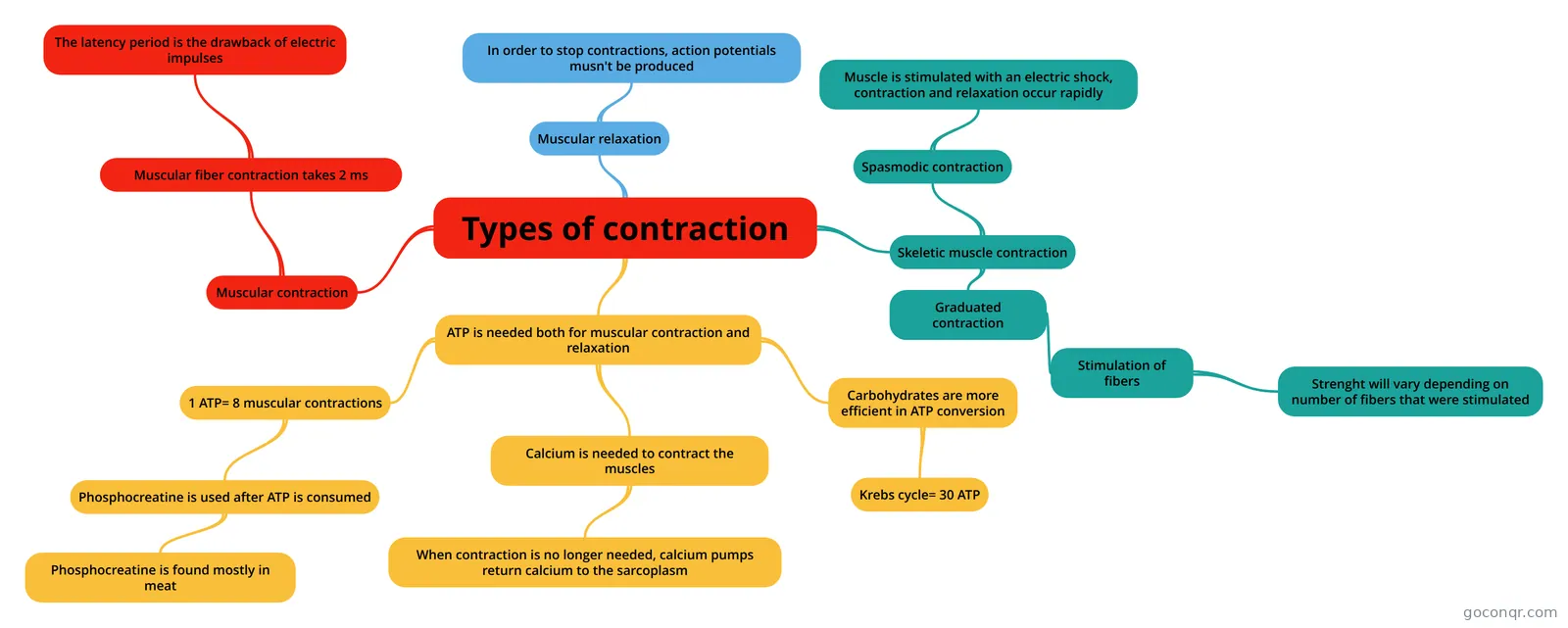
Mind map: types of muscle contraction
Map content
Types of contraction
Muscular contraction
- Muscular fiber contraction takes 2 ms
- The latency period is the drawback of electric impulses
- Muscular fiber contraction takes 2 ms
Muscular relaxation
- In order to stop contractions, action potentials musn't be produced
ATP is needed both for muscular contraction and relaxation
- Calcium is needed to contract the muscles
- When contraction is no longer needed, calcium pumps return calcium to the sarcoplasm
- 1 ATP= 8 muscular contractions
- Phosphocreatine is used after ATP is consumed
- Phosphocreatine is found mostly in meat
- Phosphocreatine is used after ATP is consumed
- Carbohydrates are more efficient in ATP conversion
- Krebs cycle= 30 ATP
- Calcium is needed to contract the muscles
Skeletic muscle contraction
- Spasmodic contraction
- Muscle is stimulated with an electric shock, contraction and relaxation occur rapidly
- Graduated contraction
- Stimulation of fibers
- Strenght will vary depending on number of fibers that were stimulated
- Stimulation of fibers
- Spasmodic contraction