
Mind map
Particles
Map content
Particles
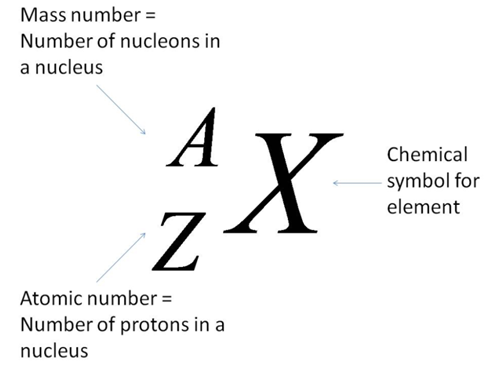
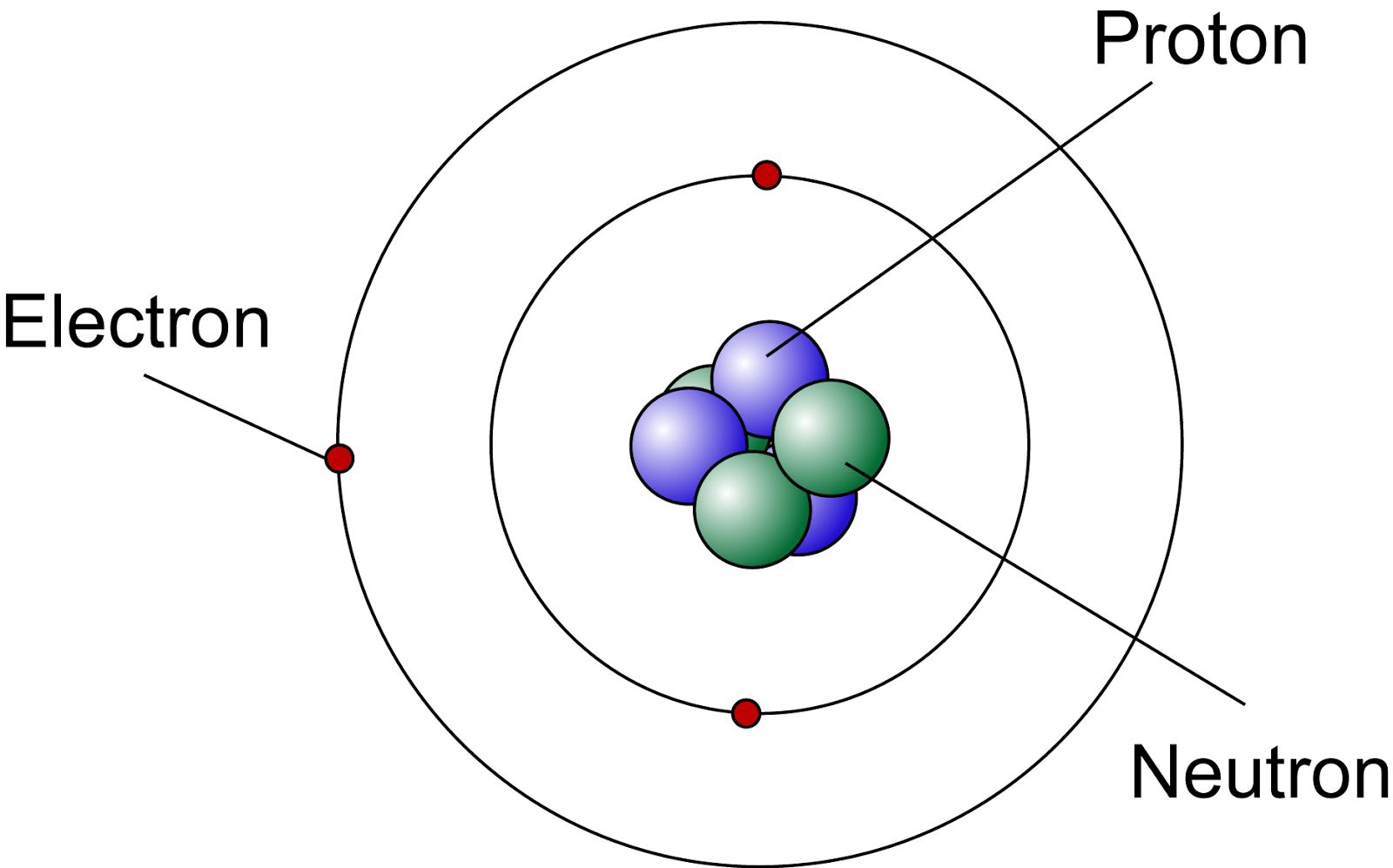
Constituents of The Atom
- Isotopes
- Atoms of the same element with the same number of protons but a different number of neutrons
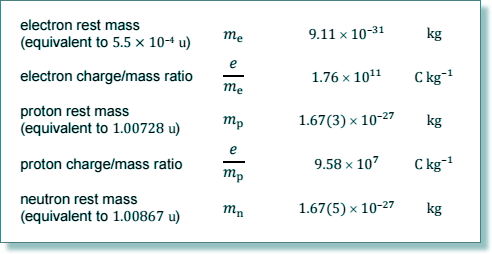
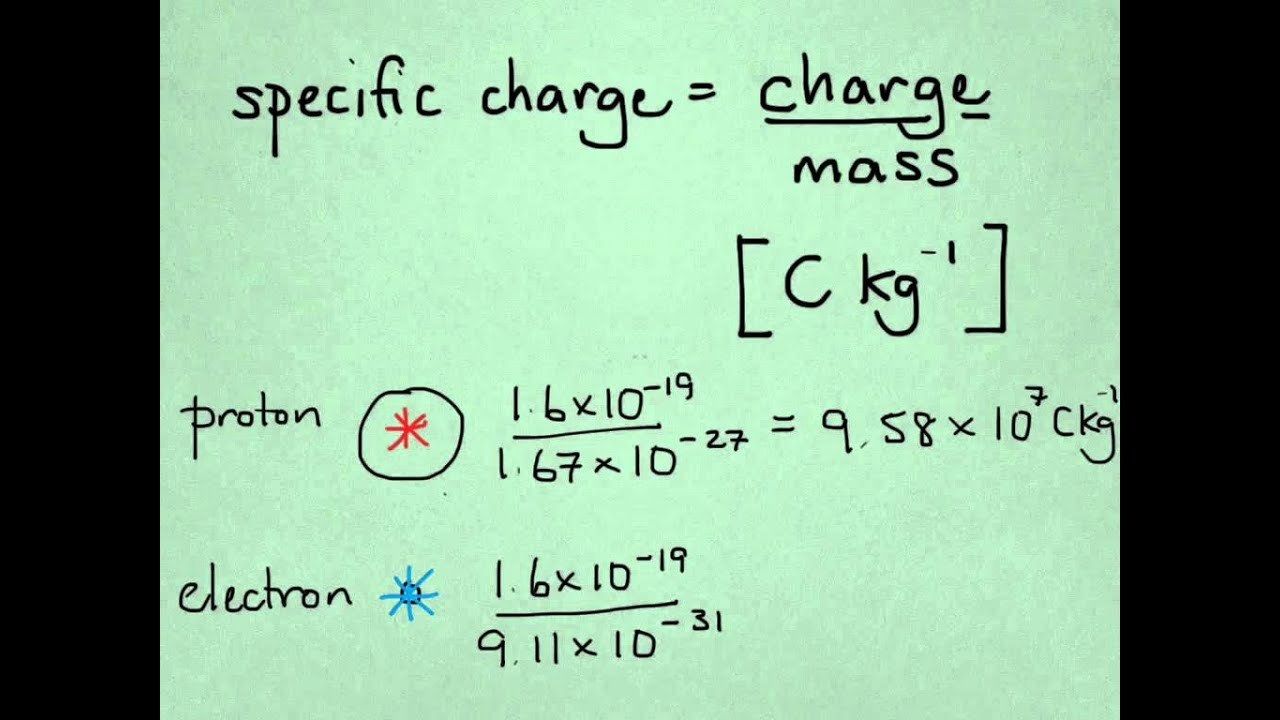
- Specific Charge
- How much charge a particle has for its mass
- Isotopes
Stable and Unstable Nuclei
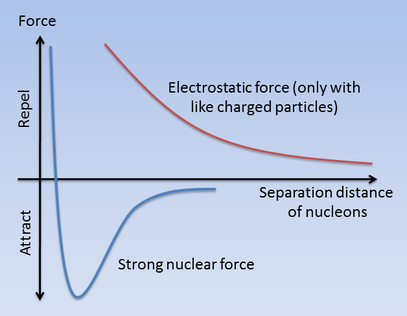
- Strong Nuclear Force
- An attractive force from 0.5fm to 3-4fm; a replusive force below 0.5fm
- 1 fm =1x10^-9m
- Only applies to all hadrons (particles which have a quark in them)
- Keeps the nucleus stable, negates electrostatic repulsion of the protons with each other
- As you go up the periodic table, elements with more protons need more neutrons to negate the electrostatic repulsion
- An attractive force from 0.5fm to 3-4fm; a replusive force below 0.5fm
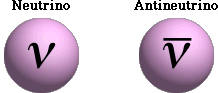
- Neutrinos
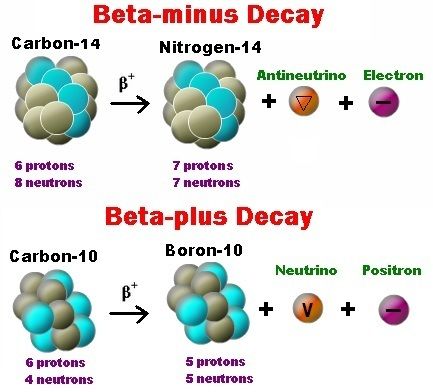
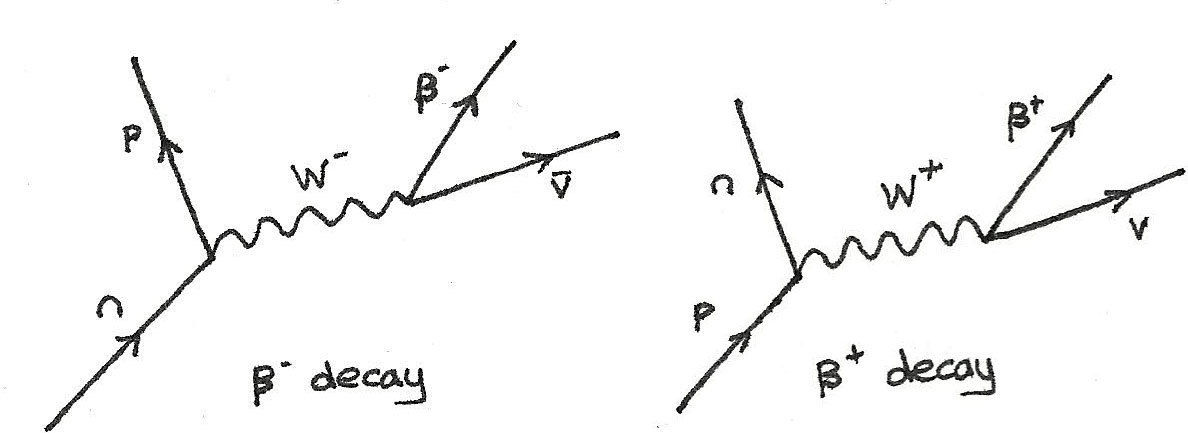
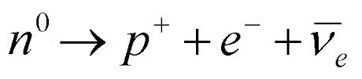
- Beta minus decay is accompanied by the emission of an anti-neutrino
- Hypothesised to account for conservation of energy in beta decay
- Negligible mass
- Nuclei decay (emit particles) to make itself more stable
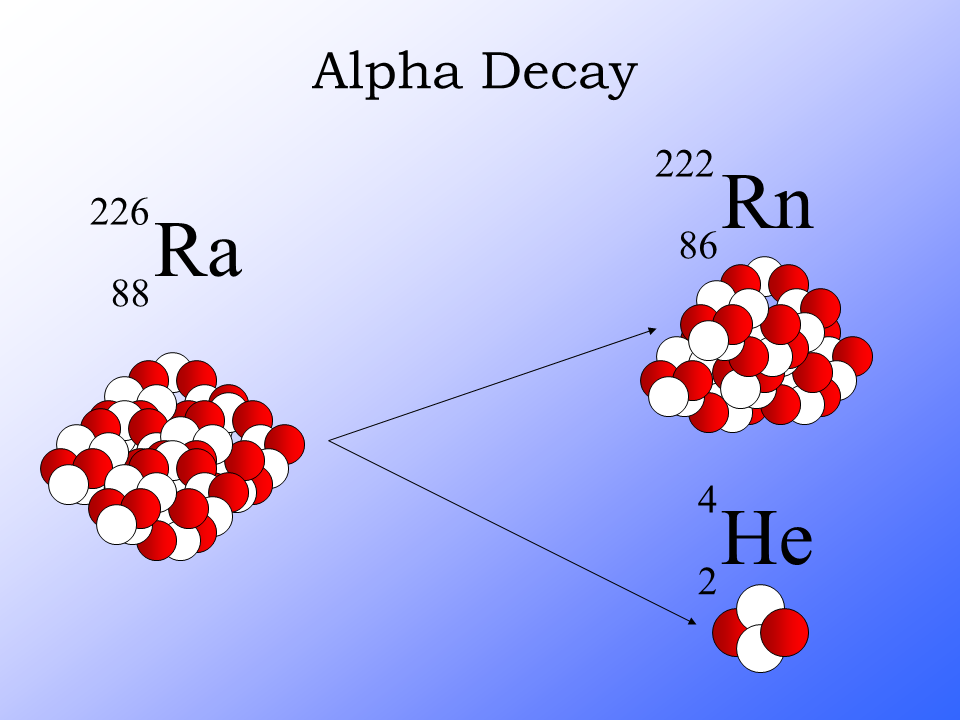
- Alpha Decay
- Emission of a particle with two neutrons and two protons
- Emission of a particle with two neutrons and two protons
- Beta Decay
- Emission of a beta-minus particle (electron) or a beta plus-particle (positron)
- Emission of a beta-minus particle (electron) or a beta plus-particle (positron)
- Alpha Decay
- Strong Nuclear Force
Particles, Anitparticles and Photons
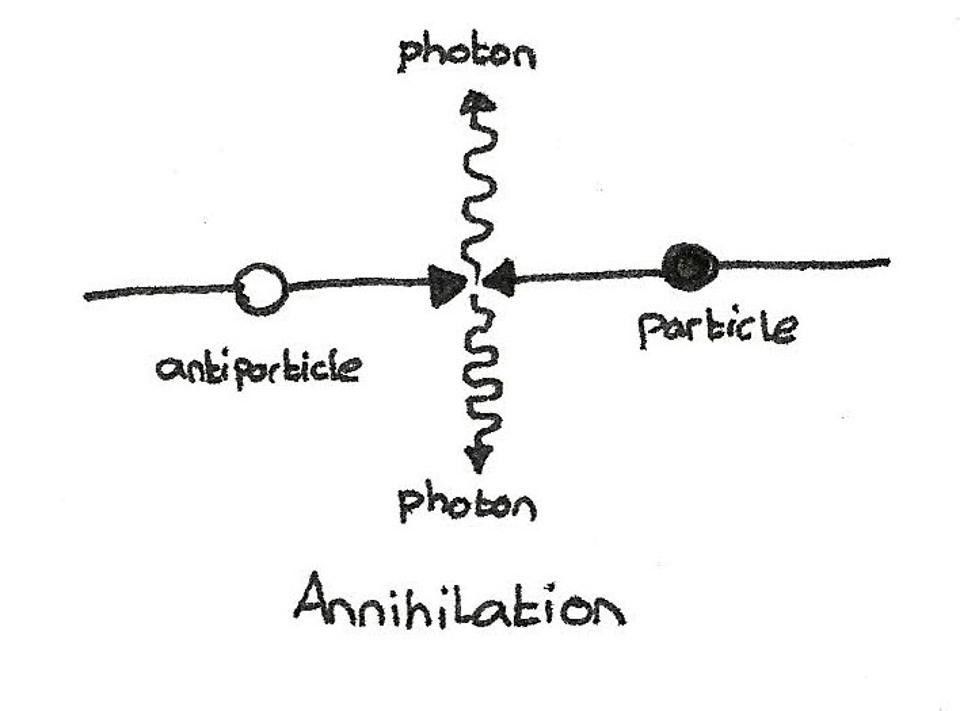
- Annihilation
- For every type of particle, there is a corresponding antiparticle that:
- Annihilates the particle and itself if they meet, converting their total mass into two photons
- Two photons are produced to ensure that both momentum and energy are conserved
- Has exactly the same mass as the particle
- Has exactly opposite charge to the particle( if there is a charge)
- Same ability to experience the same forces
- Annihilates the particle and itself if they meet, converting their total mass into two photons
- For every type of particle, there is a corresponding antiparticle that:
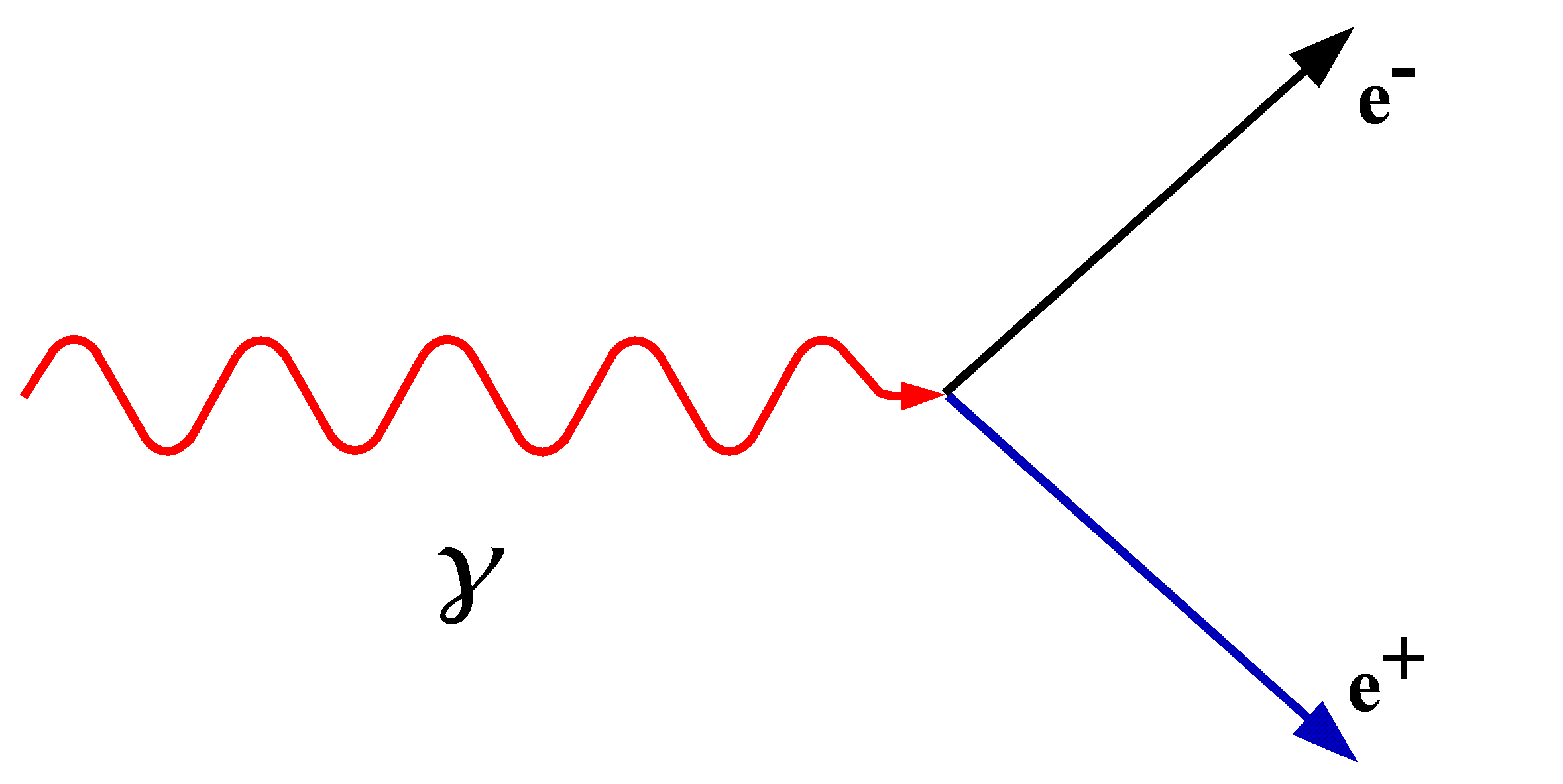
- Pair Production
- A photon can interact with the high electric field an atom
- The energy of the photon can be converted into a particle-antiparticle pair
- The energy of the incident photon is equal to the mass (rest mass energy) and energy (kinetic) of the two particles produced
- Photon with sufficient energy that suddenly has changed into a particle-antiparticle pair (electron and positron)
- The energy of the incident photon is equal to the mass (rest mass energy) and energy (kinetic) of the two particles produced
- The energy of the photon can be converted into a particle-antiparticle pair
- A photon can interact with the high electric field an atom
- Photons
- A packet of energy E= hf = hc / λ
- Where h is Planck's constant h = 6.63x10^-34 Js
- A packet of energy E= hf = hc / λ
- Annihilation
Particle Interactions
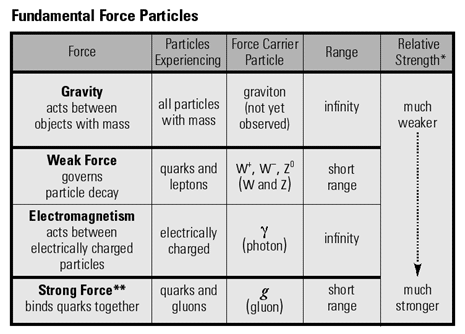
- 4 Fundamental Interactions
- Gravity
- Affects particles/objects with a mass
- Only attractive
- Electromagnetism
- Affects particles with a charge
- Attractive and Replusive
- Strong Force/Interaction
- Acts only on particles known as Hadrons
- Keeps nuclei together
- Weak Force/Interaction
- Only mechanism which can change the flavour of quarks
- Affects all particles
- Causes beta decay and other interactions
- Gravity
- Exchange Particles
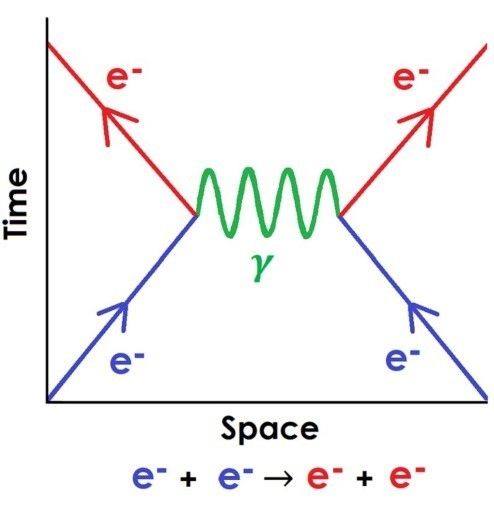
- Forces are caused by the exchange of photons e.g. the electromagnetic force between two charged objects is due to the exchange of virtual photons.
- Feyman Diagrams
- Electromagnetism
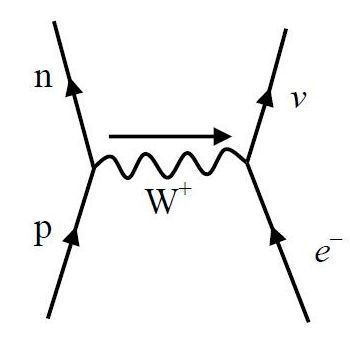
- Electron Capture
- Feyman Diagrams
- Forces are caused by the exchange of photons e.g. the electromagnetic force between two charged objects is due to the exchange of virtual photons.
- 4 Fundamental Interactions
Classification of Particles
- Hadrons
- Baryons
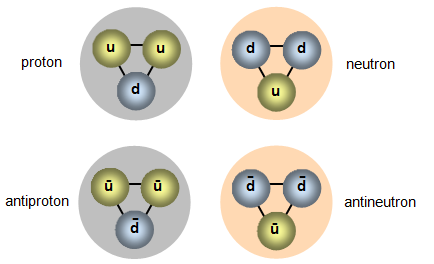
- Consists of 3 quarks; all 3 are strange or none are strange
- The proton is the only stable baryon into which other baryons eventually decay into
- Baryon Number - Must be conserved
- Mesons
- Pions
- Made up of up and down quarks (in a quark and anti-quark pair)
- Exchange particle of the strong nuclear force
- Kaons
- Usually contains a strange or anti-strange quark in its pair
- Can decay into pions
- Consists of a quark & anti-quark pair
- Pions
- Subject to the Strong Nuclear Force
- Baryons
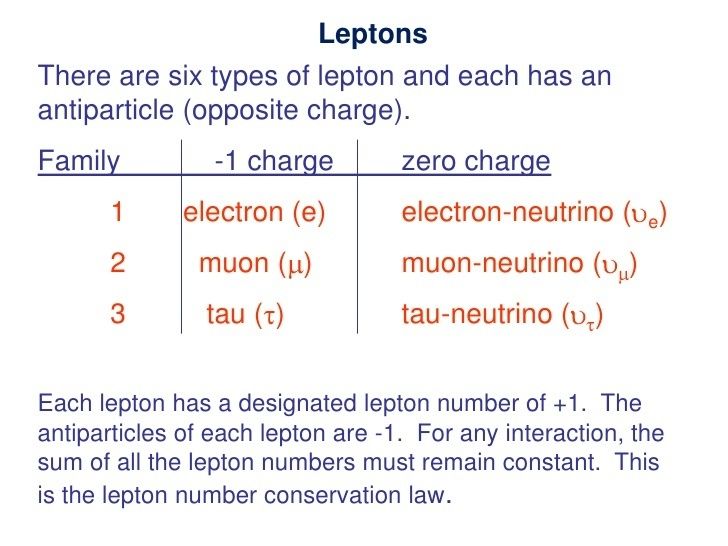
- Leptons
- Fundamental Particles - Cannot be broken down into anything else
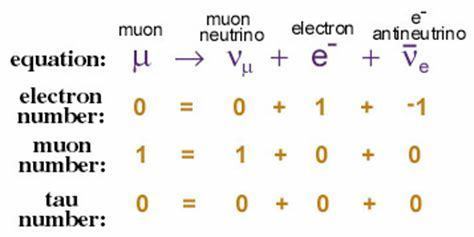
- Lepton Number - Must be Conserved
- Lepton Number must be conserved, in the electron branch and muon branch upon muon decay
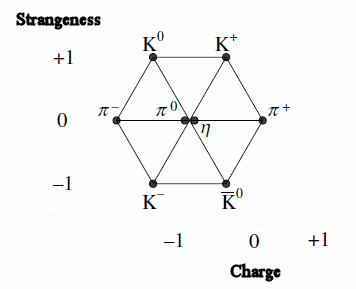
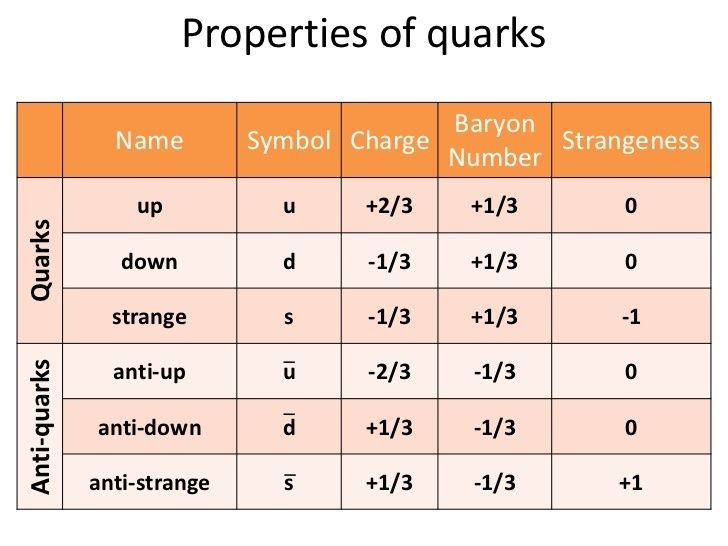
- Strangeness
- Always conserved/produced in strong interactions but decay/are not conserved in the weak interaction
- Strangeness - Quantum Number
- Always conserved/produced in strong interactions but decay/are not conserved in the weak interaction
- Hadrons
Quarks and Antiquarks
Conservation Laws
- Charge, Baryon Number and Lepton Number must be conserved (same on both sides)
- Charge: 0 -> +1 -1 +0
- Baryon: 1 -> 1 + 0 + 0
- Lepton: 0 -> 0 +1 -1
Images and files in the map
Information
- Description
- A level Physics Mind Map on Particles, created by 2402 2003 on 27/06/2020.
- Created by
- 2402 2003
- Views
- 0
- Rating