
Mind map
Restless Earth
Map content
Restless Earth
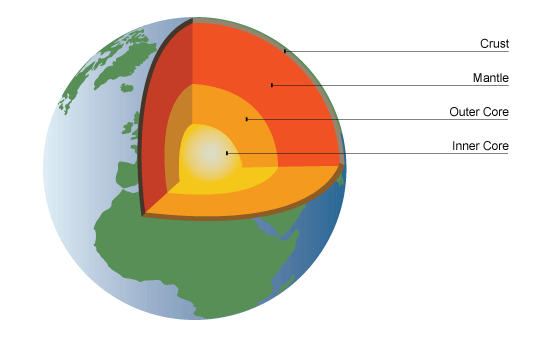
the Earths Structure
- The Crust :is the Outer shell of the Earth
- Two Types
- Continental Crust
- Carries Land
- Are THICKER (35km) but LESS DENSE
- Is OLDER than Oceanic Crust
- Continental Crust is PERMENTANT and NOT DESTROYED
- e.g. North American Plate
- Continental Crust is PERMENTANT and NOT DESTROYED
- Is OLDER than Oceanic Crust
- Oceanic Crust
- Carries Ocean
- Is THINNER (7km) but DENSER than the Continental Crust and therefore SINKS
- Is YOUNGER than Continental Crust
- Oceanic Crust is continually being FORMED and DESTROYED
- e.g. Pacific Plate
- Oceanic Crust is continually being FORMED and DESTROYED
- Is YOUNGER than Continental Crust
- Continental Crust
- Two Types
- the Mantle is Layers of Molten Rock and the widest section of the Earth
- the Inner Core is The very hot centre of the Earth
- the Outer Core is The liquid layer surrounding the inner core, which is also made up of iron and nickel
- Plates: Huge Scabs of the Crust
- Plate Boundary: The place where two plates meet
- Pangae
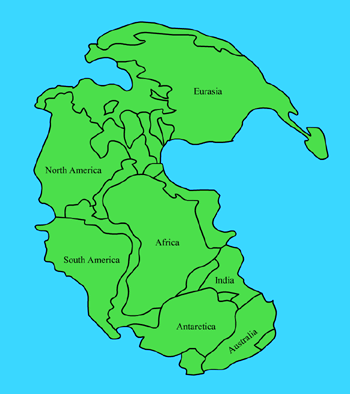
- Around 200 million years ago the continents were joined together to form a Super Continent called Pangae
- Pangae began breaking up and since then the continents have been drifting away (Continental Drift)
- Evidence
- Shapes of the continects today look as though they fit together E.g. South America and Africa
- There are similar patterns of rocks/plants and similar fossils found have been found in both continents
- Around 200 million years ago the continents were joined together to form a Super Continent called Pangae
- The Crust :is the Outer shell of the Earth
Plates
- 7 major plates and many smaller ones
- North American plate
- South American plate
- Eurasian plate
- African plate
- Indo-Australian plate
- Pacific plate
- Nazca plate
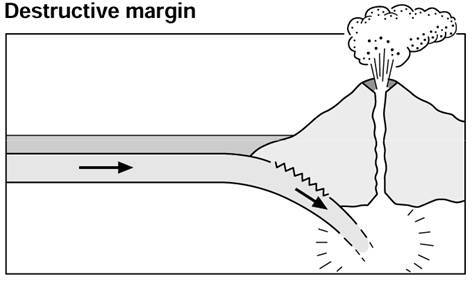
- Destructive Plate Boundaries
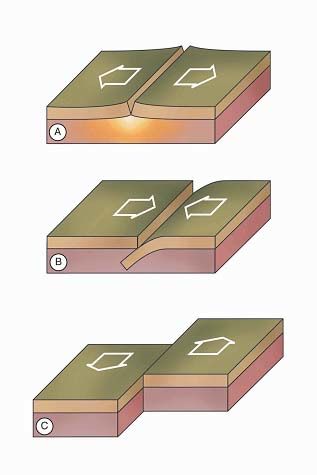
- At an destructive plate boundary the plates are moving together. The denser oceanic crust sinks into the mantle where it melts in the subduction zone. the nergy may be released as an earthquake and the molten magma may rise upwards causing a volcanic eruptiion. The continental crust becomes crumpled into fold mountains.
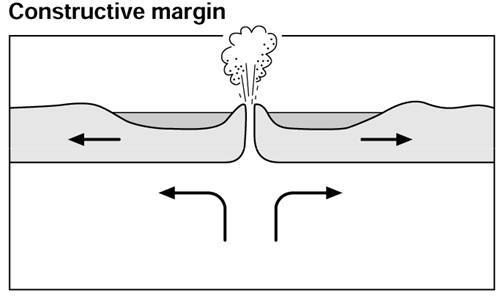
- Constructive Plate Boundaries
- At a Constructive Plate Boundary the Plates are moving apart. This type of movement mostly happens under the oceans. The gap left is filled with magma rising up from the mantle below the volcanoes. Some of these volcanoes have become large enough to form volcanic islands such as iceland and Hawaii.
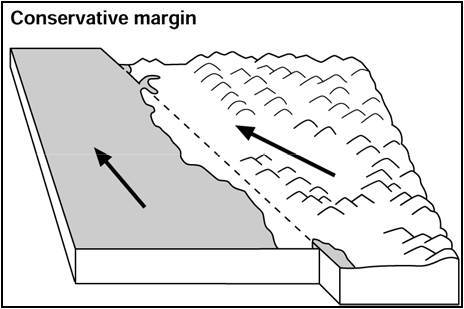
- Conservative Plate Boundaries
- The plates are moving past each other either in the same or opposite directions. They are sometimes called passive margins. The two plates meet at a fault and the pressure builds up until the two plates jerk past each other. This can cause an earthquake and the land at the fault becomes crumpled and rigid. A good example is the San Andreas fault in California.
- 7 major plates and many smaller ones
Images and files in the map
Information
- Description
- GCSE Geography AQA A Specification Unit 1A The Restless Earth
- Created by
- amercy
- Views
- 213
- Tags
- History
-
- Created by a deleted user · May 11, 2015
- Copied by amercy · May 11, 2015
- Rating