
Mind map
Second Lenguage Adquisition
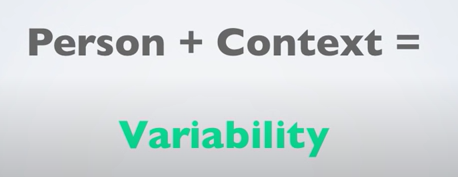
Map content
Second Lenguage Adquisition
It can be underestanding
- How the SLA is learned
- But it is not "Smooth"
- But it is not "Smooth"
- It can be an activity that some humans do
- This focuses on the growth or development of the knowledge and use of a new language
- the new language a person wants to acquire
- How the SLA is learned
Kraschen´s Hypothesis
- Learning/Acquisition Distinction Hypothesis.
- Learning : it is a conscious process in which people put a lot of effort to underestand and know the rules, and are so aware that it is important to have a fomal education (people need help to learn)
- An example can be , when an adul t start to learne a new lenguage but, he or she need to study using a guide.
- Acquisition is natural because it’s through a subconscious process and instinctive process which we are not aware of the rules of the language and internalize the language. Also, knowledge is obtained by accident
- An example can be the babies that learn a mother lenguages , without knowing that they are learning that language (aqcuire)
- Learning : it is a conscious process in which people put a lot of effort to underestand and know the rules, and are so aware that it is important to have a fomal education (people need help to learn)
- The Natural Order Hypothesis
- Grammatical structures process: when a student follow a natural order of her or his learning proces, so it is comon start whit easy levels (which we cannot say are easy, since even students with advanced learning continue to make mistakes at these levels) and themes, then gradually, students will leaning some structures of a high level (complex grammar).
- The Monitor Hypothesis.
- Monitors are a fundamental part of the second language learning process
- Types of monitors
- Over-monitor users, students who do not master the language and need monitoring constantly
- Monitor under users, this students They are those who, although they are very lenient, do not pay attention to errors.
- Optimal monitor users, these people are characterized by their autonomy when it comes to learning a second language, although they ask for help only when necessary
- Some times people has no time to thnk about the rules, but to adwuir a secon lenguage is is to necessary dedicate some time, to have a good knowlage about it. in that wau we can anailze what we speak , and how we said that.
- Also it is wll know that the grammar is a complex topic of any second lenguage.
- Types of monitors
- Monitors are a fundamental part of the second language learning process
- The Input Hypothesis
- Input, it is when someone help you to teaching you, or guiding to know the basic information about the language,
- it focuses on the meaning and not on the form of it., using the context, taht can provide us some linguistic info.
- Output When you start to practice what you lear, in this case to speak with the knowladge taht you have gotten.
- Input, it is when someone help you to teaching you, or guiding to know the basic information about the language,
- The Affective Filter Hypothesis
- It deals with how motivation, trust and positivism affect the time of generating input
- If a student is in a pleasant place with a strong motivation to acquire knowledge of a second language
- if a student is in a negative environment without motivation, the student is not going to adquire a second lenguage.
- It deals with how motivation, trust and positivism affect the time of generating input
- Learning/Acquisition Distinction Hypothesis.
Dynamic System Theory
- it offects since its components change other over the coure of the time
- The human brain is the most complex dynamic system
- DST : applies to leaning and behavior, Teacher can give the tool to the students can develop thei skills, and also they cognitive grwoth .
- The human brain is the most complex dynamic system
- The lenguage is not stable, it keeps moving, knowledge of a second language develops, due to its constant use, otherwise it becomes forgotten
- Systems
- Sub-Systems
- Also , they have independent themes that are part of a single system
- It is impossible to develop all the systems at the same time
- Also , they have independent themes that are part of a single system
- it is a gruop of procedures that make sumithing workon a specific processthat a person can do to achive a goal.
- Variables are interconected
- Organization Procces : it has some patterns
- Variables are interconected
- It cannot be isolate
- Sub-Systems
- Systems
- it offects since its components change other over the coure of the time
Dichotomies
- Dichotomie 1
- Real Bilingual
- it is a person who grown up into two lenguages, so he or she has a "full command" of the lenguage
- It has ci¿onfidence, Fluence, and also can talk about any topic.
- it is a person who grown up into two lenguages, so he or she has a "full command" of the lenguage
- Partial Bilingual
- It is a person who have grow up in a pleace , so dominate one lenguage, but that person has some knowladge abouth a second lenguage, and can dominate the four skills
- Reading
- Speaking
- Writting
- Lisenning
- It is a person who have grow up in a pleace , so dominate one lenguage, but that person has some knowladge abouth a second lenguage, and can dominate the four skills
- Real Bilingual
- Dichotomie 2
- Second lenguage
- It is a subsequent language, in some aspects the 2L can become in the 1L, due to the use of a certain language
- Second lenguage
- Dichotomie 3
- 2 Lenguage
- when you are learning a language in thenative country,i mean, where the community speaks that language
- Foreign Lenguage
- When you learn a language, in a place where the community does not speak the language you are learning (I am learning English in Colombia, where the official language is Spanish)
- 2 Lenguage
- Dichotimie 4
- Learning
- Conscious
- Adquisition
- No conscious
- Learning
- Dichotomie 5
- Input
- It is everything around uswe can perceive with our senses
- Intake
- we pay attention to the acquisition of new knowledge, and we strive to obtain it
- Input
- Dichotomie 6
- Accidental V.S intencional learning
- Accidental V.S intencional learning
- Dichotomie 1
Lizeth Fernanda Tinjaca Gomez
Images and files in the map













Information
- Description
- Mind Map on Second Lenguage Adquisition, created by LIZETH FERNANDA TINJACA GOMEZ on 01/03/2021.
- Created by
- LIZETH FERNANDA TINJACA GOMEZ
- Views
- 0
- Rating