
Mind map
physics mock exam
Map content
physics mock exam
speed, distance, time graphs, calculations
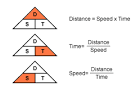
- speed=distance travelled/time taken
- d=s*t
- t=d/s
- distance time graphs
- speed=gradient=d/t=?m/s
- speed=distance travelled/time taken
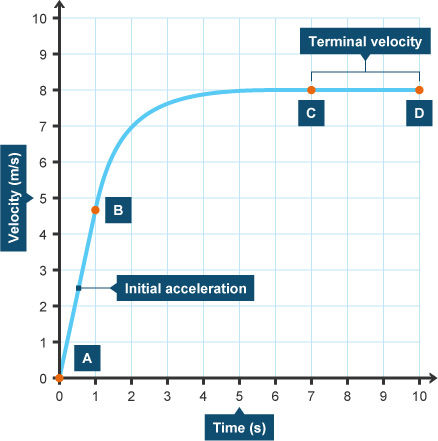
terminal velocity
- the fastest speed a falling object has
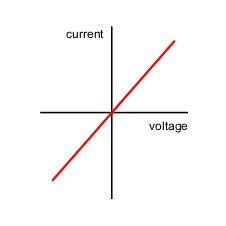
Ohms law
- the current that flows through a conductor is directly proportional to the potential difference across its ends, provided its temperature remains constant
mains electricity
- fuse box contains fuses or curcuit breakers
- live wire:provides the path along which the eletrical energy from power stations travel
- neutral wire: completes the curcuit
- earth wire: no current through it, protects you from faults
- 230v is the mains electricity to uk homes
- the casing is made from plastic as its a good insulator
fuses
- fuses have a low melting point
- if it melts the curcuit breaks
- prevents you getting a shock
- if it melts the curcuit breaks
- the curcuit breakers opens to make a curcuit incomplete if a too large current flows through
- double insulation helps stop eletric shocks
- toasters etc have a high resistance
- power(watts)= current(I) (in amps)*voltage(V) (in volts)
- p=i*v
- fuses have a low melting point
forces
- an object will not change velocity unless theres an unbalenced force
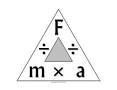
- force (N)= mass(M)(in KG)*acceleration (A) (in m/s2)
- force=(mv-mu)/time taken
momentum
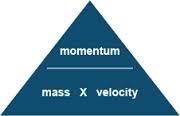
- momentum(kg in m/s)=mass (m in kg)*velocity (in m/s)
- collisions
- momentum change: force*time= increase in acceleration
- elastic collisions: colliisions where no kinetic energy is lost by transformed into other energy types
- momentum before=momentum after
- newtons law of motion
- things dont speed up or slow down or change direction unless you push or pull them
- when you push something it pushes back just as hard but in the oppisite direction
acceleration
- acceleration=change in speed/time taken
- rate at which an object changes speed
moments
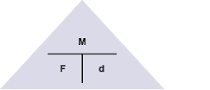
- moment of force (Nm)=force (N)*perpendicular distance from pivot (d)(in m)
- an object will be in balence if sum of antilclockwise moments=sum of clock wise moments
types of orbit
- low polar orbit
- weather
- spying
- observing earths surface
- spying
- weather
- geo stationary statellites
- stationed over equator
- doesnt move
- communtications
- gps
- orbital speed: 2*3.142(pi)*orbital radius/time period
- 23.142r/t
- low polar orbit
light
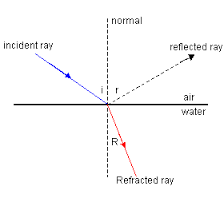
- reflection
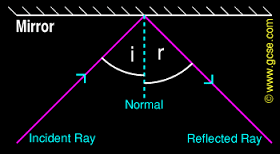
- when a ray of light strikes a mirror it is reflected so that the angle of incidence is equal to the angle of reflection
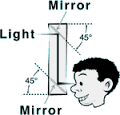
- mirrors are used to change the direction of ray of light
- images are created from rays of light in mirror reflections
- virtual thing=images were light doesnt pass
- real images= images created with light passing through them
- refraction
- light travels at 300,000,000m/s
- the change in speed may cause ray to change direction. this is refraction
- refractive index
- to find the angles of refrection
- n=sin i/sin r
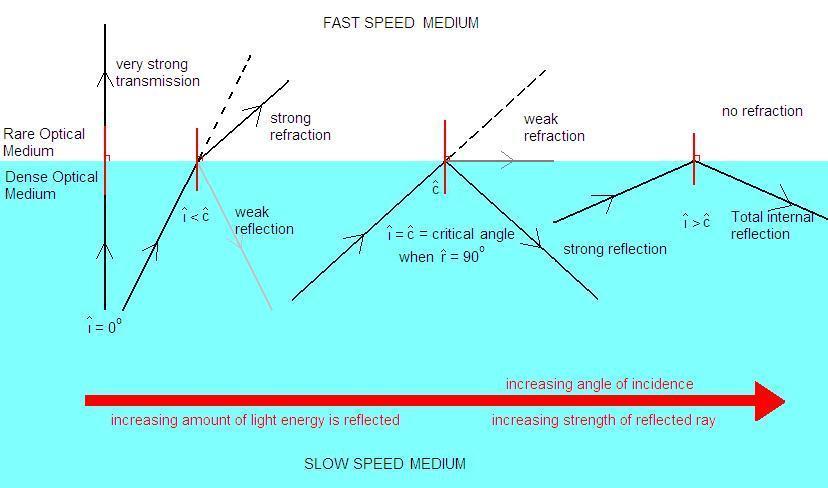
- total internal reflection
- when a ray of light passes from an optically more dense medium to an optically less dense medium (eg glass to air) the light is reflected away from the normal
- sin c=1/n
- transverse waves can be feflected, refracted and diffracted
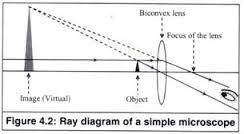
- ray diagrams
- reflection
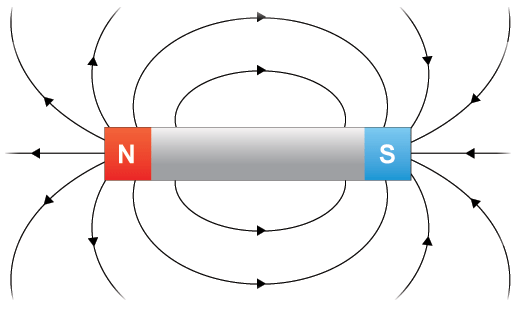
magnetic fields
- volume of space where magnetism can be detected
- cannot be seen but with iron filings you can see it
- when north and south poles are placed near each other there is an almost uniform field between the two poles
sound
- sound waves
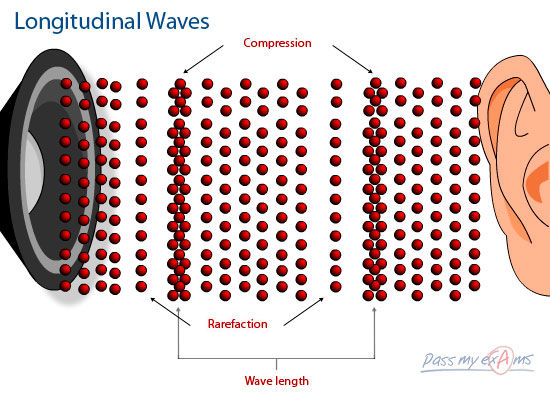
- as a speaker comes to the right it pushes air molecules together creating a compression
- this is a longitude sound wave and can be reflected, refracted and disfracted
- speed of sound
- echoes
- divide distance by time
- resonance tube and tuning forks
- oscilloscope
- echoes
- reflected sound wave is called an echo
- sound waves
electromagnetic spectrum
- visiable light
- gamma radiation
- killing cancer cells
- shortest wave length
- x rays
- medical images of bones
- ultraviolet radiation
- sunbeds
- visiable light
- seeing
- infrared radiiation
- optical fibre radiation
- microwaves
- cooking
- radio waves
- tv signals
- longest wave length
energy transfers
- we need to convert energy from place to place to be useful
- energy becomes concerted an wasted
- eg: heating water the engery converted is lost as its not doing what we want making the water hot
heat transfers
- can be transferred by conduction, convention and radiation
- heat energy is transferred by conduction
- liquids and gases by convention
- Convection occurs when particles with a lot of heat energy in a liquid or gas move and take the place of particles with less heat energy.
- All objects give out and take in thermal radiation, which is also called infrared radiation.
- can be transferred by conduction, convention and radiation
radiation
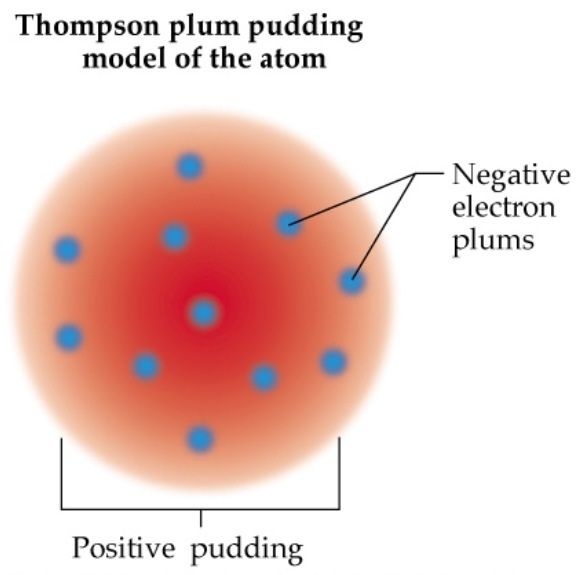
- plum pudding model
- J.J. thompson found negatively charged particles(electrons)
- nuclear model
- alpha particles go straight through foil
- alpha particles werent deflected
- most the atom is an empty space
- most the mass is in the nucleus
- nucleus of an atom has a positive charge
- plum pudding model
Images and files in the map
Information
- Description
- this is my physics igcse revision for my mocks
- Created by
- daysi273
- Views
- 144
- Tags
- Rating