
Mind map
Nephrotic Syndrome
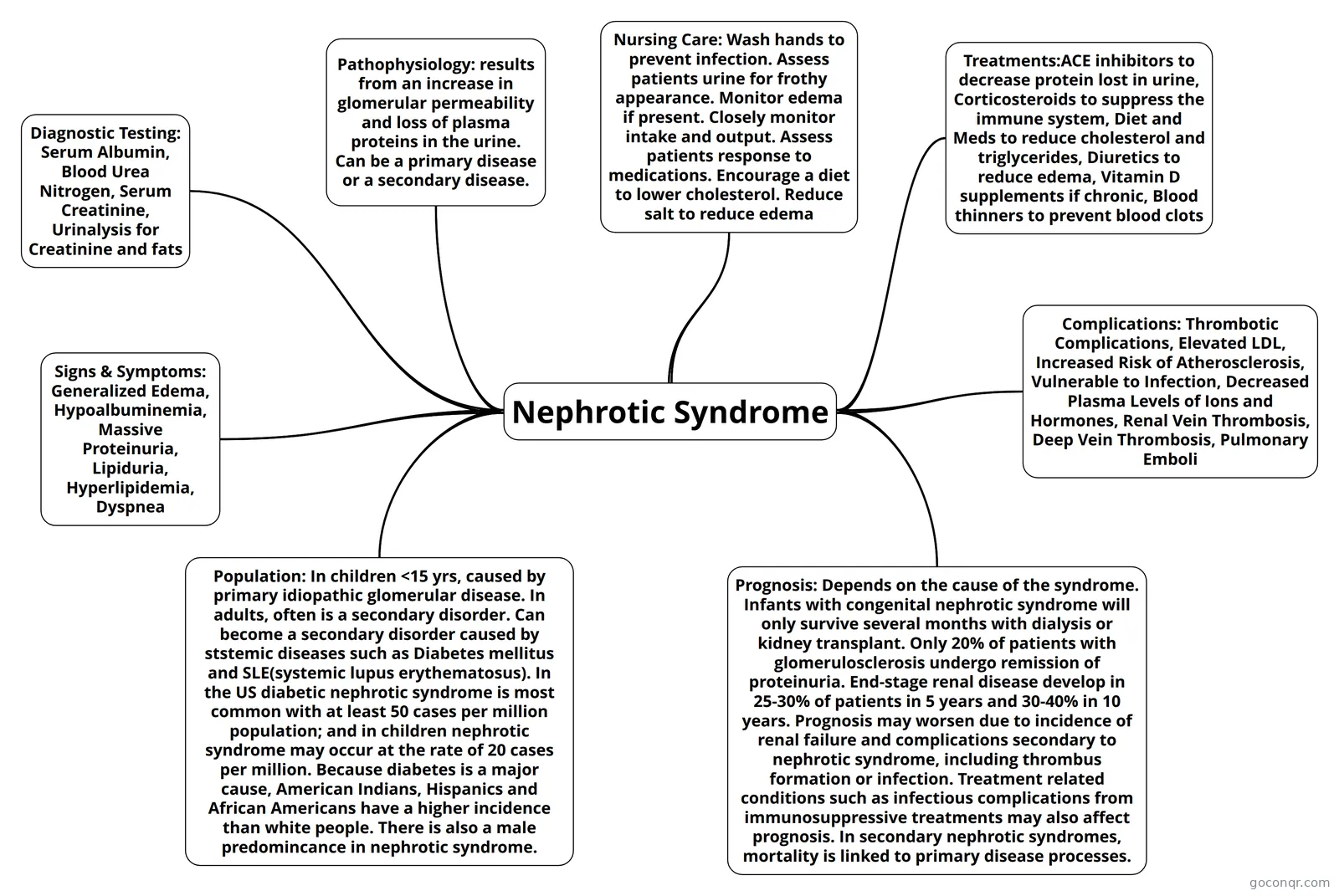
Mind map: nephrotic syndrome
Map content
Nephrotic Syndrome
Population: In children <15 yrs, caused by primary idiopathic glomerular disease. In adults, often is a secondary disorder. Can become a secondary disorder caused by ststemic diseases such as Diabetes mellitus and SLE(systemic lupus erythematosus). In the US diabetic nephrotic syndrome is most common with at least 50 cases per million population; and in children nephrotic syndrome may occur at the rate of 20 cases per million. Because diabetes is a major cause, American Indians, Hispanics and African Americans have a higher incidence than white people. There is also a male predomincance in nephrotic syndrome.
Pathophysiology: results from an increase in glomerular permeability and loss of plasma proteins in the urine. Can be a primary disease or a secondary disease.
Signs & Symptoms: Generalized Edema, Hypoalbuminemia, Massive Proteinuria, Lipiduria, Hyperlipidemia, Dyspnea
Diagnostic Testing: Serum Albumin, Blood Urea Nitrogen, Serum Creatinine, Urinalysis for Creatinine and fats
Treatments:ACE inhibitors to decrease protein lost in urine, Corticosteroids to suppress the immune system, Diet and Meds to reduce cholesterol and triglycerides, Diuretics to reduce edema, Vitamin D supplements if chronic, Blood thinners to prevent blood clots
Nursing Care: Wash hands to prevent infection. Assess patients urine for frothy appearance. Monitor edema if present. Closely monitor intake and output. Assess patients response to medications. Encourage a diet to lower cholesterol. Reduce salt to reduce edema
Complications: Thrombotic Complications, Elevated LDL, Increased Risk of Atherosclerosis, Vulnerable to Infection, Decreased Plasma Levels of Ions and Hormones, Renal Vein Thrombosis, Deep Vein Thrombosis, Pulmonary Emboli
Prognosis: Depends on the cause of the syndrome. Infants with congenital nephrotic syndrome will only survive several months with dialysis or kidney transplant. Only 20% of patients with glomerulosclerosis undergo remission of proteinuria. End-stage renal disease develop in 25-30% of patients in 5 years and 30-40% in 10 years. Prognosis may worsen due to incidence of renal failure and complications secondary to nephrotic syndrome, including thrombus formation or infection. Treatment related conditions such as infectious complications from immunosuppressive treatments may also affect prognosis. In secondary nephrotic syndromes, mortality is linked to primary disease processes.
Information
- Description
- Mind Map on Nephrotic Syndrome, created by Terence Dones on 17/11/2015.
- Created by
- Terence Dones
- Views
- 14
- Rating
More on Nephrotic and Nephritic Syndromes