
Mind map
Sound
Map content
Sound
Waves
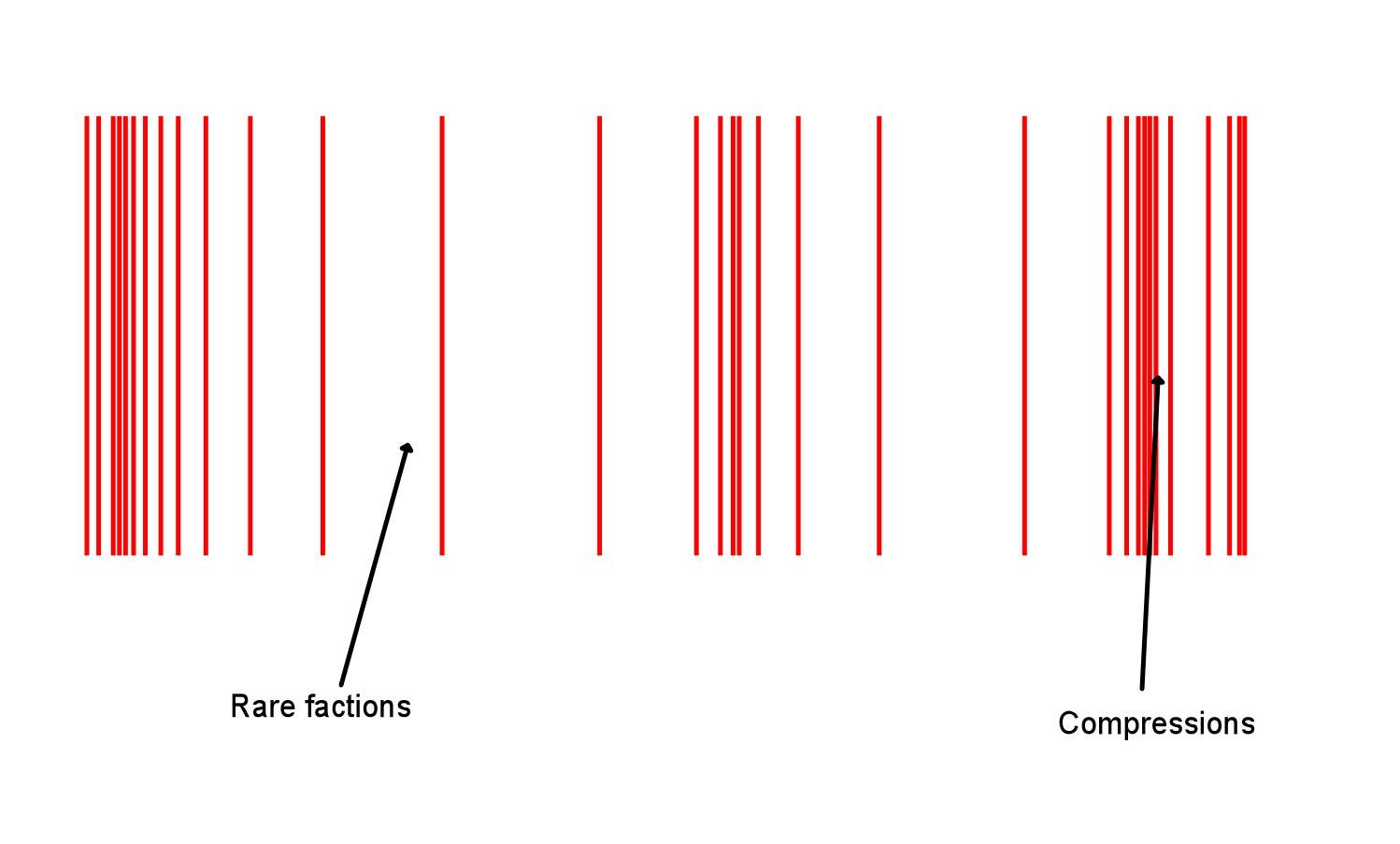
- Particle Waves
- Particles are forced together or pushed apart
- This is a longitudinal wave
- Particles are forced together or pushed apart
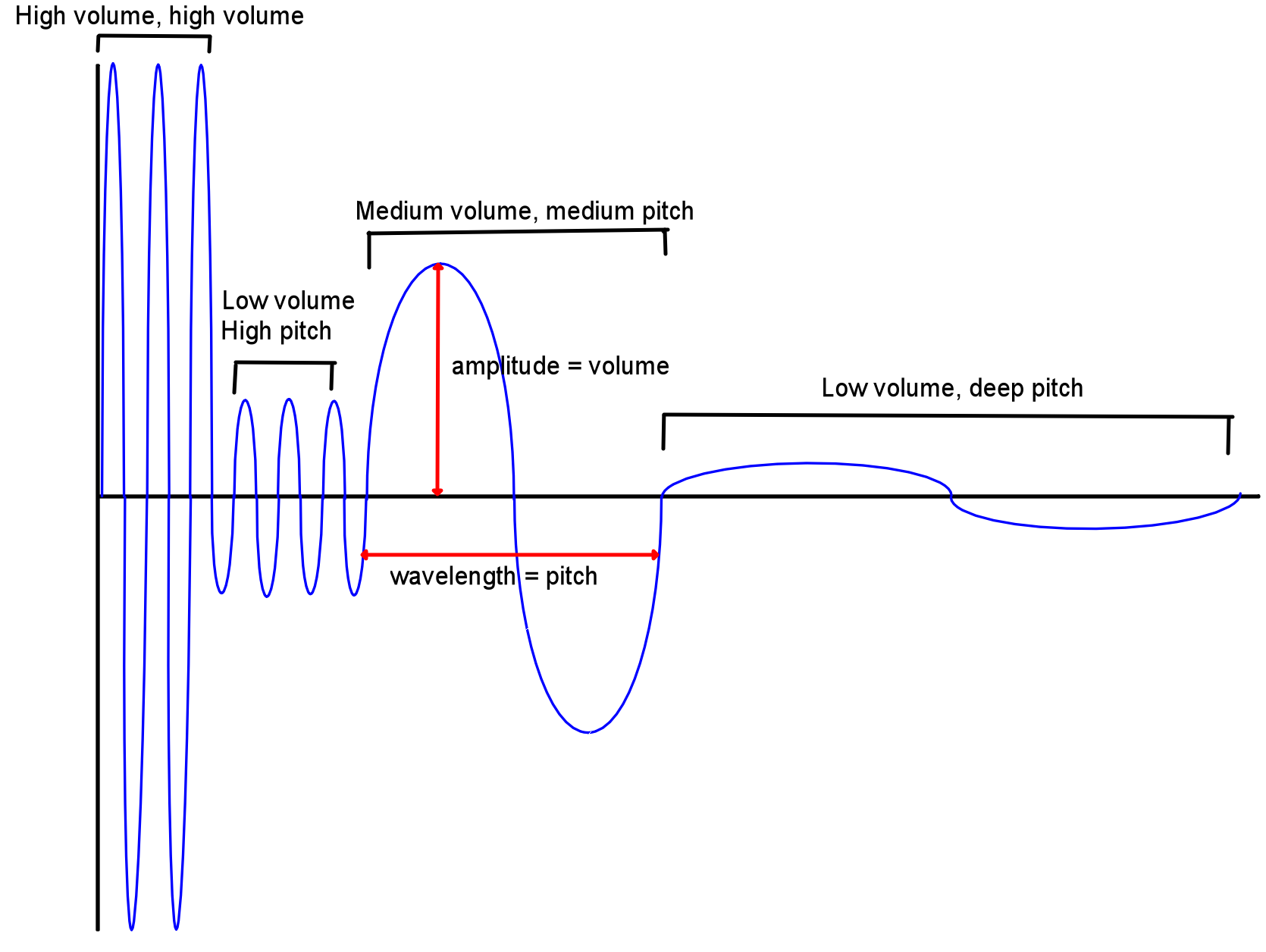
- Sound can be translated into transverse waves using an oscilloscope
- The larger the amplitude, the louder the volume
- The larger the wavelength, the lower the pitch
- Hertz (Hz) is a frequency measure. It is the amount of waves in a second
- Therefore it can tell us the pitch - the larger the Hz, the higher the pitch
- Particle Waves
The Ear
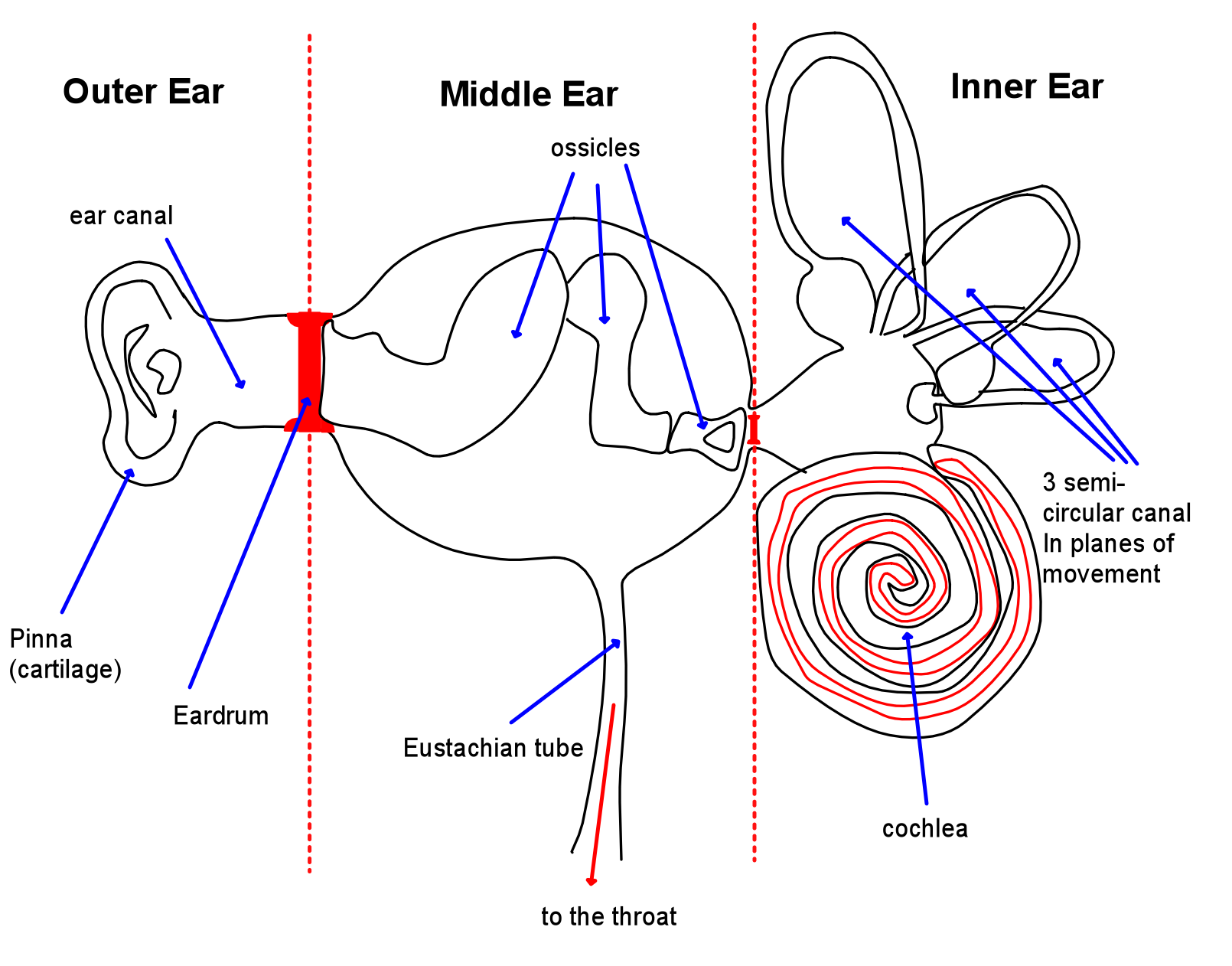
- The ear has three sections:
- Outer Ear
- The inner ear collects sound which vibrates the eardrum
- Sound is collected by the Pinna (cartilage)
- This magnifies 3x-4x
- The inner ear collects sound which vibrates the eardrum
- Middle ear
- Sound travels along three bones
- This amplifies the sound 22x
- It is filled with air
- It is joined to the back of the throat
- This is to relieve pressure
- Both sides of the eardrum must have similar air pressure levels
- This is to relieve pressure
- Sound travels along three bones
- Inner ear
- This is made up of two main structures
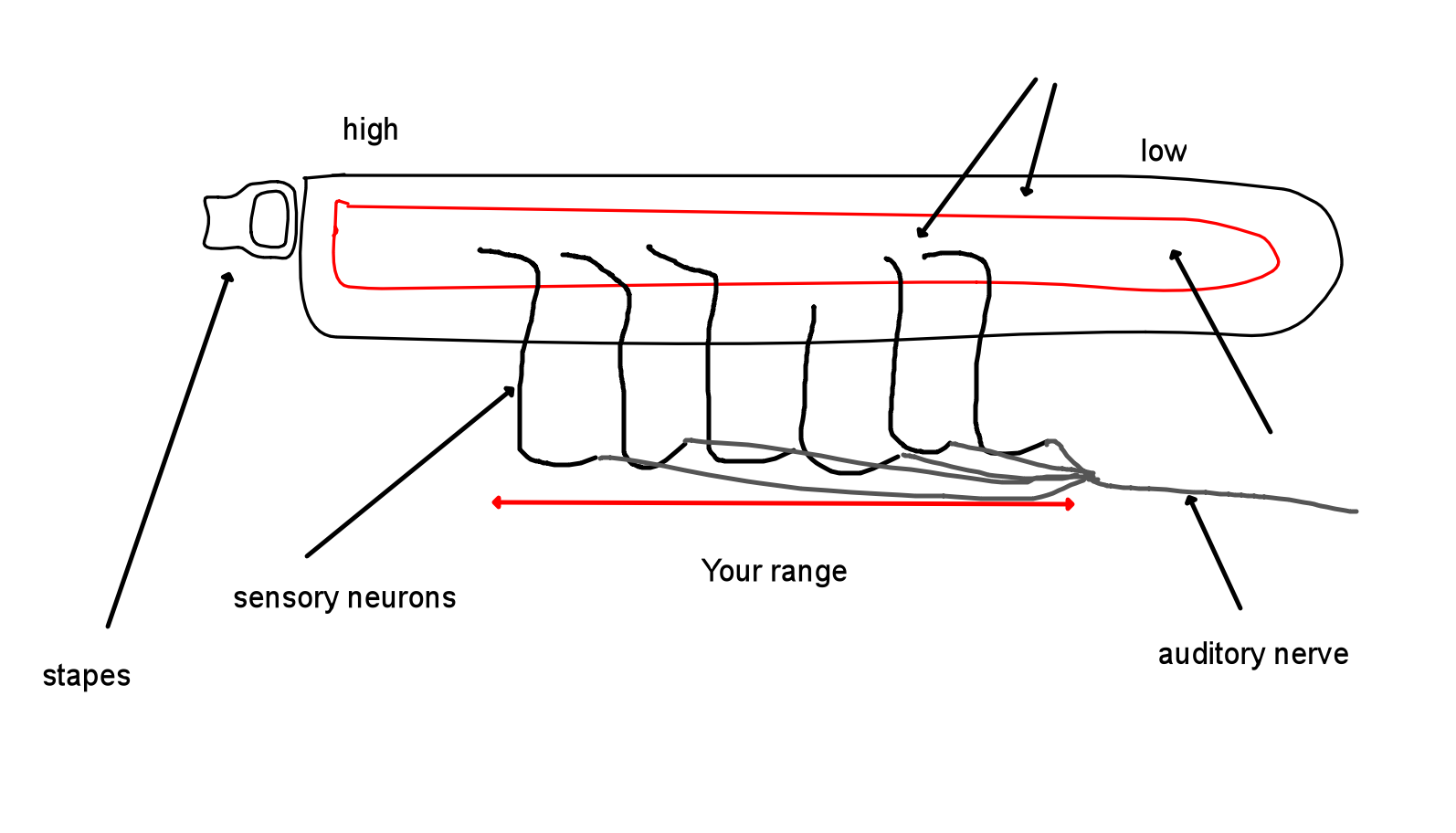
- Cochlea
- This detects sound
- The ossicles create waves in the fluid
- Sensors detect the waves and send nerve impulses to the brain
- The ossicles create waves in the fluid
- This detects sound
- 3 Semi-circular canals
- These are placed in each plane of movement
- X - Across
- Y - Up
- Z - Along
- These are placed in each plane of movement
- Cochlea
- Fluid filled
- This is made up of two main structures
- Outer Ear
- The ear has three sections:
Properties
- Sound is not part of the electromagnetic spectrum
- It travels as a particle wave
- Therefore, it requires the vibration of particles and objects
- Sound does not travel in space or a vacuum
- Therefore, it requires the vibration of particles and objects
Images and files in the map
Information
- Description
- SPS Scholarship Physics (Sound) Mind Map on Sound, created by frenchmouse0§1 on 28/12/2013.
- Created by
- frenchmouse0§1
- Views
- 104
- Tags
- Rating