
Mind map
Pain
Map content
Pain
unpleasant sensory & emotional experience associated with potential tissue damage
primarily a protective mechanism
subjective sensation
Types of Pain
- Fast Pain (acute)
- felt after about 0.1sec of the stimulus
- transmited in Aδ pain fibers
- Slow Pain (chronic)
- felt after about 1sec or more of the stimulus & increase over time
- transmited in C pain fibers
- Fast Pain (acute)
Localization of Pain
- Cutaneous Pain
- Deep Somatic Pain
- Visceral Pain
- Psychogenic Pain
Perceiving of pain
- 1. Transduction
- 2. Transmission
- 3. Central processing
- 4. Modulation
- Factors affecting pain perception
- Age, Culture, Attention, Anxiety, Previous experiences, Family and social support
Pain receptors - Nociceptors
- nerve endings with large receptive fields
- Types
- Mechanical
- Thermal
- Chemical
- Polymodal nocieptors
- Silent Nociceptors
Pain management
- 1. Nonopoids - Pain killers
- 2. Opoids- Pain killers
- such as: Pethidine
- mimicking the action of naturally occurring pain-reducing chemicals called endorphins.
- such as:Voltaren (diclofenac)
- 2. Opoids- Pain killers
- Pain suppression system
- The capability of the brain to suppress input of pain signals by activating a pain control system
- 3 major components
- The periaqueductal gray and periventricular areas of the mesencephalon and upper pons.
- the lower pons and upper medulla, and the nucleus reticularis paragigantocellularis, located laterally in the medulla.
- a pain inhibitory complex located in the dorsal horns of the spinal cord.
- suppresses the release of neurotransmitter
- Adequate Clinical History Taking
- 1. Nonopoids - Pain killers
Caused in
- Shingles
- caused by varicella-zoster virus
- PNS infection
- 1. causes chicken pox
- IP is 10 to 21 days
- an enveloped virus
- Primary target cell: Mucoepitheli al cells & T cells
- Site of latency : neurones
- secondary infection after getting chicken pox
- If the virus gets reactiveted, shingles occur
- painful, blistering skin rash that affects one side of the body
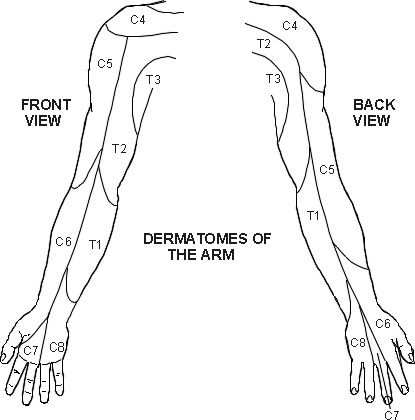
- pain and vesicles restricted to one dermatome
- Dermatome :an area of the skin supplied by nerves from a single spinal root
- Dermatome :an area of the skin supplied by nerves from a single spinal root
- pain and vesicles restricted to one dermatome
- postherpetic neuralgia
- the result of the shingled virus damaging the nerves of the skin
- last around 3 to 5 weeks
- Clinical course:
- 1.burning or tingling pain
- 2. after 1-5 days a red rash will appear
- 3. the rash will turn into fluid-filled blisters
- 10 days after that, the blisters dry up and crust over .
- A couple of weeks later, the scabs clear up
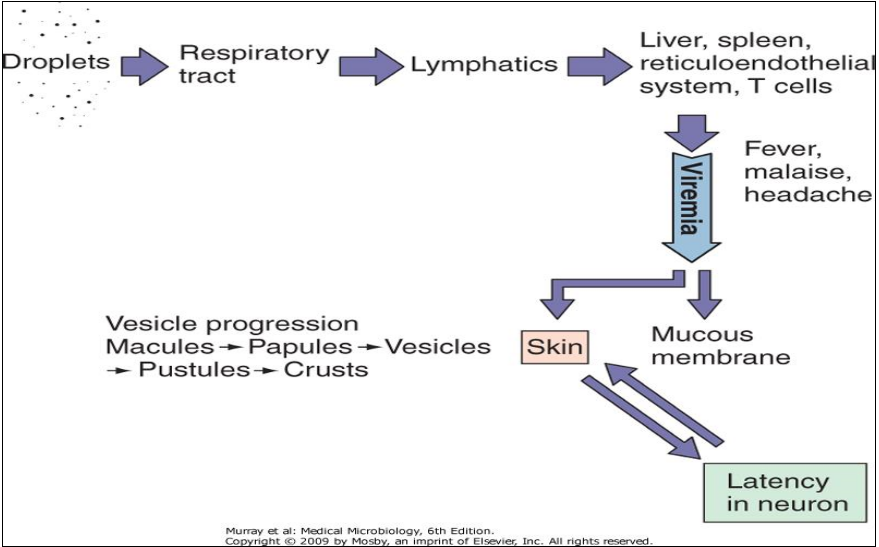
- Transmission: airborne & respiratory, sometimes direct contact
- mechnism of spread :
- mechnism of spread :
- Laboratory diagnosis
- Tzanck smear showing multinucleated giant cells & Cowdry type A inclusion bodies
- CPE - balloning and syncitium formation
- Treatment
- acyclovir
- Inhibit DNA polymerase
- require phosphorylation by thymidine kinase
- Vaccines against VZV
- > 60 yrs of age
- Two doses, 12 – 15 M, followed by 4 – 6 yrs
- Live attenauted vaccine – OKA strain
- Varicella Zoster Immune Globulin (VARIZIG) useful if administered within 96 hours of exposure
- acyclovir
- caused by varicella-zoster virus
- Shingles
Psychological management of pain
- Problem Focused Coping
- Emotion‐Focused Coping
- Psychoeducation
- Relaxation therapy
- Positive reinforcement
- 2 factors that affect pain coping
- 1.living with persistent pain
- 2. issues that are related to the pain interfering with one’s life
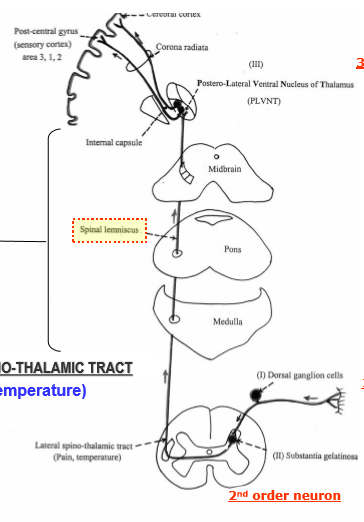
Ascending tracts in the spinal cord
- Lateral spinothalamic tract in the Lateral White Coulmn
- Responsible for pain & temperature
- include 2 pathways
- Neospinlothalamic tract
- Glutamate is the neurotransmitter
- Paleospinlothalamic tract
- Substance P is the neurotransmitter
- Neospinlothalamic tract
- Lateral spinothalamic tract in the Lateral White Coulmn
Inflammatory mediators of pain
- Cell derived mediators
- Histamine
- Arachidonic acid metabolites releases in Cyclo-oxygenase pathway , releases PGE2
- Neuropeptides
- Plasma derived mediators
- The kinin system
- releases bradykinin
- The kinin system
- Cell derived mediators
Images and files in the map
Information
- Description
- Medicine Mind Map on Pain, created by Alshaima Yousef on 24/02/2017.
- Created by
- Alshaima Yousef
- Views
- 2
- Rating