
Notes
Interference - Waves

Content of the notes (6)
Page 1
Displacement is the distance from the centre of oscillation to the rope
Amplitude is the maximum displacement.
The energy of a wave is proportional to the amplitude squared.
Page 2
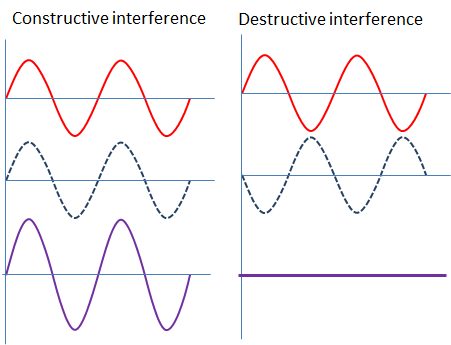
Superposition is when we have two or more waves in the same place at the same time.
Resultant displacement at any point = sum of displacements of each separate wave.
Adding 2 waves that are in phase = Constructive interference
Adding 2 waves that are not in phase = Destructive interference
Page 3
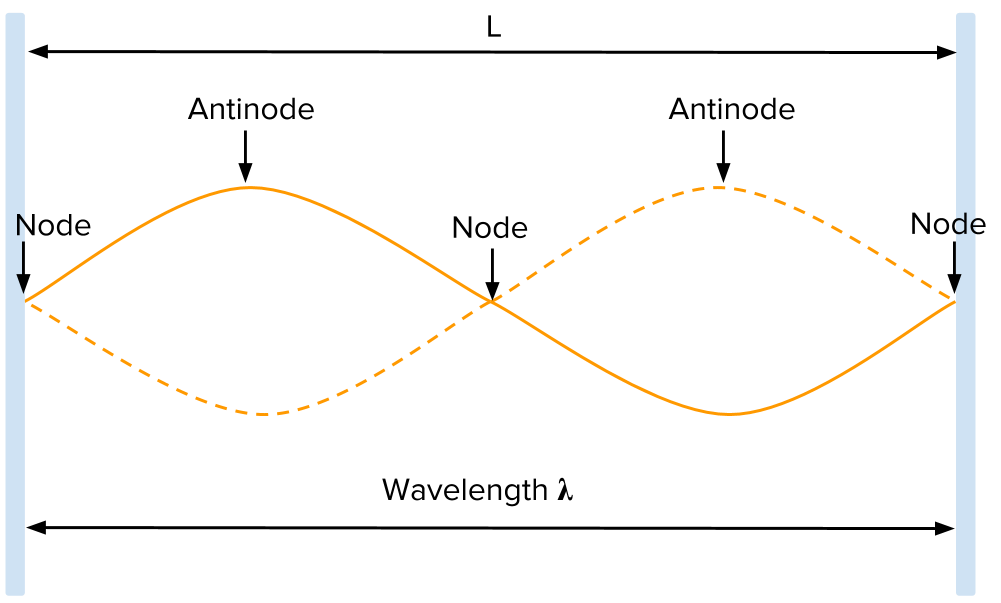
Standing wave is a wave that is fixed at both ends.
At some point the resultant of standing waves is always 0 = Nodes (Here the string does not move)
At other points the resultant oscillates with maximum amplitude = Anti-Node
The distance between (Anti)-Nodes is half a wavelength.
Page 4
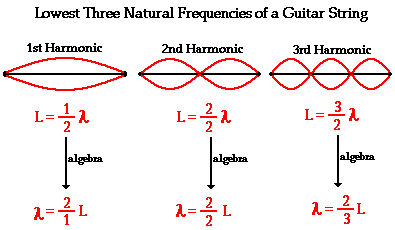
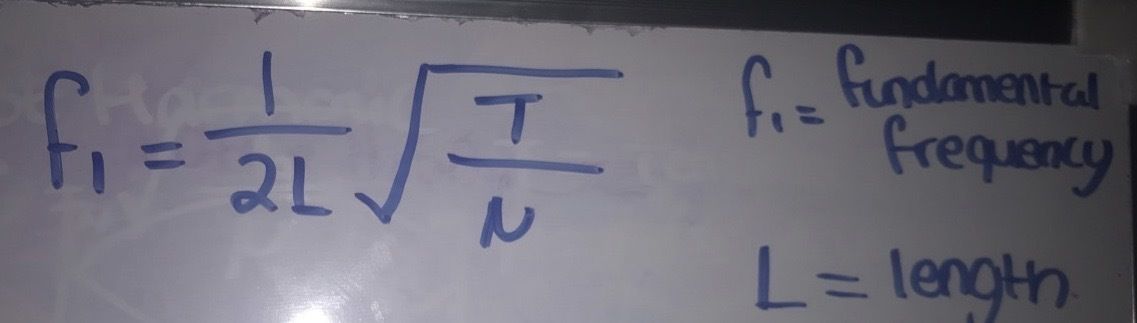
Wavelength = The Length(L) x 2
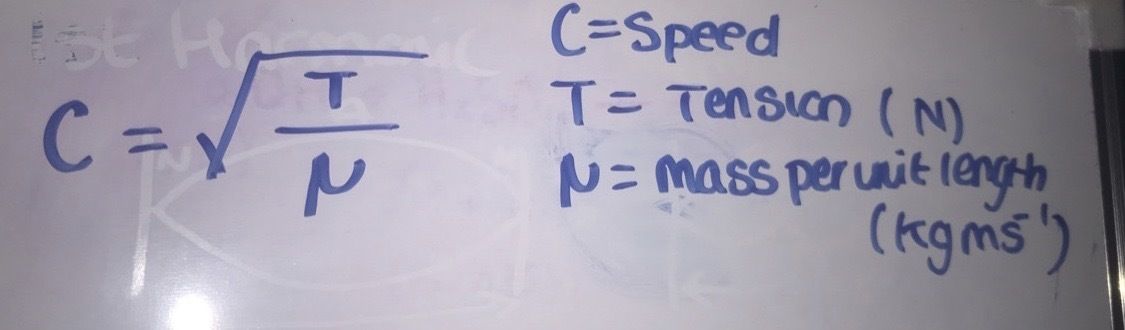
As frequency increases - Wavelength decreases
As wavelength increases - frequency decreases
Page 5
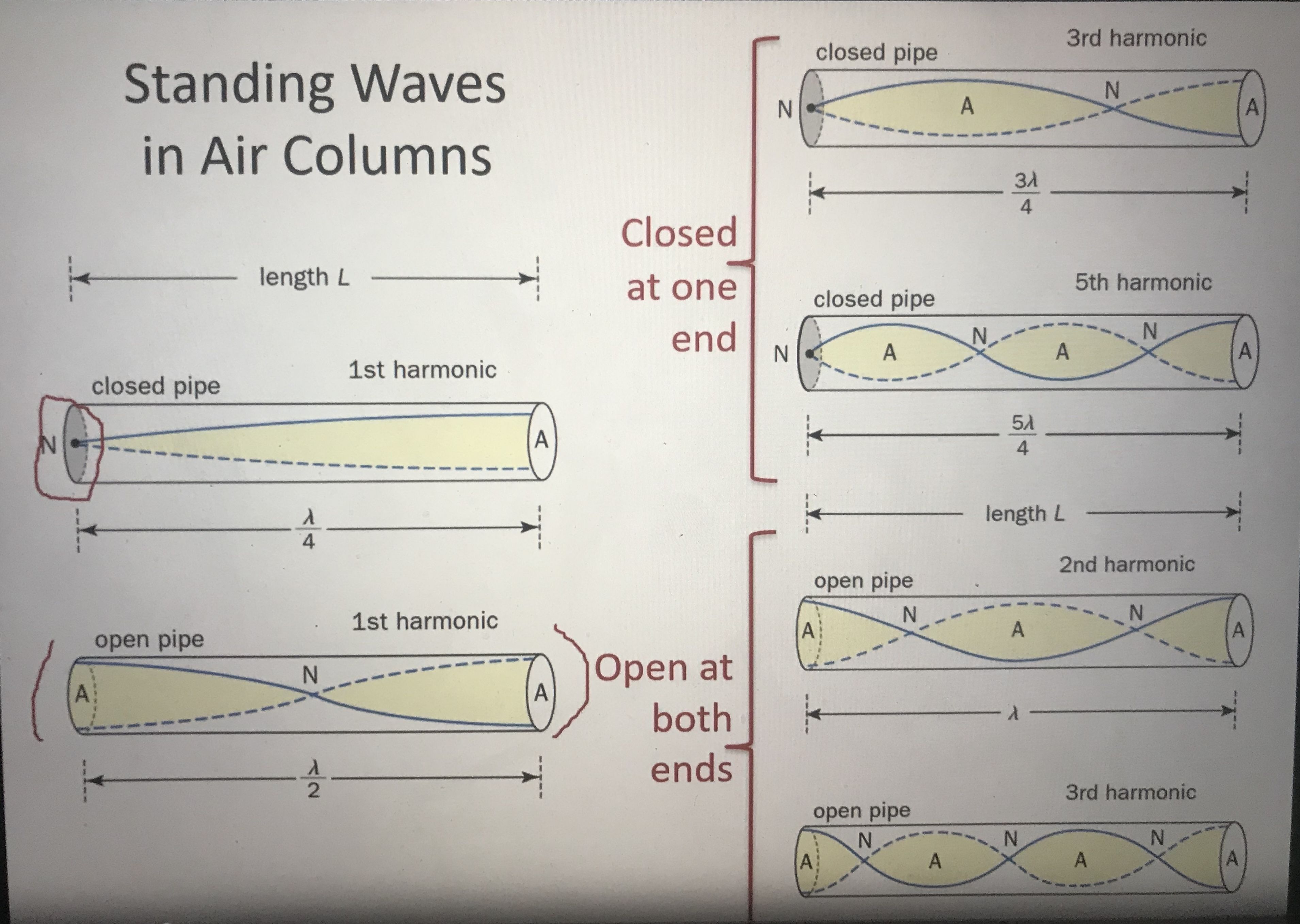
Pipes which are closed at one end only have odd number harmonics e.g. 1st harmonic - 3rd harmonic - 5th harmonic
An example of these pipes would be Church Organs.
Page 6
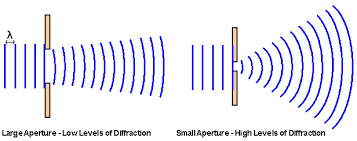
Diffraction is the bending of waves as they pass through a gap.
In the first picture, the gap is large enough for the wave's wavelength to pass through thus meaning they don't diffract as much
In the second picture the gap is smaller leading to more diffraction
The amount of diffraction depends on the size of the gap and the relative size of the wavelength.
Information
- Description
- Physics Note on Interference - Waves, created by Daley Bardini on 13/11/2020.
- Created by
- Daley Bardini
- Views
- 0
- Rating