
Notes
Separation Techniques
Content of the notes (4)
Page 1
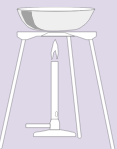
Experiment: To separate salt and water (by evaporation)
Boil the salty water until the basin is almost dry, Turn off the Bunsen and allow the hot basin to sit. The remaining water should evaporate, leaving the salt in the basin.
1. Dissolve the sand and salt in water in a beaker.
2. Filter off the sand.
3. Then boil off the water in an evaporating dish.
Page 2
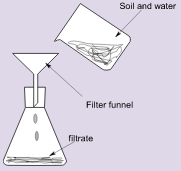
Experiment: To separate soil and water by filtration.
Page 3
Experiment: To separate copper sulfate from water
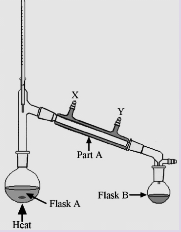
Place the copper sulfate solution in the round~bottom flask.
Heat until the solution starts to boil. As the water evaporates (changes from a liquid to a gas) it leaves the flask through the condenser' as a steam
The condenser had a 'jacket' of cold water constantly flowing around its outer section
This causes the steam to condense back into liquid water
The water collected in the flask on the right is called the distillate.
Page 4
Experiment: To separate a mixture of dyes by chromatography.
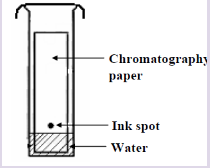
The solvent will soak up along the paper carrying the dye with it
The colours in the mixture will travel at different speeds up the paper because some are more soluble in the solvent than others
Eventually, all the colours will separate from each other.
Information
- Description
- Junior Certificate Science (Physics) Note on Separation Techniques, created by Lauren Mcguane on 07/05/2017.
- Created by
- Lauren Mcguane
- Views
- 0
- Rating