
Notes
CHAPTER 7 NOTES
Content of the notes (1)
Page 1
ADAPTATIONS:
Organisms need resources and their own characteristics and traits called adaptations to enable them to survive in particular environments
There are 3 types of adaptations - structural, physiological, and behavioural
These adaptations enable organisms to successfully obtain requirements, often in changing conditions
ABIOTIC/BIOTIC FACTORS:
The environment is the sum total of all the factors that affect an organism
Abiotic factors - physical and chemical factors/non living - temperature, light intensity, texture, pH of the soil, concentration of significant gases in water/air
Biotic factors - the presence or absence of other living things that affect an organism/ living things - more of that kind of organisms, competitors, predators, availability of mates
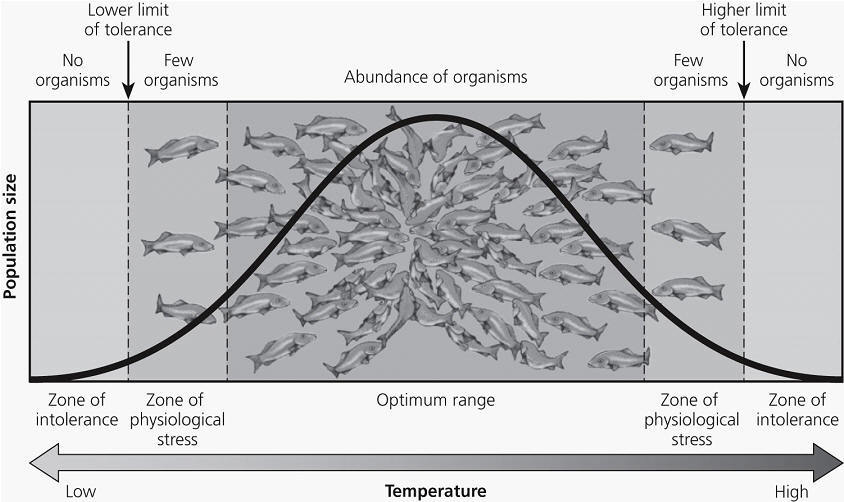
TOLERANCE RANGES: (temperature/oxygen):
A particular species has a level/tolerance range in which it functions best called the optimum range
Outside this range the species begins to suffer physiological stress, functioning is affected
Internal/External Environments:
Internal Unicellular - Everything to the inside of the cell membrane
Multicellular - refers to the conditions within its cells and in the extracellular fluid between its cells
External - Abiotic/biotic factors surrounding organisms, that enable them live in their particular habitat
ADJUSTING TO CHANGE:
Organisms can easily adjust to change, as long as the change is gradual
GEOGRAPHIC DISTRIBUTION/RANGE:
The distribution/range of species depends on the resources available in the environment,
and whether it can obtain what it needs. This also depends on the organisms adaptations to abiotic factors,
and its tolerance range. The larger the tolerance range, the more wide the geographic range.
The distribution and abundance (how many there are in a given area) of different kinds of species depends on how well they obtain the resources they need for their survival
ECOSYSTEMS:
Ecosystem = Habitat + community of living things
Environmental factors characterise ecosystems - systems in which there is exchange or cycling between living things and non-living components
MICRO-HABITATS - within a particular habitat, small scale but distinctive differences in the chemical/physical factors that affect what lives there
Eg. Habitat - forest, Micro-habitat - Under a log
VEGETATION TYPES:
Ecosystems can be distinguished from each other by their overall appearance and the kind of communities they support, as well as the kind of vegetation being supported
An ecosystem can be distinguished by several layers (strata)
Classification of ecosystems in 2 factors - height, and percentage of canopy cover of the tallest layer (stratum)
MEASURING ENVIRONMENTAL FACTORS:
When studying ecosystems to analyse and explain the distribution of populations we use;
Quantitative - measurements that can be quantified - measurements of factors
Qualitative - descriptions not involving measurements, 'hot/dry'
Stratification - vertical differences in abiotic conditions, giving rise to 'layers' or strata
Zonation - horizontal differences in abiotic conditions that give rise to distinctive zones
DISTRIBUTION OF PLANTS:
In an area can be determined by marking a straight line across the area and recording the type and number of plants along that line. This cross-section is called a transect, additional information about factors can influence distribution eg. soil type
PLANTS LIVING ON LAND/WATER:
Differences in;
- Temperature
- Gaseous change
- Water Balance
- Light
- Support
EPIPHYTES:
'Epi' - above, 'Phyte' - plant - AERIAL PLANTS
They grow on branches and trunks of other plants, by they are not parasites. They have no contact with the soil, and have difficulty in obtaining nutrients and in holding water that comes their way, they have an advantage in competing for light, living high up in the forest trees
MESOPHYTES - plants in areas with adequate water
HYDROPHYTES - aquatic plants
HALOPHYTES - salt-tolerant plants
XEROPHYTES - plants in areas where water is scarce
PLANTS AND FIRE:
It rejuvenates vegetation
Grass trees will flower abundantly after fire
Some orchids are fire-dependant and sprout from bulbs
A lot of them produce fires as part of a regeneration process
Survival depends on the intensity and scope of the fire and the adaptations that plants have to particular fire regimes. There are 2 strategies;
- producing extremely large numbers of seeds that accumulate in the soils or in woody fruit, and germinate after a fire
- have structures and mechanisms that allow for survival and regeneration
IN PLANTS:
Stages in a life cycle of a plant coincide with there environmental conditions.
Germination, growth, flowering, seed setting, and budding are signalled by changes in abiotic factors (temperature, rainfall, length of daylight, availability of water and nutrients
Plant responses tend to be less immediately evident that those of animals but they are just as important. Plants tend to adapt to new situations by modifying their growth
PHYTOHORMONES:
Plant hormones are produces by any growing tissue; the type and amount vary according to the stage in the plant's life cycle
Animal hormones are produced by particular tissues or glands
PLANT REGULATORS:
- plant hormones work by changing permeability of membranes
- which then affects inputs for cellular activity
- plant hormones can promote or inhibit growth
- affect the production of certain enzymes, which then affect cellular processes
AUXINS:
- first plant hormones discovered
COLEOPTILES: the sheath like covering on the young growing tips of grasses
Charles Darwin discovered - that the tip of the coleoptile was the tissue responsible for detecting the light, and it was also responsible producing a substance called Auxin, that travelled to the lower part if the coleoptile where the physiological response of bending occurred.
- Auxin also - promote plant cell elongation, cell expansion, regulate other activities such as ripening of fruit and growth of shoot tips, falls of leaves and fruit
HERBICIDES:
- kills unwanted seeds
- chemicals that kill plants
- stimulating rapid growth of cells means that cells use up reserves of energy (CARBOHYDRATES) faster than they can be replenished, auxins stimulate the unwanted plants to grow rapidly that they run out of supplies - the plants starve!
SHARING CONTROL:
Four other phytohormones;
Gibberellins - promote cell division and elongation in plant shoots; extend internodes and can raise flower heads (bolting)
Cytokinins - Stimulate cell division and the middle layer of cells (mesophyll) in leaves. They tend to be concentrated in the starchy material in seeds (endosperm) and in young fruit
Abscisic Acid (ABE) - Generally acts as an inhibitor. It promotes closure of stomata particularly during times of water stress; stimulates dormancy in seeds and buds
Ethylene - In gaseous state, it is significant in ripening fruits by stimulating the conversion of starch to sugars, increasing the sweetness of fruit. Ethylene also stimulates colour change and softening of tissues of ripening fruit as in tomatoes/bananas
PHYTOCHROMES:
A pigment that plants use to detect light (a plant photoreceptor) in the red region of the spectrum
PHOTOPERIODISM:
Phytochrome roles in regulating cycle of flowering of plants according to the length of daylight (photoperiod)
Phytochrome has 2 forms;
- the inactive form can be converted readily
- active form in the presence of light
The amount of the two forms relative to each other is the signal for the physiological response such as flowering, germination or dormancy
The relative lengths of daylight and darkness stimulate the timing of flowering
Different plants react differently;
- 'short-day' plants
- 'long-day' plants
'Short-day' Plants - are really long-night plants because if a dark period is introduced into the light period, flowering still occurs, if a dark period is interrupted by a light flash, no flowering occurs
'Long-day Plants - require long summer days to trigger flowering, if a dark period is introduced into the light period, no flowering takes place, if the dark period is replaced with illumination for 3-5 days then flowering occurs
Day-neutral - flower no matter of the relative lengths of daylight or darkness
Vernalisation - plants needs a period of low temperatures to flower
DORMANCY:
- imposed by such external conditions
- energy requirements are lowered to a minimum when temperatures are low or harsh
- when conditions are favourable the combination of different environmental cues triggers renewed activity
RESPONSES BY PLANTS:
Sessile plants are able to respond to directional stimuli by growth response that can be negative (away from stimulus) or positive (towards the stimulus)
These responses are called TROPISMS
Plant movements in response to external stimuli can be grouped into several categories;
TAXIS - movement of a whole organism in response e.g algae towards a light source (positive phototaxis), or away from a chemical solution (negative chemotaxis)
TROPISM - growth movement in response to an external stimulus in which the direction of the response (referred to as a unilateral or undirectional stimulus)
NASTIC - movement of a plant organ that is not determined by the direction of the stimulus
TROPISM - STIMULUS - RESPONSE
PHOTOTROPISM - light - positive - shoots grow towards light, negative - roots grow away from light
GEOTROPISM - gravity - positive - roots grow downwards, negative - shoots grow upwards
HYDROPTROPISM - water - roots grow towards water
THIGMOTROPISM - touch, contact - stems and tendrils grow round or against points or contact with solid objects such as stems of other plants
CHEMOTROPISM - chemicals - positive - pollen tubes of some plants are attracted to the stigma of the same species, enabling fertilisation. The ovary releases chemicals that produce a positive response
RESPONSE TO LIGHT:
- shoot is in the sun
- auxin produced and transported across the shaded side
- cells away from light respond by growing and elongating
- causes the shoot to grow differentially
- shoots curves over towards the source of light
- the bending occurs behind the tip/apex, in the zone of elongation
RESPONSES TO GRAVITY
- slightly greater amount of auxin are found in the lower side of horizontally held organs placed horizontally (vase on its side)
- the pull of gravity is detected by cells near the stem or root tip (apex)
- these cells contain starch grains that change their location in the cells
- vertical --> horizontal position
- the change in location results in cell growth
NASTICS:
- can be slow/rapid
- the loss of turgor causes the cells to become flaccid or limp and lose support
NUTATION - describes movement of plants structures that are in response to internal rather than external stimuli
pAGE 1
PAGE 2
PAGE 3
page 4
Information
- Description
- Note on CHAPTER 7 NOTES, created by Vanessa_xx on 07/11/2014.
- Created by
- Vanessa_xx
- Views
- 11
- Rating