
Ecosystems and Populations
812 resources created by 683 users
This GoConqr page gathers over 6,700 community-made resources on Ecosystems and Populations: quizzes, mind maps, flashcards and notes to revise and practise with.
Top Ecosystems and Populations resources
-
45 cardsOCR Gateway Biology - B2 by Harvinder Lewars B2: understanding our environment
-
44 questionsBio Exam 4 Chapter 55 If the sun were to suddenly stop providing energy to Earth, most ecosystems would eventually vanish. Which ...
-
44 questionsBio Exam 4 Chapter 53 Suppose researchers marked 800 turtles and later were able to trap a total of 300 individuals in that popul...
-
56 questionsLeaving Cert Biology Unit 1 definitions What is an Abiotic factor?
-
50 questions0654 B12 Organisms and Their Environment Quiz Which of the following is an example of a food chain?
-
48 questionsEcology Practice Test What do we call the movement of organisms into a given area from another area?
-
30 questions0654 B13 Impacts of Humans on Ecosystems Quiz The diagram represents the carbon cycle. Which process is represented by arrow X?
-
34 questionsChapter 4: Ecology Revision Questions Ecology revision questions
Quizzes
See all 97 quizzes-
44 questionsBio Exam 4 Chapter 55 If the sun were to suddenly stop providing energy to Earth, most ecosystems would eventually vanish. Which ...
-
44 questionsBio Exam 4 Chapter 53 Suppose researchers marked 800 turtles and later were able to trap a total of 300 individuals in that popul...
-
56 questionsLeaving Cert Biology Unit 1 definitions What is an Abiotic factor?
-
50 questions0654 B12 Organisms and Their Environment Quiz Which of the following is an example of a food chain?
-
48 questionsEcology Practice Test What do we call the movement of organisms into a given area from another area?
-
30 questions0654 B13 Impacts of Humans on Ecosystems Quiz The diagram represents the carbon cycle. Which process is represented by arrow X?
-
34 questionsChapter 4: Ecology Revision Questions Ecology revision questions
-
20 questionsCommunities and Ecosystems What is the definition of species?
Mind maps
See all 329 mind maps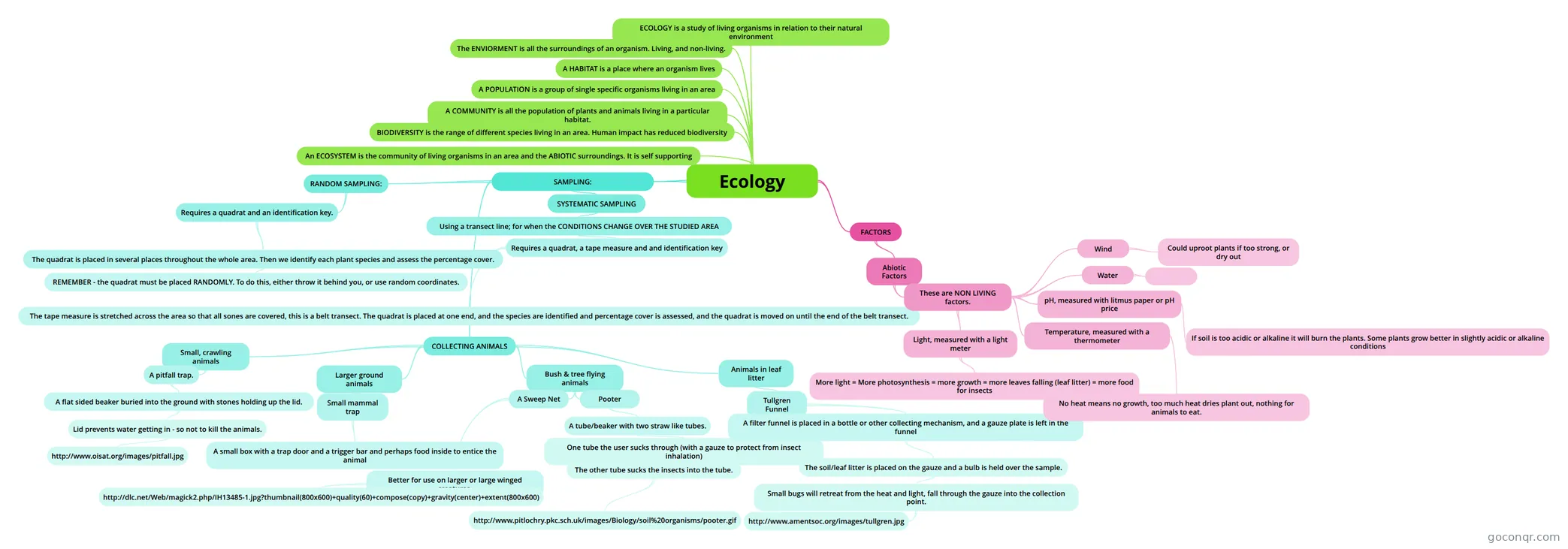
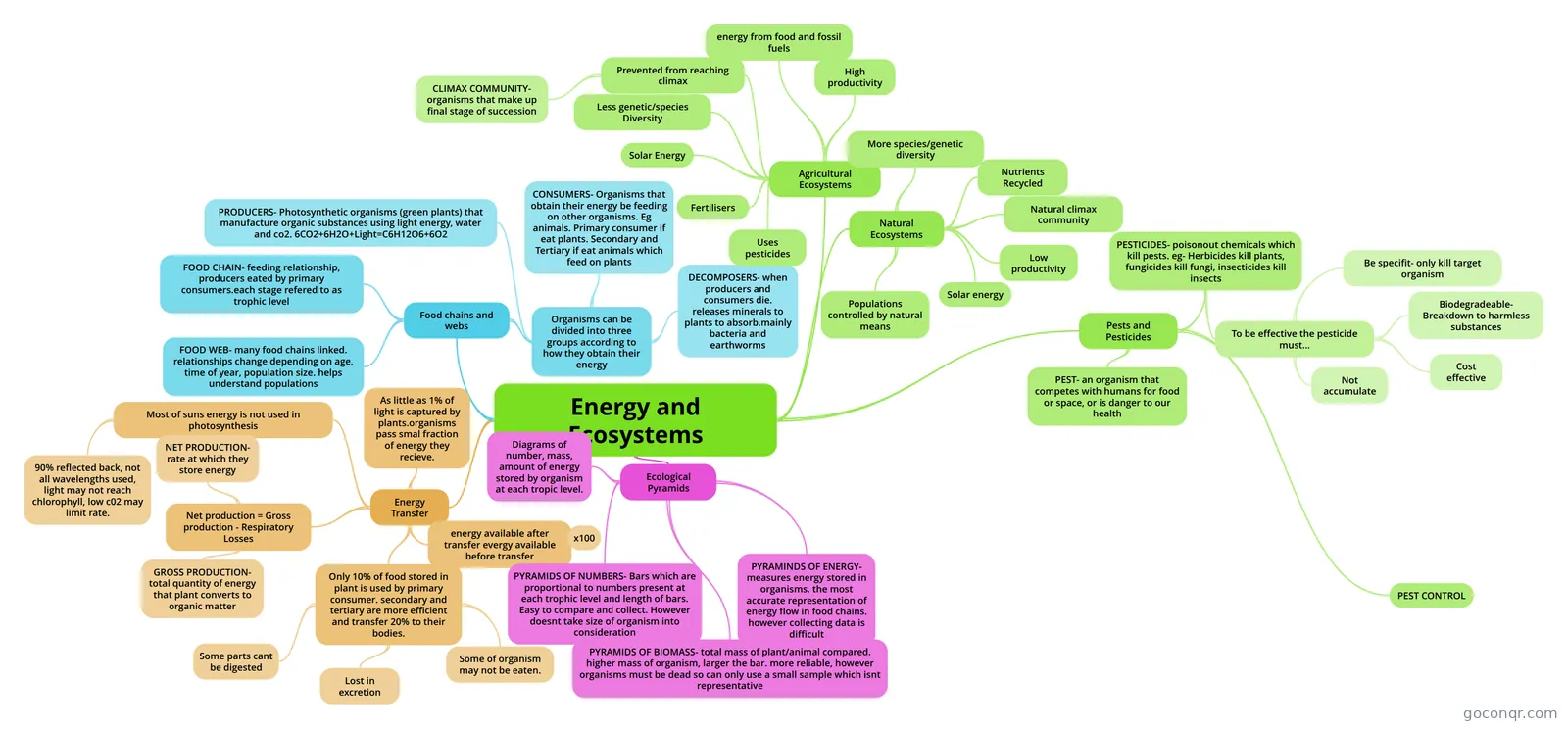
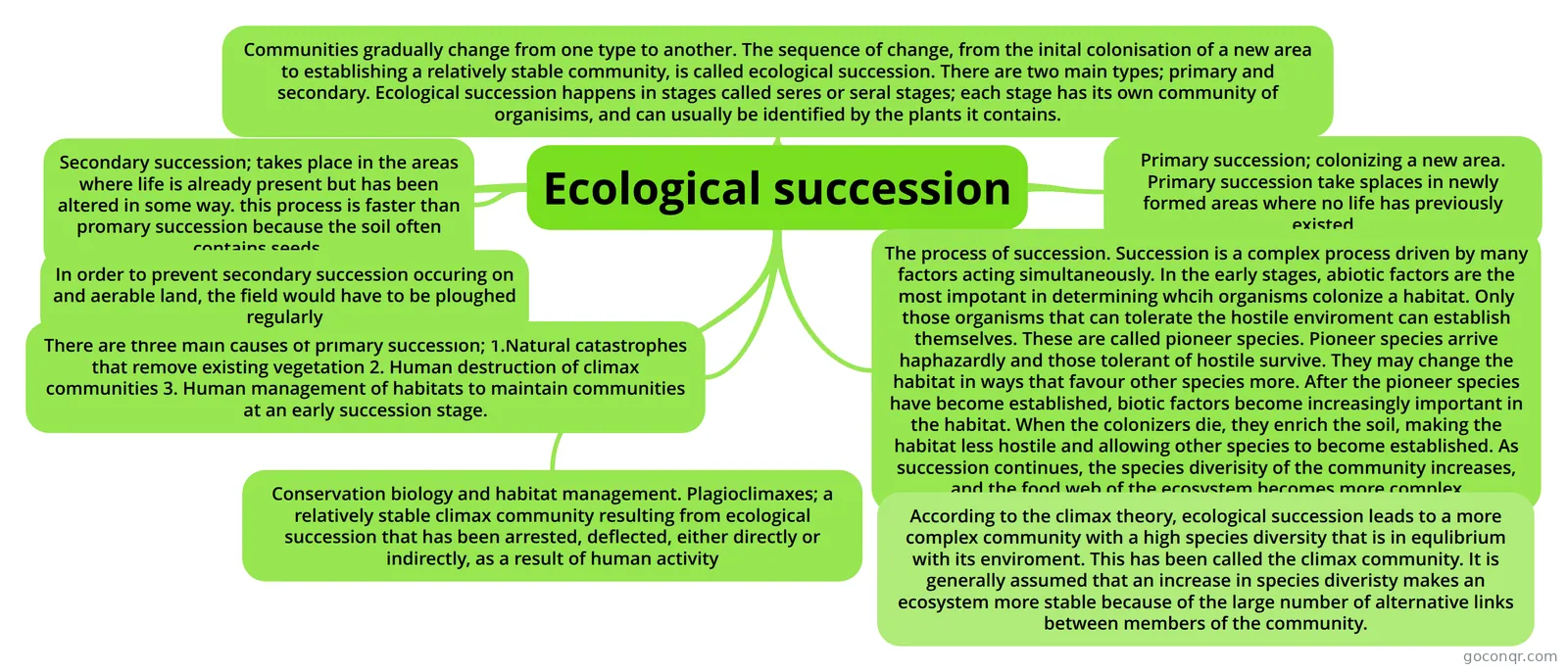
Flashcards
See all 311 flashcards-
45 cardsOCR Gateway Biology - B2 by Harvinder Lewars B2: understanding our environment
-
40 cardsAQA A2 Biology Unit 4: Populations what is the difference between biotic and abiotic factors?
-
37 cardsB3 quiz What are species?
-
10 cardsEcosystems Animals and plants
-
20 cardsUse of natural and arifical fertilisers Use of Natural and Artificial fertilisers
-
80 cardsUnit 1: Sustaining Ecosystems
-
37 cardsKey words for Biology Topic 5
-
20 cardsEcosystems Ecosystems and their components
Flowcharts
-
Panda Ant Characteristics of the panda ant
-
Mapa semántico ecosistemas Mapa conceptual de ecosistemas
-
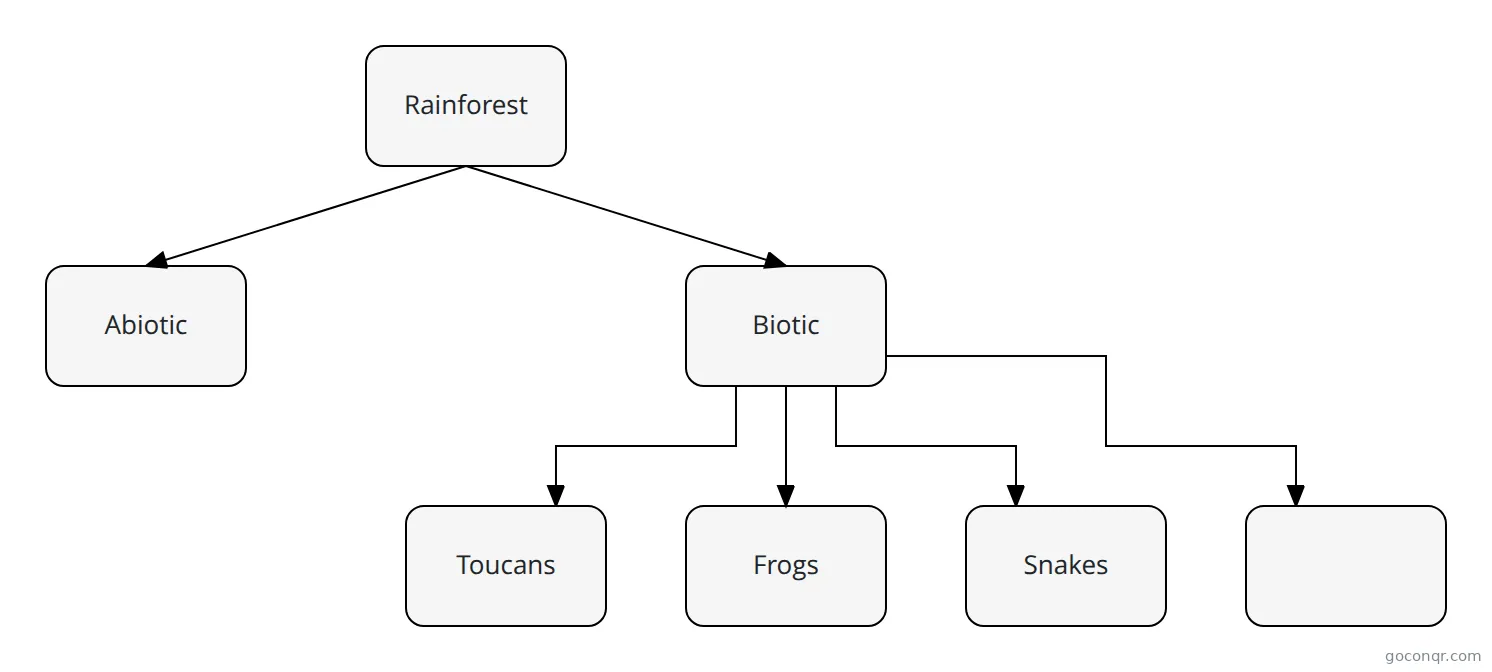 Biome Project 11 (rain forest) Flow Chart
-
Evidence 2 An investigation about ecosystems and its main components, such as living beings and food chain.
-
Biomes - Alanis González - Angela Díaz - 7A :)
-
Determining population size How to determine the size of the population
-
Ecological communities
-
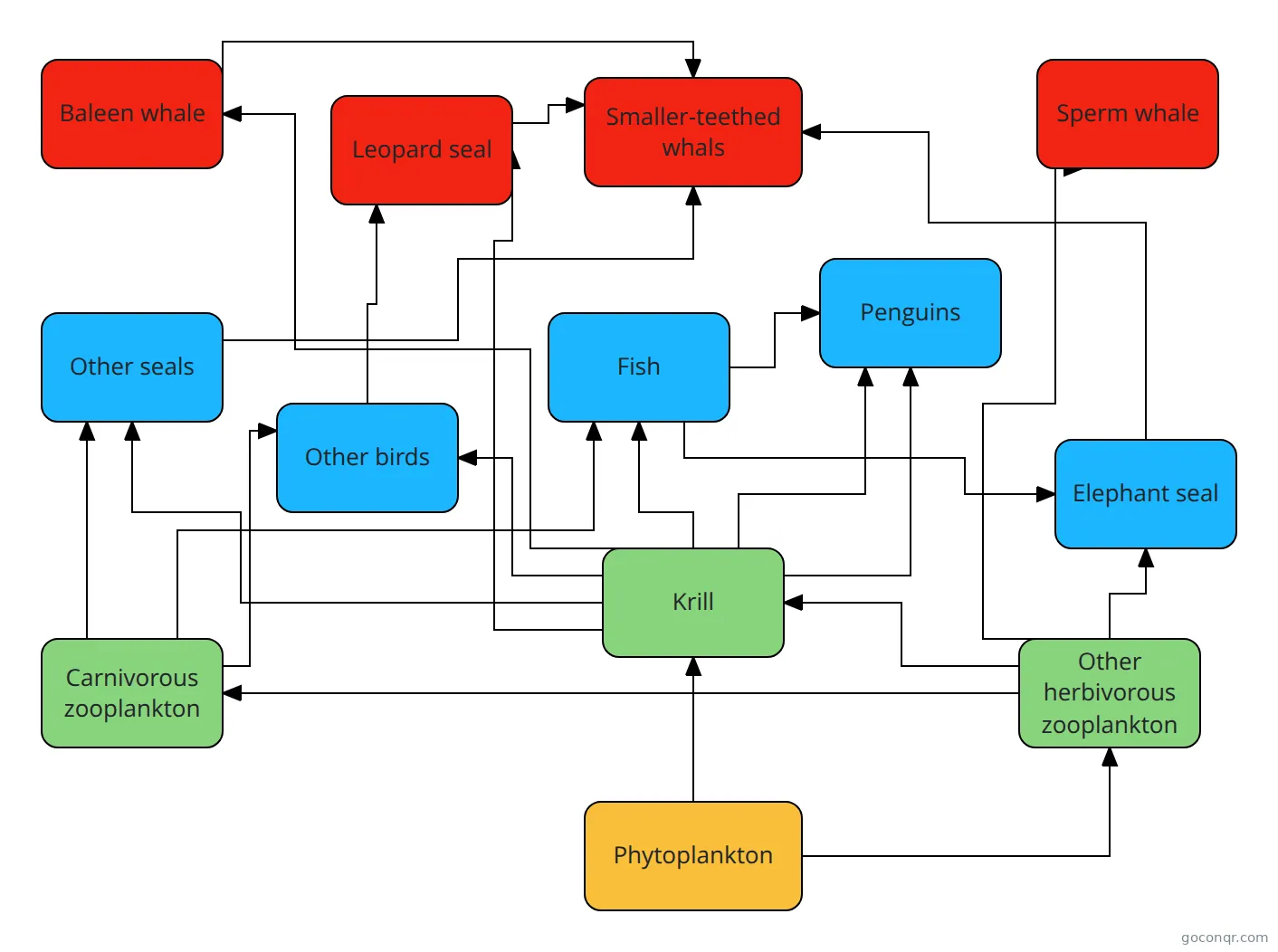 Antarctic food web An Antarctic food web for GCSE Geography
Notes
See all 51 notes-
Biodiversity notes and exam questions Biodiversity is a measure of three things: The variety of species in an ecosystem The variety of habitats in an ecosystem The genetic diversity of an ecosystem Species diversity can be me...
-
Ch.2 Habitat Management & Creation Habitat ManagementSpecies depend on abiotic and biotic factorsAbiotic (physical) factors: water, temperature, light levels, pH, mineral/nutrient suppliesBiotic (biological) factors: food, predation, disease, competiti...
-
Nutrient Cycles
-
BIOLOGY UNIT 3B GCSE There are over SIX BILLION PEOPLE in the worlddue to medicine and farming methods which have REDUCED the number of people dying from disease and hunger. increasing population puts pressure on environment h...
-
Exam Q on food chains 10m Explain how energy is transferred through food chains and food webs in an ecosystem. You should refer to the efficiency of this transfer in your answer. You will gain credit if you make use of the information in the d...
-
Biology & our environment Variation characteristics of organisims vary within & between species. genetic variationMutationsEnvironmental variation Evolution a gradual process involving gene mutation & natural selection, which can lea...
-
Topic 7: Ecology Adaptations, Interdependence and Competition Communities (7.1.1) An individual is part of a species but lives in its habitat within a population. Organisms are adapted to live in the...
-
Biology Unit 2: Ecology Vocab:abiotic features: nonliving things in an ecosystembiome: a large geographical region with similar plants, animals, and climatebiosphere: all the living organisms found on earthbiota: all the living organisms fou...
Slides
See all 15 slidesMore Biology and natural sciences topics
About Ecosystems and Populations
GoConqr OriginalWhat this unit covers
The resources here follow the core ideas of ecology. You will find definitions of biotic and abiotic factors, energy flow, food chains and webs, pyramids of biomass, nutrient cycles, succession, biomes, eutrophication and human impact. Population topics include growth, competition and pest control.
Where to start
Begin with the mind map Ecosystems. It defines an ecosystem, explains why ecosystems are dynamic and separates biotic from abiotic factors. Next, read the Biodiversity notes and exam questions, which treat biodiversity as species, habitat and genetic variety. If you like key terms, the flashcard deck Bio 20 - Chapter 3 - Ecosystems and Their Diversity covers words such as habitat, niche, biome and population.
Using quizzes and maps together
Read a map first, then test yourself. Here is one way to work:
- Study a mind map such as Food chains and food webs or The carbon cycle.
- Take a quiz such as Year 9 Ecosystem or Population Dynamics.
- Note the questions you missed and go back to the flashcards for those terms.
- Try a longer exam-style task, such as the Ecology Practice Test.
Exam boards and courses
Resources mention GCSE Biology, A-level Biology, IB Biology, AP Biology, IGCSE Biology, National 5 Biology, SQA Higher Biology, QCAA Biology and others. Check each resource against your own course, as they were made by community members. Teachers can use maps and flashcards as ready-made starters for lessons.
Where it fits
This unit sits in the Ecology and the Environment strand of Biology and natural sciences. Pick a resource that matches what you are studying this week, and see how you get on.
Frequently asked questions
Which resource should I open first?
Start with the Ecosystems mind map. It defines an ecosystem, explains that ecosystems change, and separates biotic from abiotic factors. After that, the Biodiversity notes and exam questions add species, habitat and genetic diversity, and a quiz such as Year 9 Ecosystem lets you check what stuck.
What do the mind maps cover?
The mind maps cover food chains and webs, energy transfer, the carbon cycle, nitrogen, eutrophication, succession, decomposers and relationships between species. Some follow specific courses, such as the QCAA Biology map on the diversity of species and ecosystems, and the OCR Gateway GCSE Biology B2 map.
Are there population topics as well as ecosystems?
Yes. The Population Dynamics quiz asks about density independent factors and population growth. There are also flashcards on competition in plants and in animals, population growth and pest control, and IB Biology 5.3 Populations (SL). Notes titled Populations are listed too.
Which exams do these resources suit?
Resources on this page mention GCSE Biology, A-level Biology, IB Biology, AP Biology, IGCSE Biology, National 5 Biology and SQA Higher Biology, among others. Most are secondary level. Always compare a resource with your own course, since community members made them.
Are the resources free?
Yes. Every resource listed here is free to open, study and take, with no account needed. They were made by GoConqr users rather than by GoConqr itself. A free account also saves your quiz scores and lets you create your own quizzes, maps, flashcards and notes.
What if I cannot find my exact topic?
Try a nearby title. Habitat, biome and nutrient topics appear under several names, such as SAVANNA BIOME, Temperate Deciduous Woodland and Nutrient Cycles. You can also build your own mind map or flashcards for the gap and keep them with your revision.