
Notes
Introduction & Plant Structure
Content of the notes (2)
Page 1
Plant Cell (PC)
Basic structural and physiological unit of plants
most biological reactions in the plant occur here
each cell has a specialized function
Eukaryotic cells
Eukaryotic vs. Prokaryotic cells
Eukaryotic cells
Contain nucleus, cytoplasm, and subcellular membrane bound organelles
Enclosed by a cell membrane
e.g. Plant cells --> cell wall
DNA on chromosomes in nucleus bound by nuclear envelope (membrane bound nucleus)
Prokaryotic cells
Lack membrane bound nucleus
primitive blue-green algae and bacteria
DNA not organized into chromosomes and no membranous envelope
no specialized structures (organelles) to perform functions unlike eukaryotic cells
Plant Cell Structure and Function
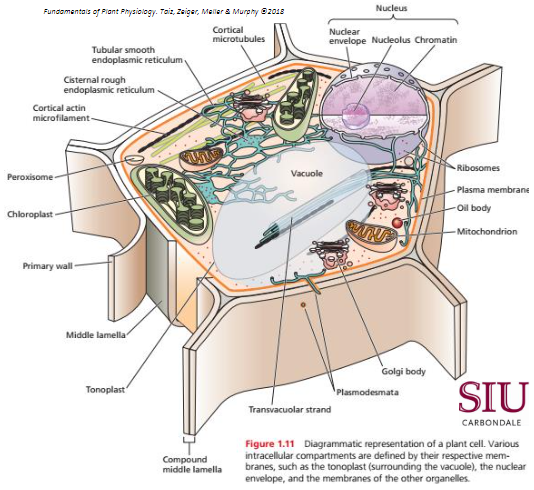
consists of cell wall and protoplast (all living components of a cell inside cell wall)
organelles contained in a fluid matrix
cytoplasm contained by rigid cell wall
organelles - subcellular parts that carry out different cell functions
Plant Cell Organelles
Cell Wall
Surrounds the protoplast
Non-living, not static (not fixed, will move)
Thin but mechanically very strong
Chemical and physical properties of cell wall regulate the rate and extent of cell growth
Functions:
Support of plant cell
Gives cell shape
Resists strong internal forces of osmotic pressure
Protects cell from mechanical damage
Acts as a barrier for pathogens (disease)
Accounts for plant shape and form
Two Types
Primary cell wall
Secondary cell wall
Primary Cell Wall - cellulosic structure
Relatively unspecialized, molecularly similar in all plants
Soft, flexible, and a single layer of cells
Composed of cellulose microfibrils embedded in a polysaccharide matrix
polysaccharide matrix - hemicelluloses, pectins, and a few structural proteins
Primary Cell Wall Components:
Cellulose microfibrils — stiff structure that contribute to the strength and structural integrity of the cell wall (has B-1->4 Glycosidic linkages that make up the 1->4 B-glucan chains & Cellulose (25% of cell wall) which is a polymer of glucose)
Hemicelluloses — flexible polysaccharides that bind the cellulose microfibrils into a cohesive network
Provide a slippery coating to prevent direct microfibril to microfibril contact
Types of hemicelluloses:
Xyloglucan
Polysaccaride backbone of 1->4 linked B-D-glucose residues like cellulose
Most abundant
Short side chains containing xylose, galactose, and sometimes terminal fucose
Xylans & Glucomannans
Other polysaccharides present during certain plant growth stages
Secondary cell wall contains less xyloglucan and more xylans and glucomannans
Pectins
Structural Protein