
Plant Biology and Diversity
457 resources created by 376 users
This Plant Biology and Diversity page on GoConqr gathers community-made quizzes, mind maps, flashcards and notes, from plant structure and photosynthesis to transport in plants, plant families and tree identification. It's built for school students revising a topic, university students and professional candidates filling gaps, and teachers after ready-made material. There are over 3,700 resources here, including more than 330 quizzes, over 1,800 mind maps and more than 1,200 flashcards, with a few for primary pupils too. Pick a topic, try a quiz to find your gaps, then make your own set.
Top Plant Biology and Diversity resources
-
200 questionsBio Exam 2 Part 1 Which of the following is a major trend in land plant evolution?
-
42 questionsBiol 115 Exam 3
-
31 cardsBiology 108 Lab - Lab 5 where do we think the first plants originated from?
-
Mind map Plants: Exchange and Transport
-
35 cardsLast Lab Practical swc's biology for plants
-
20 questionsCh. 21 & 26 Quiz Which eukaryotic kingdom includes members that are the result of endosymbioses that included an ancient pro...
-
19 cardsPhotosynthesis Plants make their own food by way of Photosynthesis. the process produces glucose. photosynthesis happens i...
-
Mind map Photosynthesis
Quizzes
See all 80 quizzes-
200 questionsBio Exam 2 Part 1 Which of the following is a major trend in land plant evolution?
-
42 questionsBiol 115 Exam 3
-
20 questionsCh. 21 & 26 Quiz Which eukaryotic kingdom includes members that are the result of endosymbioses that included an ancient pro...
-
20 questionsPlant Anatomy Quiz Name the four main parts of a plant
-
20 questionsG7 Plants Quiz Where does photosynthesis occur in a rose bush?
-
25 questionsDendrology trees mate What is the Latin name for the Wild Black Cherry, Whiskey Cherry
-
17 questionsG8 Unit 1 Plants Revision Quiz where is this cell is found in a flowering plant?
-
15 questionsIdentifying Plant Families What type of ovary does this flower have?
Mind maps
See all 156 mind maps-
Plants: Exchange and Transport
-
Photosynthesis
-
Section 3- Plant nutrition and Transport
-
9.1: Transport in the xylem of plants IB Biology 9.1 Mindmap
-
Plant Tissue Mind Map on Plant Tissue, created by Britz Garcia on 07/11/2017.
-
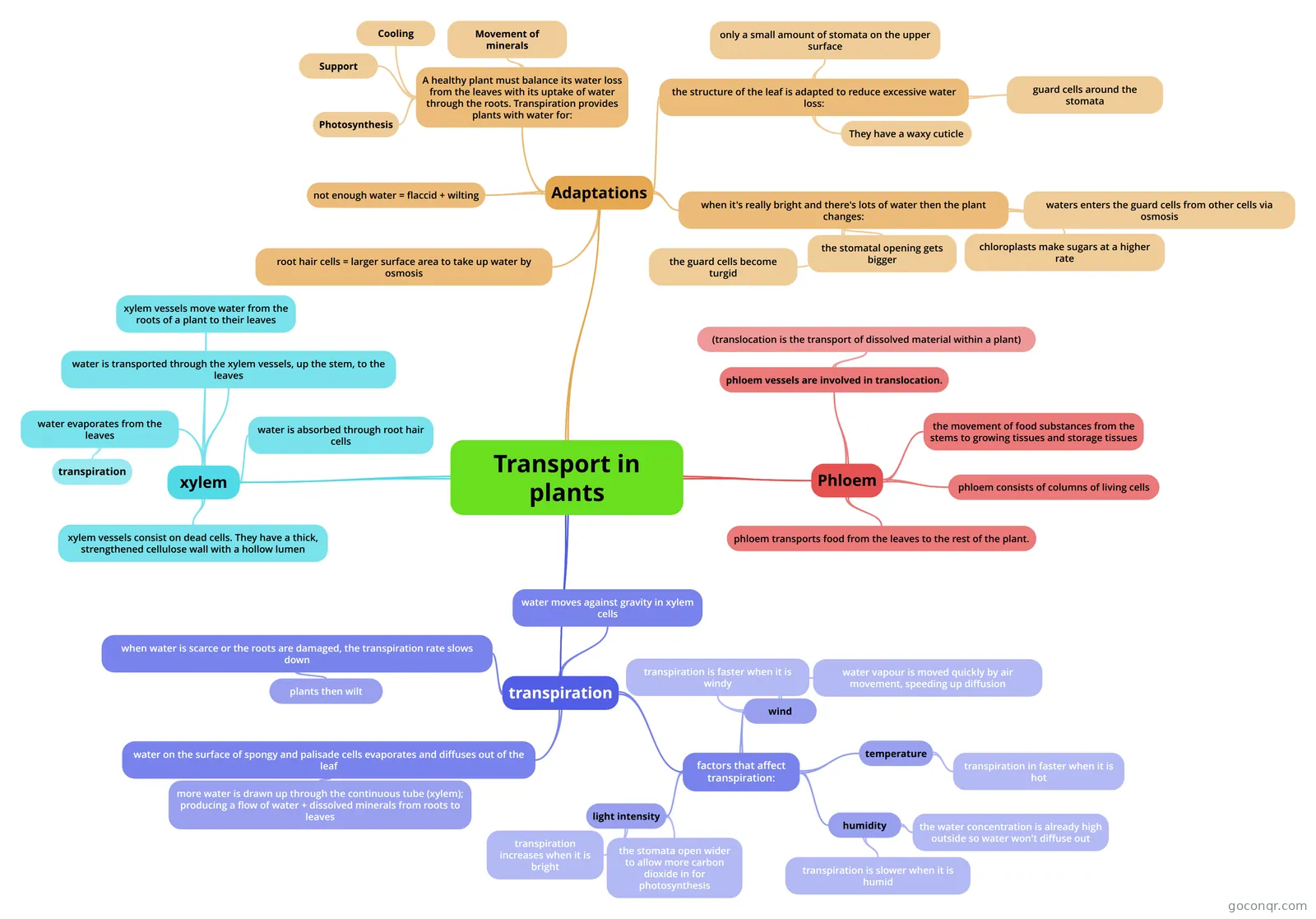 Transport in plants
-
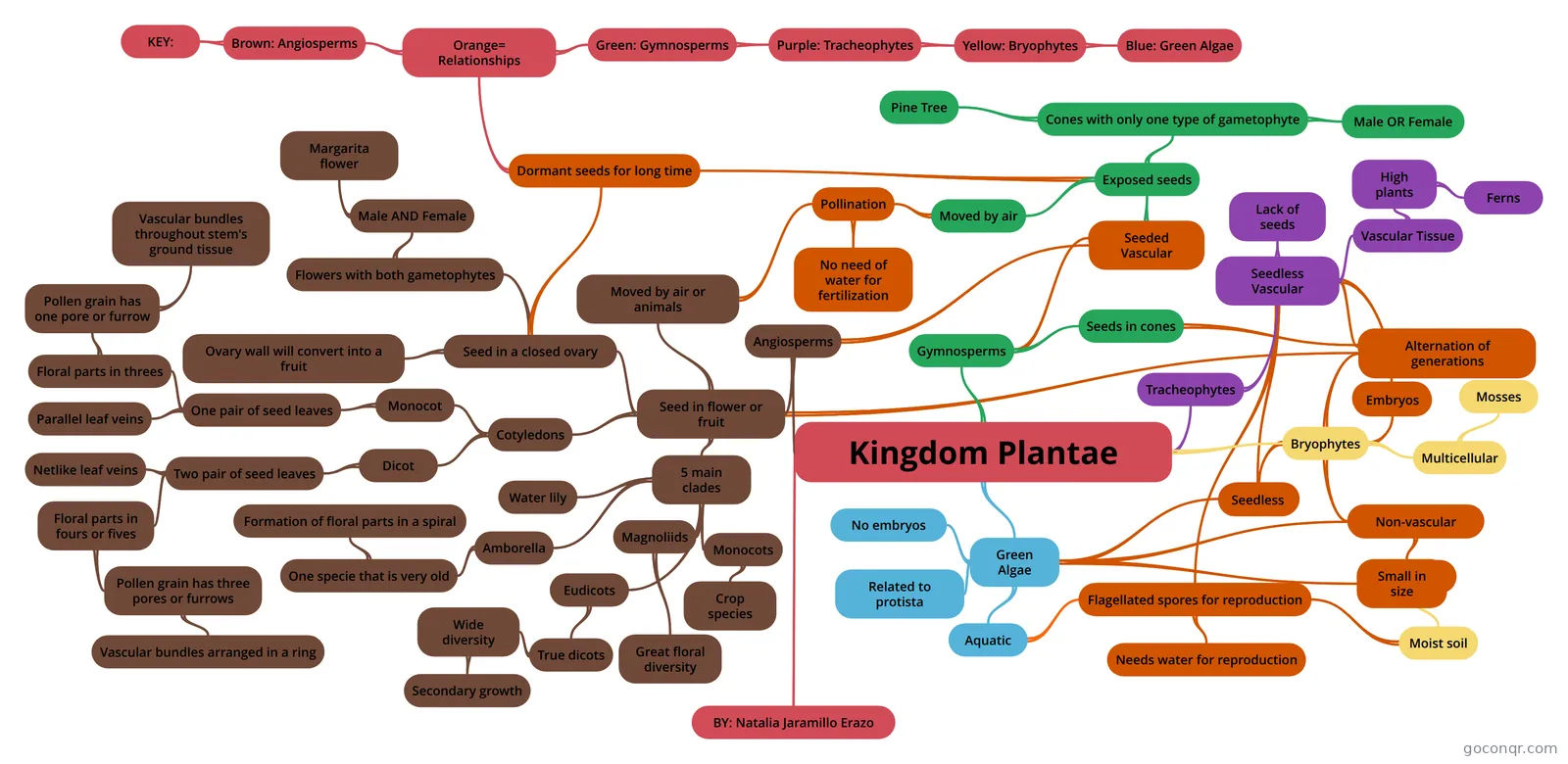 Kingdom Plantae Kingdom plantae and some basic traits of it.
-
Transpiration
Flashcards
See all 181 flashcards-
31 cardsBiology 108 Lab - Lab 5 where do we think the first plants originated from?
-
35 cardsLast Lab Practical swc's biology for plants
-
19 cardsPhotosynthesis Plants make their own food by way of Photosynthesis. the process produces glucose. photosynthesis happens i...
-
30 cardsPlant Anatomy What are the cell walls of plants made of?
-
20 cardsStructure of leaves How is a leaf structured?
-
21 cardsCHAPTER 16 - GERMINATION AND SEED STRUCTURE what is germination?
-
16 cardsBiology Module 14 test The parts of a plant (such as stems, roots and leaves) that are not involved in reproduction
-
11 cardsUnit #2 - Tissue, Stomata & Cots Organization & Movement to Land
Flowcharts
Notes
See all 31 notes-
Chapter 9: Transport in plants 9.1 Transport systems in dicotyledonous plants Dicotyledonous plants (dicots) make seeds that contain two cotyledons, organs that act as food stores for the developing embryo plant and form the first leaves when the s...
-
Plant Structure and Photosynthesis GROSS MORPHOLOGY OF A PLANT Flowers are the reproductive structures of plants. Their role is to attract pollinators, and to produce fruit and seeds Protect the seeds and may also help with their distribution. Animals ...
-
Unit 4: Plant Anatomy Basic Plant Cell Cell is smallest unit which exhibits life characteristics Features unique to plant cells are cell wall, chloroplasts, plasmodesmata, large central vacuole Cell wall surrounds cell on outside of the pl...
-
Plant Kingdom 1. Algae : - Chlorophyll-bearing - Simple - Thalloid - Autotrophic - Both fresh water and marine - Occur in other habitats: Moist stones Soils Woods - Occur in association with: Fungi (lichen) Animal...
-
Investigating plant mineral deficiencies Independent: Minerals present Dependent: Physical characteristics of plant Control: Volume mineral solution Species plant Size container Amount light received
-
Liliaceae Liliaceae( The Lily Family) monocot petals: 3 sepals: 3 (looks like petals) corolla: regular ovary: superior stamens: 6 leaves: simple with parallel veins fruit: capsule with 3 seed-bearing compartments Photos from go...
-
Scrophulariaceae Scrophulariaceae ( The Snapdragon Family) dicot corolla: irregular; bilaterally symmetrical petals: 5 that join in long tube sepals: 4-5 stamens: 5 with 1 extra long leaves: variable ovary: superior stigma: two lobes ...
-
Rosaceae Rosaceae( The Rose Family ) dicot regular corolla petals: 5 not joined together calyx with 5 sepals stamens: numerous ovary: both superior & inferior leaves: alternate, simple, or compound members: roses, strawberries...
Slides
More Biology and natural sciences topics
About Plant Biology and Diversity
GoConqr OriginalWhat this unit covers
The resources here follow the plant from its parts to its processes to its many kinds. You will find work on gross morphology, leaves, roots, flowers, seeds and germination, along with photosynthesis, gas exchange, plant nutrition, plant hormones and plant defences. Other resources look at the wider plant kingdom, including bryophytes, land plant evolution and flower families such as Rosaceae and Liliaceae.
Where to start
Begin with the notes on Plant Structure and Photosynthesis, which open with the gross morphology of a plant and explain what flowers are for. Then try the Plant Anatomy Quiz, which asks you to name the main parts of a plant and checks whether all plant cells have a cell wall. It is a quick way to see what you already know.
Transport in plants
This is a big theme on the page. The notes on Chapter 9, Transport in plants, run through transport systems in dicotyledonous plants, water transport, transpiration, translocation and adaptations to water availability. Pair them with the mind maps Transport in plants and Transpiration, which set out how xylem vessels carry water from the roots to the leaves and how phloem is made of columns of living cells.
Using quizzes and maps together
- Read a set of notes or open a mind map to get the outline.
- Take a quiz on the same topic, such as the Identifying Plant Families quiz on ovary types.
- Note what you missed and go back to the map.
- Use flashcards for key words, like the photosynthesis decks, until the terms feel familiar.
Identification and fieldwork
If you like practical botany, there are flashcards for houseplant identification and quizzes on leaves and trees, plus a foraging calendar quiz using Latin names. They suit lab work and field courses as well as revision. Choose one topic that matches your course and work through it at your own pace.
This unit sits in the Plant Biology strand of Biology and natural sciences, so it fits alongside your other biology revision.
Frequently asked questions
Which resource should I start with?
The notes on Plant Structure and Photosynthesis are a good first step, as they cover the gross morphology of a plant and the role of flowers. Follow them with the Plant Anatomy Quiz to check the basics, then move to the transport in plants material.
What do the mind maps cover?
The mind maps cover photosynthesis, gas exchange, transport in the xylem and phloem, transpiration, stomata, roots and shoots, plant defences, seed dispersal, flower families, bryophytes and the plant kingdom. Some are linked to GCSE AQA Additional Science, so they suit exam revision.
Are the resources free to use?
Yes. Every resource on this page is free to open, study and take, with no account needed. They were made by GoConqr users, not by GoConqr itself, so style and depth vary from one resource to the next.
Which levels and exams do they suit?
Most resources are aimed at secondary school students, with a good share for university students. The listed material mentions GCSE Biology, A-level Biology, IB Biology, IGCSE Biology, AP Biology and MCAT, so many topics will match your course.
Can I practise plant identification here?
Yes. There are flashcards for houseplant identification, tree identification by leaves and Minnesota trees, plus quizzes on leaf types, tree leaves and flower families. They suit students on botany or field courses who need to learn names and features.
What if I can't find my topic?
Try a nearby topic first, such as photosynthesis, plant structure or transport in plants, as many resources overlap. A free account lets you save quiz scores and make your own quizzes, mind maps, flashcards and notes for anything that is missing.