
Quiz
PHSI3012 11-2 Insulin Resistance (T3L4)
This quiz has question types that open in the usual player.
Questions in this quiz (16)
1Which of these effects are where?
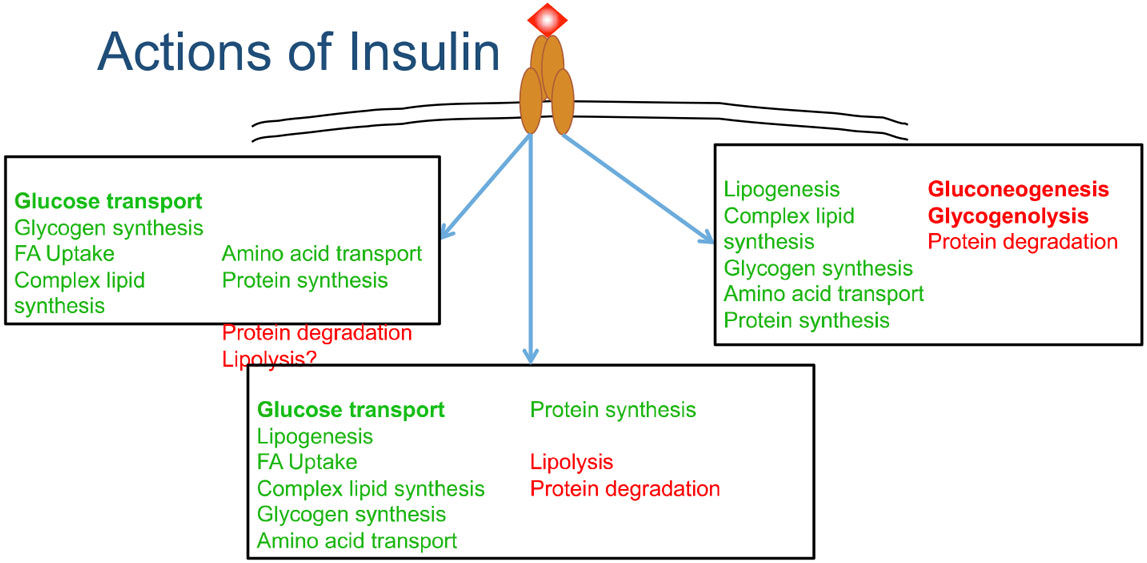
- ASkeletal Muscle
- BAdipose Tissue
- CLiver
2Actions of Insulin. Insulin stimulates and inhibits various things. Which are STIMULATED?
- AGlucose transport (muscle, adipose)
- BGlycogen synthesis (muscle, adipose, liver)
- CLipogenesis (adipose, liver)
- DFA transport (muscle, adipose)
- EComplex lipid synthesis (muscle, adipose, liver)
- FProtein synthesis (all tissues)
- GAmino acid transport (all tissues)
- HProtein degradation (all tissues)
- IGluconeogenesis & Glycogenolysis (liver)
- JLipolysis (adipose, muscle?)
3Actions of Insulin. Insulin stimulates and inhibits various things. Which are INHIBITED?
- AGlucose transport (muscle, adipose)
- BGlycogen synthesis (muscle, adipose, liver)
- CLipogenesis (adipose, liver)
- DFA transport (muscle, adipose)
- EComplex lipid synthesis (muscle, adipose, liver)
- FProtein synthesis (all tissues)
- GAmino acid transport (all tissues)
- HProtein degradation (all tissues)
- IGluconeogenesis & Glycogenolysis (liver)
- JLipolysis (adipose, muscle?)
4Definition of Insulin Resistance. There are three of them. Which is which?
“The inability of a known quantity of exogenous or endogenous insulin to increase glucose uptake and utilisation in an individual as much as it does in a normal population.” = the [blank_start]__________[blank_end] definition.
“The inability of exogenous insulin to alter post-translational modifications (e.g. phosphorylation) of specific proteins in tissue or cells.” = the [blank_start]__________[blank_end] definition.
“The inability of exogenous or endogenous insulin to increase glucose uptake in tissues or cultured cells.” = the [blank_start]__________[blank_end] definition.- AClinical
- B“Sometimes”
- CExperimental
5Loss of function of IR in skeletal muscle results in which of the following:
- AReduced Skeletal Muscle glucose uptake
- BWhole-body glucose intolerance and insulin resistance
6Insulin resistance results from a fuck-up in which of the following:
- AInsulin Receptor
- BInsulin Transporter
7Loss of function of Glut4 in Skeletal Muscle results in which of the following:
- AReduced Skeletal Muscle glucose uptake
- BWhole-body glucose intolerance and insulin resistance
8Knockout of the Insulin Receptor in ADIPOSE TISSUE is known as which of the following:
- AMIRKO
- BFIRKO
- CLIRKO
- DAIRKO
9True or false: FIRKO results in INCREASED insulin sensitivity in adipose tissue.
- ATrue
- BFalse
10True or false: FIRKO results in DECREASED insulin sensitivity in adipose tissue.
- ATrue
- BFalse
11True or false: Knockout of the Insulin Receptor in adipose tissue results in an INCREASE of weight! True? True.
- ATrue
- BFalse
12Loss of function of Glut4 in ADIPOSE TISSUE results in which of the following:
- AReduced adipocyte glucose uptake
- BReduced insulin suppression of HGP
- CIncreased insulin suppression of HGP
- DWhole-body glucose intolerance and insulin resistance
13LIRKO results in which of the following:
- ALoss of insulin suppression of HGP
- BWhole-body glucose intolerance and insulin resistance
14HGP = ??
- AHepatic Glucose Production
- BHypoGonadotroPin
- CHaematic Glucose Production
15“The” Mechanism(s). “The” mechanism of insulin resistance is which of the following:
- AReduced Insulin Receptor (IR) levels
- BReduced Glut4 levels
- CInappropriate translocation of Glut4 to the plasma membrane
- DInappropriate translocation of IR to the plasma membrane
16Insulin resistance is caused by many factors including:
- AEctopic lipid deposition
- BInflammation
- CMitochondrial oxidative stress
Information
- Description
- PHSI3012 11-2 Insulin Resistance (T3L4)
- Author
- Deleted user
- Language
- English
- Views
- 31
- History
- Created on 24 Nov 2017 · updated on 24 Nov 2017
- Tags
- Rating
- No ratings yet Rate this quiz