
PHOTOSYNTHESIS
Slides in this set (4)
-
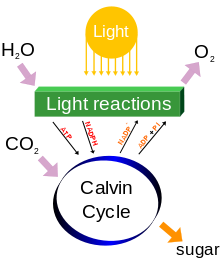
- Photosynthesis is a process used by plants and other organisms to convert light energy, normally from the Sun, into chemical energy that can be later released to fuel the organisms' activities. This chemical energy is stored in carbohydrate molecules, such as sugars, which are synthesized from carbon dioxide and water – hence the name photosynthesis, from the Greek φῶς, phōs, "light", and σύνθεσις,synthesis, "putting together". In most cases, oxygen is also released as a waste product. Most plants, most algae, and cyanobacteriaperform photosynthesis; such organisms are called photoautotrophs.
- https://www.youtube.com/watch?v=joZ1EsA5_NY (Embed)
- Caption: photosynthesis
-
- Overview
- Photosynthetic membranes and organelles
-
- Photosynthetic organisms are photoautotrophs, which means that they are able to synthesize food directly from carbon dioxide and water using energy from light. However, not all organisms that use light as a source of energy carry out photosynthesis, since photoheterotrophsuse organic compounds, rather than carbon dioxide, as a source of carbon.
Information
- Description
- Slide Set on PHOTOSYNTHESIS, created by reena mishra on 02/08/2015.
- Created by
- reena mishra · Aug 2015
- Updated
- Apr 5, 2016
- Views
- 57
- Tags
- Rating