
Notes
The DevOps handbook - creado desde un Mapa Mental
Content of the notes (1)
Page 1
technical debt
DEV
Posibles elementos a incluir desde Desarrollo para evitar el downward spiral
DevOps Movement
Dev and Ops goals
Dev: respond to changes in market
Ops: provide stable and secure service
The Corre chronic conflict
The downward spiral
every company is a technology company
3 Acts
Act 1: Tech Debt + Ethernal Promise to fix + sys more prone to failure are the most important
Act 2: Compensate broken promise with not planned/analysed new promises (+ tech debt)
Act 3: Everything becomes more difficult/slower and tightly coupled. getting worse until we lose in the marketplace
Costs: Learned helplessness + burnout And Lost in value creation
Small development teams
Lower stress and higher satisfaction
frequent deployments even during the day
Long term
Peer reviews
Dark Launches
No culture of fear
Value streams
The sequence of activities required to design, produce, and deliver a good or service to a customer, including the dual flows of information and material.
Tech VS. The process required to convert a business hypothesis into a Technology-enabled service that delivers value to the customer
The Three Ways
convergence of DevOps
Metrics
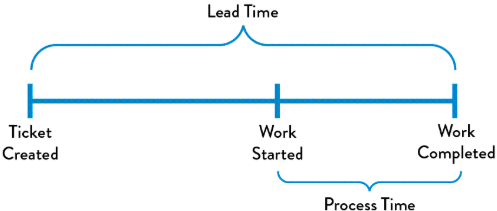
Deployment Lead Time
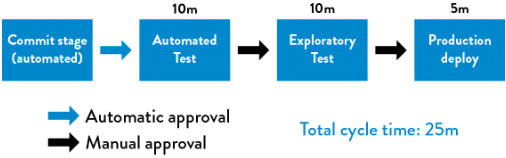
From Check In to Version Control to running in production, includes testing and operation. More predictable and Mechanic. The one we should focus on
Process Time
Process time starts when someone begins working on the request
% C/A
Percent Complete and Accurate. It reflects the quality of output of each step in our value stream
Total Lead Time
Lead time starts when the request is made and ends when it's fulfilled (what the user experiences)
Flow
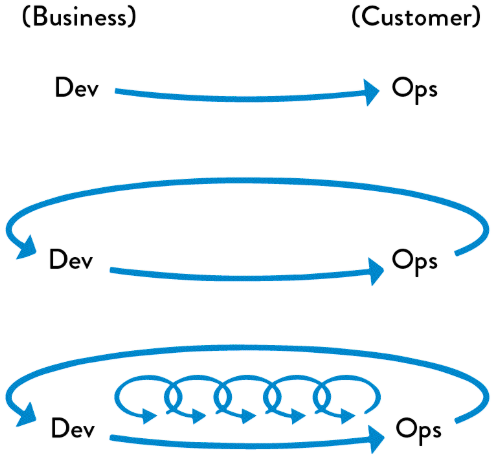
Fast Flow of work from development to operations to the customer (deliver value quickly)
Goal: Reduce Lead Time
Feedback
Enable Fast & constant flow of feedback from ops to dev at all stages of the value stream
Continual Learning and Experimentation
Enables the creation of a generative, high trust culture that supports a dynamic, discipined & scientific approach to experimentation and risk-taking, facilitating the creation of organizational learning
Continuous Build, integration, test & deployment
Environments on demand
Limit WIP
Reduce negative impact of multitasking
Make Our Work Visible
To see where work is flowing well and where work is queued or stalled
Reduce Batch Sizes
Large batch sizes -> skyrocketing levels of WIP and variability in flow
Small batch sizes -> less WIP, faster lead times, faster error detection, less rework
Reduce # of Handoffs
Limit # cards on columns
Visual work boards
Continuous deployment
Automate portions of work
Reorganize teams
Reorganize teams so they can deliver value without dependencies
Continually shorten & amplify feedback loops
Theory of Constraints
Toyota Kata Movement
continuous delivery
Lean
Agile
Infraestructure as a code
Lean Principles
Information
- Description
- Mapa de libro "The DevOps handbook"
- Created by
- Víctor Garrido · Nov 2021
- Updated
- Nov 4, 2021
- Views
- 1
- History
-
- Created by Víctor Garrido · Nov 4, 2021
- Copied to Note by Víctor Garrido · Nov 4, 2021
- Rating