
Schenck vs. U.S.
Slides in this set (11)
-
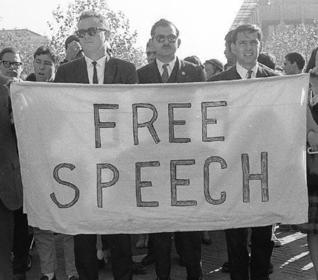
- Charles Schenck mailed flyers to draftees during
-
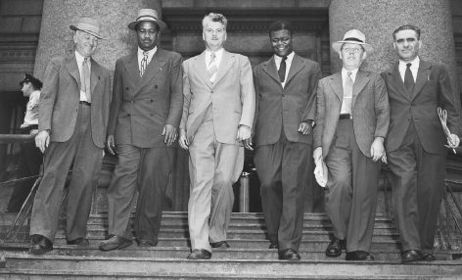
- Charles Schenck mailed flyers to draftees in WWI. The flyers suggested that the draft was outrageous and motivated by a capitalist system. The flyers states "Do not submit to intimidation" but advised peaceful action, such as petition. Schenck was charged with conspiracy to violate the Espionage Act by attempting to cause insubordination in the military and to obstruct recruitment.
-
Who was involved in the Schenck v US case
- Charles Schenck
- The U.S. Government
- The U.S. Supreme Court
- Many WWI draftees
-
- Charles Schenck felt that he should be able to mail the flyers without the government getting involved because of his first amendment right to freedom of speech.
-
- Charles Schenck was mailing flyers stating that young men should avoid being drafted to the war. Is what Schenck was doing constitutional or not.
-
- With a unanimous vote, the Supreme Court supported the conviction of Charles Schenck and stated that it did not violate his first amendment right to freedom of speech.
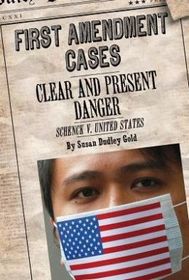
-
- There was a unanimous vote that supported Charles Schenck's conviction and stated that it didn't violate his first amendment rights.
- Justice Oliver Wendell Holmes spoke for the Supreme Court:
- "The character of every act depends on the circumstances. "The question in every case is whether the words used are used in such circumstances and are of such a nature as to create a clear and present danger that they will bring about the substantive evils that Congress has a right to prevent." During wartime, utterances tolerable in peacetime can be punished."
- https://www.oyez.org/cases/1900-1940/249us47
-
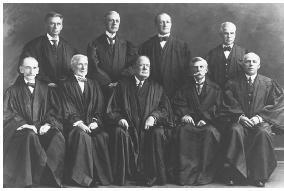
- There was no dissenting or concurring opinion in this case. It was a unanimous vote and all 9 of the Justices voted for the same reasons.
-
- I believe this case was a "landmark" because it laid out some restrictions on what can and can't be said during wartime, especially if what is being said goes against the U.S. and causes a disruptence in the War and the effort for the War.
-
Information
- Description
- The Schenck vs. U.S. Supreme Court case
- Created by
- celandreth · Mar 2016
- Updated
- Jan 5, 2017
- Views
- 867
- Tags
- Rating