
Notes
Electromagnetic Radiation
Content of the notes (1)
Page 1
Electromagnetic radiation comes in the form of a transverse wave, and so requires no particles to transfer energy. This means EM radiation can move across a vacuum.
All electromagnetic radiation consists of an oscillating electric field and magnetic field on different planes. Both travel in the direction of the wave's motion, or direction of energy transferred, but are perpendicular to each other.
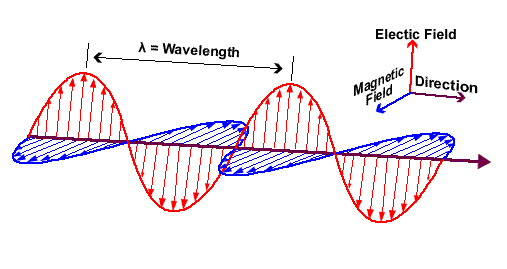
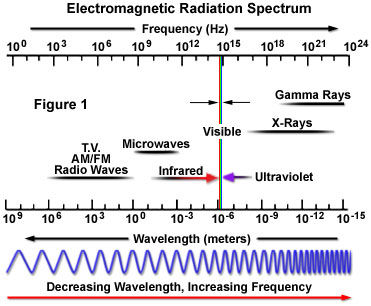
The electromagnetic spectrum presents all known wavelengths and frequencies of electromagnetic radiation. The categories are continuous, there aren't really set bounds of different types of waves. All electromagnetic waves travel at the speed of light in whatever medium they are in. Referring to the wave equation:
wave speed = frequency x wavelength
We can assume that if the speed remains constant, frequency and wavelength are inversely proportionate, which is why they change at the same ra
Information
- Description
- GCSE Physics Note on Electromagnetic Radiation, created by Jack Harrison on 04/10/2016.
- Created by
- Jack Harrison · Oct 2016
- Updated
- Oct 5, 2016
- Views
- 0
- Rating