
Respiration
Slides in this set (6)
-
- The body needs a constant supply of energy which comes from digested food. Glucose from digested carbs is an important substance that contains stored chemical energy. When glucose reacts with oxygen a lot of energy is released.
- In the body's cells glucose and oxygen reacts to release energy. Some of this is released heat and the rest is used by the cells.
- Glucose + Oxygen » Carbon Dioxide + Water Energy The type of respiration is
- from the from the waste product (exhaled) waste product called aerobic
- digestive breathing (exhaled) respiration
- system system because energy
- release is in the presence of oxygen
-
Blood vessels and Circulatory System
- Oxygen is carried by the red blood cells. Glucose is dissolved in the blood plasma (the liquid part of the blood). Plasma leaks out of capillaries and forms tissue fluid which bathes the cells. Oxygen and glucose leads the capillaries through tissue fluid.
-
-
Effects of exercise on pulse rate
- The body needs to release more energy so oxygen and glucose need to reach muscle cells quickly: so blood is pumped around the body faster so the pulse is faster. The body needs to release less energy, so oxygen and glucose need to reach muscle cells slowly so blood is pumped around the body more slowly so the pulse is slower.
-
Aerobic and anaerobic excercise
- Aerobic Respiration: Glucose + oxygen » carbon dioxide + water small amount
- Anaerobic Respiration : Glucose + lactic acid Large amount of energy release
- With anaerobic exercise oxygen is carried through your breath to the muscles, giving them the energy needed to sustain the effort however oxygen is not present with anaerobic exercise. This has very high intensity. E.g. sprinting and weight lifting. C₆H₁₂O₆ » 2C₃H₆O₃
- Aerobic excercise burns fat, improves mood, strengthens the heart and lungs and reduces your risk of diabetes. In aerobic exercise calories are burned more efficiently in bodies that have more muscle and so is helpful for weight loss. This included running at a comfortable running pace - you should be able to talk without breathing too hard, swimming and biking. C₆H₁₂O₆ +6O₂ » 6CO₂ + 6H₂O
-
The breathing system and gas exchange
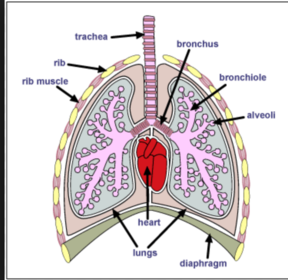
- Caption: The Lungs
- Breathing is when muscles change the volume of chest. Ventilation is the movement of air in and out of lungs. Lungs collect oxygen from the air and delivers Co₂ to the air and so lungs need a large moist surface area for exchange of gases to take place; a good blood supply and circulatory system to move things around the body; ways to prevent the surfaces being clogged up with dust from the air. Alveoli are very good at exchanging gases because they have walls one cel thick; they give lungs a large surface area, they are surrounded by lots of capillaries. Mucus traps dust and microbes. Cilia (tinyh= hairs) sweep mucus out of bronchi and trachea. Chemicals and heat from smoking stop cilia from working. Then mucas collects and reduces surface area for gas change. Smoking can also cause alveoli to breakdown.
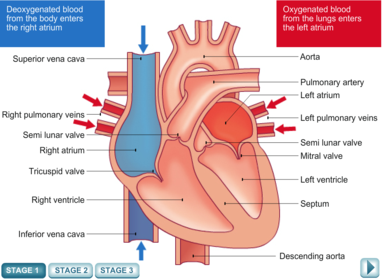
Information
- Description
- Year 8 KS3 Biology
- Created by
- Sarita Saha · Jan 2017
- Updated
- Apr 6, 2018
- Views
- 431
- Tags
- Rating