
Notes
10. Organic Chemistry
Content of the notes (9)
Page 1
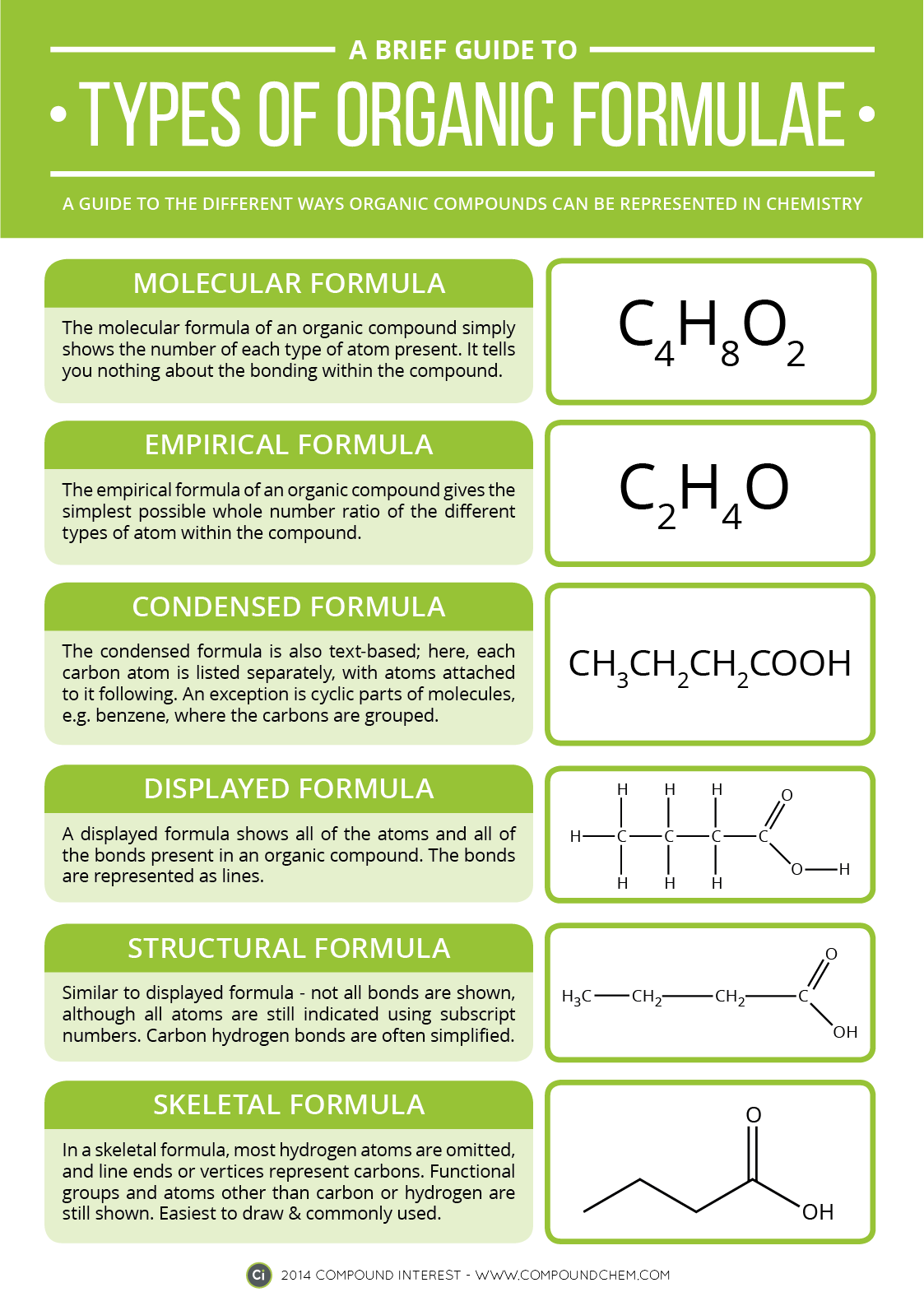
Fundamentals of Organic Chemistry
Naming Organic Compounds
1. Prefix: longest continuous carbon chain
1: meth-
2: eth-
3: prop-
4: but-
5: pent-
6: hex-
7: hept-
8: oct-
2. Identify type of bonds
Single: alkane
Double: alkene
Triple: alkyne
3. Suffix: Identify present functional groups
none: -e
-OH (hydroxyl): -ol
-NH2 (amine): amino-
-X (halogen): chloro-, bromo- or iodo-
(aldehyde): -al
(ketone): -one
(carboxyl): -oic acid
(ester): -oate
When there are multiple groups present,
arrange them in alphabetical order prior to the
root name.
4. Identify the side chains
Methyl group (1 carbon)
Ethyl group (2 carbons)
...
5. Use numbers and prefixes to indicate the number and location
of double/triple bonds or functional groups
→ Number is indicated by a prefix:
(mono-), di-, tri-, tetra-, penta-, hexa-
→Location is indicated with a number, and multiple numbers are
separated by a comma
eg. 2,2-dimethyl-propane
!! Always use lowest number possible (eg. 2 instead of 4 in
2-methyl-pentane)
Homologous series
Alkanes
→ general formula: C(n)H(2n+2)
Alkyl radicals R- are alkanes with one of the hydrogens removed
→ have a -1 charge
Homologous series have the same general formula with the
neighbouring members of the series differing by CH2
Primary, Secondary and Tertiary
Primary
→ Functional group is bonded to a carbon that is bonded to
only one other carbon (R group)
Secondary
→ Functional group is bonded to a carbon that is bonded to
two other carbons (R groups)
Tertiary
→ Functional group is bonded to a carbon that is bonded to
three other carbons (R groups)
Class of organic compound
Different compounds that contain the same functional group are
divided into classes.
→ Alcohols
→ Esters
→ Aldehydes
→ Ketones
etc.
Page 2
Alkanes
Properties of Alkanes
General formula
C(n)H(2n+2)
Low reactivity
→ Strong and stable C-C and H-C bonds, low polarity
→ Exceptions; undergo combustion and substitution reactions with
halogens under UV light
Combust fully to give carbon dioxide and water
→ Reaction is very exothermic; make good fuels
Even though chain alkanes are more common, they occur in ring structures
called cycloalkanes
Alkanes are fully saturated with hydrogens, contrary to alkenes and alkynes
!Boiling point increases as carbon chain length increases
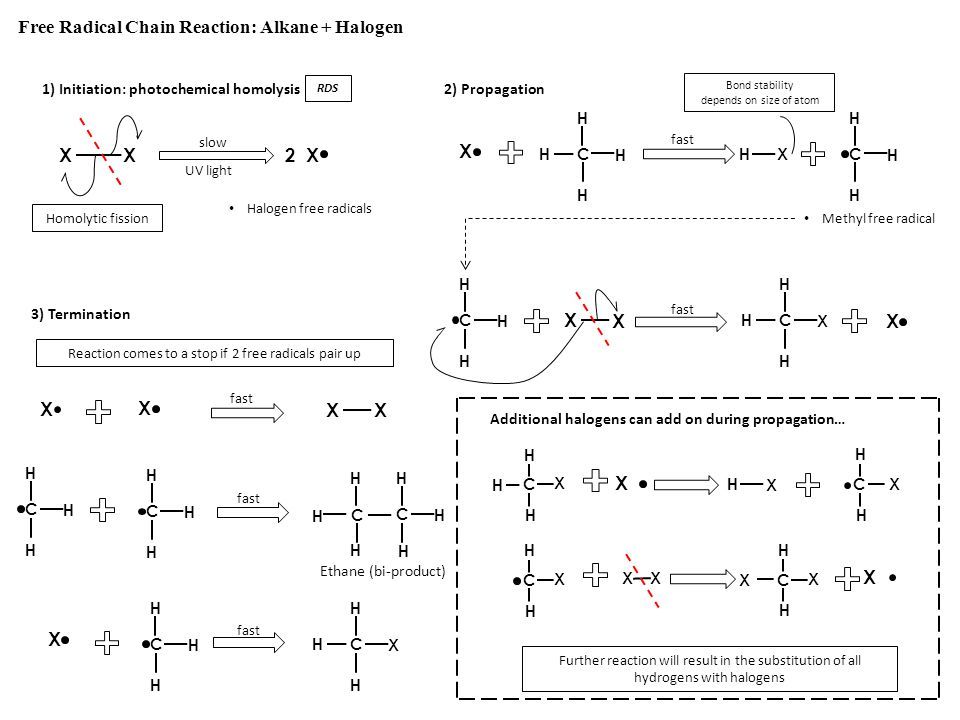
Free Radical Substitution
Alkanes react with chlorine or other halogens in the presence
of UV light to form hydrogen chloride and a substituted alkane
→ Bromine is only halogen that does not need UV light to initiate reaction
Reaction mechanism; photochemical homolytic fission
→ heterolytic fission: both shared e go to one of the atoms
→ homolytic fission: each bonded atom retains one e; creation
of 2 free radicals (under influence of UV)
→ Mechanism steps:
1. Initiation; homolytic fission of halogen
2. Propagation; free radical halogen reacts with alkane
(eg. methane) to produce HX and a free radical methyl group
3. Termination; two free radicals react together (eg. radical methyl
and radical chlorine)
Halogenalkanes
→ more reactive than alkanes; can undergo nucleophilic substitution reactions
Page 3
Alkenes and Alkynes
Properties of Alkenes
Second homologous series of hydrocarbons
General formula: CnH2n
Contain at least one C=C bond
→ (sigma + pi bond)
→ sp2 hybridization
More reactive than alkanes
→ Undergo addition reactions
→ Unsaturated hydrocarbons
Can be distinguished from alkanes using bromine water,
or a halogen gas, which will decolourize in the presence of alkenes
Physical properties
→ non-polar or weak polar
→ no hydrogen bonding
→ Relatively low mp/bp ~alkanes
(Double bonds disrupt London forces)
→ Water insoluble
Properties of Alkynes
Third homologous series of hydrocarbons
General formula: CnH2n-2
Contain at least one triple carbon to carbon bond
→ sigma + 2 pi bonds
→ sp2 hybridization
Unsaturated hydrocarbons
→ reactive like alkenes (can also perform addition
reactions
Physical properties
→ Water insoluble
→ Non-polar or weak polar
→ Aroudnd the same boiling point of alkenes with
the same carbon chain lenght
Page 4
Alcohols
Alcohols are organic compounds that contain a hydroxyl group (-OH)
→ Compound names have the ending -ol
→ OH group is often isolated in molecular formula
Combustion
→ Combust completely to give carbon dioxide and water
→ Give out little pollution and doesn't contain sulphur
→ Obtainable from renewable sources
Oxidizing agents
→ Acidified potassium dichromate, K2Cr2O7
→ Potassium permanganate, K2Mn2O7
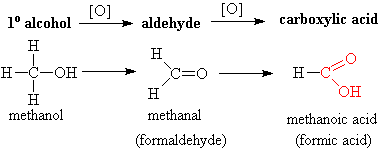
Primary Alcohols Oxidation
In primary alcohols, hydroxyl group is often found at the end of the chain
→ methanol (wood alcohol), ethanol (alcohol in wine)
→ oxidation products have lower boiling point than reactants; no hydrogen
bonding
1: Aldehyde
→ eg. methanal (formaldehyde)
→ Have a group with carbon with double bond to O and one bond to a H
→ To obtain aldehydes, it can be distilled from the reaction mixture as
soon as it is formed.
→ Polar molecules - dipole-dipole interaction
2: Carboxylic acid
→ eg. methanoic acid (formic acid), ethanoic acid (vinegar)
→ Have a C with double bond to O and OH (carboxyl group)
Secondary Alcohols Oxidation
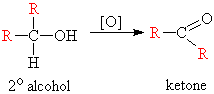
1st oxidation: Ketone
→ eg. propanone
→ have a C double bonded to an O in the middle of the chain
→ Polar molecules - dipole-dipole interactions
! Ketones cannot undergo further oxidation
Tertiary Alcohols Oxidation
Any further oxidation unlikely with oxidizing agent, except for combustion
Hydroxyl substitution reactions
Alcohols can be made using a halogenalkane and -OH group
→ Halogen will be substituted by the hydroxyl group
eg. BrC2H7 + NaOH → C2H7OH + NaBr
Esters
An alcohol and an organic acid will react to an ester in a condensation reaction
→ Performed in water bath + concentrated sulfuric acid catalyst
→ Esters are compounds that often give a certain smell or taste
→ Polar molecules
Page 5
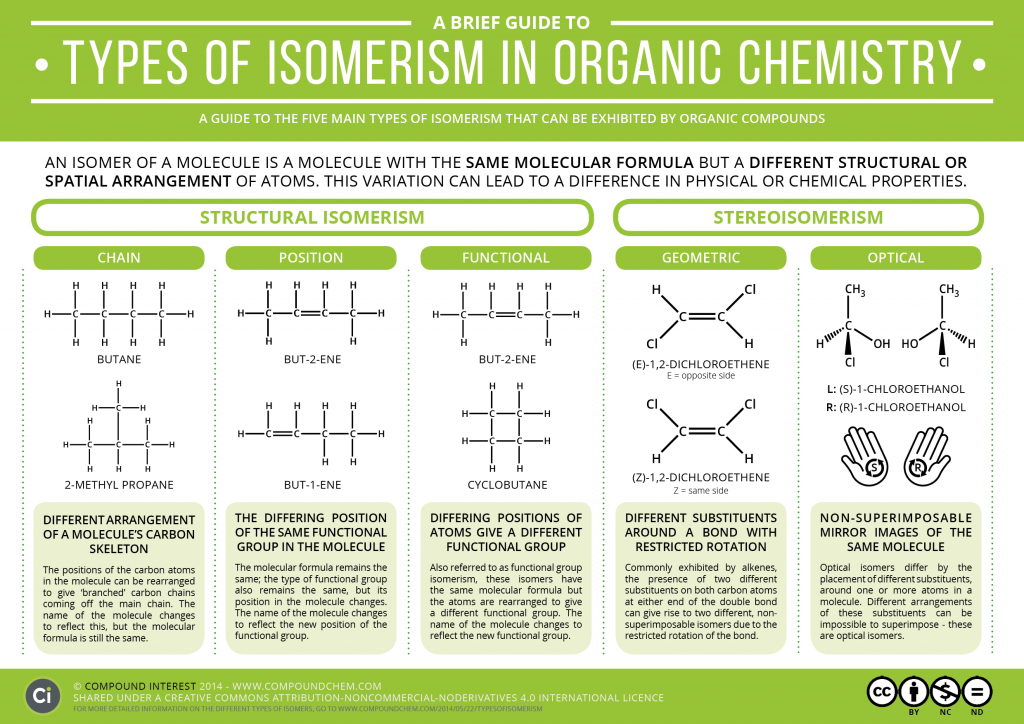
Structural isomers and Stereoisomerism
Structural isomers
→ Compounds with the same molecular formula but a
different structural formula
→ Similar chemical properties but possibly different
physical properties.
! The longer the carbon chain; the more structural isomers possible
Stereoisomerism
Cis-trans isomerism
→ Specific case of E/Z isomerism
→ Occur when rotation around bond is restricted or prevented
(eg. double/triple C-C bonds, pi-bond) when R1 and R2 are found
on either side of the double bond
→ Cis: both R groups on same side of double bond
(up-up / down-down)
→ Trans: R groups on opposite sides of double bond
(up-down / down-up)
→ Can also occur in cycloalkanes
E/Z isomerism
→ Occurs in every case where where free rotation around a C=C bond is restricted, could have 4 different R groups
→ Cahn-Ingold-Prelog (CIP) rules for determining the priority of the
atoms/groups attached to the two carbons
→ Z: both highest priority groups on same side (like cis, zusammen)
E: higher priorities lie on opposite sides (like trans, entgegen)
Physical and chemical properties of geometric stereoisomers
→ Same chemical but different physical properties, eg. boiling point
Optical Isomerism
→ All compounds that contain at leas one asymmetric or chiral carbon
within the molecule; contains 4 different atoms or groups.
→ This carbon is known as the stereocentre
→ Multiple stereocentres; multiple stereoisomers possible
Enantiomers: mirror images
Diastereomers: not mirror images
Enantiomers can rotate the plane of plane-polarized light
→ One turns it to the left, the other to the right
→ If a substance containes only the same enantiomers, the
substance will be optically active
- can be detected by a polarimeter
Page 6
Polymerization
Polymer
→ a long chain molecule produced by repeated chemical linkage (i.e. polymerization)
of many small molecules (monomers)
There are two types of polymers;
1. Addition polymers
→ formed by addition reaction of alkenes
2. Condensation polymers
→ formed by condensation reaction
Addition Polymers
Addition reaction
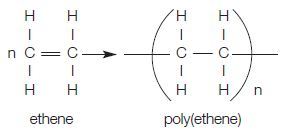
→ weak pi bond of alkene (C=C) monomer 'opens' allowing many (n)
C-C units to form long chains
→ Occur with catalyst + high pressure and temperature
Peroxides (free radical mechanism) or Zeigler catalyst (carbocation mechanism)
→ Most plastics are addition polymers, but little to no biological systems know how
to break down these polymers
Addition polymer properties
→ Alkane-like
→ Nonreactive (except in combustion)
→ Non-biodegradable: cause pollution and environmental harm
Condensation Polymers
Condensation reaction
→ Elimination of simple molecules (H2O, HCl)
→ Conditions: catalyst + water bath
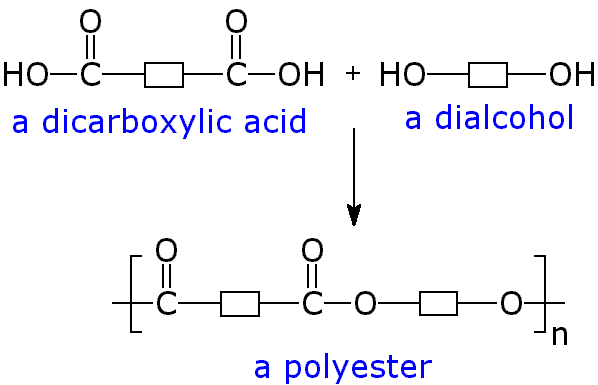
dicarboxylic acid + diol → polyester + H2O
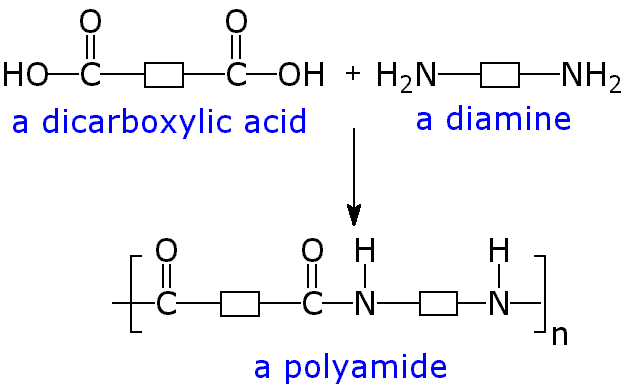
diacylchloride + diamine → polyamine + HCl
Condensation polymers
→ 2 functional groups needed per monomer; one at
each end of a chain structure
Polyesters
→ Form very long chains; fibres used for clothing
→ n Diol + n dicarboxylic acid → [polyester]n + (n-1) H2O
Polyamides
→ condensation reaction: n dicarboxylic acid +
n diamine → [polyamide]n + (n-1) H2O
→ form long-chain fibres used for clothing
Note: ester + amide bonds are hydrolysable
→ more biodegradable than addition polymers
ie. polyester + (n-1) H2O → n diacid + n diol
→ Will degrade in nature but release organic
residues into environment
Condensation polymer examples
Poly(lactic acid), PLA
→ Made from a single monomer, lactic acid
→ Renewable resource; can be obtained through
fermentation of starch or sugar, biodegradable
→ Can undergo repeated condensation reaction
with itself
KEVLAR
→ Used for bulletproof vests
→ a polyamide (aramid) with low density and very
high tensile strength; used for body armour, sports
equipment, brake linings, ropes
Page 7
Nucleophilic Substitution Reactions
Key pattern → one bond breaks at C, other bond forms at C
In nucleophilic substitution reactions, there are 2 types:
Sn1 → waits for the other atom to leave
Sn2 → attacks and kicks off other atom
Nucleophile
→ Groups with electron-rich atoms able to donate a pair of
electrons (lewis bases)
→ Ion/molecule which is strongly attracted to a region of
positive charge. They are fully negative or have a strong
negative charge somewhere.
→ Examples:
-OH hydroxides
-CN cyanides
H2O water (weak)
NH3 ammonia (weak)
HBr halogenacids
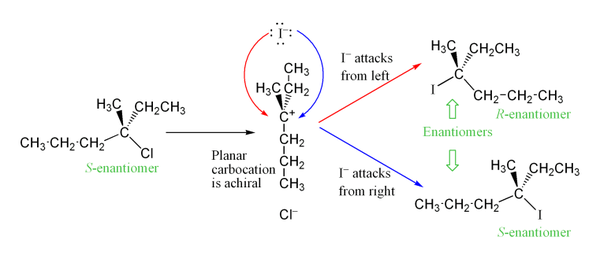
Sn1 Reactions
In Sn1, the nucleophile 'waits' for the bonded halogen group to
leave before reacting with the remaining carbocation
→ 2 step reaction:
1. Leaving of halogen - slow
2. nucleophile bonding with carbocation - fast
→ Can happen from both sides; 2 optical isomers formed
Product is not optically active
Sn2 Reactions
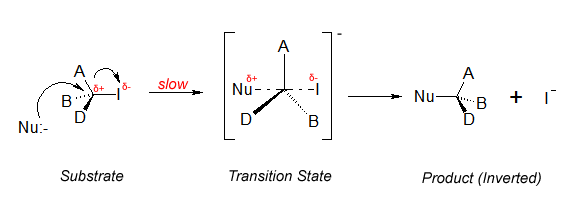
In Sn2 reactions, the nucleophile 'attacks' from the opposite side of the
molecule and forces halogen group to leave
→ Only 1 optical isomer is formed; product is optically active
enantiomer is inverse of reactant
→ X leaves at the same time as the nucleophile bonds; 1 step reaction
with transition state
Factors affecting Sn1 or Sn2
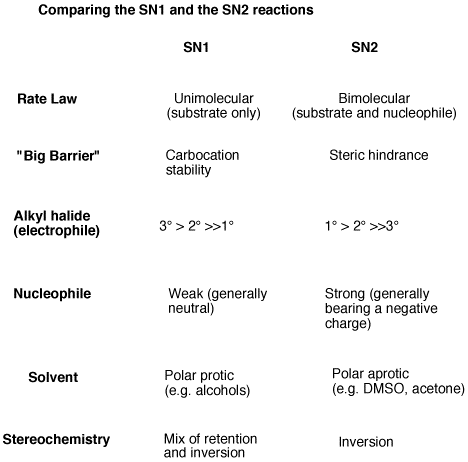
The 'Big Barrier'
→ key factor that prevents the reaction from happening
Sn1: carbocation stability increases as there are more
bonds on the central carbon
3 > 2 >> 1
Sn2: steric hindrance
Nucleophile has to attack from opposite side
1 > 2 >> 3
Solvent characteristics
→ Sovents can be nonpolar, polar protic or polar aprotic
polar protic solvents: contain an -OH group, which makes
them effective in stabilizing the carbocation
> Sn1 is favoured, Sn2 disfavoured
Nucleophile type
→ Weak nucleophile: Sn1
→ Strong nucleophile: Sn2
Rate law
→ Sn1 is a 2 step reaction where the first step is the slow step;
Rate law depends on substrate only
→ Sn2 is a single step reaction
Rate law depends on both substrate and nucleophile
Page 8
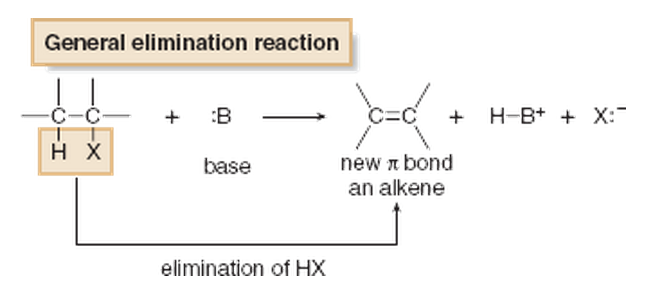
Elimination reactions
Key pattern → substrate with a base forms an alkene + conjugate
acid + leaving group
Factors affecting elimination or substitution
Temperature
→ At lower temperatures, nucleophilic substitution occurs
→ At higher temperatures, elimination will occur
→ Often a combination between these two, but the higher
T, the more elimination products
Explanation:
Substitution forms 2 products while elimination forms 3
products → greater increase in entropy
We have that
G = H - TS
At higher temperatures, Gibbs Free energy is more negative
for elimination reactions than substitution
Page 9
Electrophilic Addition and Substitution Reactions
Electrophilic Addition
Key pattern → a pi bond is broken
Electrophile
→ attracted to a region of high electron density
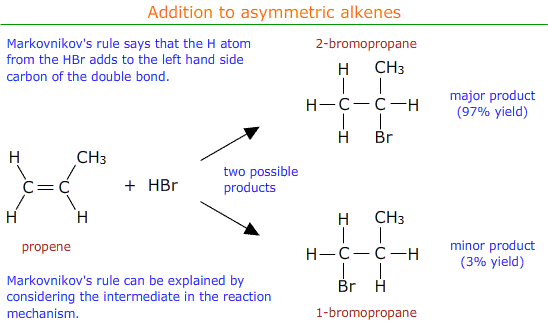
Addition to asymmetrical alkenes
In theory, two isomers could be produced in an
addition to an asymmetrical alkene. However,
there is often one that is much more favoured.
Markovnikov's observation
→ There is a preference for secondary halogenated
alkanes
→ The hydrogen goes to the C with the most hydrogens
bonded to it
Markovnikov's rule
'In an addition reaction of a protic acid HX to an alkene
or an alkyne, the hydrogen atom becomes bonded to
the carbon that had the greatest number of hydrogens
Explanation:
Stability of carbocation when pi-bond breaks:
3 > 2 >> 1
Akyll groups tend to push electrons towards the carbon
atom they are bonded to: stabilizes charge on
carbocation
Electrophilic Substitution
Benzene is the simpelest aromatic hydrocarbon compound (arene)
and has a delocalized structure of pi-bonds around its ring
> each C-C bond has order of 1.5
> Susceptible to attack by electrophiles
> Does not readily undergo addition but does substitution
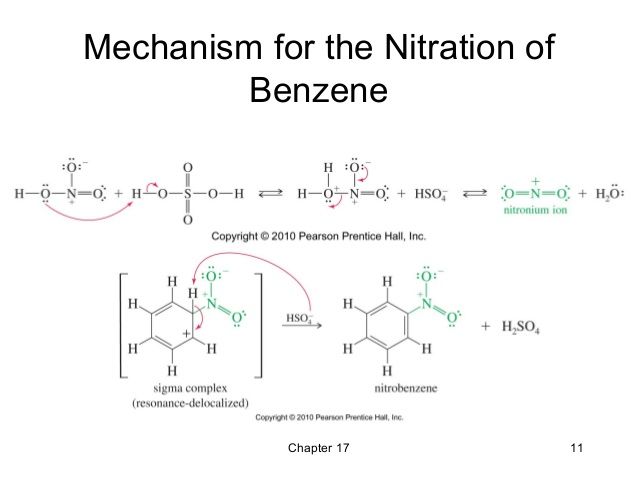
Nitration of Benzene
Benzene reacts with a mixture of concentrated nitric acid and
concentrated sulfuric acid when warmed at 50oC to give nitrobenzene
and water
Information
- Description
- IB HL Chemistry Note on 10. Organic Chemistry, created by kirsten w on 07/02/2017.
- Created by
- kirsten w · Feb 2017
- Updated
- Feb 10, 2017
- Views
- 364
- Tags
- Rating