
Sound / Waves
Slides in this set (7)
-
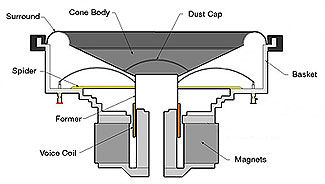
- Sound waves are longitudinal waves which means that they vibrate in the same direction as they travel. Sound waves are created in loudspeakers by converting electrical energy to kinetic energy in the air via a magnet, The loudspeaker vibrates back and forth, vibrating the air in front of the speaker and creating sound waves.
-
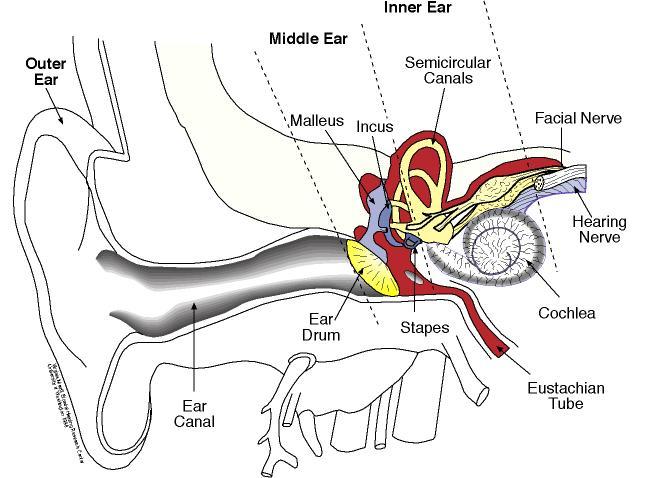
- Sound waves are detected by the ear through the ear drum I will demonstrate this through the short story of a sound wave through the ear. The sound wave entered the ear canal soaring through it's confined tunnels, the sound wave reaches the ear drum beating on it 1 thousand times in that short second. The sound wave was gone but it's kinetic energy pushed through the bones and into the Cochlea making it's liquid surge and the sterocillia sway and churn building their electric charge and sending a message through to the auditory nerve and completing it's journey to the brain all in the blink of an eye.
-
Difference between light and sound waves
- Light travels as transverse waves and can travel through a vacuum. Sound travels as longitudinal waves and needs to travel through a solid, liquid or gas: it cannot travel through a vacuum.
- Light and sound can be reflected and refracted, just like water waves. Light and sound can also be diffracted, just like water waves, but diffraction in light is less obvious than in sound.
-
- Table of difference between sound and light waves
- Light Sound
- Can travel through a vacuum Yes No
- Can be reflected Yes Yes
- Can be refracted Yes Yes
- Can be diffracted Yes Yes
- Can interfere with each other Yes Yes
-
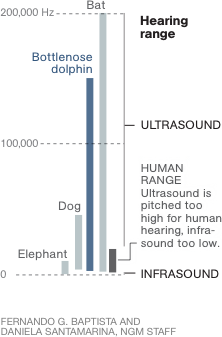
- Ultrasound is sound that is to high for the average human to hear, anything above 20,000 Hertz and infrasound anything to low for the average human to hear, anything below 20 Hertz.
- Different animals have different hearing ranges such as the bottle nose dolphins that have a hearing range of 40 to 160,000
- Hertz.
-
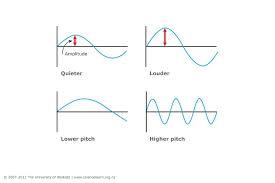
- The frequency is the number of waves produced per second this is measured in hertz, thousands of hertz (KHZ), Megahertz (MHZ)
- or Gigahertz (GHZ)
- The wavelength of a wave is the distance between a point on one wave and the same point on the next wave. It is often easiest to measure this from the crest of one wave to the crest of the next wave, but it doesn't matter where as long as it is the same point in each wave.
Information
- Description
- Slide Set on Sound / Waves, created by Lachlan Horn on 05/05/2017.
- Created by
- Lachlan Horn
- Views
- 1
- Rating