
Flashcards
ch 1 IFP
Cards in this deck (36)
- 1UNIT 1Aims
This unit aims to:
introduce you to states, nations and countries around the world
define four key IR concepts: state, nation, country and international order
encourage the use of IR vocabulary to help you think about the causes and effects of international events - 2Learning outcomes By the end of this unit, and having completed the Essential readings and activities, you should be able to: define and discuss states, nations, countries, and international ordersidentify the world’s states on a political map and discuss their power
identify regions’ major physical features and socio-cultural divisions
comment on basic elements of different regions’ international orders - 3What is international relations?- International relations is the study of human interaction at the international scale
- Studies a lot of different things - 4Professor Fred Halliday identifies three types of issues in IR: 1. Relations between states: war, peace, trade, and diplomacy 2. Non-state or ‘transnational’ relations across frontiers 3. Operations of the international system as a whole e.g. economic, social, and ecological issuesIR’s most important ideas are deeply contested
e.g. imperialism: acquire, conquer and rule distant territories and populations - 5trade, human rights, globalisation, GEC

- 61.1: An introduction to IR concepts – states, nations, countries and international orderWhat is a ‘state’?
The most influential collective actors in contemporary IR are states
Collective actors – groups of individuals with enough centralised decision-making ability to
reproduce their groups over time
be treated as individuals for the purposes of analysis - 7e.g. ‘the USA’ and ‘Egypt’ mediating a ceasefire between ‘Israel’ and ‘the Palestinian Authority’ The term is sometimes used interchangeably with: country, nation, power etc. but is, in fact, a distinct conceptStates are political and administrative organisations that govern territories and populations
Theda Skocpol defines states as sets ‘...of administrative, policing, and military organisations headed, and more or
less well-coordinated by, an executive authority.’ - 8- State as an administrative and bureaucratic machine, with each part playing an important role in the exercise of state sovereigntySo what is sovereignty?
Sovereignty is a defining characteristic of every state
- It describes a state’s ability to
control the peoples and territories it claims to rule
- Defend itself against interference from other states and foreign actors - 9States therefore have to deal with at least two priorities: 1. Maintaining order within their borders by means of bureaucrats and police2. Maintaining their independence from other states
by means of diplomats and militaries - 10States have historically been defined as: Territorially bound units Possessing sovereignty* Recognised externally (a formal, legal act) Responsible for governance Having the monopoly of the legitimate use of force Exercising independence from any political or religious superior*sovereignty: the ultimate overseer, or authority, in the decision-making process of the state and in the maintenance of order
e.g: Pakistan, USA, UK - 11Article 1 of the 1933 Montevideo Convention on the Rights and Duties of States: 1. Govern a permanent population 2. Govern a defined territory3.Have a government capable of exercising authority over people and territory
4.Receive recognition from other states and engage in diplomacy with them - 12State-centric: a significant portion of IR focuses on relations between statesMakes it easier to analyse international events?
or
Focusing on sovereign states blinds an analyst to the second and third areas of IR identified by Fred Halliday? - 13The Nationa group of individuals who see themselves linked by
a shared identity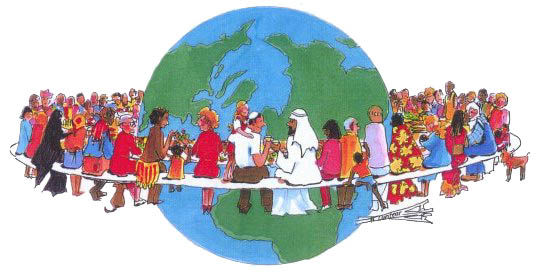
- 14This identity can be based on: - common language - culture - religion - history - citizenshipIn order for a territory to be considered a state, it must fulfil certain criteria (as outlined in the 1933 Montevideo Convention on the Rights and Duties of States. These are: a permanent population, a defined territory, a government and the ability to engage in diplomatic relations with other states
- 15A nation, however, need not boast all of these qualities Thus, it is possible for a state to be made up of more than one nation Kurds, native americans, Sindhis, Aborigines, Koreans
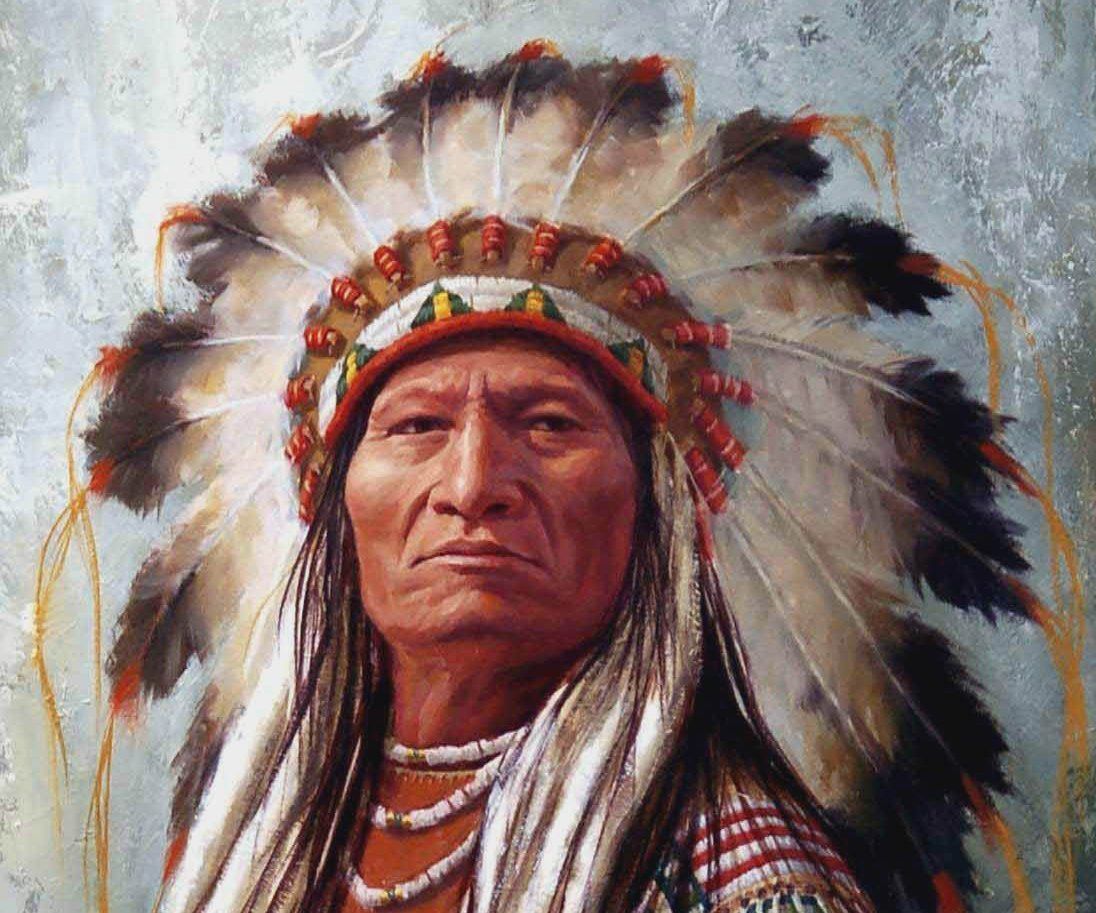
- 16A group’s sense of identity is often cultivated by the government that rules it Hence nations and states are often closely related Benedict Anderson: many nations have been created by the states in which they live as a way to unify citizens behind their governmentThrough public education, independence celebrations, flags, and patriotic anthems, states create nationalism in their populations
Leads to the creation of nation-states, political communities in which citizenship is a precondition for nationality - 17Nation-states typically have a narrow definition of their national identity They prefer homogeneity to heterogeneity – emphasising aspects of identity that link all of their citizens togetherNation-states foster a sense of national belonging to justify the actions of the government, which often takes on a role as the ‘defender of the nation’
- 18Though states are powerful sources of national identity, they are not the only ones All states – even nation-states – include groups who do not share the state’s dominant identitye.g. France’s population includes a number of cultural and linguistic minorities who consider themselves distinct from the main French nation, including the Basques and Bretons of France’s Atlantic coast
Many Malaysians associate themselves with a cultural minority by embracing their local cultural heritage, which might originate in one of Malaysia’s peninsular provinces, Malaysian Borneo, or elsewhere
in the world - 19This phenomenon will certainly be familiar to any citizen of a state composed of immigrants from a variety of ethnic backgrounds This includes multinational states like Canada, where people refer to themselves as French-Canadian, Scottish-Canadian, Indo-Canadian, Chinese- Canadian, and so onThese hyphenated identities combine a civic identify based on citizenship (Canadian) with an ethnic identity based on cultural and historic characteristics (French, Scottish, Indian, Chinese)
- 20Country physical environments, geographical space in which states and nations exist a state refers to a government, a nation refers to a group of people with a shared identity, a country refers to the lines and symbols on a map that represent borders, geographical features, ecosystems and natural resources USA, Wales, Scotland
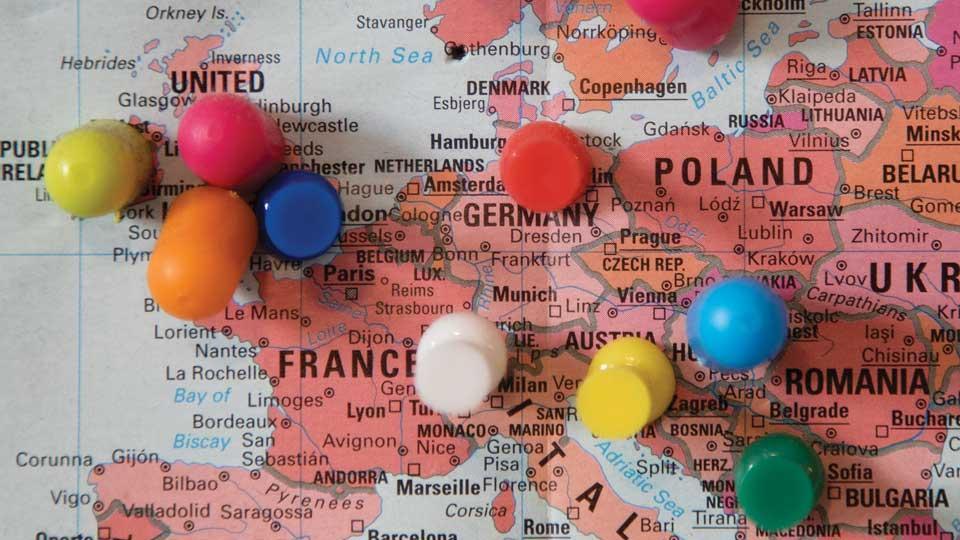
- 21A country can refer to the territory ruled by a state It can also refer to the territory inhabited by a nation A number of states around the world claim authority over nations and countries that they do not effectively rule, or rule over nations and countries that fall outside their ‘official’ international borderse.g. Somalia can effectively control only a faction of the country and nation it claims to rule
states like Morocco and Israel administer territories and populations beyond their internationally recognised borders - 22Countries matter in IR because an actors’ goals and influence are often a product of concrete material factors like geography geopolitics: studies ways in which geography determines the distribution of in an international ordera state with limited territory and few resources is likely to be a weaker than one that controls expansive lands and
rich natural resources
e.g. Benin and Austria are relatively weak members of international society
today’s two superpowers – the United States of America and the People’s Republic of China – are continental states - 23size alone doesn’t determine a state’s power in IR Some very large states are also very poor and, therefore, relatively weak e.g. China in the 1970s or the Democratic Republic of Congo todaystates such as the United Kingdom and the Netherlands have been able to exert an enormous influence on world politics despite their tiny landmasses
Other factors must therefore play critical roles in determining power - 24- population - levels of economic development - technological innovation - quality of education - the role of women in society - political stability - ‘neighbourhood’ in which the actor happens to be locatede.g. Poland had the misfortune of being surrounded by powerful and hostile states for most of its existence, resulting in it being carved up on no less than five separate occasions between the late 18th and mid-20th centuries
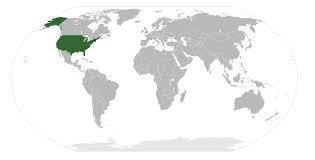
- 25The USA, on the other hand, could not have better geographical luck Not only does it have extraordinary natural resources at its disposal, but its power is enhanced by its location – with relatively weak states north and south and vast protective oceans east and west
- 26International Orders Consider how do states, nations, countries fit together into a system? ‘the English School’ – an informal group of academics and diplomats based in and around the London School of Economics who describe the world as an international societyInternational society: a community of international actors whose relationships are structured by a shared set of practices and principles
These influence the behaviour of society’s members by establishing ‘codes of conduct’ that they are supposed follow in their relations with one another - 27These codes of conduct are often systemised in ‘formal’ treaties e.g. Charter of the United Nations treaties that made up the 1648 Peace of WestphaliaOther treaties and agreements are ‘dead letters’ – abandoned or never enforced
Sometimes, international society’s codes of conduct are ‘informal’ in the sense that they are not written down at all
To members of the English School, the key to understanding IR is to understand how international society’s codes of conduct influence actors’ behaviour at the international scale - 28primary function of international society – the creation of international order We live in a world with or without a global government?every state is sovereign in that it has final legal authority over its own affairs
Therefore, no international body has the legal right to override its decisions
Because there is no global government, the modern international order is defined by anarchy – a condition in which there is no central authority with the power to compel obedience
...but not chaotic - 29Despite the absence of a global government, the international community has developed a system of global governance – a loose framework of treaties, agreements and regimes that shapes actors’ behaviour on the international stageOver time, some of these get internalised by the members of an international order
e.g. diplomatic immunity, rules that dictate the proper handling of prisoners of war, rules surrounding the transmission of data across the internet - 30This creates patterns of behaviour that bring a degree of regularity to our anarchic international order Although there is no global judicial system to enforce international society’s rules, most actors follow most of the rules most of the timeThis is partly because many rules do get enforced – often by the same states who develop and adopt them
e.g. a state’s membership in Africa’s regional international order is based on its acceptance of
other African states’ sovereignty - 31Governments that do not accept this rule are not allowed to join the organisations associated with Africa’s regional international order – such as the African Union ...or elseSANCTIONS!!!
punishments that can range from minor limitations on trade and travel to extreme measures such as full economic blockades and invasions - 32e.g. in East Asia, North Korea has been subjected to sanctions in response to its violation of rules surrounding the development of nuclear weapons sanctions include severe restrictions on North Korea’s ability to trade into the global economy, limiting the government’s ability to provide for its citizens’ material needsThe international community hopes that these sanctions will convince North Korea to give up its nuclear weapons programme in exchange for a return to full political and economic membership of the international order
- 33Sanctions have historically been an effective way to change state behaviour South Africa’s dismantling of its apartheid system and Iran’s entry into negotiations regarding its own nuclear programme are two examples of sanctions successfully forcing states back into compliance with an order’s preferred behavioursAcceptable types of behaviour vary from one international order to another
behaviours associated with the defense
of state sovereignty are different in Western Europe and East Asia - 34In Western Europe, states have voluntarily surrendered some of their independent decision-making to an international organisation (IO) – the European Union (EU) – which has the legal power to compel its members to accept its lawsThis is certainly not the case in East Asia, where states remain
very protective of their sovereign independence and refuse to cede any of their independent decision-making to an international organisation - 35rules governing international orders vary depending on whether you are studying regional or global IRRegional international orders are populated by members who often share principles and interests thanks to their geographical proximity
This permits regional orders to adopt relatively ‘thick’ set of rules dictating their behaviours – producing relatively durable regional international orders - 36On the global scale, international orders are inhabited by a plethora of actors with very different principles and interests As a result, the global international order is shaped by a ‘thinner’ set of rules than its regional counterparts – leaving it far more vulnerable to disruptionActivity
Explain the difference between a state, a nation and a country.
Information
- Description
- International Relations Flashcards on ch 1 IFP, created by Amna Tamkin on 10/09/2017.
- Created by
- Amna Tamkin
- Views
- 421
- Rating