Flashcards
Space Flight Flashcards
Cards in this deck (12)
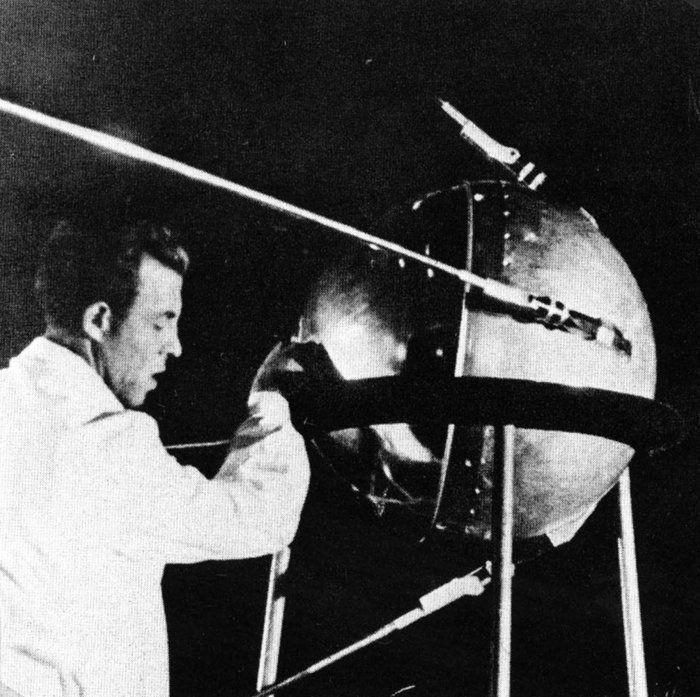
- 1Sputnik 1 October 1957The Soviet Union launched the first satellite.
- 2Vostok 1 April 12th, 1961The first person in space was Yuri Gagarin, a Soviet Air Force lieutenant. He
orbited the Earth once in a flight that lasted 108 minutes.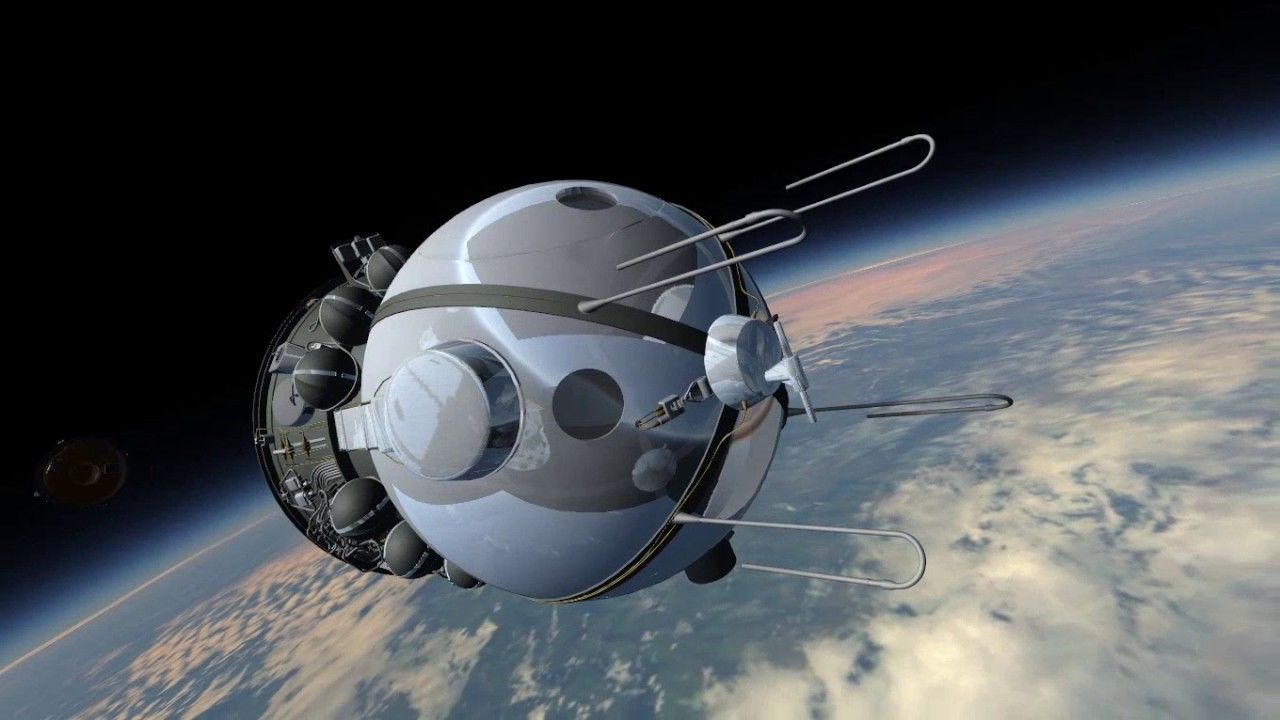
- 3Apollo 11 July 20th, 1969American astronauts Neil Armstrong and Buzz Aldrin guided their Eagle lander to
Tranquility Base for the 1st landing on the surface of the moon while crewmate Michael Collins circled above inside the
command module Columbia. As Armstrong stepped out onto the Sea of Tranquility, he said, "That's one small step for man, one giant leap for mankind.”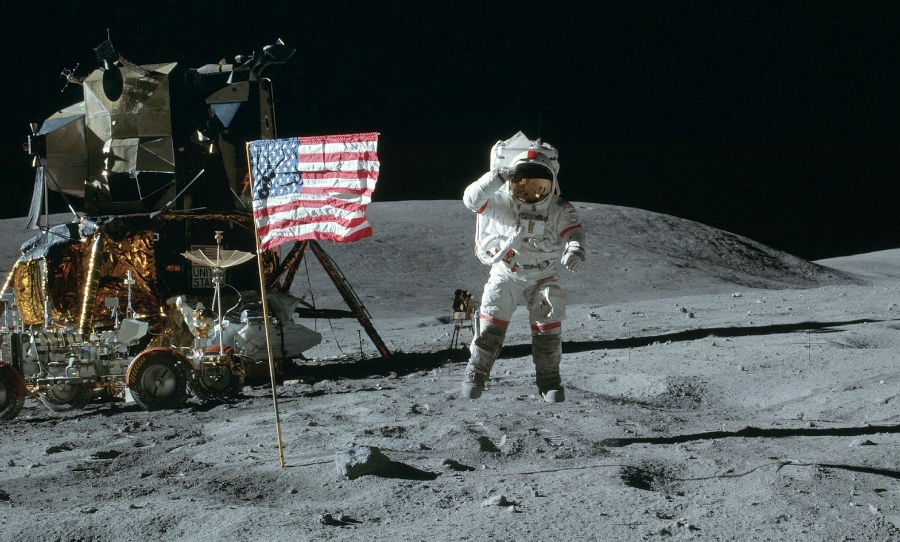
- 4Mariner 10 Nov 3rd, 1973This NASA spacecraft was sent to Mercury. It showed that Mercury has
an iron core and a moon-like surface. The probe reached Mercury with the help of the gravitational influence of Venus.
It was the first mission to use this gravity assist trajectory, and had the benefit of studying both planets.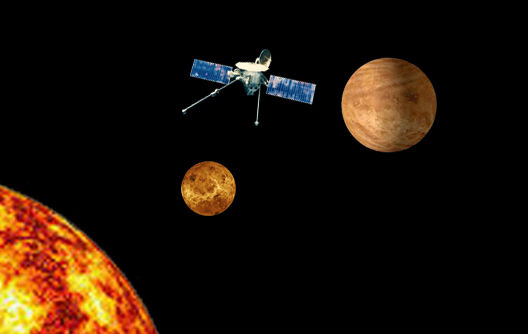
- 5Voyager 1 & 2 Aug & Sept 1977- The NASA Voyager spacecrafts took advantage of a rare
alignment of the outer planets to visit Jupiter, Saturn, Uranus and Neptune.
- While at Jupiter, they found a thin ring
around the planet and found that the moon Io is the most volcanically active body in the solar system.
-Voyager 2 arrived at Uranus in 1986 where it discovered 10 new moons. In 1989, it reached Neptune.
- The spacecraft carry golden records bearing the images, greetings and sounds of Earth to the stars in case alien life forms should find them.
- Voyager 1 and Voyager 2 entered interstellar space (the space between the stars) in 2012.
- It will take about 300 years to reach the Oort Cloud, and possibly 30,000 years to fly beyond it.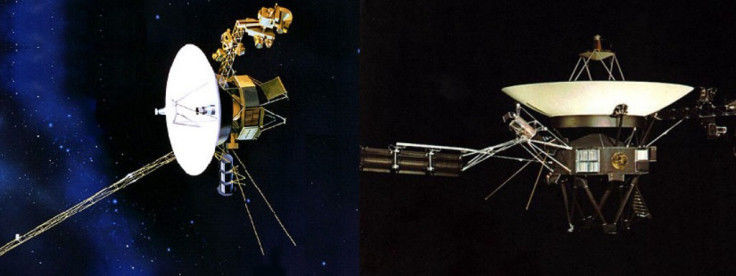
- 6SOHO December 95'The Solar and Heliospheric Observatory is a joint U.S. and European mission. It
is studying the internal structure of the Sun, its outer atmosphere, and the origin of the solar wind.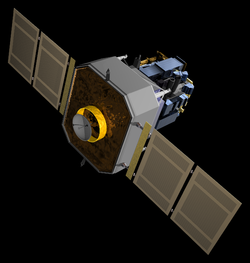
- 7Cassini-Huygens October 97'-First to orbit the planet Saturn in 2004.
-The Huygens probe separated from Cassini and landed on the moon Titan in 2005 to study the possibility of life evolving on this moon.
- Cassini revealed water-rich plumes venting from the South Polar Region of Enceladus.
-In 2014, NASA reported that Cassini found evidence for a large south polar subsurface ocean of liquid water with a
thickness of around 10 km (6.2 mi).
- Cassini was purposely destroyed when it was sent through the rings, into
Saturn’s atmosphere, in September 2017.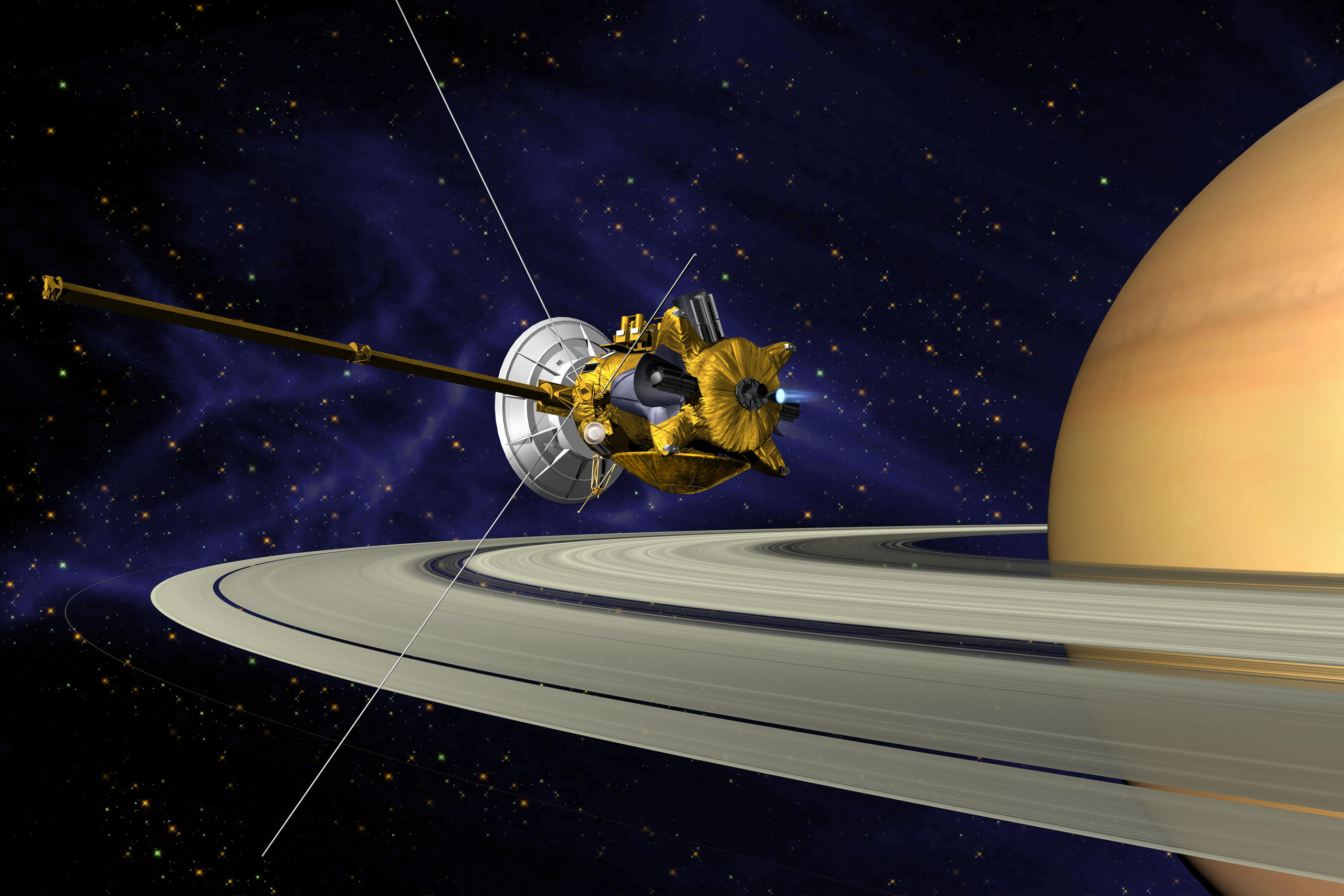
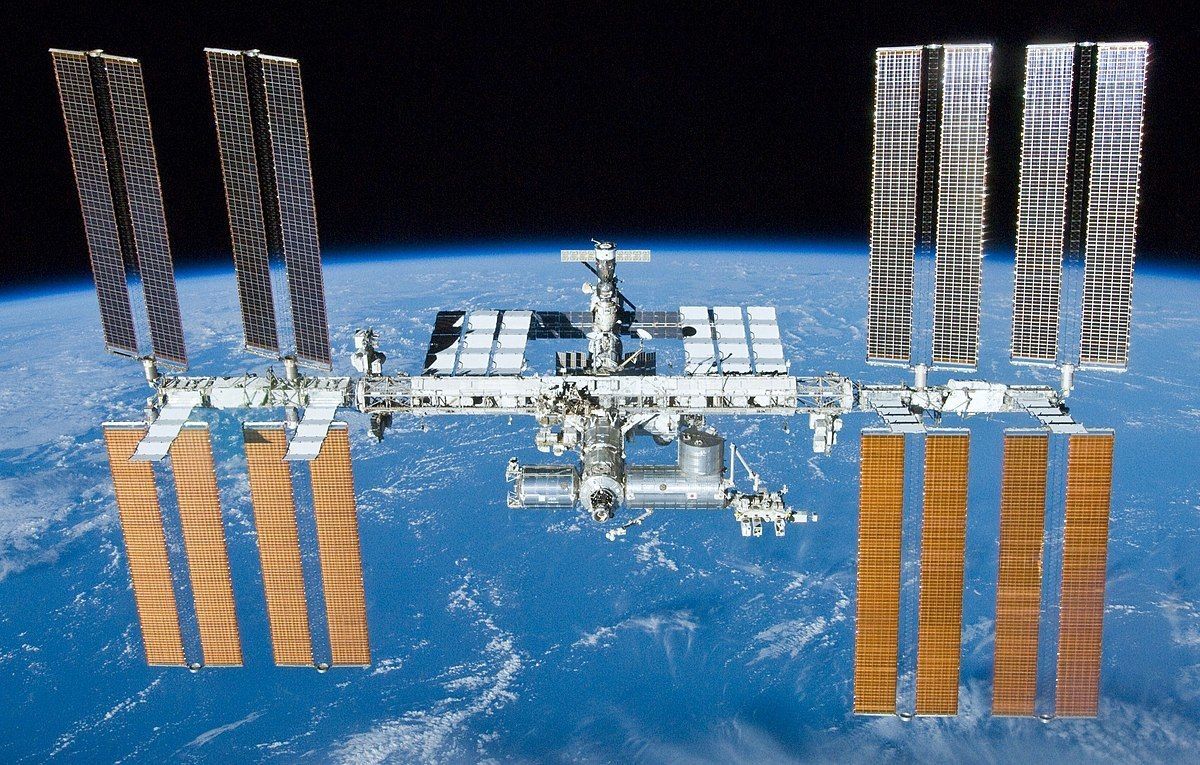
- 8International Space Station building began 1998The first extensive cooperation between space agencies from many different countries started in 1993, when NASA, Russia, Canada, Japan and European nations decided to pool their resources to build an international station in space. The astronauts have conducted hundreds of microgravity scientific experiments that are not possible on Earth.
- 9New Horizons Jan 2006- NASA’s New Horizons passed Pluto in 2015. It returned stunning images of Jupiter during its 2007 flyby and gravity assist maneuver.
- In August 2018, New Horizons confirmed the existence of a "hydrogen wall" at the outer edges of the Solar System.
-Flyby of the Kuiper Belt trans-Neptunian
object, Ultima Thule, took place on January 1, 2019, which makes it the farthest object in the Solar System ever
visited by a spacecraft.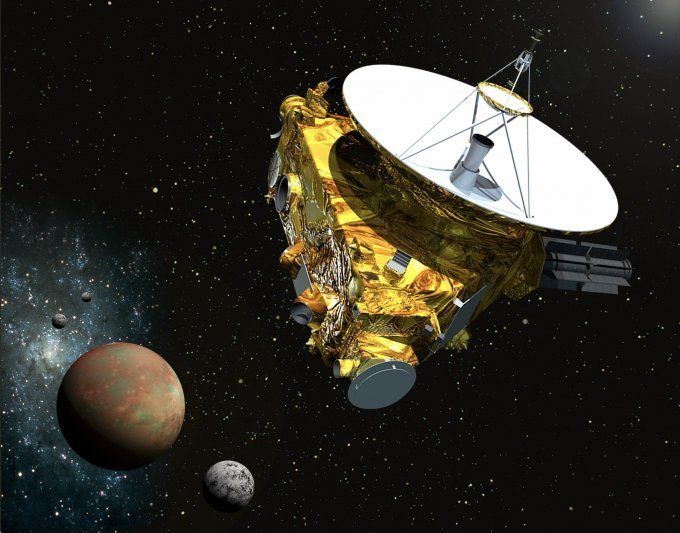
- 10Juno Aug 5th 2001-NASA space probe orbiting the planet Jupiter.
Juno's mission is to measure Jupiter's composition, gravitational field, magnetic field, and polar magnetosphere.
-It will also search for clues about how the planet formed, including whether it has a rocky core, the amount of water present within the deep atmosphere, and its fast winds, which can reach speeds up to 620 km/h (390 mph).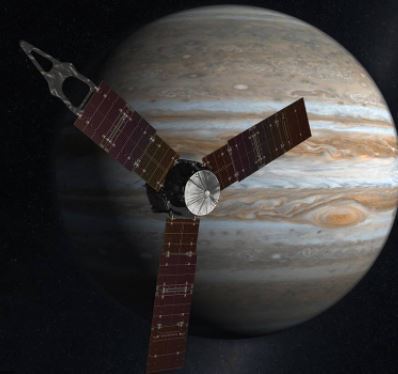
- 11Perserverance launched July 30th, 2020Mars rover designed to explore the Jezero crater on Mars as part of
NASA's Mars 2020 mission. The rover's goals include identifying ancient Martian environments capable of supporting
life, seeking out evidence of former microbial life existing in those environments, collecting rock and soil samples to store on the Martian surface, and testing oxygen production from the Martian atmosphere to prepare for future crewed
missions.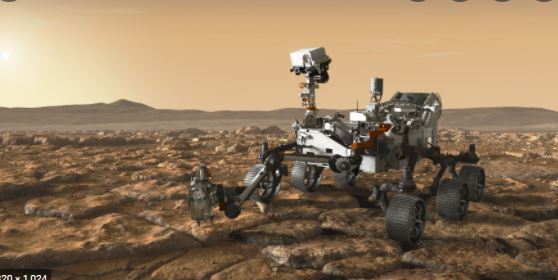
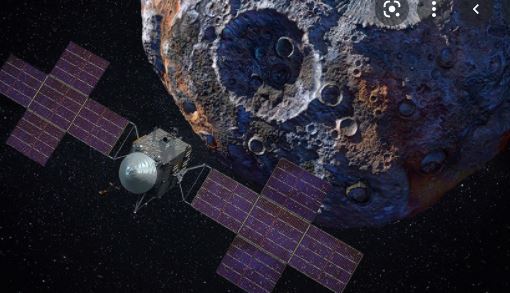
- 12Psyche August 2022is a planned orbiter mission that will explore the origin of planetary cores by
studying the metallic asteroid of the same name.