
Flashcards
Literature
Cards in this deck (24)
- 1What is literature?-self-referential
-highly regarded
-non-pragmatic
-imaginative writing
-specific use of language - 2Imaginative writing (What is literature?)not fact,but fiction
ok,but...
philosophical texts are considered literature.
and what about the bible? - 3specific use of language (What is literature?)a deviation from the linguistic norm
ok,but...
this is not limited to literature:
"an apple a day keeps the doctor away",biographies,modern literature - 4Literature is self-referential... (What is literature?)...but so are nursery rhymes,advertising slogans, etc.
=>"This sentence,no verb"
-draws attention to its own principles - 5Literature is non-pragmatic. (What is literature?)but what about:
-Die Leiden des jungen Werther
-Catharsis,Aristotle
Literature is effective. (D. Attridge)
-use literature as a guideline for their own life - 6Literature is writing that is highly regarded. (What is literature?)Problem: historical change,modification of the canon (inclusion of women, postcolonial texts, popular fiction,etc.)
- 7literature is functional (T.Eagleton)you want a novel to be literature,therefore it is
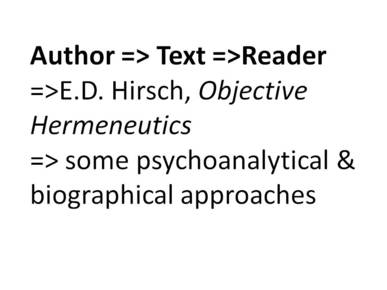
- 8Literary theories-author-centred approaches
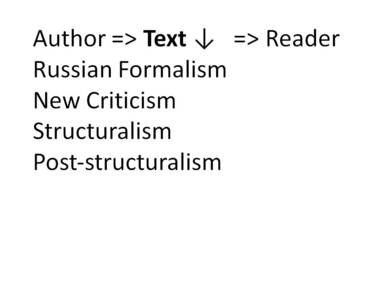
-text-centred approaches
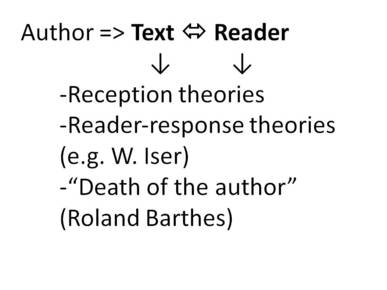
-reader-centred approaches - 91.author-centred approaches
- 102. text-centred approaches
- 113. reader-centred approaches
- 12anticipatory function of literatureauthor picks sth. up, years later this happens
- 13ethical function of literaturereflecting your own moral concept, but can experience the protagonists moral without doing it on your own ("Probehandeln")
- 14passionate thinkingcan suffer/be happy with character => can be cleansing (catharsis)
- 15What does homodiegetic/autodiegetic mean?narrator is part of the story
(Stanzel's first person narration) - 16What does heterodiegetic mean?Narrator is not part of the fictional world
(Stanzel's authorial/figural narration) - 17Who established the terms Homodiegetic/Autodiegetic and Heterodiegetic Narration?Gerard Genette
- 18story timeerzählte Zeit
(Zeit, die innerhalb der Geschichte verstreicht) - 19discourse timeErzählzeit
(Zeit, die man fürs Lesen braucht) - 20summary (concerning time)story time > discourse time
- 21Stretch (concerning Time)Story Time < Discourse Time
- 22Scene (Concerning Time)Story time= Discourse Time
- 23Ellipsisomission,omits aspects of no importance
- 24PauseComment, description
Information
- Description
- English Flashcards on Literature, created by kuemli on 15/11/2013.
- Created by
- kuemli
- Views
- 201
- Tags
- Rating