
Flashcards
Geography Year 11 Exam Revision
Cards in this deck (56)
- 1Define WeatherThe state of the atmosphere at a particular place and time as regards to heat, cloudiness, dryness, sunshine, wind, rain etc
- 2Define ClimateThe weather conditions prevailing in an area in general or over a long period of time
- 3What are the 6 elements of weather, what units are they measured by and how the instruments measure the elementsAir Temperature - Thermometer - Degrees
Air Pressure - Barometer - Millibars
Humidity - Hygrometer - Percentage
Cloudiness - By Eye - Octas
Precipitation - Rain Gauge - Millimeters
Wind - Anenometer (Speed)/ Weather Vane (direction) - N, S, E, W - 4List and Explain the 5 factors affecting temperatureOcean Currents
Warm Currents = Warmer Climate
Cold Currents = Cooler Climate
Length of Day
(depending on time of year)
Latitude
Incoming solar radiation (insolation) is concentrated near the equator
Insolation near the poles has to pass through a greater amount of atmosphere and there is more chance of it being reflected back into outer space
Albedo
(the reflective properties of a surface)
Closeness to the sea
Water moderates the temperature
Cooler summers and warmer winters - 5Why does Adelaide have a cooler climate to DarwinAdelaide is closer to the south pole where the temperatures are cooler, however Darwin is located in the tropics therefore it is closer to the equator where a majority of the sunlight hits the earth. This gives Darwin warmer temperatures
- 6Elements of a synoptic chartIsobars show pressure
closer the isobars are to each other the lower the pressure and they also indicate strong winds, the further away they are the higher the pressure
Red line with semicircles indicate warm fronts
Blue line with triangles indicate cold front
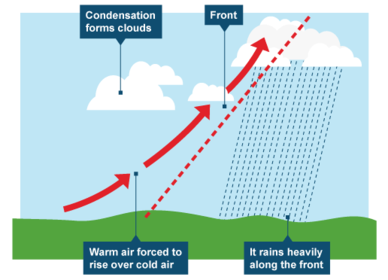
Warm fronts bring steady and continuous rain
Cold fronts bring cloud and heavy rain/showers - 7Define AtmosphereThe Atmosphere is an envelope of transparent, odourless gases held to the earth by gravitational attraction
- 8What are the four layers of the AtmosphereThermosphere
Mesosphere
Stratosphere
Troposphere - 9Facts about the TroposphereContains most of the Atmosphere's water vapour, cloud, dust and pollution
Temperatures decrease by 6.4 degrees celcius with every 1000m increase in altitude
Layer is unstable - 10Facts about the StratosphereCharacterised by a steady increase in temperature caused by ozone (O3)
Ozone absorbs incoming ultra-violet radiation from the sun
Protects the earth from meteorites that usually burn out before they enter the earth's gravitational field - 11Facts about the MesosphereNo water vapour, cloud, dust or ozone to absorb incoming radiation
Temperatures drop rapidly
Coolest of all the layers at -90 degrees celsius and strongest winds at almost 3000km per hour - 12Facts about ThermosphereTemperatures rise rapidly, to 1500 degrees celcius
This is due to increased amounts of atomic oxygen that absorbs incoming ultra-violet radiation - 13Gases in atmosphere and their composition in percentageNitrogen = 78%
Oxygen = 21%
Argon = 0.9%
Other gases, e.g. Carbon dioxide, helium and ozone = 0.1% - 14Define InsolationThe amount of solar radiation reaching a given area
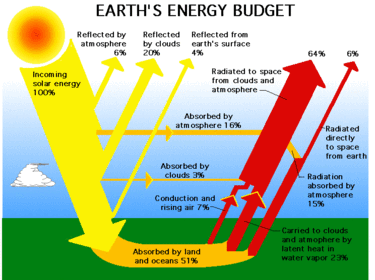
- 15What is the % of insolation absorbed by the earth and its atmosphere What is the % of insolation that is reflected into spaceAbsorbed by the Earth = 46%
Reflected by Earth's surface = 6% - 16What is the % of insolation absorbed by land, oceans, clouds and atmosphereAbsorbed by cloud = 4%
Absorbed by water vapour = 19% - 17What is the % of insolation reflected back into space by the atmosphere, clouds and earth's surfaceReflected by atmospheric gases and dust
= 8%
Reflected by clouds = 17% - 18Define AlbedoThe proportion of the incident light or radiation that is reflected by a surface, typically that of a planet or moon
- 19What is the albedo of fresh snow and an ideal black surfaceAsphalt
0.05 - 0.10 (new)
0.10 - 0.15 (weathered)
Snow
0.80 - 0.90 - 20Define heat budgetIncoming heat being absorbed by the Earth, and outgoing heat escaping the Earth in the form of radiation
- 21What would happen if the amount of heat being absorbed and reflected by the Earth was unbalancedIf both were not balanced, the Earth would be getting either progressively warmer or progressively cooler with each passing year
- 22Earth's Energy Budget
- 23Define Urban Heat IslandAn Urban Heat Island (UHI) is city or metropolitan area that is significantly warmer than its surrounding rural areas due to human activities
- 24Urban Heat Island CausesConcrete and asphalt tend to increase the amount of solar radiation absorbed
Cities tend to have fewer trees and thus the cooling effects of shade and evapotranspiration are reduced. The cooling effects of winds can also be reduced by buildings - 25Effects of UHI on weather, environment and global warmingUHI can alter local wind patterns, the development of clouds and fog, humidity and the rates of precipitation
- 26How can the effects of UHI be minimisedPainting structures white, or other light colours
Installation of green roofs atop city buildings
Roof sprinkling is another evaporative cooling solution - 27Types of precipitationRain
Hail
Sleet
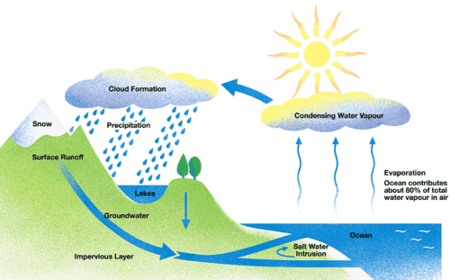
Snow - 28The Water Cycle
- 29Types of RainfallConvectional
Frontal
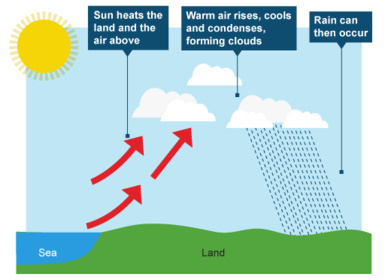
Orographic - 30Convectional Rainfall
- 31Frontal Rainfall
- 32Orographic Rainfall
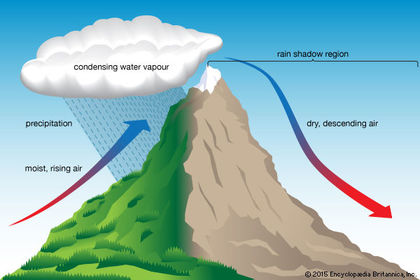
- 33What is this...The Stevenson Screen
It is a standard shelter (from rain, snow and high winds, but also leaves and animals) for meteorological instruments, particularly wet and dry bulb thermometers used to record humidity and air temperature.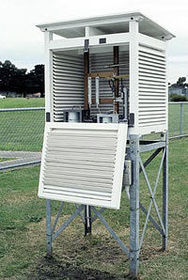
- 34How do sunspots affect climate changeDespite sunspots being cooler areas on the surface of the sun, periods of increased sunspots cause a slight increase of energy emitted by the sun. However this slight variance in solar radiation can drastically affect Earth’s climate.
- 35How do Volcanoes affect climate changeVolcanic eruptions release molten rock
The gases and dust released from volcanoes have influences on climate
Most particles released have a cooling effect on the climate as it shades solar radiation
Cooling effect can last for months to years
Particles can also cause global warming when extreme amounts of greenhouse gases are released into atmosphere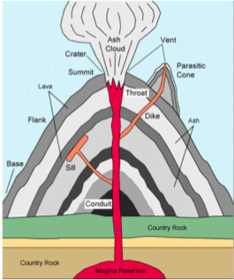
- 36How do Ice Ages affect climate changeIce ages are the times of extreme cooling of the Earth's climate
The composition of the atmosphere changes in position of Earth around the sun, ocean currents and shifting of tectonic plates
Can last hundreds of millions of years
Can change the earth's surface, reshape it and makes sea levels drop
When temperatures drop in areas opposite the ice cliffs, cold-weather plant life is driven to the southern latitudes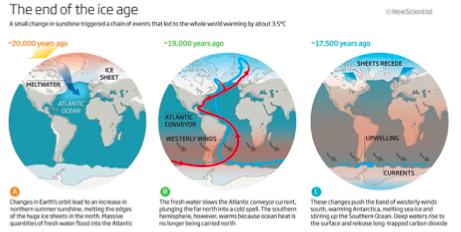
- 37How does solar activity (tilt, precession and orbit) affect climate changeBy burning huge amounts fossils fuels, we have actually tipped the Earth on its axis. An approx of 6-7 cm per year.
The tilt and orbit would promote the growth of ice sheets. This response would be due to a warmer winter, in which warmer air would be able to hold more moisture, and subsequently produce a greater amount of snowfall. In addition, summer temperatures would be cooler, resulting in less melting of the winter's accumulation
Fact:
In 13000 years seasons will be opposite (WE WOULD HAVE A SNOWY CHRISTMAS) - 38How does the change in land and ocean floor topography affect climate changeMountain ranges create barriers that alter wind and precipitation patterns that demonstrates a effect of topography on the climate.
Topographical features such as an area is close to a body of water it tends to make milder climates. Mountainous areas tend to have more extreme weather because it acts as a barrier to air movements and moisture. One side of mountain can be dry while the other side is full of vegetation. all can influence the weather and climate. - 39What is El NinoEl Nino is a climate changing effect; it occurs in a 3-6 year interval, it temporarily changes the weather patterns in the Eastern Pacific Ocean by increasing the temperature by a few degrees. El Nino normally cools the warm water in the Western Pacific Ocean. This can lead to a higher probability of drought in Australia/Asia region.
- 40How does El Nino affect climate changeDue to El Nino temporarily changing the weather patterns in the Eastern Pacific Ocean by increasing the temperature by a few degrees, El Nino can change these factors of weather
Likelihood of frost; Likelihood of flood risk; Number of rain days; Likelihood of heat waves; Evaporation. - 41What is Anthropogenic deforestationAnthropogenic deforestation is a human action, by deforestation approximately 18% of carbon emissions are a result of deforestation. Deforestation can naturally occur from natural disasters, however the primary cause, which is predominantly the most harmful, is human induced. Trees play a major role in the absorption of greenhouse gases. The decrease in trees lead an increase in greenhouse gases in the atmosphere – hence global warming. Forests have been called ‘The lungs of the earth’ this is because trees take carbon dioxide out of the air and replace it with the oxygen. Deforestation leads to the release of CO2 in he atmosphere, another greenhouse gas.
- 42What is UHIAn urban heat island is a city or metropolitan area that is significantly warmer than its surrounding rural areas due to human activities.
Factors to reduce UHI
Have green roofs
Incorporate more trees into the Metropolitan area
Paint buildings, roads and paths a lighter shade - 43How do fossil fuels affect climate changeWhen fossil fuels are burned they release carbon dioxide into the atmosphere which contributes to global warming. Using fossil fuels to generate energy also releases pollutants into the atmosphere e.g sulphur dioxide.
- 44What is natural and anthropogenicNatural
existing in or derived from nature; not made or caused by humankind.
e.g. Erosion
Anthropogenic
Environmental pollution and pollutants originating in human activity.
e.g. Deforestation - 45What is the difference between the Greenhouse Effect and the Enhanced Greenhouse Effect and what are their conditionsGreenhouse Effect
The trapping of the sun's warmth in a planet's lower atmosphere, due to the greater transparency of the atmosphere to visible radiation from the sun than to infrared radiation emitted from the planet's surface.
Enhanced Greenhouse Effect
Sometimes referred to as climate change or global warming, is the impact on the climate from the additional heat retained due to the increased amounts of carbon dioxide and other greenhouse gases that humans have released into the earths atmosphere since the industrial revolution. - 46What are the greenhouse gasesCarbon Dioxide
Methane
Nitrous Oxide
Tropospheric Ozone
CFC-12
HCFC-22
Sulfur Hexaflouride - 47Features of El Nino and La NinaEl Niño events are associated with a warming of the central and eastern tropical Pacific
La Niña events are the reverse, with a sustained cooling of these same areas. These changes in the Pacific Ocean and its overlying atmosphere occur in a cycle known as the El Niño–Southern Oscillation (ENSO). - 48Results of the Microclimate studyThe hottest location was in direct sunlight with a low albedo making the area hot
The coolest location was under the shade also with a low albedo, however the plants made the area cool because of the process of transpiration. - 49Define ConflictA struggle for power, property, strong disagreement between people, groups, that results in often angry argument
a difference that causes disagreement between ideas, feelings - 50What are the causes of conflictLack of Resources
Land
Religion
Economic
Political Instability - 51How can conflict affect wellbeingConflict affects wellbeing because there would be no services, no jobs, no shelter as everything would be destroyed
- 52What are the three ways to identify conflict cause, length and scaleCause
Lack of Resources, Land, Religion, Economic, Political Instability
Length
Various, the longer it goes on for, the more damage, the shorter, the less damage
Scale
Minimal, Mild, Moderate, Intense, Severe - 53Label the countries in the horn of Africa and their capitals
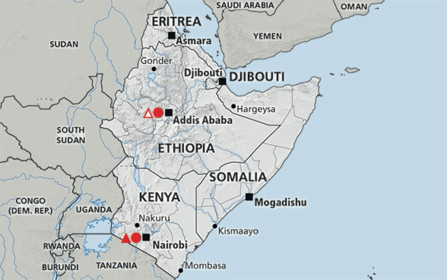
- 54What is the social, economic and environmental impacts of conflictSocial
People die, lose family, lose homes.
Economic
People lose jobs, farms, businesses.
Environmental
Land gets destroyed or polluted by bombs, fire, etc - 55Define Refugee and Asylum SeekerRefugee
A person who has been forced to leave their country in order to escape war, persecution, or natural disaster
Asylum Seeker
A person who has left their home country as a political refugee and is seeking asylum in another. - 56Conflict investigation as a case studyEffects of Conflict
There are many reported disruptions in the northwest to the center of the country due to industrial operations that impacting the environment, there are also many forest fires, damage to natural protected areas, disruption of water-supply communications and widespread impact on soil and agricultural land, water and electricity supply,
Cause of Conflict
News the conflict was sparked due to the pro-Russian activists taking control of the government buildings within the towns of Donetsk and Luhansk regions, the actions taken to override the government control were repeated from the Black Sea peninsula conflict in Ukraine.
Information
- Description
- Year 12 Geography Flashcards on Geography Year 11 Exam Revision, created by Olivia Gniadek on 28/05/2016.
- Created by
- Olivia Gniadek · May 2016
- Updated
- Apr 6, 2018
- Views
- 78
- Tags
- Rating