
Animal Behaviour mind maps
26 mind maps by 19 users
This Animal Behaviour page gathers mind maps on topics from foraging and social behaviour to canine fear and stereotypic behaviours. University students and professional candidates can use them to practise connecting ideas, while teachers can find material to share. Explore over 20 mind maps for university-level study and professional preparation.
Select topic
- Biological Influences on Behaviour5
- Animal Learning and Cognition6
- Social Behaviour and Communication6
- Dog and Cat Behaviour12
- Farm Animal Behaviour6
- Horse Behaviour7
- Behaviour and Animal Welfare5
- Clinical Behaviour Assessment14
- Pet Behaviour Problems8
- Fear, Anxiety and Aggression in Pets8
- Behaviour Modification and Training7
Mind maps
-
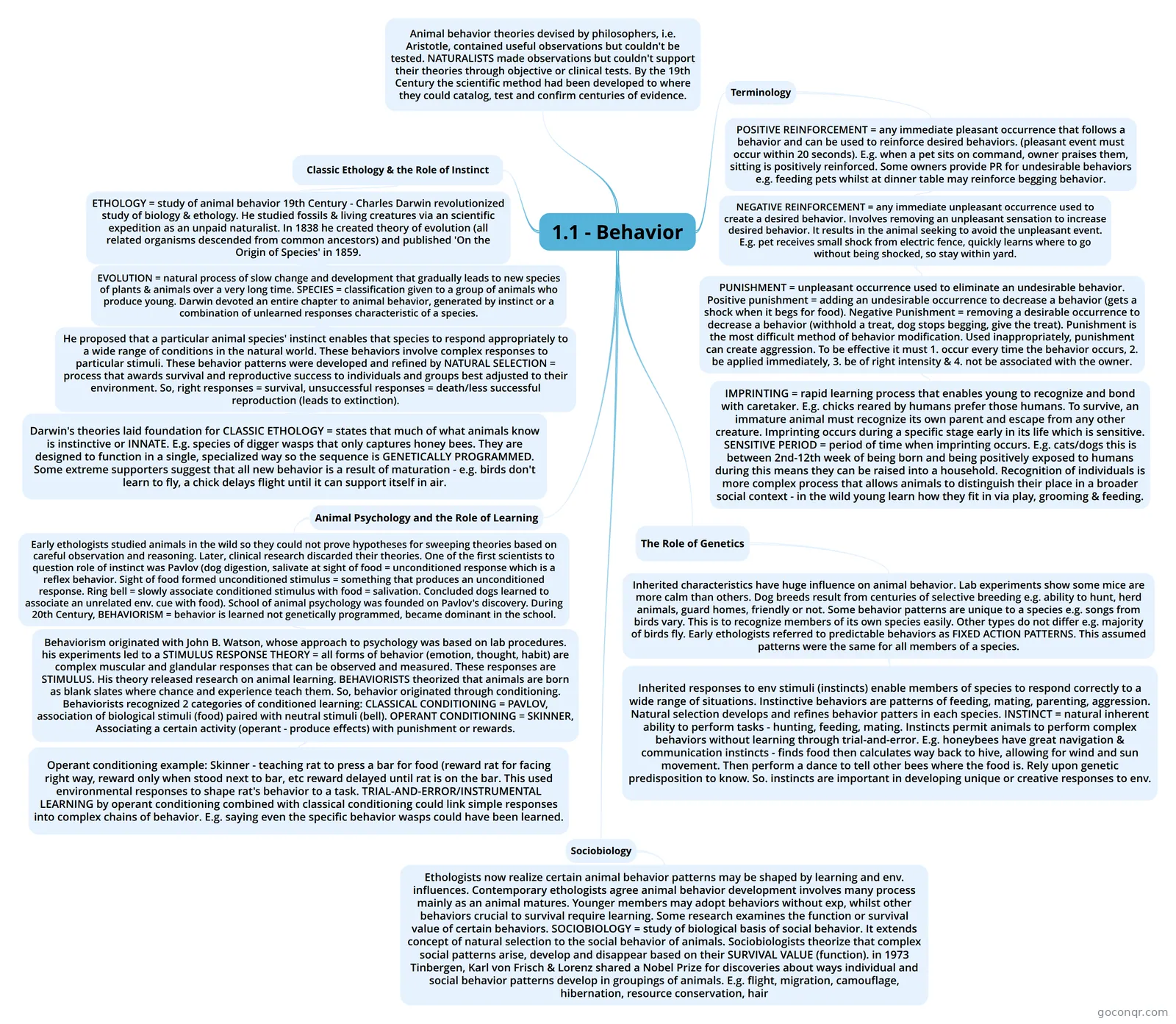 1.1 - Behavior intro to vet technology
-
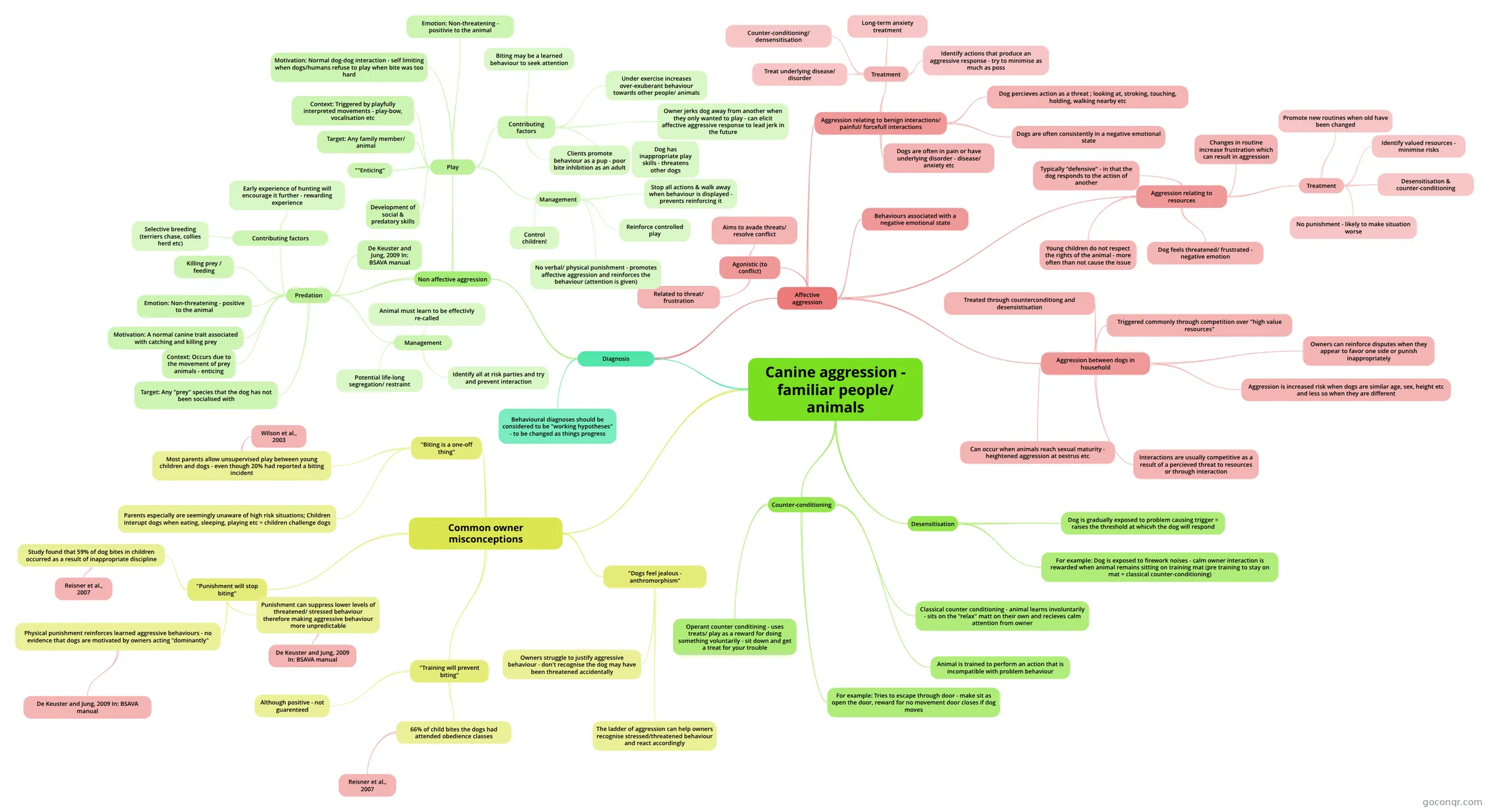 Canine aggression - familiar people/ animals
-
Separation anxiety
-
Canine fear & phobia
-
Aggression
-
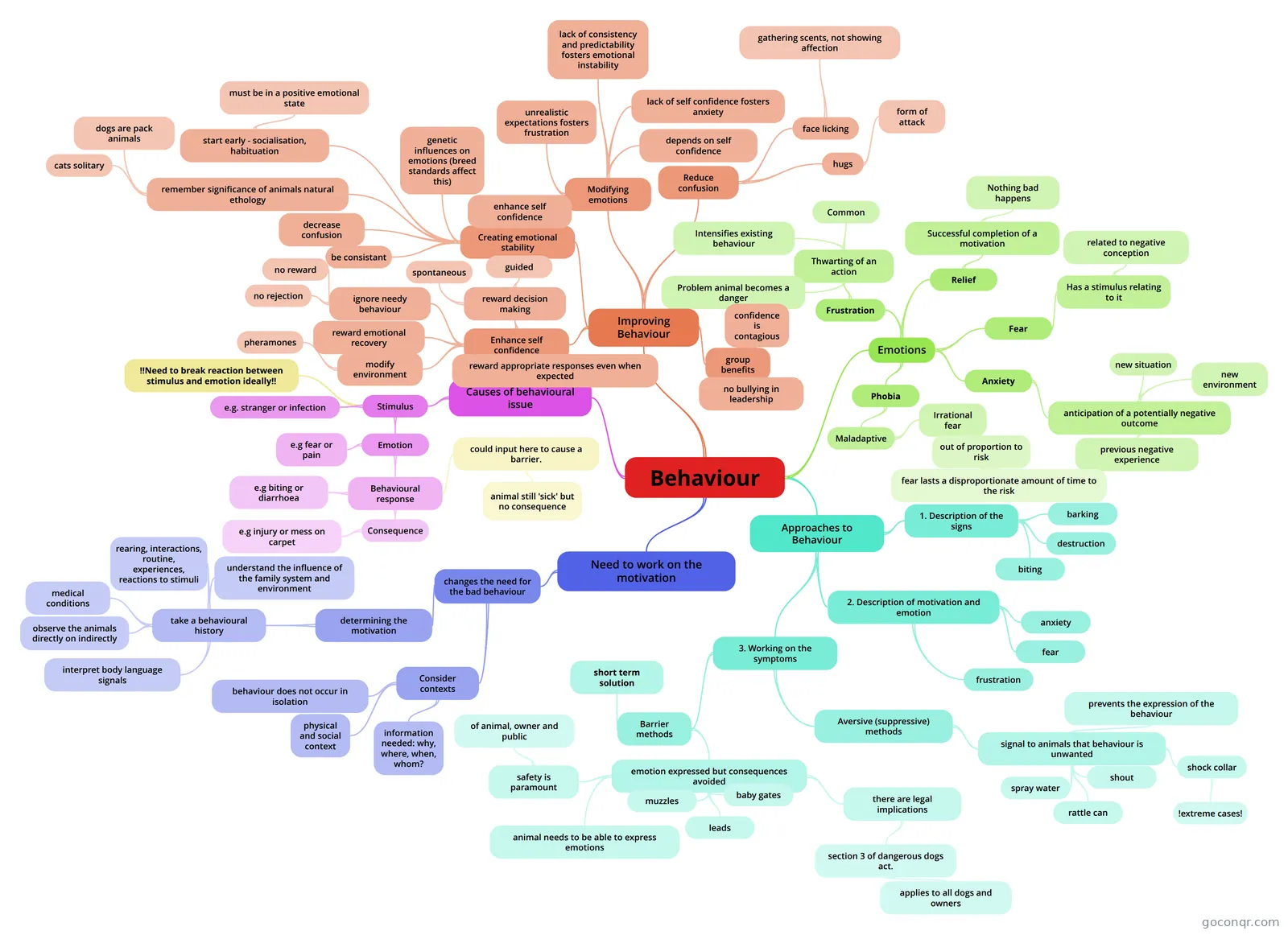 Behaviour
-
Behavior Counseling and Therapy 1.4 Introduction to Vet Technology Behavior Counseling and Therapy 1.4
-
Behavior Problems 1.3 1.3 Behavior Problems Introduction to Vet Technology
-
Development of behaviour
-
Social Behaviour
-
Understanding Normal Behavior 1.2 1.2 Understanding Normal Behavior Vet Information Technology
-
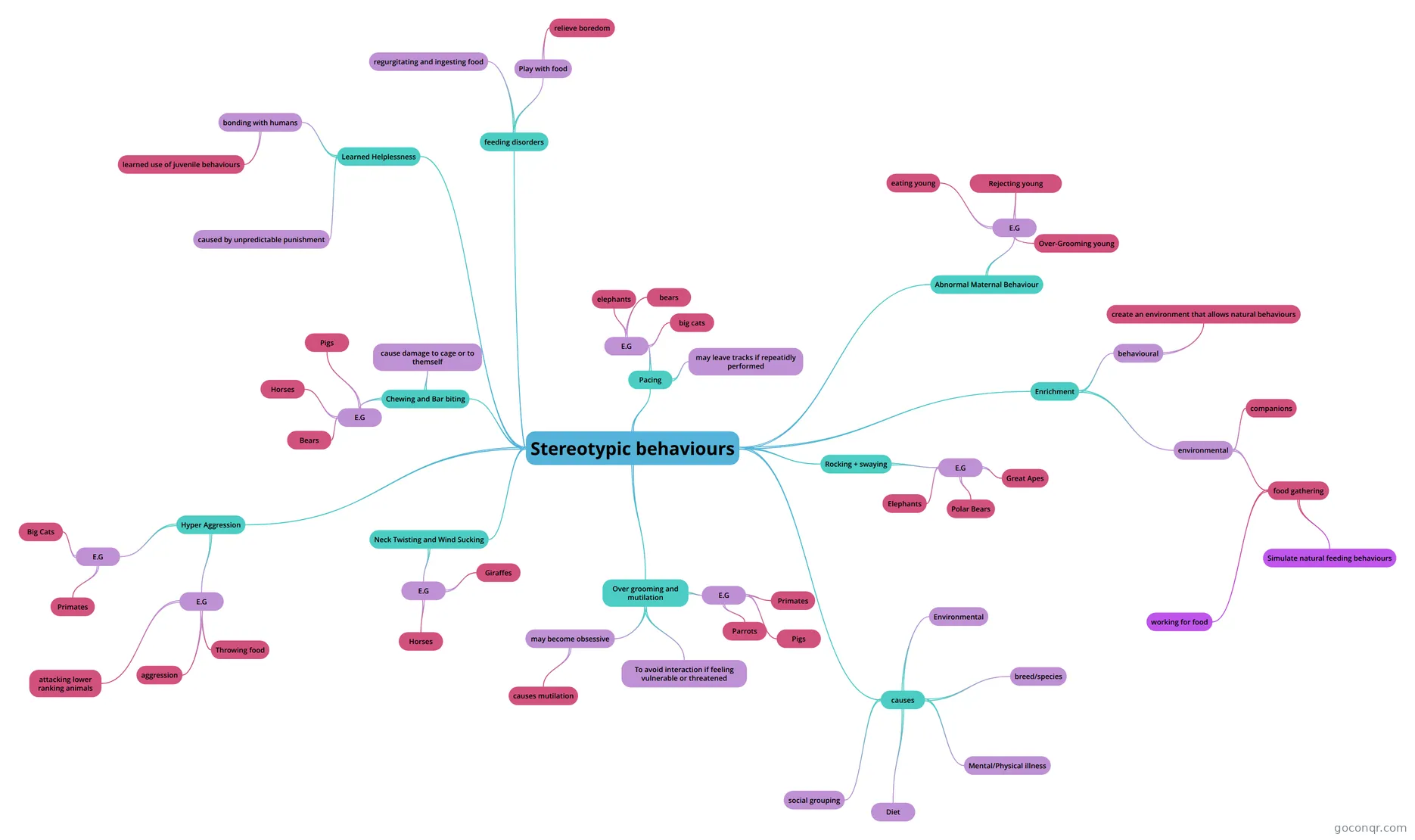 Stereotypic behaviours part of animal care level 3 behaviour
-
Clinical Signs of Cognitive Dysfunction
-
Foraging
-
Animal Behaviour assessment
-
Behaviour
-
Problem Behaviour Lesson 2
-
Psychopharmacology and Neuroscience (Question 1)
-
Horse Behavior
-
How to know what a horse feel depending on the behavior
-
Aggressive Dogs
-
The causal factors and treatment of an abnormal behaviour
-
Social Behaviour in Horses
-
The affect of owner behaviour on problem behaviours in UK dogs
-
23645 - DKO the nature of horses
-
Does the behaviour of the owner affect the incidence of problem behaviour in companion dogs in the U
More Animal Behaviour resources
About animal behaviour mind maps
GoConqr OriginalWhat the Animal Behaviour mind maps cover
These user-made maps bring together topics in Animal Behaviour, with branches that connect related ideas. Development of behaviour covers instinct and learning, while Foraging considers dogs and horses. Social Behaviour looks at behaviour among organisms, and Stereotypic behaviours includes examples such as pacing and rocking.
How to use the maps
Start with Development of behaviour if you want to trace connections between innate and learned behaviour. For a clinical topic, Clinical Signs of Cognitive Dysfunction groups signs such as confusion and changes in activity. Read one branch at a time, then try to recall its links before checking the map again.
When you want to test recall rather than follow connections, switch to a quiz on the unit page. Flashcards offer another way to revisit individual points. Pick a map that matches your topic and follow its branches.
Frequently asked questions
Which mind map could I start with?
Try Development of behaviour if you want a map that brings instinct and learning together. Its branches include innate and learnt behaviour, as well as learning by association. Read through the connections first, then revisit the branches you want to explore in more detail.
Are these mind maps free to use?
Yes. Every resource listed here is free to open and study without an account. A free account also lets you save quiz scores and make your own quizzes, mind maps, flashcards and notes. The resources were made by GoConqr users, not by GoConqr.
What topics do the mind maps cover?
The maps cover a range of Animal Behaviour topics. Foraging includes dogs and horses, while Social Behaviour looks at behaviour among organisms. Other maps cover canine fear and phobia, separation anxiety, stereotypic behaviours and clinical signs of cognitive dysfunction. Choose a topic that fits your current study.