
Data Collection Methods and Instruments mind maps
236 mind maps by 219 users · Page 1 of 6
This page gathers mind maps on Data Collection Methods and Instruments, covering questionnaires, interviews, sampling and field research. University students can use them to revise methods, while teachers can find material for lessons. Browse over 200 user-made maps, mostly at university level, and pick one to start.
Mind maps
-
QUESTIONNAIRES RESEARCH INSTRUMENT: QUESTIONNAIRES
-
Instrumentos de investigación
-
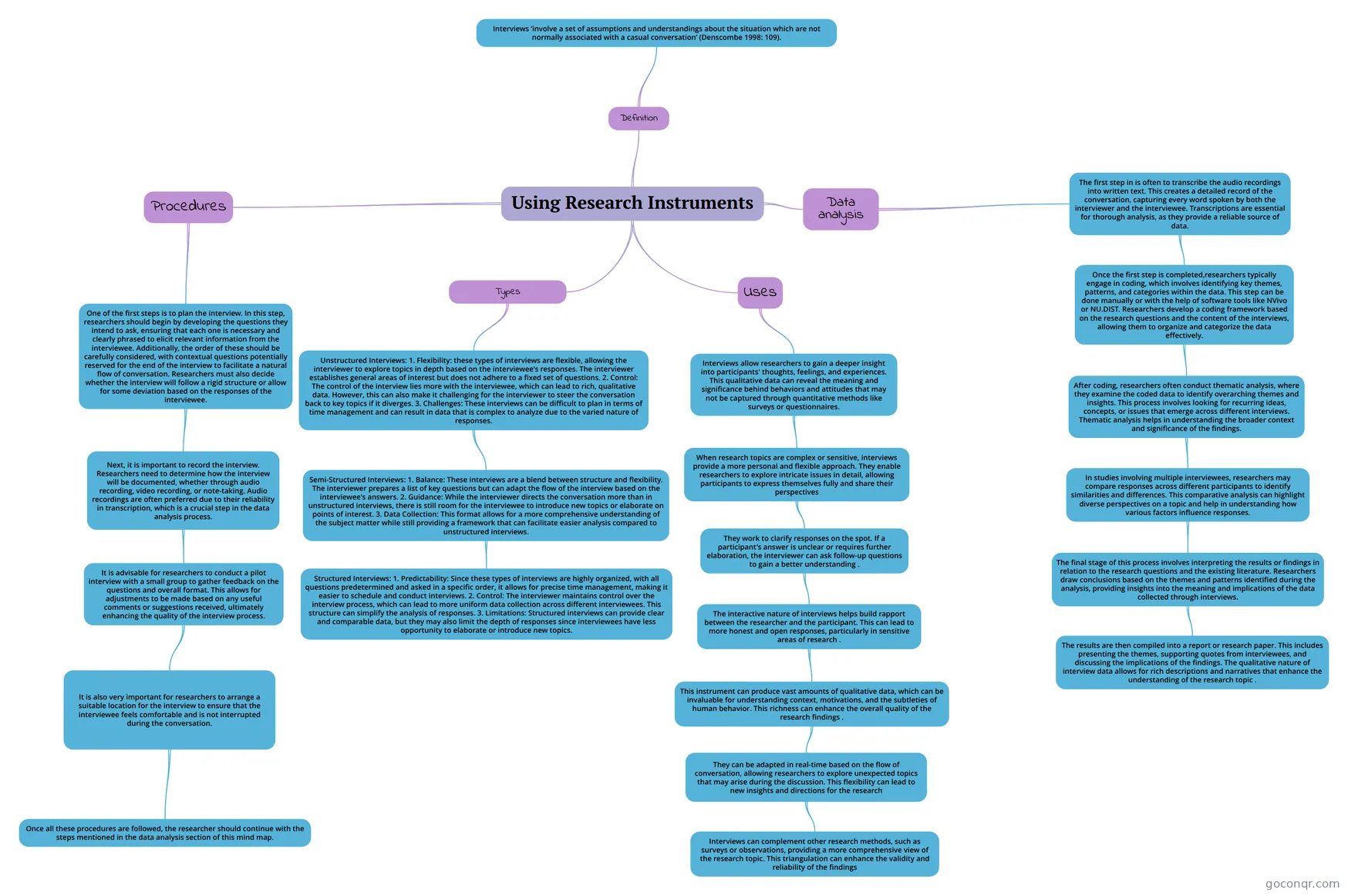 Using Research Instruments Interviews
-
What is the questionnaire
-
NEEDS ANALYSIS:
-
Research instrument: Questionnaires
-
Methodologies to gather information
-
Research Instruments
-
Final Reflective Assessment: Data Collection Journey
-
OBSERVATION
-
VALIDITY & RELIABILITY
-
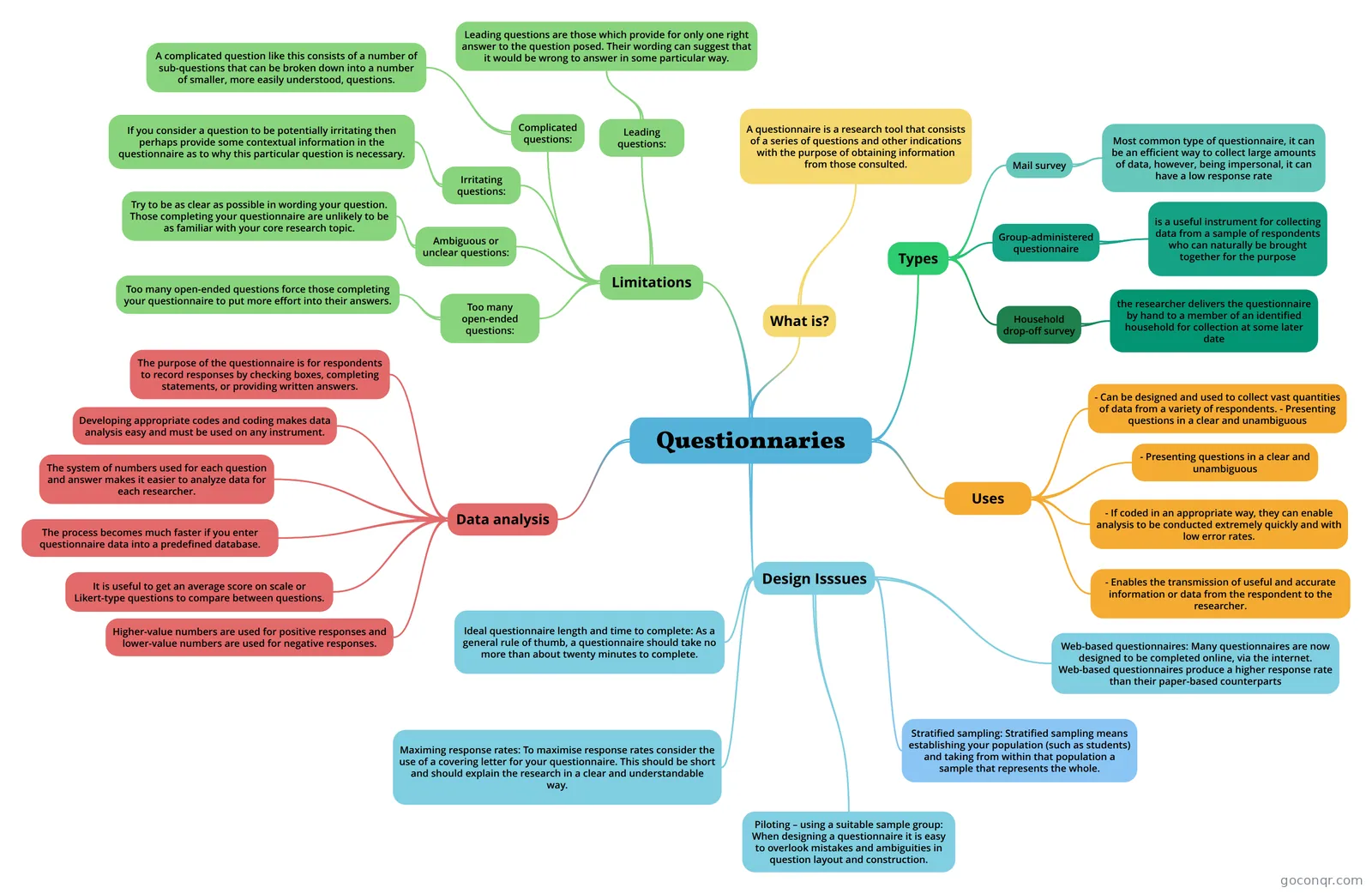 Questionnaries
-
INSTRUMENTS FOR DATA COLLECTION
-
Using research instruments
-
Research instruments.
-
Manipulating and using Data
-
Questionnaires
-
Using Research Instruments
-
What are questionnaires and what do they meassure?
-
Research-instruments: Interviews
-
Interviews
-
research instruments
-
Questionnaires
-
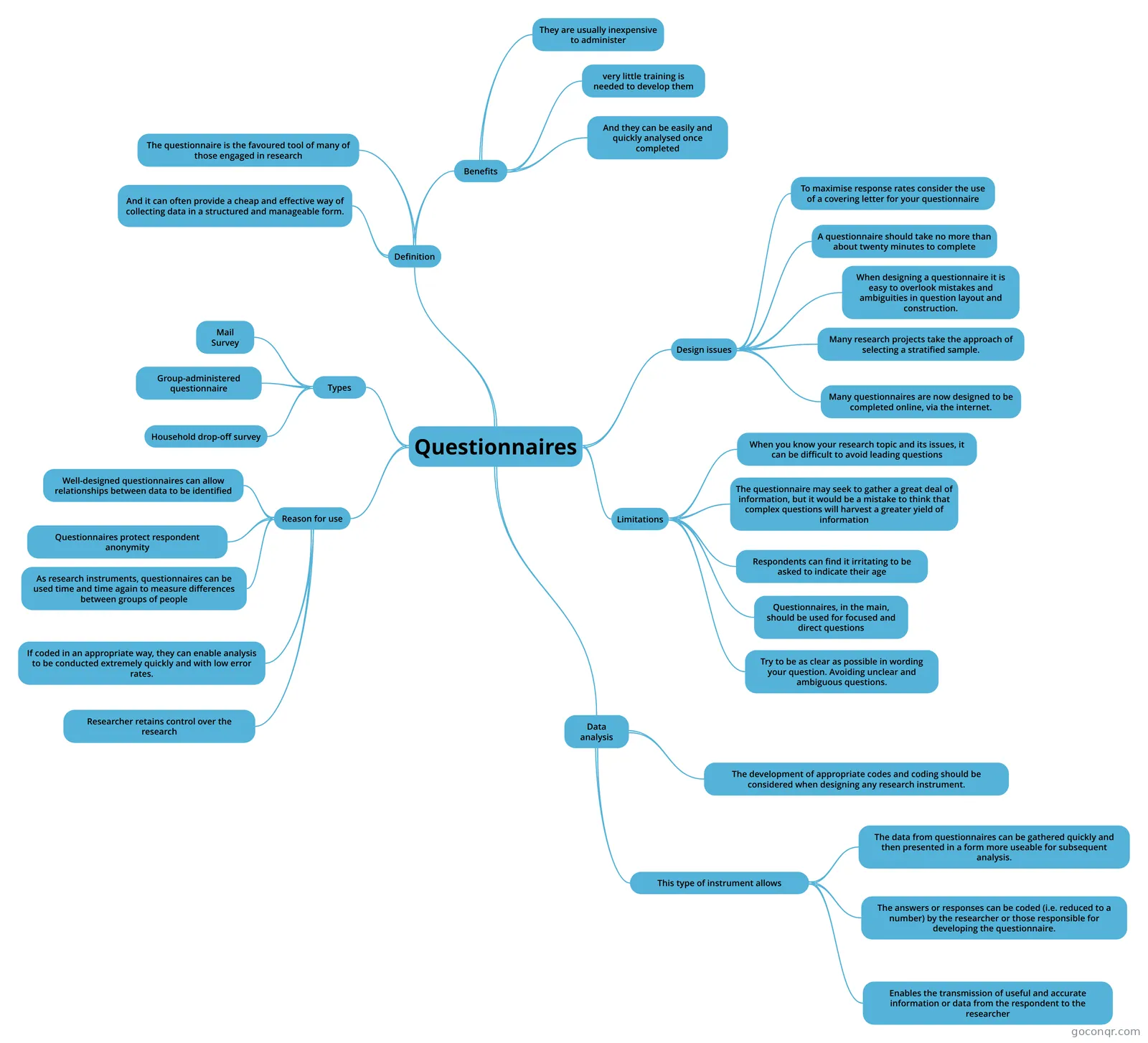 Questionnaires Research intrument: Questionnaires
-
Questionnaires
-
Questionnaires
-
Constructing the questionnaire
-
Questionnaire
-
INTERVIEW
-
INTERVIEW
-
Focus groups
-
Research instruments
-
RESEARCH INSTRUMENTS YRG
-
Ch. 8: Validity & Reliability
-
The questionnaires in a project
-
Questionnaires
-
Research Instruments
-
Research Instruments
-
Needs analysis: Data collection and analysis
-
Interviews
More Data Collection Methods and Instruments resources
About data collection methods and instruments mind maps
GoConqr OriginalData Collection Methods and Instruments mind maps
These user-made maps organise topics into branches, so you can follow connections between methods and instruments. Data Sources brings together primary and secondary data, reliability and collection methods. It is a useful starting point if you want an overview before focusing on an instrument.
For a closer look at questionnaires, Constructing the questionnaire includes closed-ended items. Likert scales explores response options for questions and statements. The Interviews map introduces different conceptions of an interview.
Revise with the maps
Read one branch, then try to recall its main points without looking. Return to the map to check what you missed. Use Data Collection to compare sampling types, or Field Research Process to follow the stages of fieldwork. When you want a change from reading branches, switch to flashcards on the unit page for recall practice. Choose a map that matches the topic you are studying.
Frequently asked questions
Which mind map is a good place to start?
Start with Data Sources if you want to connect primary and secondary data with collection methods. For a more focused topic, Constructing the questionnaire looks at questionnaire items, while Interviews introduces conceptions of the interview. Choose the map that fits the material you are revising.
What do the mind maps cover?
The maps cover questionnaires, interviews, sampling, field research and research instruments. Data Collection lists sampling types, while Field Research Process follows stages such as preparing for fieldwork and choosing a site. Other maps address Likert scales, data sources, validity and reliability.
Are the mind maps free to use?
Yes. Every resource listed on this page is free to open and study without an account. The maps were made by GoConqr users. A free account also lets you save quiz scores and make your own quizzes, mind maps, flashcards and notes.