
Data Structures and Algorithms mind maps
23 mind maps by 23 users
This GoConqr page gathers mind maps on Data Structures and Algorithms, from lists and arrays to data exchange. The maps are mainly for university students studying data structures and teachers seeking visual material, with a few for school students. There are over 20 mind maps made by over 20 users. Pick a map to explore a topic.
Mind maps
-
Part 1: Mind Map
-
Data Exchange Applications
-
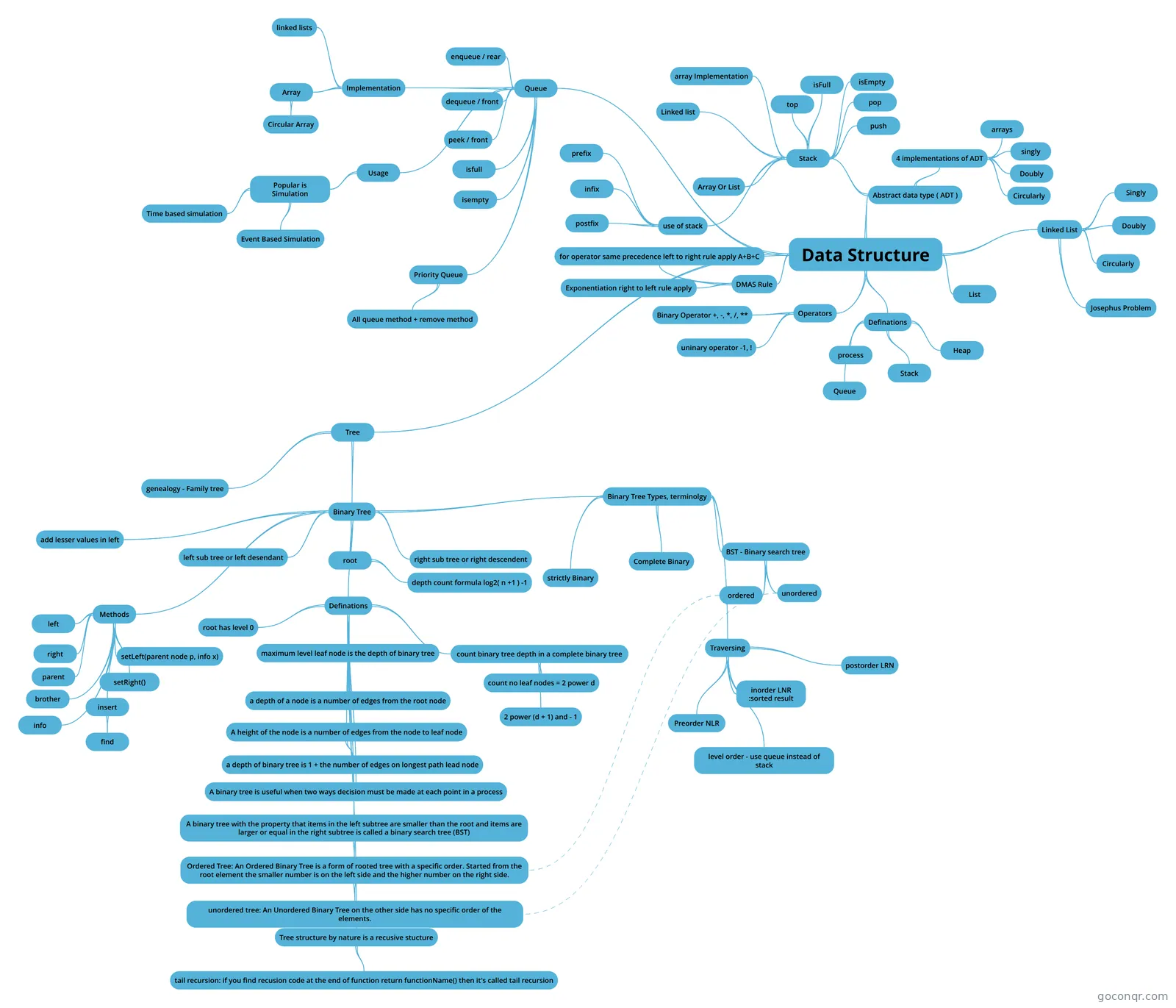 Data Structure
-
IA3 JSON API data knowledge
-
Part 1
-
DS IA3 Part 1
-
Mind Map
-
Crisp and fuzzy data in structures
-
Data Structures
-
Series, Arrays and Data Frames
-
Dictionary Data Structure
-
Data Structure (14 marks)
-
Data Structures
-
COMPARATIVE STUDY OF DATA IN SHARPER AND FUZZY STRUCTURES DATA
-
Data structures
-
SWAPI.Tech
-
Data Structure
-
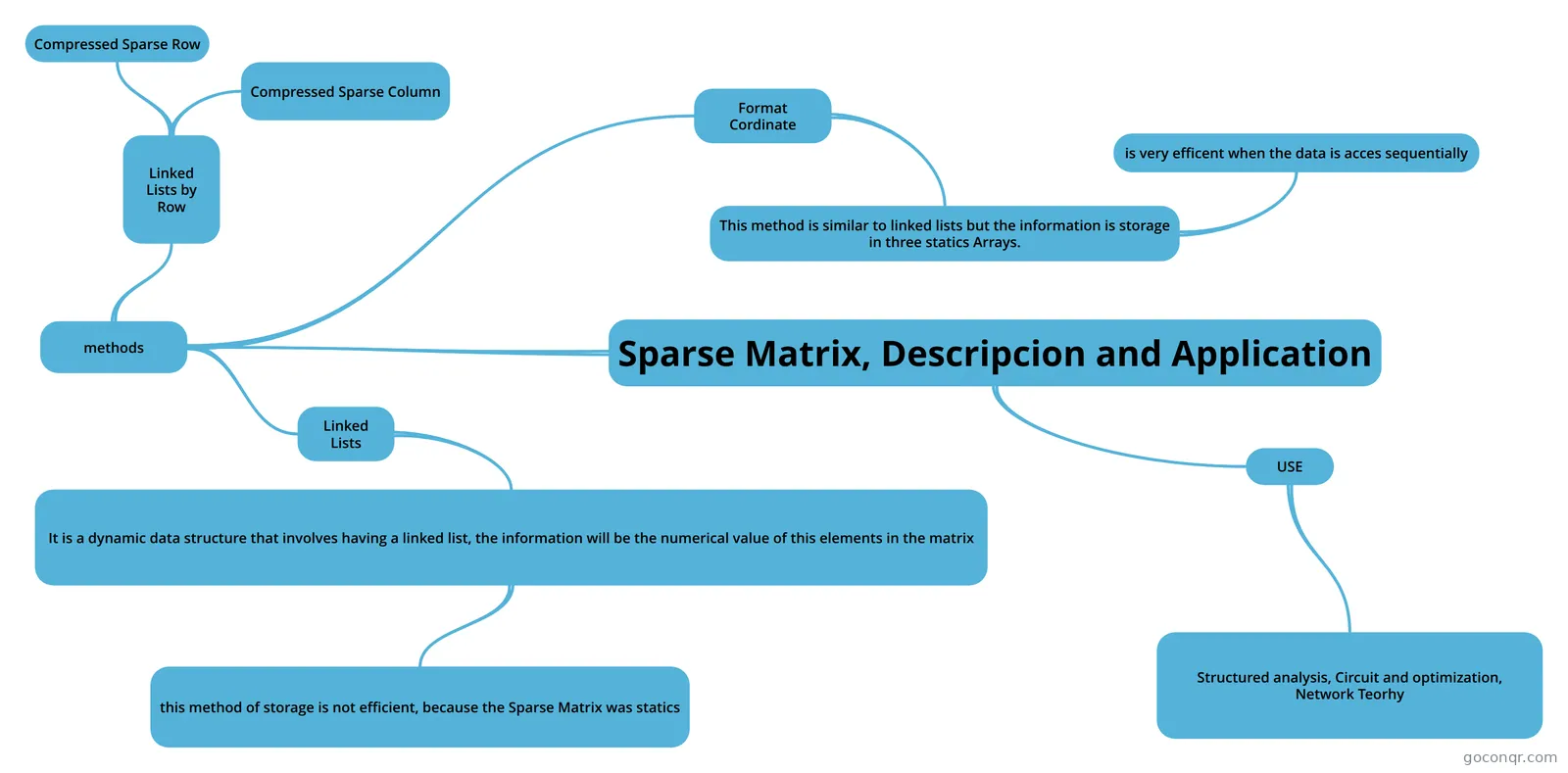 Sparse Matrix, Descripcion and Application Mapa Mental realizado para ayudar a la comprencion de el uso de las matrices dispersas
-
Linear Data Structures
-
Untitled
-
Data Structures
-
Tree, Graph & Recurrence Relation
-
studing
More Data Structures and Algorithms resources
About data structures and algorithms mind maps
GoConqr OriginalUsing data structures and algorithms mind maps
The maps on this page bring related terms together in visual branches. Crisp and fuzzy data in structures includes sets, queues, lists and matrices. Series, Arrays and Data Frames looks at definitions and differences between those structures. For data exchange, Data Exchange Applications includes JSON, XML and data types.
Choose a starting point
Start with Crisp and fuzzy data in structures if you want to see several structures in one map. If you are studying a narrower topic, Dictionary Data Structure focuses on keys and values. Read the branches, then cover them and recall the terms they connect. Revisit any branch you could not explain.
When you want to check your understanding with questions, switch to a quiz on the unit page. If you need a written explanation before returning to a map, try the unit's notes. Choose a map and follow one branch at a time.
Frequently asked questions
Which mind map is a useful place to start?
Crisp and fuzzy data in structures is a starting point if you want to look across several topics. Its branches include sets, queues, lists and matrices. For a more focused map, Dictionary Data Structure covers dictionaries, including the keys and values associated with their elements.
Are these mind maps free to use?
Yes. Every mind map listed here is free to open and study without an account. The resources were made by GoConqr users. A free account also lets you save quiz scores and make your own quizzes, mind maps, flashcards and notes.
Who are these mind maps for?
Most of the resources are at university level, so university students can use them to review structures and related terms. Teachers can also use the maps as visual material for topics such as arrays and data exchange. A smaller number of resources are suitable for school students.