
Food Groups and Foods
10 resources created by 9 users
This Food Groups and Foods page on GoConqr gathers community-made mind maps, flashcards and quizzes, from cereals, dairy and fruit and vegetables to legumes and nuts, fish, eggs, convenience food and functional foods. It's built for school students revising a topic, university students and professional candidates filling gaps, and teachers after ready-made material. There are over 130 resources here, including more than 100 mind maps, 11 flashcard decks and 8 quizzes. Pick a group, try a quiz to find your gaps, then make your own notes.
Top Food Groups and Foods resources
Quizzes
Mind maps
Flashcards
More Nutrition and dietetics topics
About Food Groups and Foods
GoConqr OriginalWhat this unit covers
This unit sits in the Food, Diet and Meal Planning strand of Nutrition and dietetics. Most of what is listed is mind maps, which suits a topic built around groups of foods that you compare and sort.
The main food groups
Start with the Food Groups and Food Pyramid maps to see the whole picture. Then move through the groups one at a time.
- Cereals: The cereal group explains that cereals are the seeds or grains of cultivated grass plants. It also covers their average composition and structure, including the bran layer.
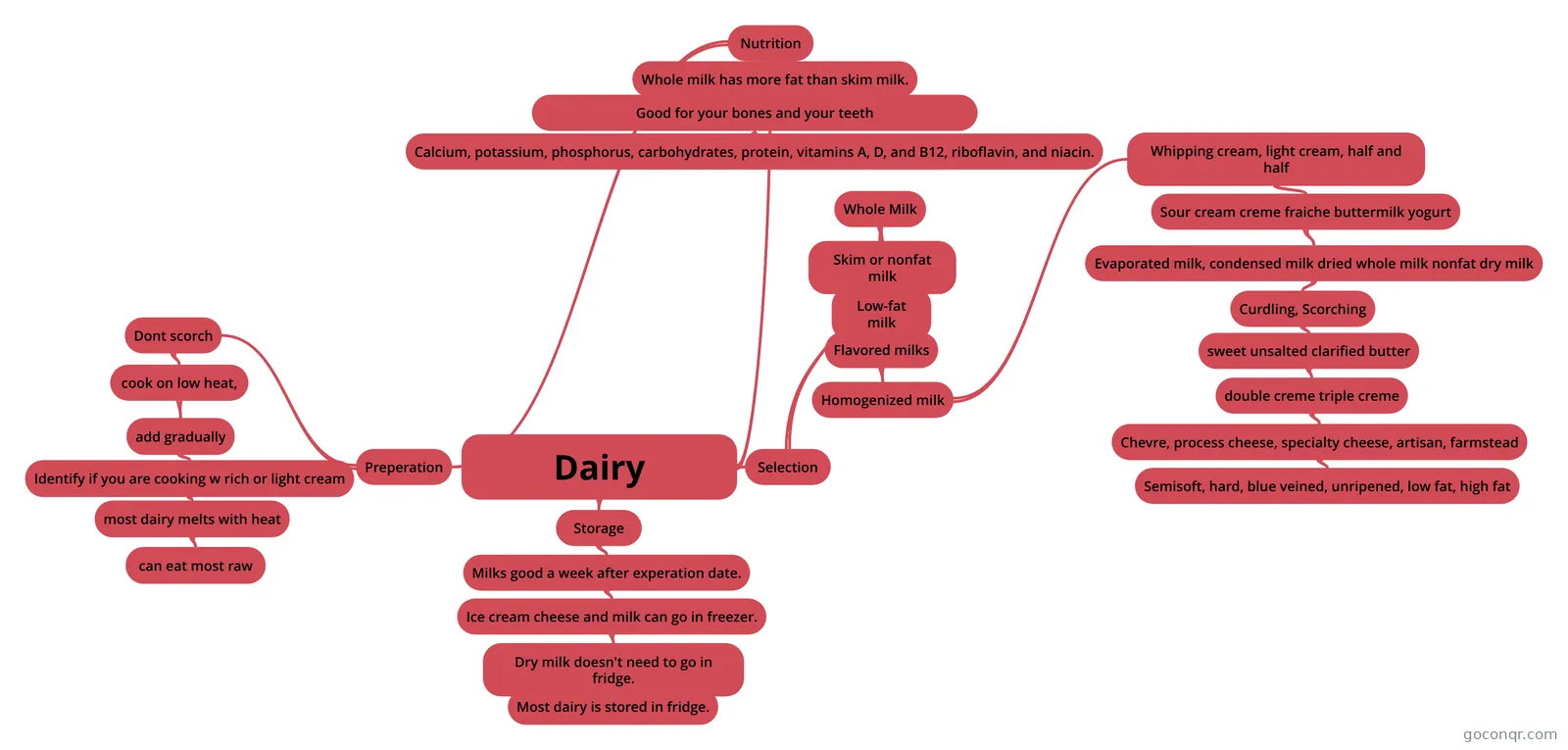
- Dairy: the Dairy map covers selection, storage, preparation and nutrition, including calcium, protein and vitamins. The flashcard deck Biochemistry of Milk goes deeper into the components of milk.
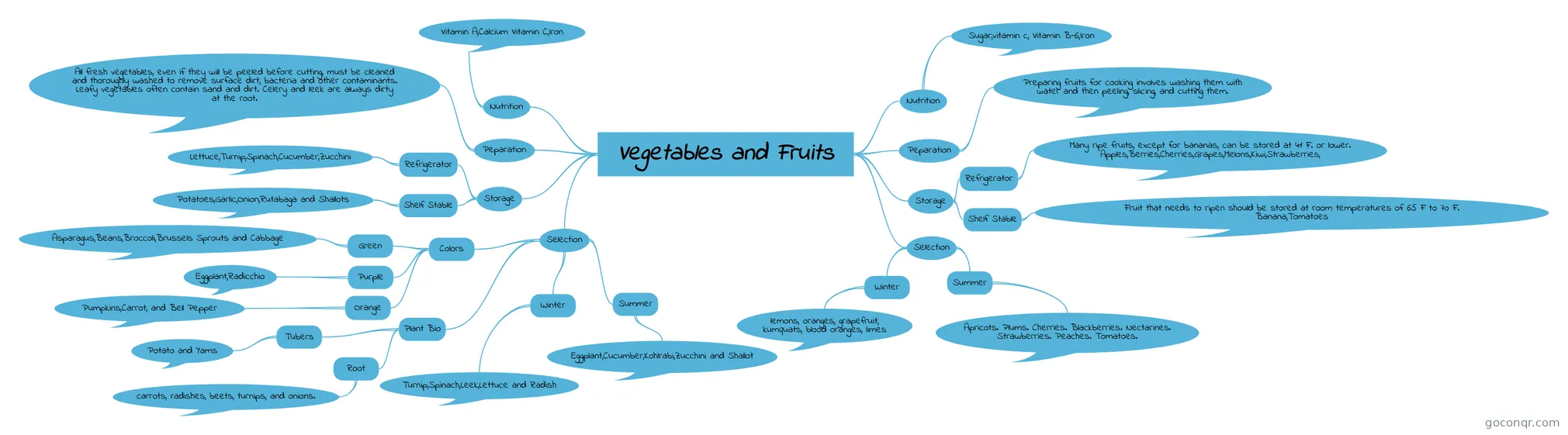
- Fruit and vegetables: one map looks at nutritional value, with fibre, potassium, iron and calcium examples. Another looks at health campaigns such as 5 a Day.
- Legumes and nuts: nutritive value and uses, from salads to curries and snacks.
- Meat, fish and eggs: see Meat Mindmap, Fish Mindmap and Eggs.
Food choices and modern issues
Some maps look at how people buy and eat. The map on convenience food and ready made meals lists why these foods are popular, such as less time, longer working hours and more microwaves. Food choices available to a consumer covers frozen, cook-chilled and own-brand products. The Facts Behind The Issues starts with fast food. For newer ideas, try Functional Foods, Nutraceuticals and Phytochemicals and Phytonutrients.
Using maps and quizzes together
Read a map first, then test yourself. Try Name the Food Group after the group maps, and Go, Grow and Grow foods for a lighter check. Lecture 3 - food composition suits those who want to test composition. Where a quiz shows a gap, go back to the matching map or flashcard deck, such as 5 food groups or Dairy products.
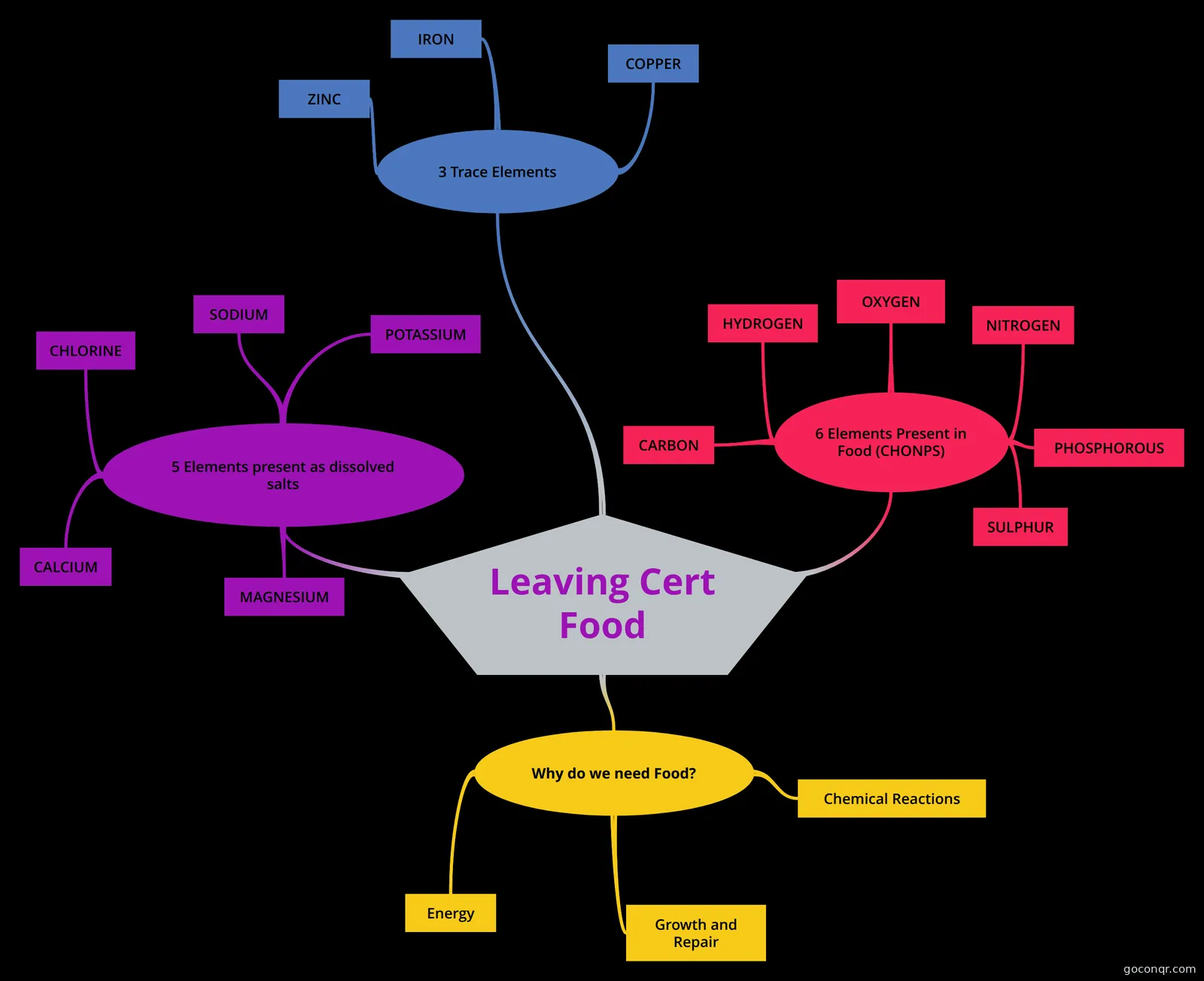
Many students use the Leaving Certificate material here for revision, and teachers can pick maps to share in class. Choose one food group today, take a quiz, then start a map of your own.
Frequently asked questions
Where should I start on this page?
Begin with the Food Groups and Food Pyramid mind maps for an overview. Then pick a single group, such as The cereal group or Dairy, and read its map. Once you know the main points, take Name the Food Group to see what stuck.
What do the mind maps cover?
They cover cereals, dairy, fruit and vegetables, legumes and nuts, meat, fish and eggs. Others cover convenience food, consumer food choices, fast food and functional foods. Many include nutrients, uses, storage or preparation, so you can compare groups side by side.
Are the resources free to use?
Yes. Every resource listed here is free to open, study and take, with no account needed. They were made by GoConqr users, not by GoConqr. A free account also saves your quiz scores and lets you make your own quizzes, mind maps, flashcards and notes.
Which levels and exams does this suit?
Most resources are at secondary level, with a good share for university students and professional candidates. One exam is mentioned in the listed resources: the Leaving Certificate. Teachers can use the maps and decks as ready-made material for classes.
Are there flashcards as well as maps?
Yes. There are 11 flashcard decks, including Biochemistry of Milk, Functional Foods and Nutraceuticals, Phytochemicals and Phytonutrients, 5 food groups, Dairy products and Meat. They suit quick recall once you have read the related mind map.
What if I cannot find a topic I need?
Check the related groups first, as many topics overlap. If it is still missing, you can make your own mind map, flashcards, quiz or notes from the material you have, using a free account.