
Paediatric Dentistry mind maps
16 mind maps by 12 users
This Paediatric Dentistry page gathers mind maps on topics from child development to pulp therapy and trauma. University students and professional candidates can use them to review these topics, while teachers can find ready-made material. There are over 10 mind maps made by more than 10 users, covering university and professional study. Choose a map to begin.
Mind maps
-
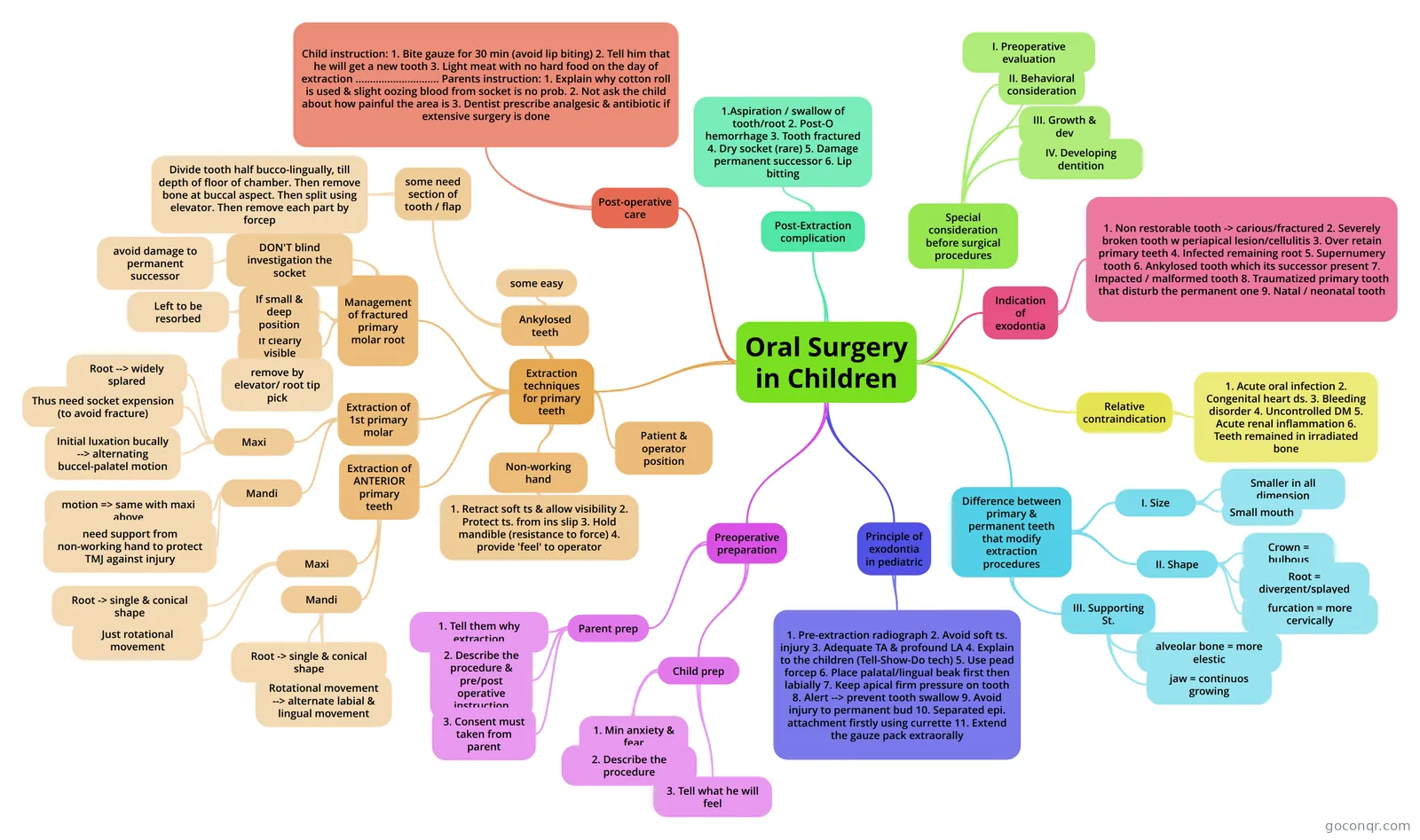 Oral Surgery in Children
-
Clinical decision making for caries management in children
-
Child Development
-
Dental Management Of Children with Special Needs
-
 Gingival & periodontal Diseases in Children
-
Treatment planning in CDH
-
Primary Trauma
-
Restos in Primary & Mixed Dentition
-
Protective stabilization
-
Pulp therapy
-
Pacifier-sucking habit duration and frequency on occlusal and myofunctional
-
Mobident
-
Prevalence and predictive factors of sleep bruxism in children with and without cognitive impairment
-
Pediatric Patients
-
Working with Children & Child Development
-
MIH
More Paediatric Dentistry resources
About paediatric dentistry mind maps
GoConqr OriginalExplore Paediatric Dentistry mind maps
These maps offer different starting points for revision. Child Development outlines phases of attachment, while Pulp therapy sets out indications for treatment. The map on caries management brings together clinical and radiographic identification, the carious process and the location of lesions.
Start with the topic you want to review. For example, use Primary Trauma to follow its branches on crown fractures and injuries to the periodontium. Open the branches and try to recall their contents before reading them again.
Move between formats
Use a map to see how points are grouped, then revisit any branch you find difficult to recall. When you want to practise recalling individual details or check your understanding with questions, switch to the flashcards or quizzes on the unit page. Teachers can also select a map as a starting point for revision material.
Pick a topic and explore its branches.
Frequently asked questions
Which mind map should I start with?
Start with the topic you want to review. Child Development is an option for attachment phases; Pulp therapy sets out indications for treatment. If you are revising injuries, Primary Trauma covers crown fractures and injuries to the periodontium. Open a branch and use its points to guide your review.
What do these mind maps cover?
The maps cover topics including child development, oral surgery, pulp therapy, trauma and caries management. They also include material on treatment planning and protective stabilisation. Each map organises its topic into branches, so you can choose one area and follow the points listed under it.
Are the mind maps free to use?
Yes. Every resource listed here is free to open and study without an account. The maps were made by GoConqr users. A free account also lets you save quiz scores and create your own quizzes, mind maps, flashcards and notes.