
Present Perfect mind maps
217 mind maps by 208 users · Page 1 of 6
This GoConqr page gathers present perfect mind maps, from verb forms and time expressions to life experiences. It offers school students material for revision and teachers resources for grammar lessons. With over 160 mind maps made by more than 150 users, there is plenty to explore; choose a map to get started.
Select topic
- Past Participles6
- Present Perfect Affirmative, Negative and Questions13
- Present Perfect for Experiences15
- For, Since and Ago30
- Present Perfect Time Expressions and Adverbs63
- Have Been vs Have Gone5
- Present Perfect vs Past Simple5
- Present Perfect Simple vs Continuous30
- Present Perfect Reading Comprehension46
Mind maps
-
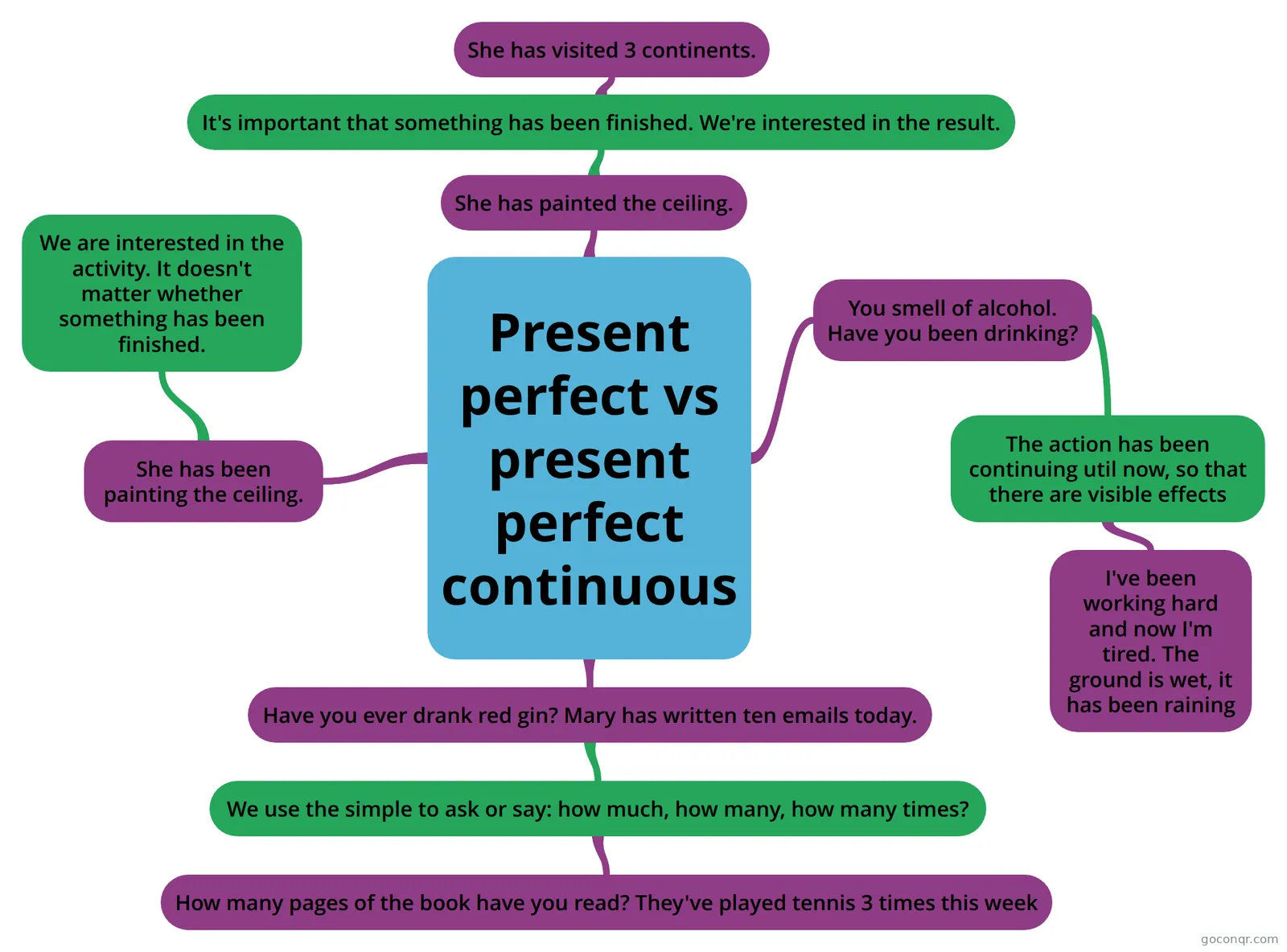 Present perfect vs present perfect continuous pp vs ppc
-
FOR, SINCE, EVER , NEVER, ALREADY, YET
-
Life experiences
-
Adverbs (present perfect)
-
PRESENT PERFECT
-
VS
-
Unit 3
-
6. IV. For and Since / When? and How long?
-
? Today's Class #589 ? October 21/2021
-
SUMMARY UNIT 6
-
already, yet, just, ever ,for and since.
-
Present Continuous and Present Perfect Simple
-
Grammar
-
Present perfect; have been and have gone. Time expressions with the presentent perfect.
-
English
-
PRESENT PERFECT SIMPLE VS PRESENT PERFECT CONTINUOUS
-
Unit 8. ADVENTURE
-
PRESENT PERFECT TIME EXPRESSIONS
-
Research Already-just-yet
-
PRESENT PERFECT (since, for, ever, never, still, just, yet, already, both, all, none, neither)
-
Present Perfect
-
Adverbs
-
PRESENT PERFECT VS PRESENT PERFECT CONTINUOUS
-
Present
-
EDUCATION STRUCTURES
-
FOR and SINCE
-
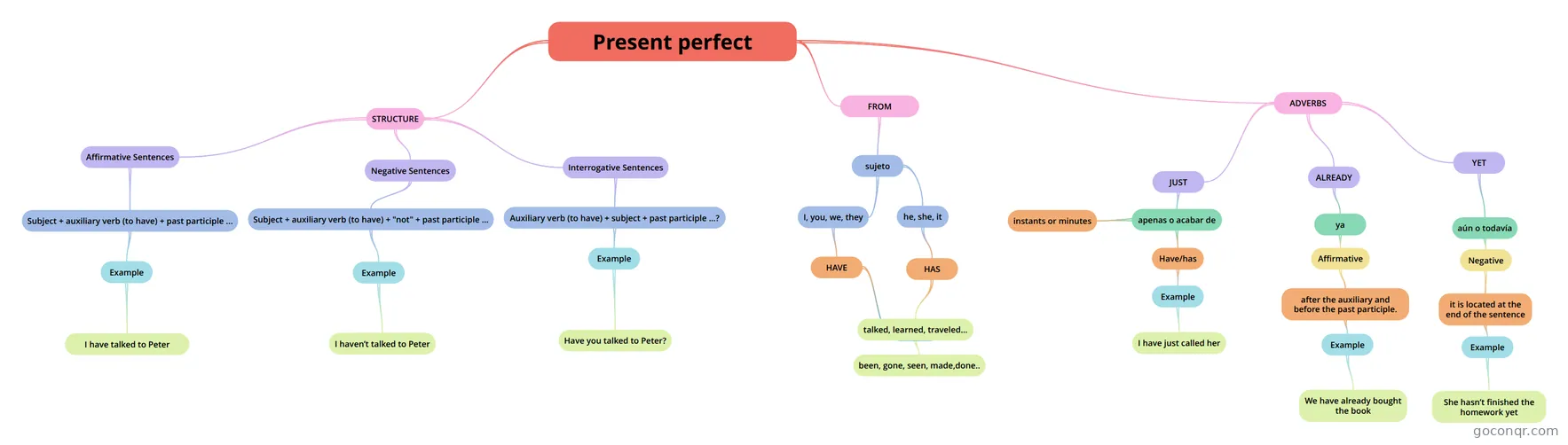 Present perfect Yet Just Already
-
PRESENT PERFECT PROGRESSIVE
-
Present Perfect Simple
-
Present Perfect
-
UNIT 4
-
Present perfect; Have been and have gone
-
PRESENT PERFECT
-
Already, Just, Still and Yet
-
Present perfect with just, yet, already
-
Present Perfect
-
SINCE VS. FOR
-
PRESENT PERFECT
-
The Present Perfect Tense with "NEVER" and "EVER"
-
Time expressions
More Present Perfect resources
About present perfect mind maps
GoConqr OriginalExplore present perfect mind maps
The maps on this page take different approaches to the unit. Present Perfect Simple focuses on a verb form, while Time expressions brings together words used to talk about experiences and actions up to now. Other maps compare the simple and continuous forms or look at the difference between have been and have gone.
Choose a starting point
For an overview, try Present perfect, which sets out affirmative, negative and interrogative sentence structures. If you are working on a particular expression, the map about for and since gives examples alongside its explanations.
Revise with a map
Follow the branches on one map, then compare its examples with those in another on the same topic. When you want to check your understanding or revisit vocabulary, switch to a quiz or flashcards on the unit page. Pick a map that matches what you are revising.
Frequently asked questions
Which mind map should I start with?
Start with Present perfect if you want to review sentence structure. Its branches cover affirmative, negative and interrogative sentences. For a narrower topic, Time expressions brings together words such as never, ever, yet and already, with notes on how they are used.
What topics do the mind maps cover?
The collection includes maps on present perfect sentence forms, time expressions and life experiences. Some compare the simple and continuous forms, while others focus on pairs such as for and since or have been and have gone. Broader unit maps include present perfect alongside other material.
Are the mind maps free to use?
Yes. Every resource listed on this page is free to open and study without an account. A free account also lets you save quiz scores and create your own quizzes, mind maps, flashcards and notes. The listed resources were made by GoConqr users.
Who are these resources for?
School students can use the maps to revise present perfect forms and expressions, while teachers can use them as resources for grammar lessons. The collection includes both focused maps and broader unit maps. Some listed resources also mention FCE.