
Principles of Flight and Aerodynamics
27 resources created by 20 users
This Principles of Flight and Aerodynamics page on GoConqr gathers community-made quizzes, mind maps, flashcards and a slide set, from lift, drag and stalling to high speed flight and rotorcraft. It's built for university students and professional candidates practising for exams such as the PPL, ATPL and EASA Part-66, and for teachers after ready-made material. There are over 140 resources here, including more than 50 quizzes and over 60 flashcard decks. Try a quiz to find your gaps, then pick a topic to revise.
Top Principles of Flight and Aerodynamics resources
-
200 questionsPOF EXAM PREP CMPLT 1 2On a standard atmosfaire the conditions at sea level are]
-
103 questionsEASA ATP Qatar Yellow 6 81.1.10.1 (5446) Spoiler deflection causes :
-
90 questionsAerodynamics EASA
-
200 cardsbob tait 5
-
47 questionsChapter 16 Which of the following definitions of propeller parameters is correct?
-
6 questions03. Pressure and density 1. A trough of low pressure is generally associated with:
-
9 questionsASSIGNMENT SHEET 2-2-3: LIFT PRODUCTION AND DRAG REVIEW This lesson is a continuation of aerodynamic principles from Lesson 2.1. Definitions of lift, weight, thrus...
-
8 questionsTest ATPL Principles of Flight (EASA 2020) Este es un examen tipo test (en inglés) de principios de vuelo para ATPL. Cada pregunta tiene su propio tie...
Quizzes
See all 21 quizzes-
200 questionsPOF EXAM PREP CMPLT 1 2On a standard atmosfaire the conditions at sea level are]
-
103 questionsEASA ATP Qatar Yellow 6 81.1.10.1 (5446) Spoiler deflection causes :
-
90 questionsAerodynamics EASA
-
47 questionsChapter 16 Which of the following definitions of propeller parameters is correct?
-
6 questions03. Pressure and density 1. A trough of low pressure is generally associated with:
-
9 questionsASSIGNMENT SHEET 2-2-3: LIFT PRODUCTION AND DRAG REVIEW This lesson is a continuation of aerodynamic principles from Lesson 2.1. Definitions of lift, weight, thrus...
-
8 questionsTest ATPL Principles of Flight (EASA 2020) Este es un examen tipo test (en inglés) de principios de vuelo para ATPL. Cada pregunta tiene su propio tie...
-
90 questionsDas Großes Deutsche Kuchen-Quiz In a hydraulic braking system, the accumulator is:
Mind maps
Flashcards
More Aviation topics
About Principles of Flight and Aerodynamics
GoConqr OriginalWhat the page covers
The resources follow the usual path of a principles of flight course. Flashcard decks work through thrust, power, lift, drag, the lift/drag ratio, stalling, high lift devices, balance and trim, stability, transonic and supersonic flight, and asymmetric flight. Other decks cover ground effect, turning, gliding and descending, and limitations. There are also resources on rotorcraft, altimetry and propellers.
Where to start
If the basics are new, begin with the flashcard deck 1 - What is an aircraft? and its matching mind map. Then move to the decks on lift and drag, using the Drag and Wing Characteristics mind maps to see how the ideas link. Terms such as inertia, thrust, roll, pitch and yaw are defined in the deck called Untitled_1, which makes a quick vocabulary check.
Quizzes for exam practice
Once the main ideas feel familiar, move on to the quizzes. Test ATPL Principles of Flight (EASA 2020) includes fill-in-the-blank questions on topics such as the speed of sound and constant speed propellers. EASA ATP Qatar Yellow 6 works through spoilers and the Mach number. Aerodynamics EASA covers the standard atmosphere and how pressure changes with altitude. For other exam routes, look at PPL Technical Practice 1 and PPL Technical Practice 2, or ASA FAA PP Aerodynamics.
Using quizzes and maps together
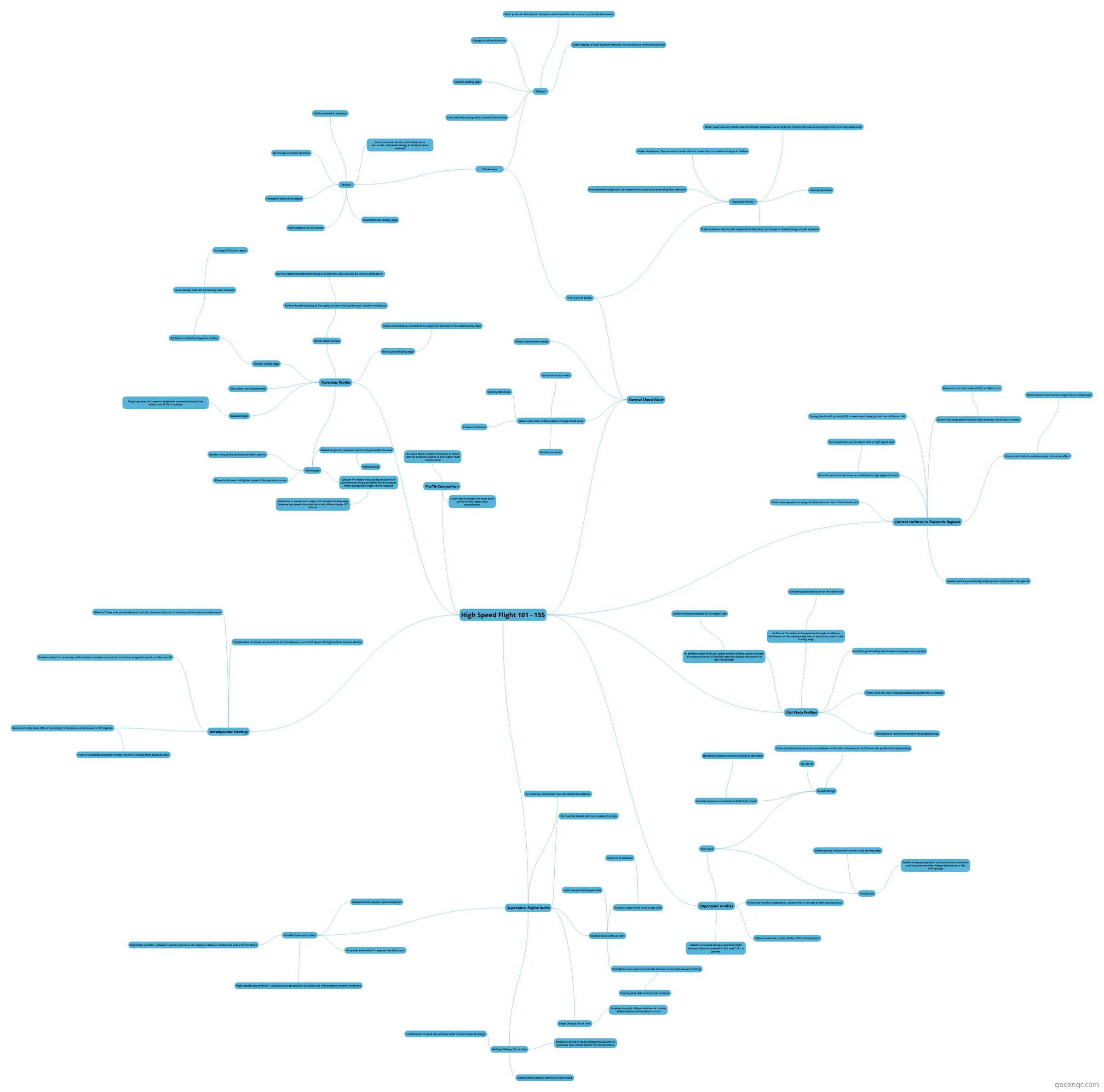
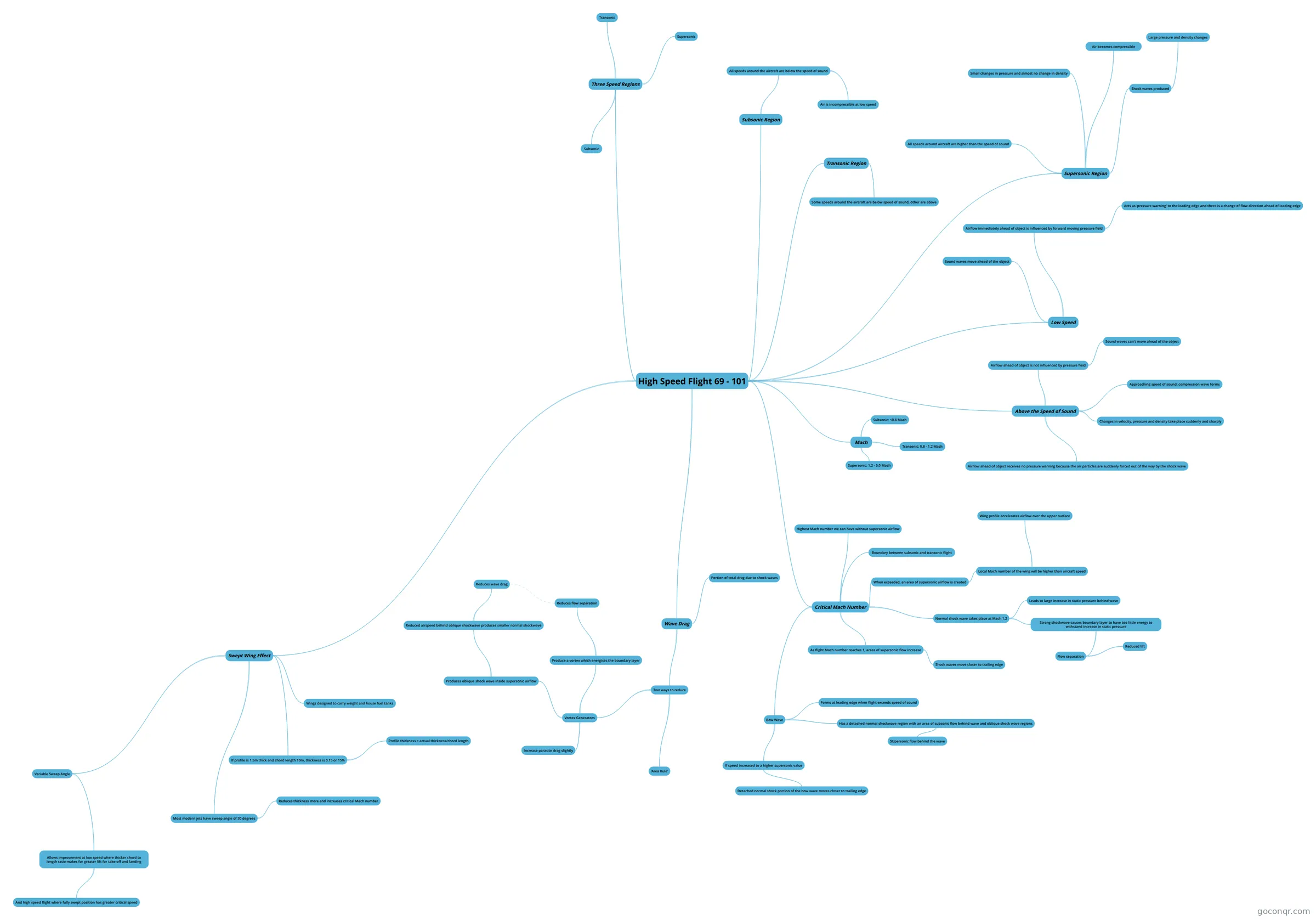
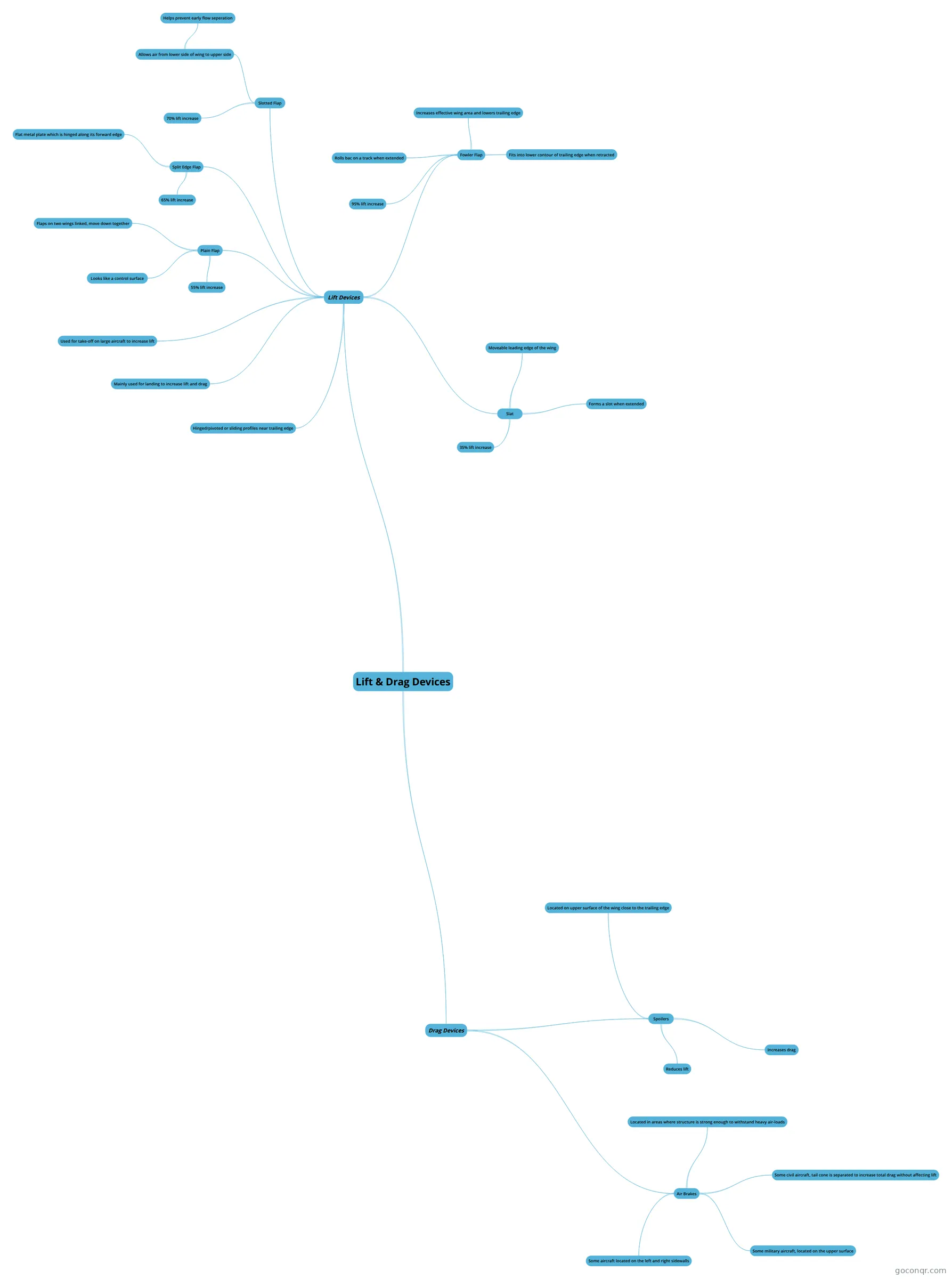
- Read a mind map on one topic, such as High Speed Flight or Lift & Drag Devices.
- Take a quiz on the same topic without notes.
- Note the questions you missed and go back to the matching flashcards.
- Retake the quiz a few days later.
Where this unit fits
This unit sits in the strand Aviation Foundations and Principles of Flight, within the subject Aviation. Pick the topic you find hardest, open a quiz, and add your own maps and flashcards where the community material leaves gaps.
Frequently asked questions
Which quiz should I try first?
Test ATPL Principles of Flight (EASA 2020) is a good first check if you are preparing for ATPL-style questions, because it mixes definitions and applied questions. For a gentler start, try Aerodynamics or the lift production and drag review, then move on to the longer exam-style sets.
What do the mind maps cover?
The mind maps cover drag, lift and drag devices, wing characteristics, steady symmetric flight, high speed flight, rotorcraft aerodynamics, and the basic question of what an aircraft is. They suit a quick overview before you take a quiz or work through the flashcards.
Which exams do these resources suit?
The listed resources mention the PPL, ATPL, EASA Part-66, EASA ATPL and FAA. They are aimed at university students and professional candidates, with some material that teachers may find handy. Always check your own syllabus, since the resources were made by users and not by GoConqr.
Are the resources free to use?
Yes. Every resource listed here is free to open, study and take, with no account needed. The resources were made by GoConqr users, not by GoConqr itself. If you want your quiz scores saved, a free account can do that and also lets you build your own material.
Is there material on helicopters?
Yes. There are flashcards on Rotorcraft, the FAA Helicopter Pilot Handbook and a rotorwing deck, plus a mind map called ROTORCRAFT AERODYNAMICS. Use them alongside the fixed-wing lift and drag decks to compare how the forces differ.
What if the topic I need is missing?
Look through the chapter-style flashcard decks first, as they split the subject into small topics. If you still cannot find what you need, make your own quiz, map or flashcards and fill the gap, using the community resources as a model.