
Religion, Ethics and Conscience mind maps
136 mind maps by 109 users · Page 1 of 4
This GoConqr page gathers mind maps on Religion, Ethics and Conscience, from moral arguments to sexual ethics. They are for school students revising ethical ideas and teachers looking for ready-made material. There are more than 130 mind maps, most at school level. Choose a topic and open a map to get started.
Select topic
- Religion and Morality20
- Ethical Theories and Moral Principles13
- Natural Law22
- Divine Command Theory7
- Situation Ethics24
- Kantian and Virtue Ethics8
- Conscience and Religious Approaches33
- Secular Approaches to Conscience10
- Free Will and Determinism5
- Sexual Ethics24
- Medical and Life Ethics15
- Environmental and Animal Ethics8
- War and Peace5
- Social Ethics, Crime and Punishment8
Mind maps
-
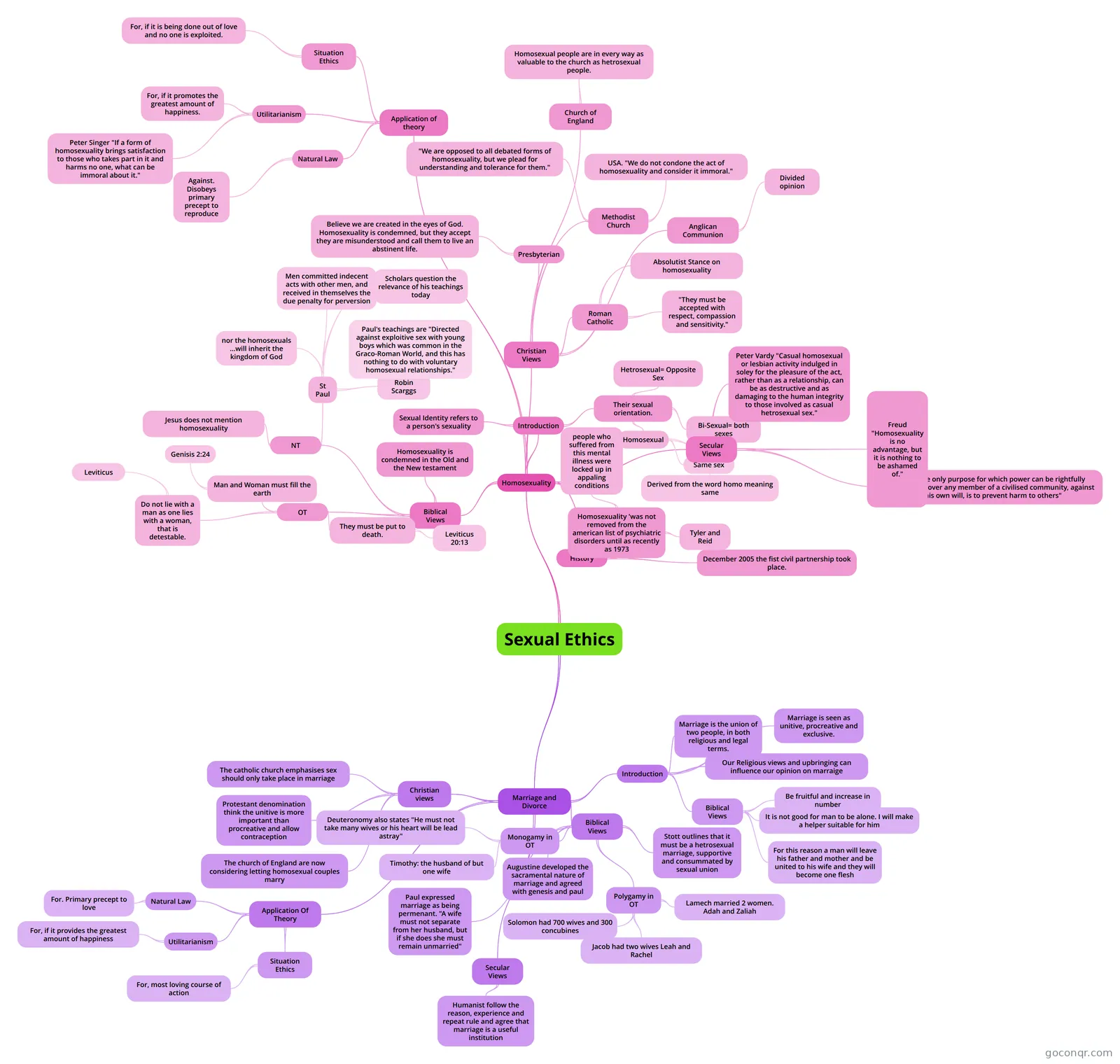 Sexual Ethics
-
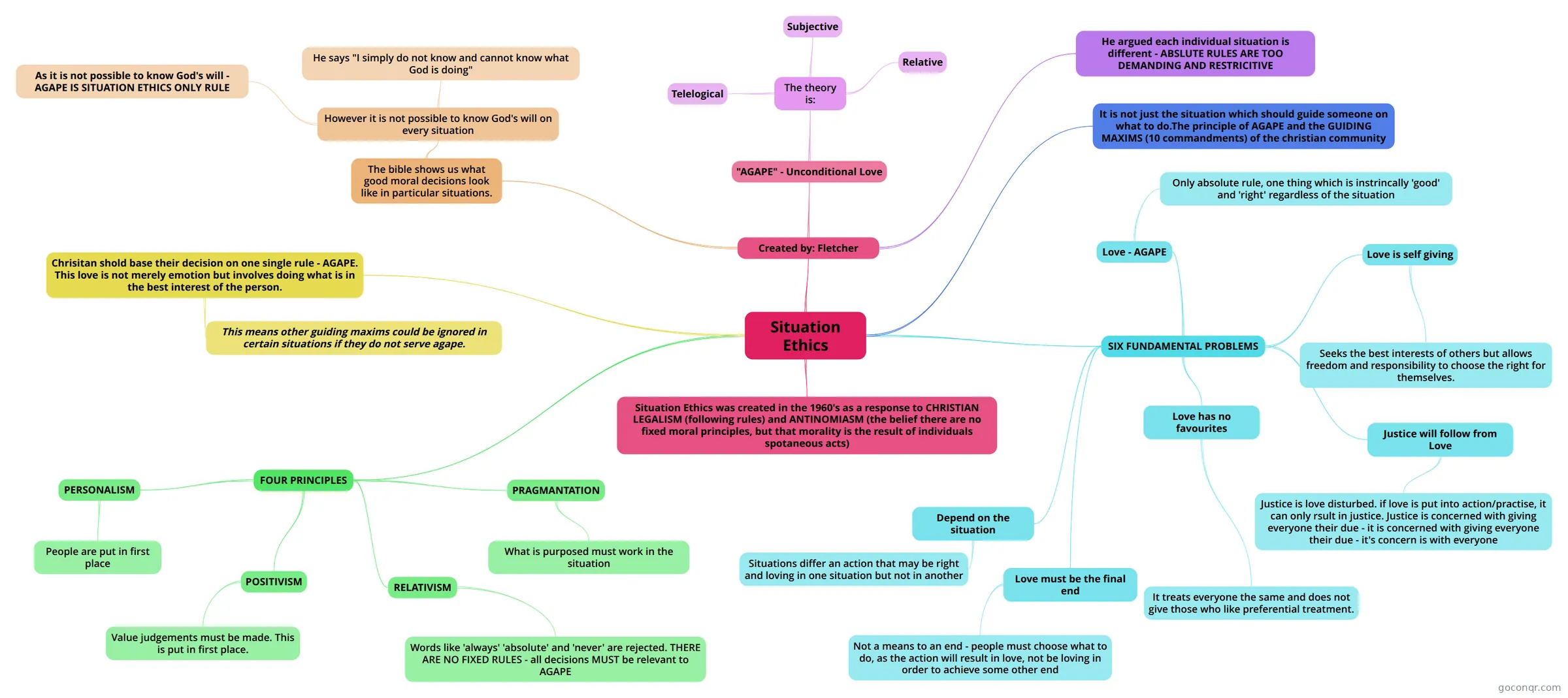 Situation Ethics
-
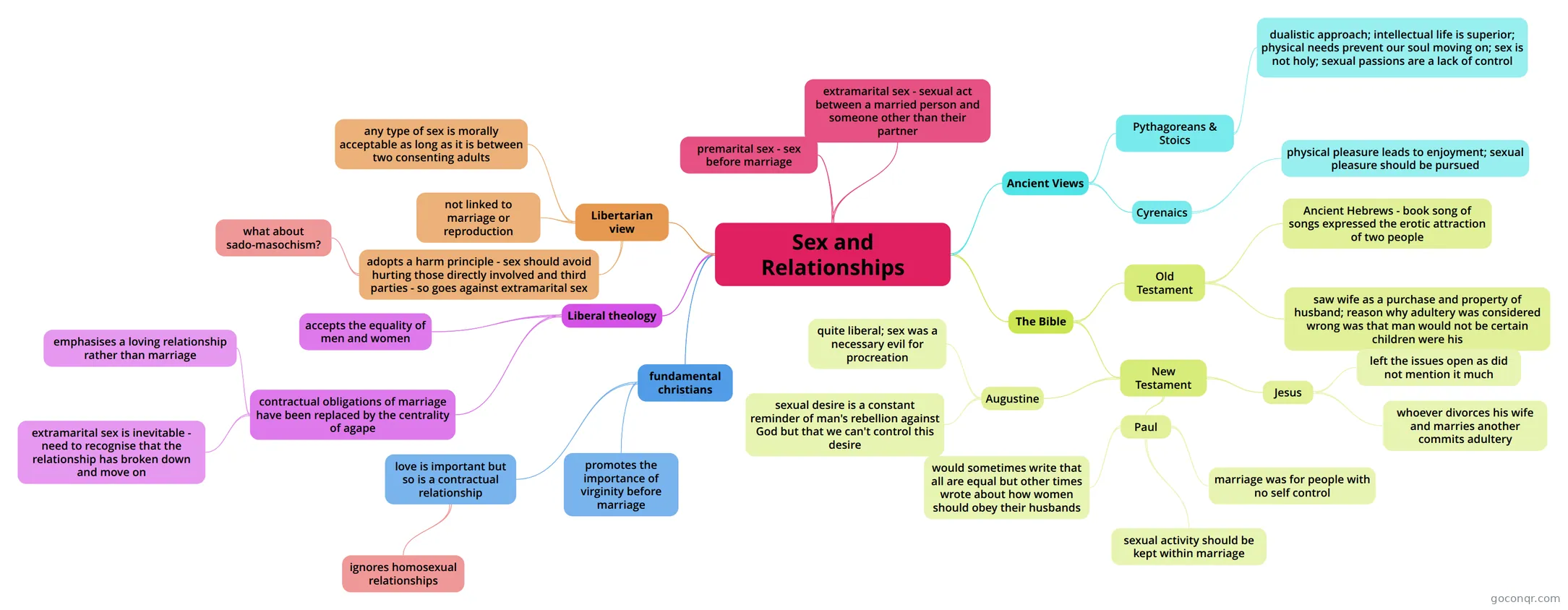 Sex and Relationships
-
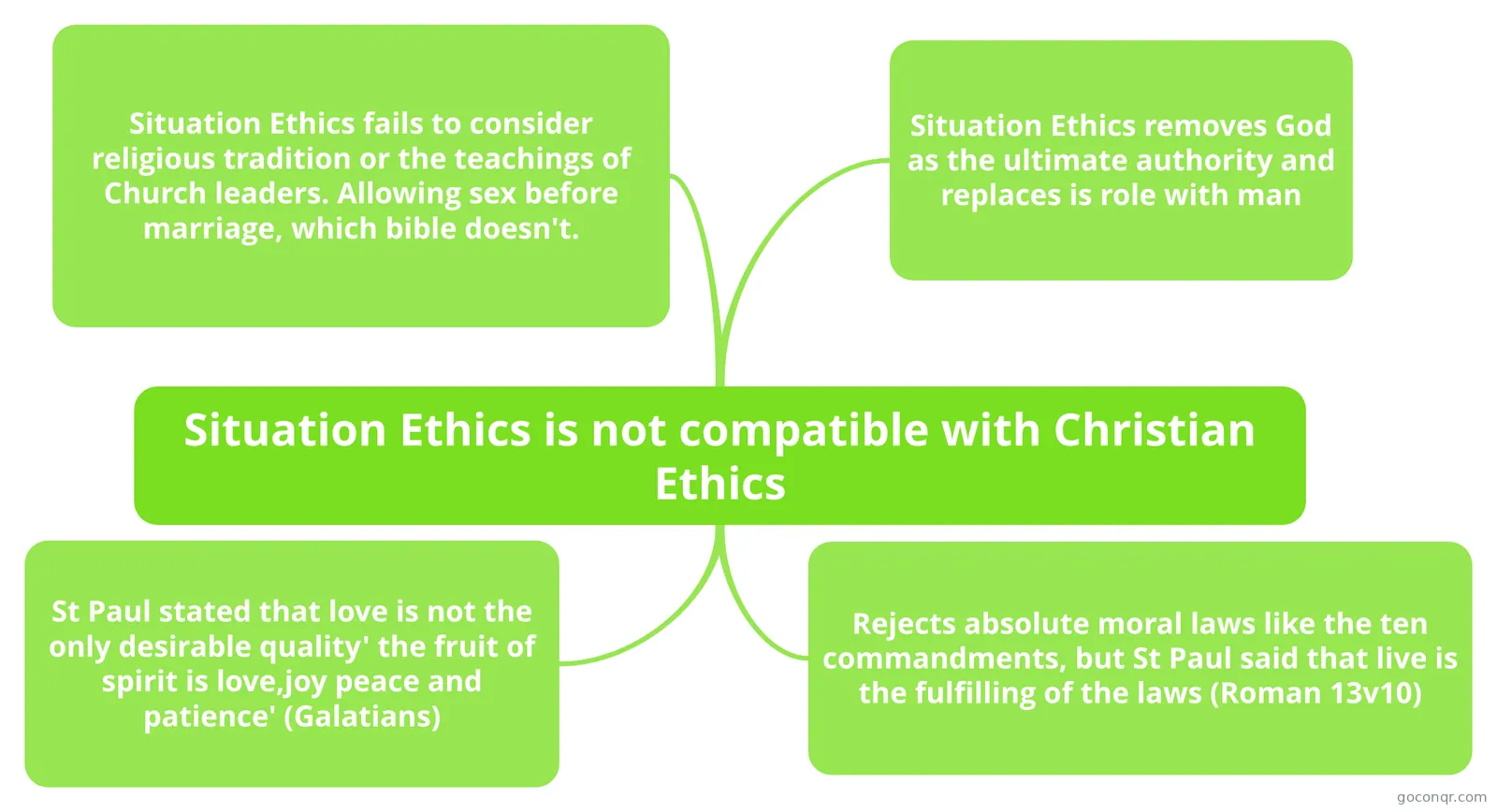 Situation Ethics is not compatible with Christian Ethics
-
Free will and determinism
-
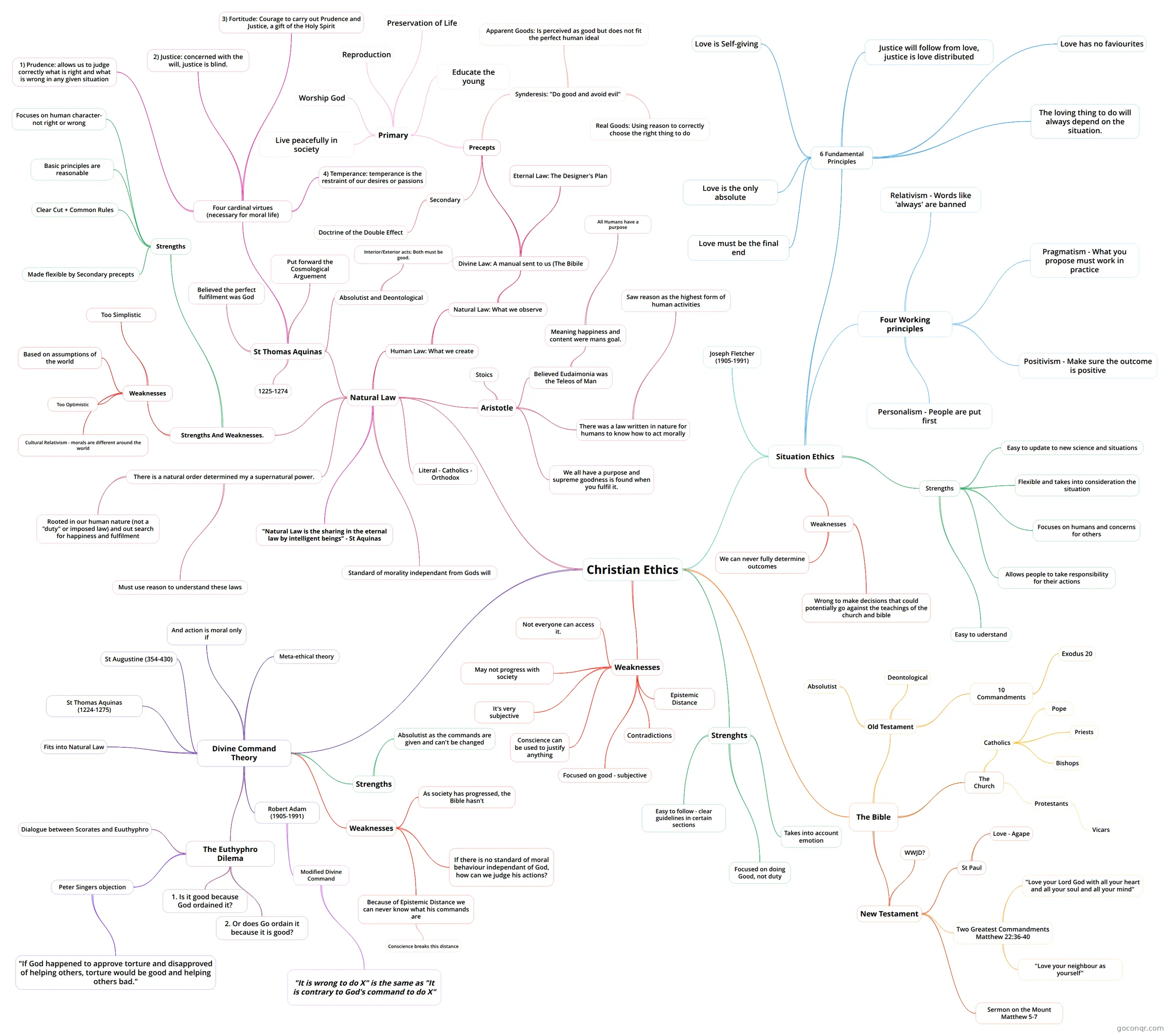 Christian Ethics Mind map on AS level Christian Ethics - including strengths and weaknesses
-
Natural Moral Law OCR
-
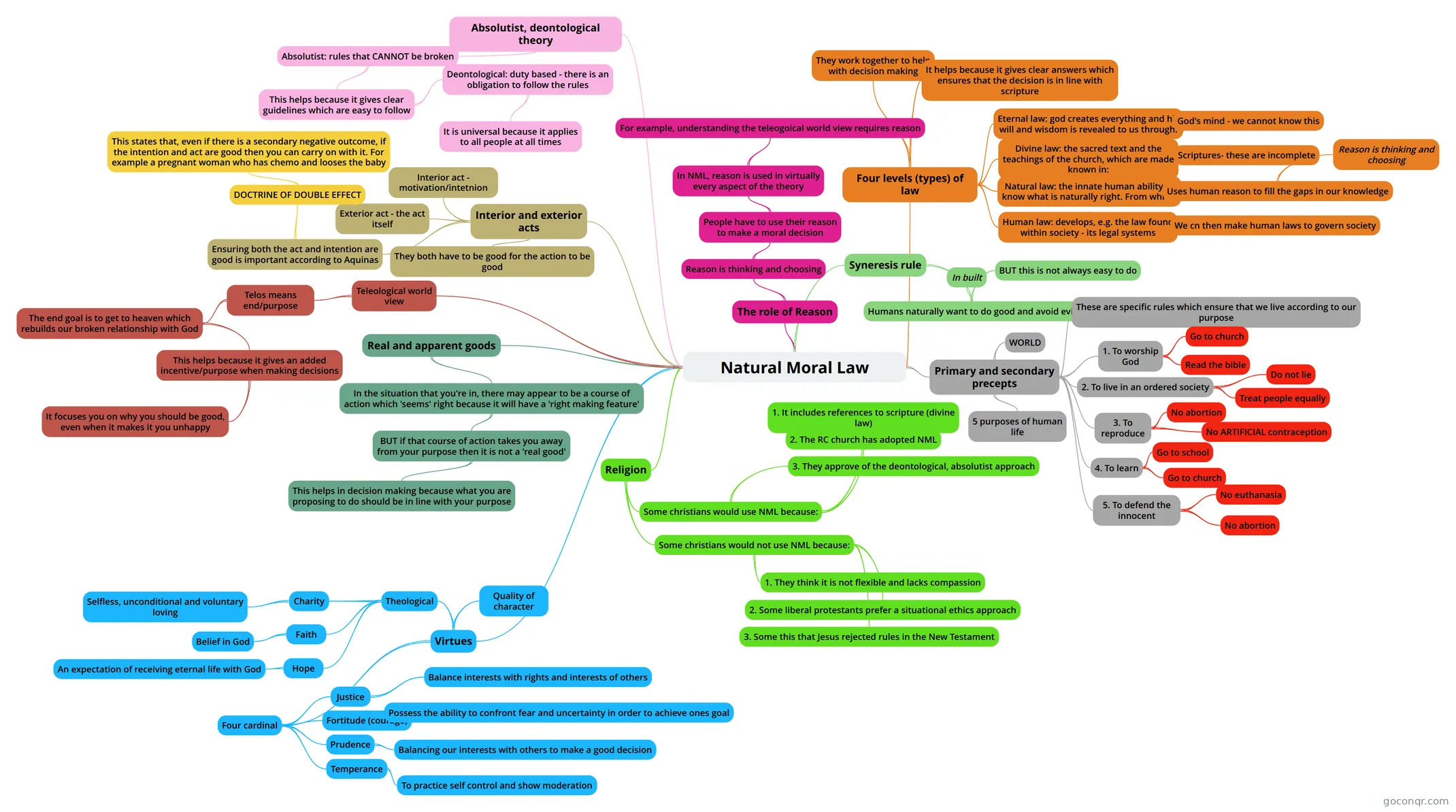 Natural Moral Law Mind map of all key features in Natural Moral Law
-
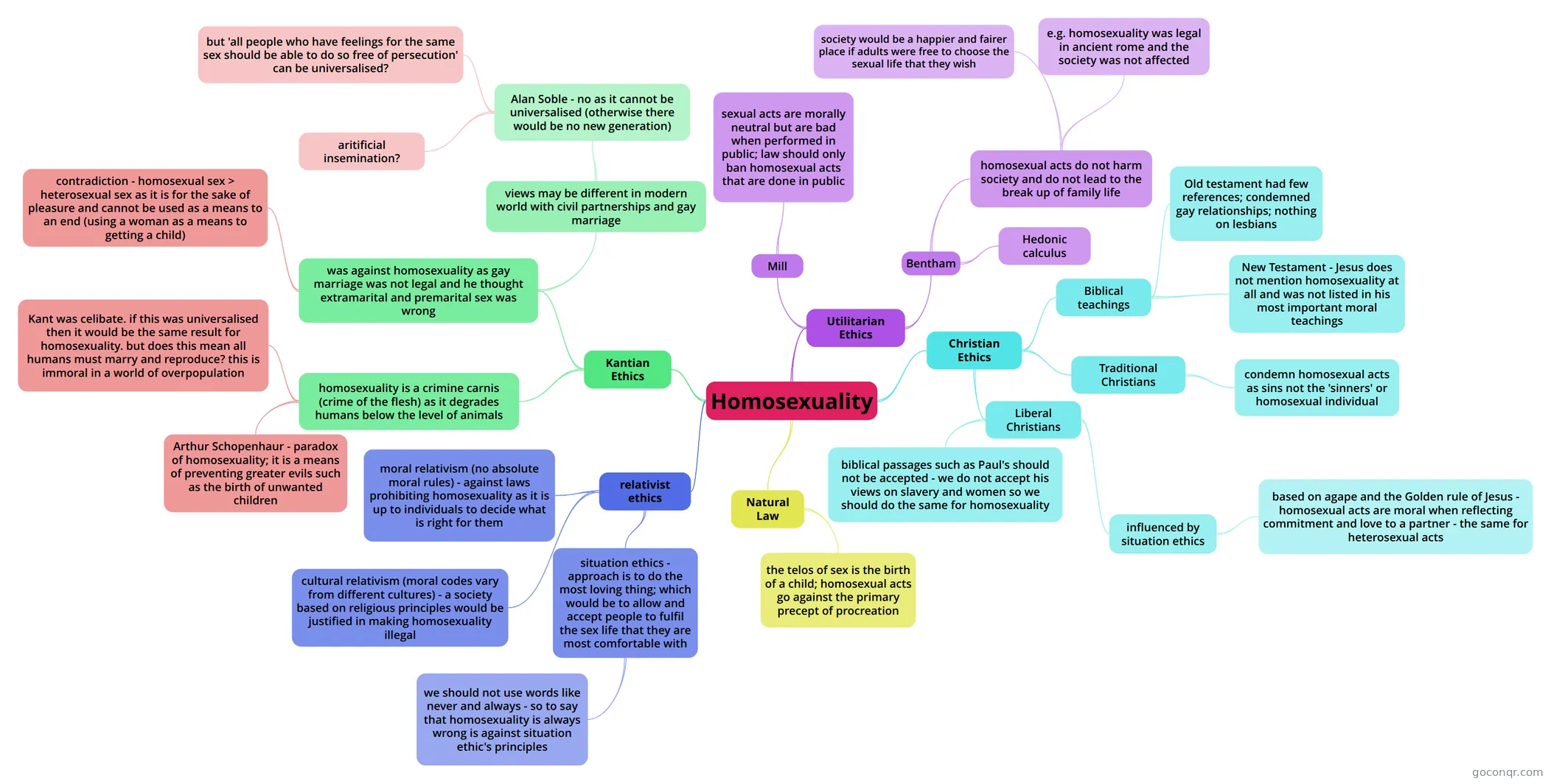 Homosexuality
-
Medical Ethics- Abortion
-
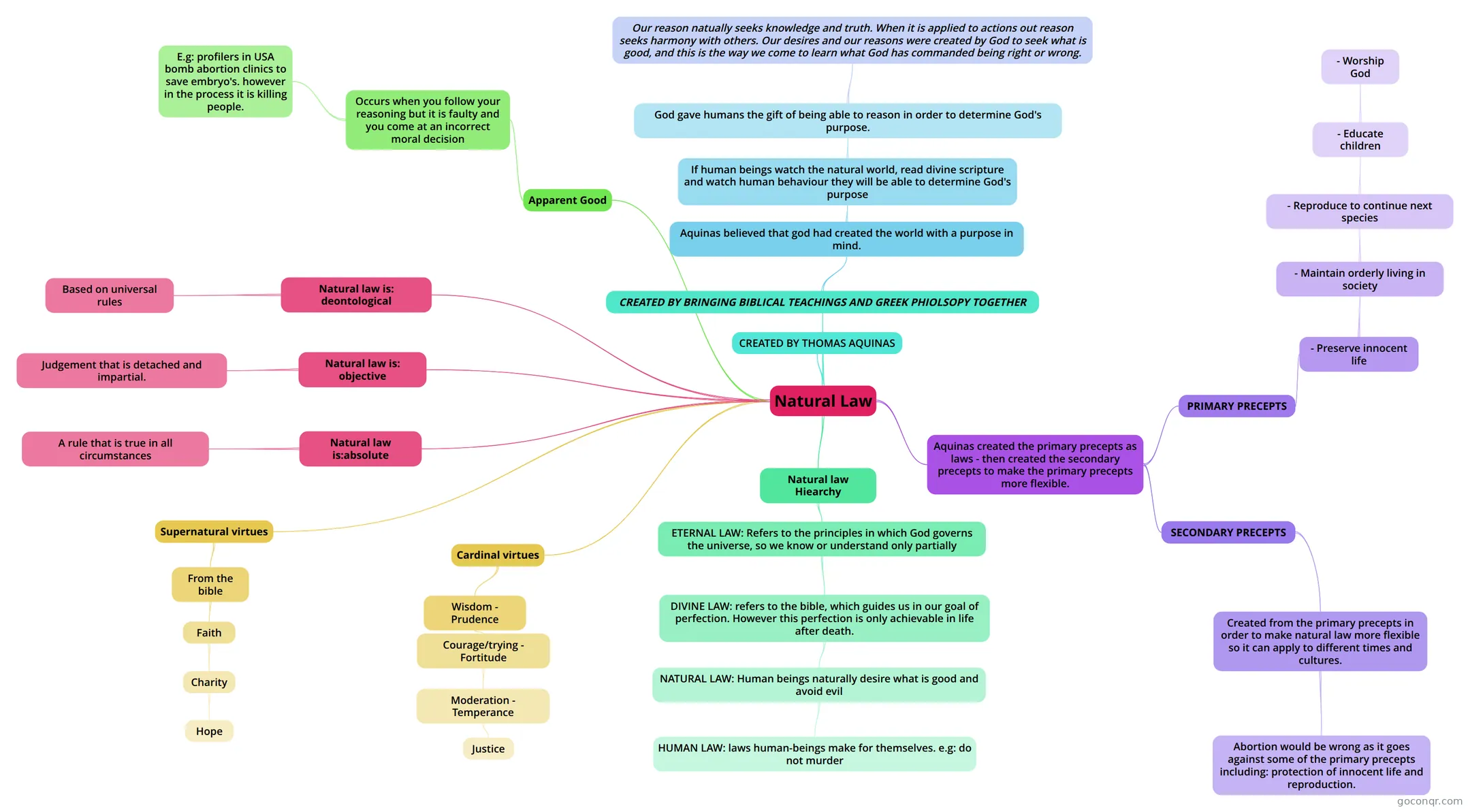 Natural Law
-
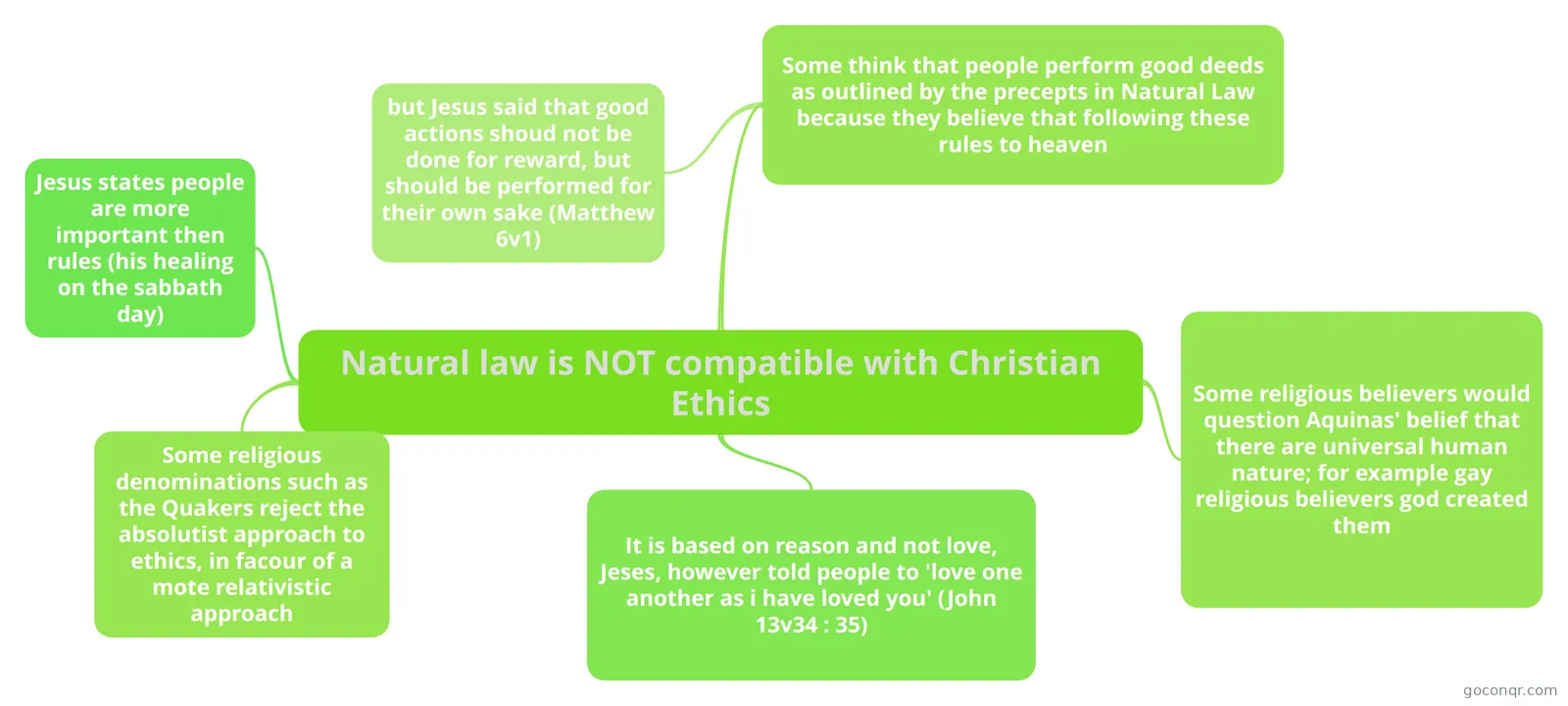 Natural law is NOT compatible with Christian Ethics
-
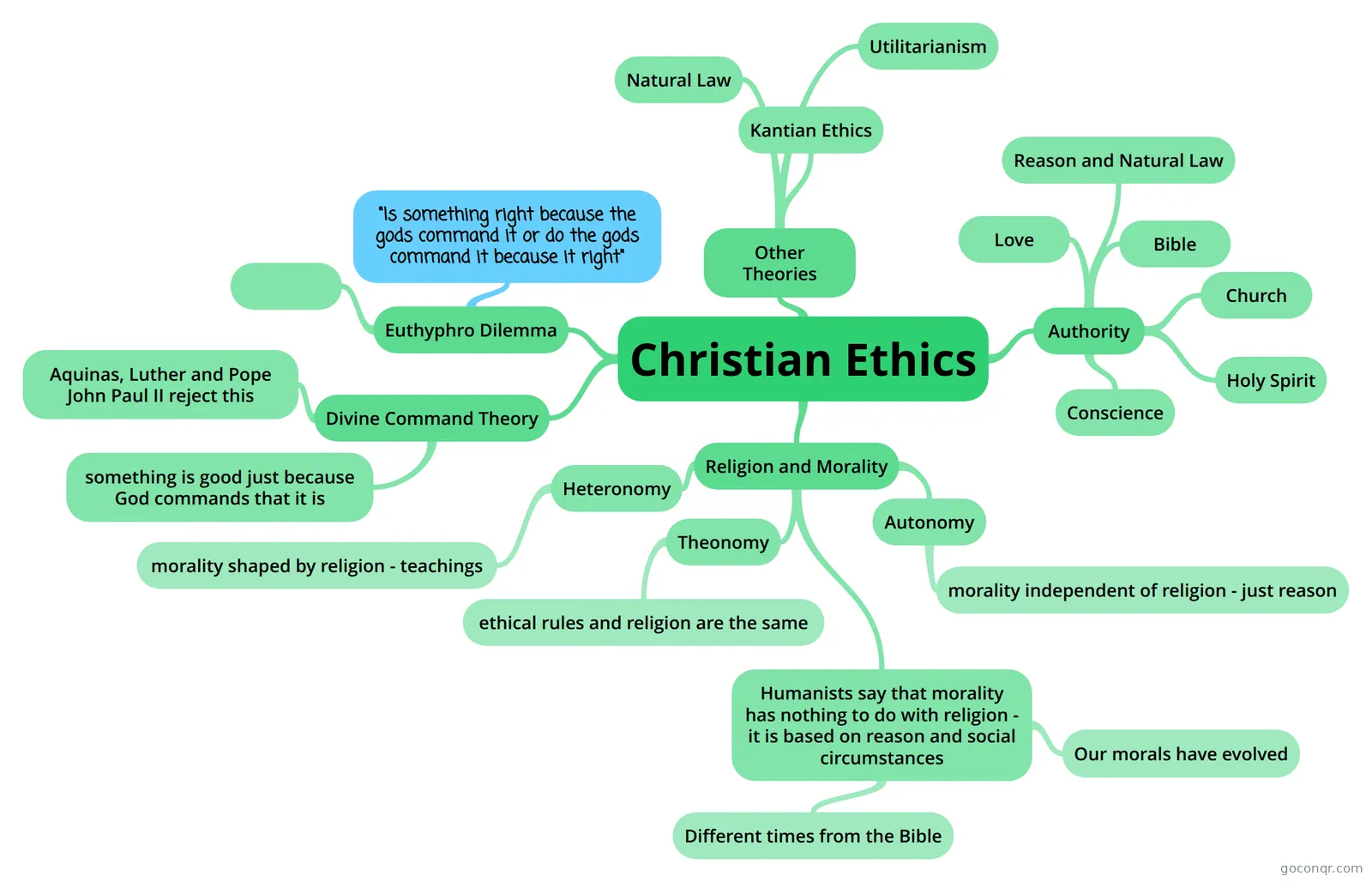 Christian Ethics
-
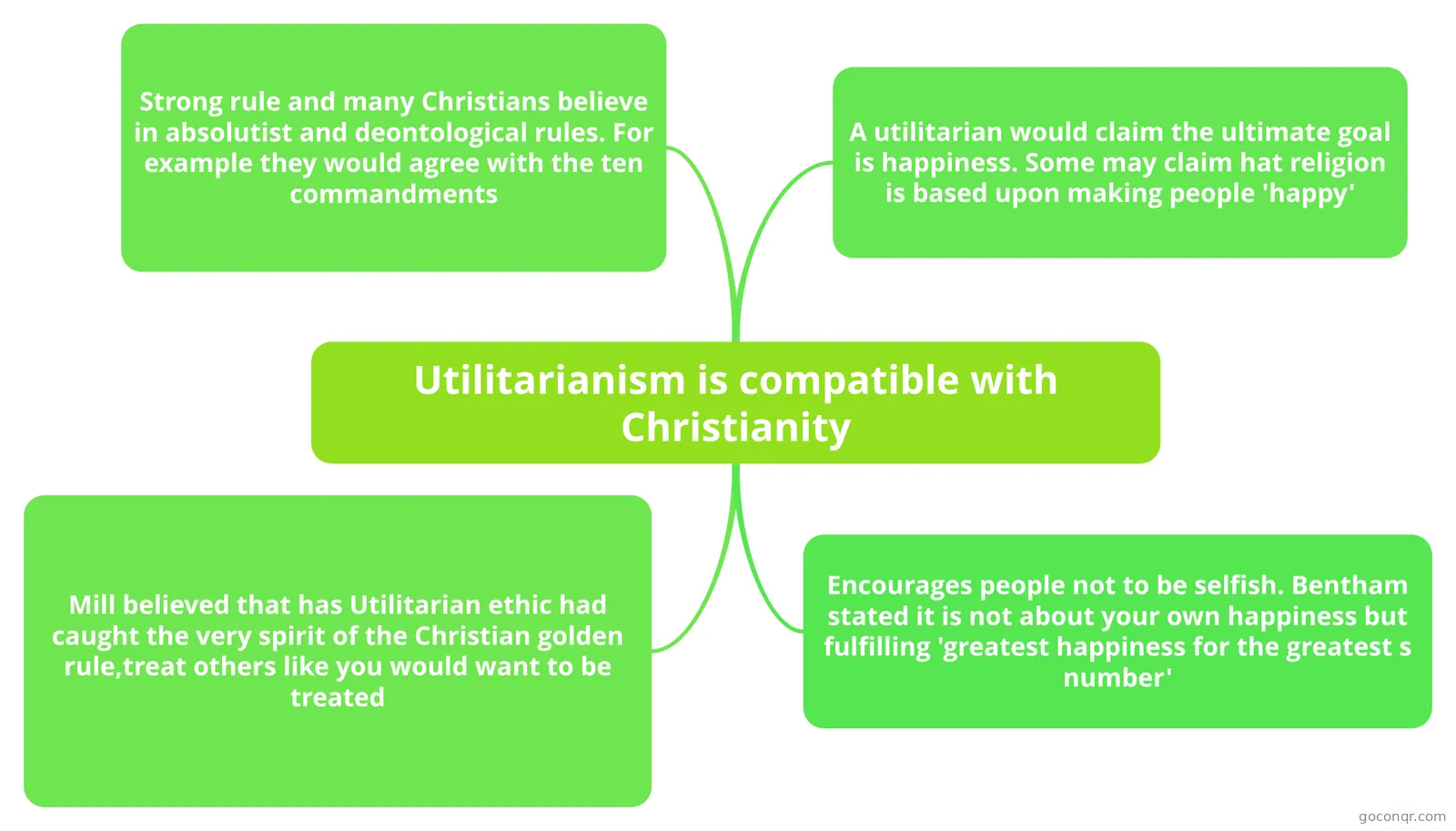 Utilitarianism is compatible with Christianity
-
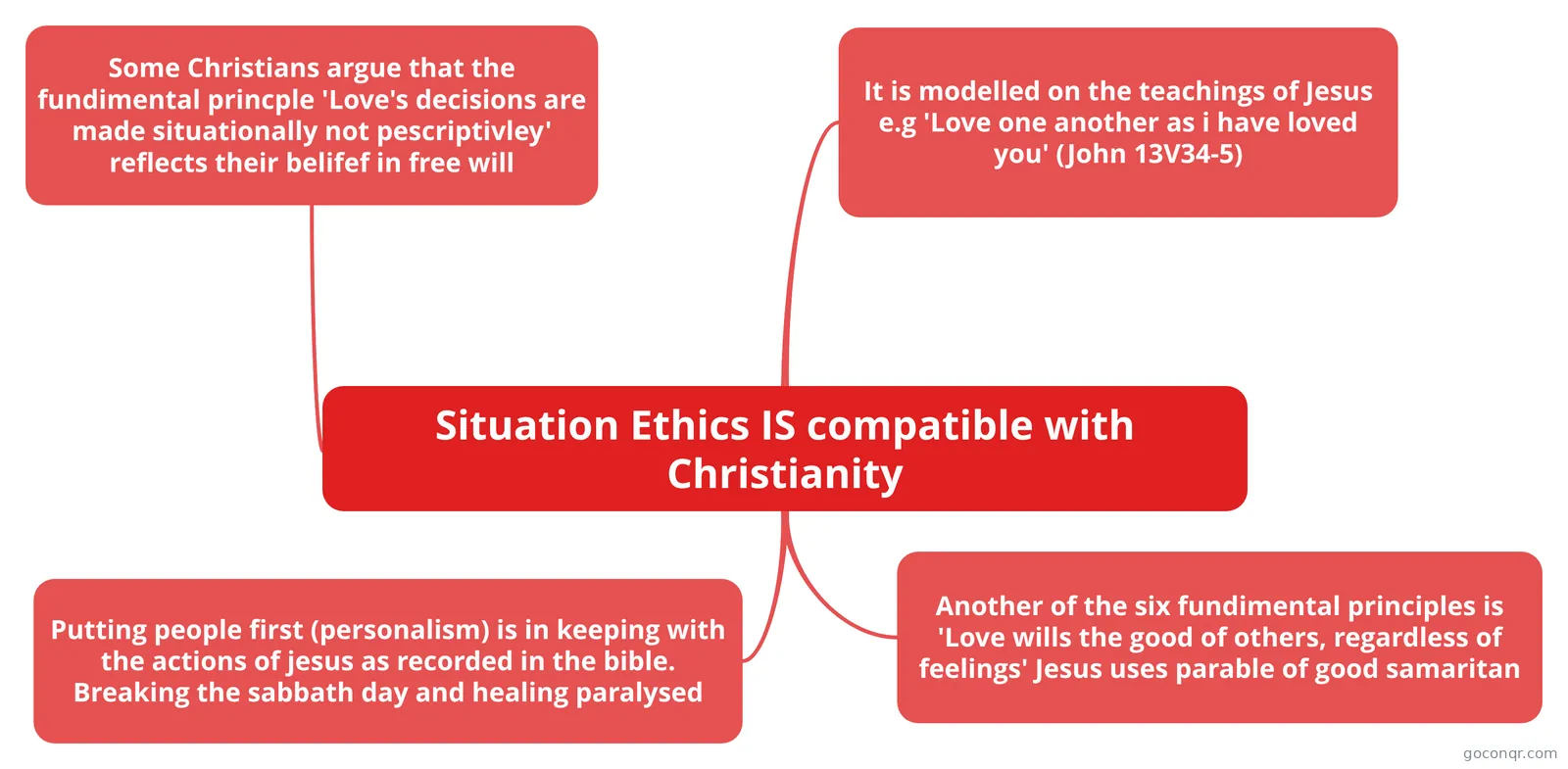 Situation Ethics IS compatible with Christianity
-
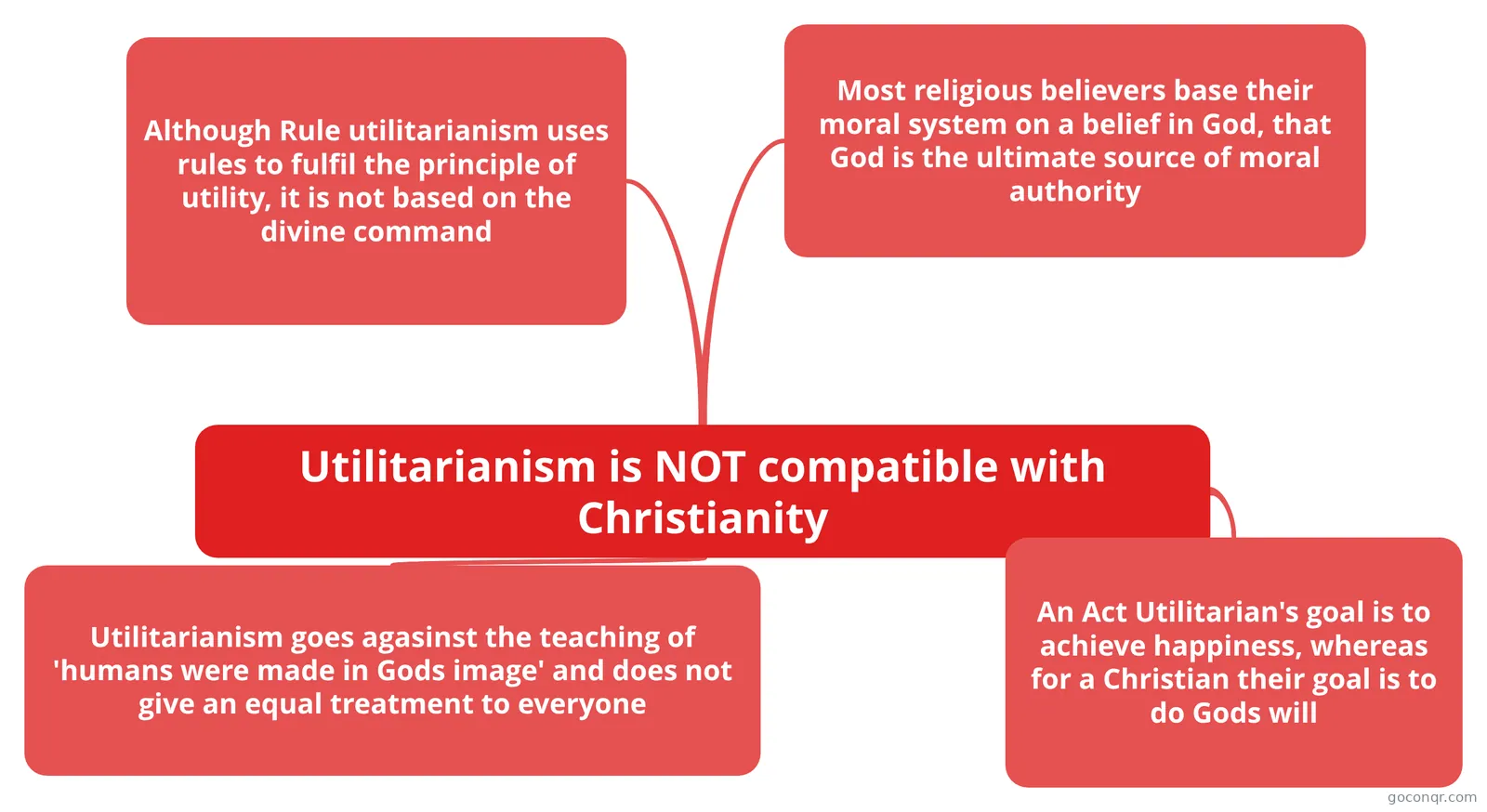 Utilitarianism is NOT compatible with Christianity
-
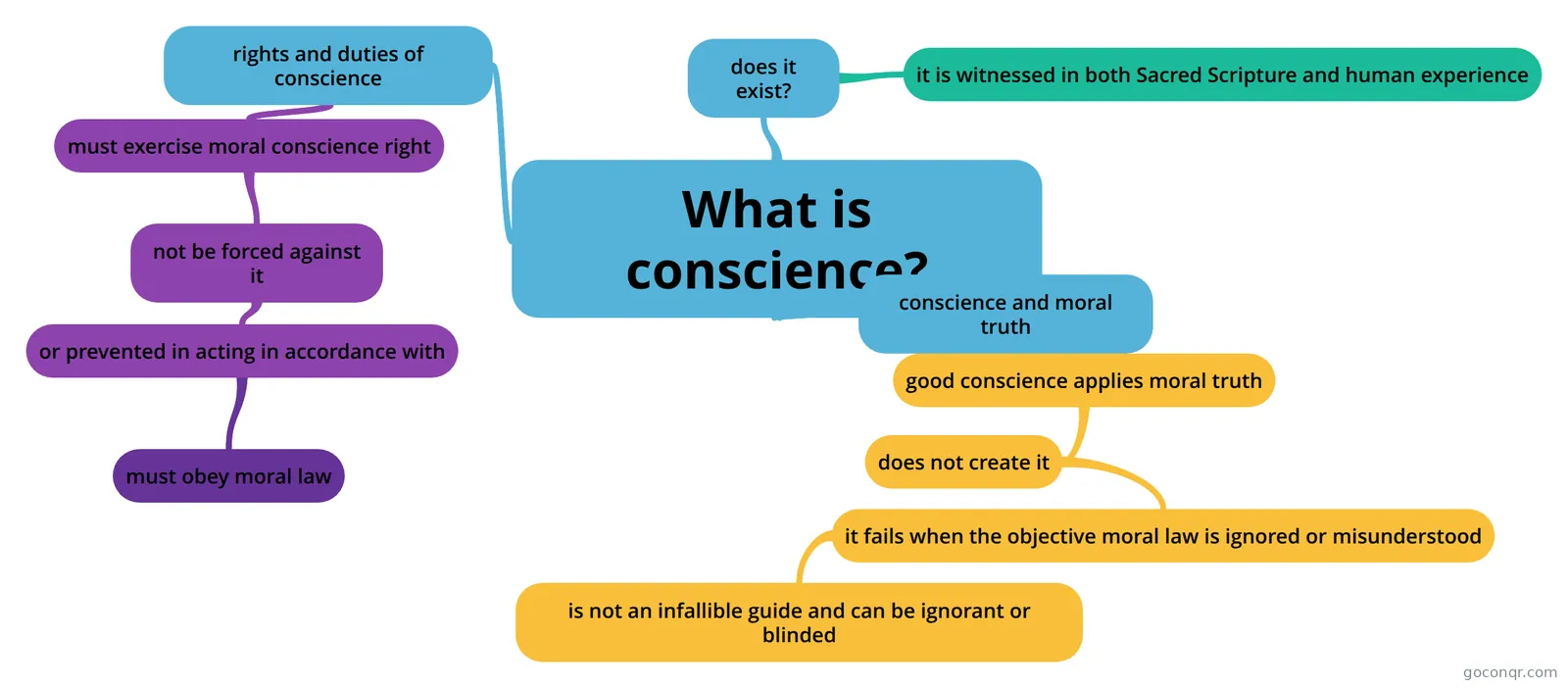 What is conscience? conscience
-
A2 Philosophy and Ethics: Critiques of Religion and morality - Key Philosophers Mind-map linked in master document designed for: Edexcel - Religious Studies - Philosophy and Ethics - Unit...
-
Natural law is compatible with Christian Ethics
More Religion, Ethics and Conscience resources
About religion, ethics and conscience mind maps
GoConqr OriginalReligion, Ethics and Conscience mind maps
These user-made maps bring together ideas on conscience, moral arguments and ethical questions. The map called “The Moral Argument” includes Kant’s moral argument and its background. “Sexual Ethics” maps cover topics including sexual identity, contraception and historical views.
Choose a starting point
Start with “The Moral Argument” if you want to trace an argument through its branches. For conscience, compare “Christian Views on Conscience” with “Secular Views on Conscience”. The different titles give you a way to choose a perspective to explore.
As you read, cover a branch and try to recall its main points. Then uncover it and check what you remembered. If you want to test your understanding with questions, switch to a quiz on the unit page. Flashcards can also help when you want to revisit shorter points.
Pick a map that fits the topic you are revising and follow its branches.
Frequently asked questions
Which mind map could I start with?
“The Moral Argument” is a starting point if you are revising Kant’s moral argument. Its branches include background to the argument. If you are working on an applied topic instead, a “Sexual Ethics” map offers branches on subjects such as sexual identity and historical views.
What do the conscience mind maps cover?
The page includes maps called “Christian Views on Conscience” and “Secular Views on Conscience”, as well as several called “Conscience”. One of the latter includes Aquinas, Butler, Newman, Freud, Piaget and Fromm. The different maps let you explore more than one approach to the topic.
Are these mind maps free to use?
Yes. Every resource listed here is free to open and study without an account. The maps were made by GoConqr users rather than by GoConqr. A free account also lets you save quiz scores and make your own quizzes, mind maps, flashcards and notes.