
Research Design flowcharts
47 flowcharts by 42 users · Page 1 of 2
This Research Design page on GoConqr gathers user-made flowcharts on research problems, study designs and internal validity. University students can use them to review design choices, while teachers can find material for teaching those topics. There are over 20 flowcharts, mainly at university level. Pick a topic and explore a flowchart.
Select topic
- Identifying a Research Problem46
- Research Questions, Aims and Objectives21
- Research Hypotheses and Variables7
- Research Paradigms and Approaches34
- Purposes of Research13
- Qualitative Research15
- Quantitative Research17
- Mixed Methods Research28
- Experimental and Quasi-Experimental Designs63
- Non-Experimental Research Designs21
- Case Study Research10
- Sampling and Data Collection17
- Validity and Bias in Research13
Flowcharts
-
diseños de investigacion
-
RESEARCH
-
Experiment
-
The Case Study
-
Research Questions and Hypotheses
-
Chapter 6 Fernanda
-
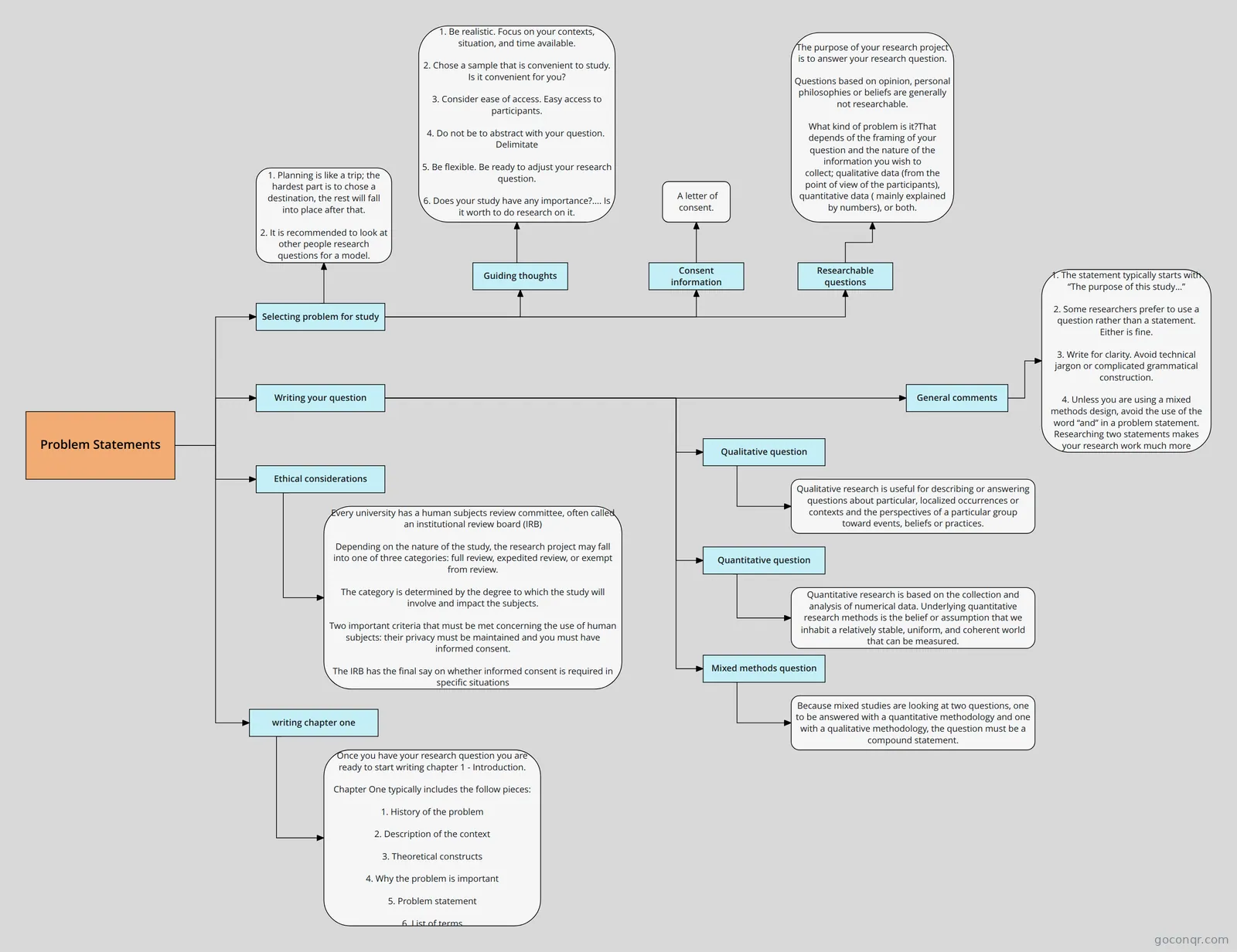 Problem Statements/ Writing a research question Guideline to write a research question
-
IMR CHAPTER 10 YESENIA GUERRERO
-
Non-experimental Design
-
Untitled
-
Quasi-experimental Design
-
Untitled
-
Selecting the research problem
-
Identifying a Research Problem
-
Identifying a research problem
-
Identifying a research problem
-
Untitled
-
Flowchart_7 Febrero_final_
-
Threats to Internal Validity
-
Single-Factor Within-Groups Design
-
Untitled
-
CHAPTER TWO
-
Untitled
-
Untitled
-
Untitled
-
Step 3 - Research idea
-
Untitled
-
WORK BREAKDOWN STRUCTURE
-
Untitled
-
Untitled
-
Untitled
-
Untitled
-
Untitled
-
Untitled
-
Untitled
-
Untitled
-
Untitled
-
Untitled
-
Untitled
-
Untitled
More Research Design resources
About research design flowcharts
GoConqr OriginalWhat research design flowcharts cover
These flowcharts bring together different parts of research design. Identifying a Research Problem distinguishes the problem from the topic and the purpose of a study. Single-Factor Within-Groups Design sets out advantages and disadvantages, while Threats to Internal Validity lists concerns such as testing effects and attrition.
How to use the flowcharts
Start with Identifying a Research Problem if you are working out how a problem relates to a broader topic. For design choices, try Non-experimental Design or Quasi-experimental Design and follow the connections between the approaches shown.
After reading a flowchart, cover its details and try to recall how the ideas connect. Return to it to check what you missed. If you want another way to review the topic, switch to a mind map on the Research Design unit page; use a quiz there when you are ready to check your understanding. Choose a flowchart that matches the part of research design you are studying.
Frequently asked questions
Which flowchart should I start with?
If you are considering a research problem, start with “Identifying a Research Problem”. It distinguishes the problem from the topic and purpose of a study. If your focus is on study design instead, “Non-experimental Design” introduces several non-experimental approaches shown on the page.
What kinds of design do the flowcharts cover?
The listed flowcharts include “Single-Factor Within-Groups Design”, “Non-experimental Design” and “Quasi-experimental Design”. They offer different starting points for reviewing design choices. Other flowcharts address related work, including identifying a research problem, writing a research question and recognising threats to internal validity.
Are these flowcharts free to use?
Yes. Every flowchart listed here is free to open and study without an account. The resources were made by GoConqr users. A free account also lets you save quiz scores and make your own quizzes, mind maps, flashcards and notes.
Who are these flowcharts for?
The collection is mainly at university level. University students can use it to review research problems, design choices and validity, while teachers can find material for those topics. Individual flowcharts focus on different aspects, so the most useful starting point depends on what you are studying or teaching.