
Research Design
791 resources created by 659 users
This Research Design page on GoConqr gathers community-made flashcards, mind maps, quizzes, notes and flowcharts, from identifying a research problem to experimental, quasi-experimental and observational designs. It's built for university students planning a study and teachers after ready-made material. There are over 700 resources here, including more than 50 quizzes, over 500 mind maps and more than 90 flashcard decks, written mostly at university level. Pick a topic, try a quiz to find your gaps, then make your own set.
Select topic
- Identifying a Research Problem46
- Research Questions, Aims and Objectives21
- Research Hypotheses and Variables7
- Research Paradigms and Approaches34
- Purposes of Research13
- Qualitative Research15
- Quantitative Research17
- Mixed Methods Research28
- Experimental and Quasi-Experimental Designs63
- Non-Experimental Research Designs21
- Case Study Research10
- Sampling and Data Collection17
- Validity and Bias in Research13
Top Research Design resources
-
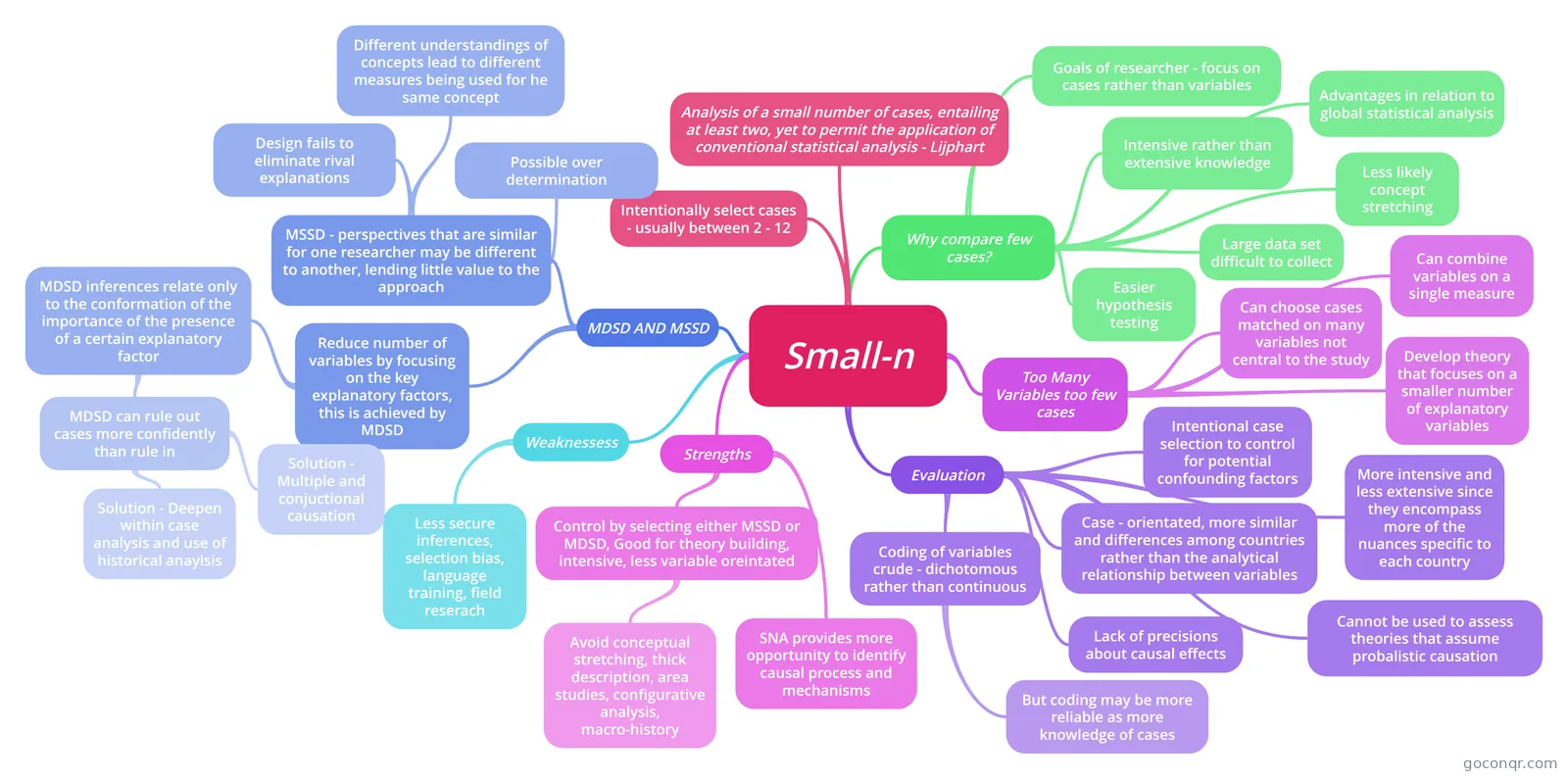 Mind map Small-n
-
Mind map Types of Research Design
-
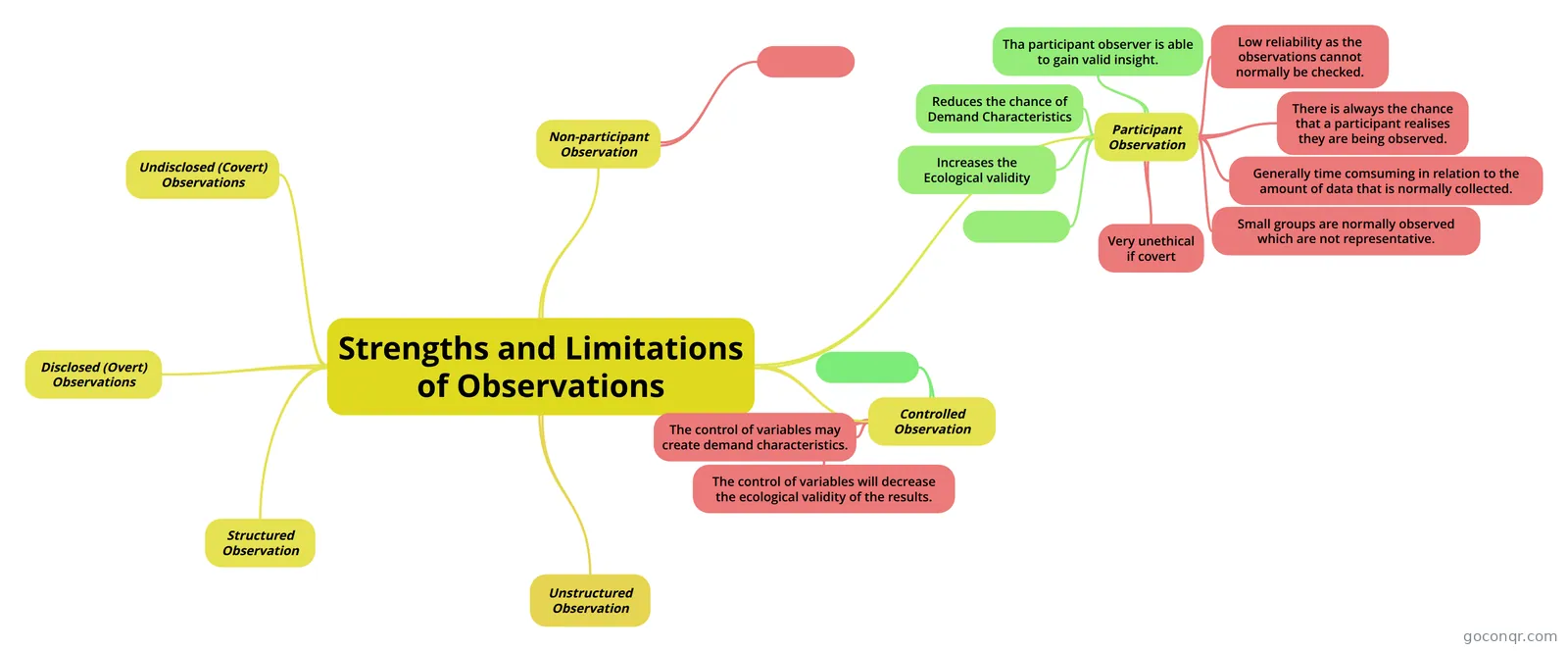 Mind map Strengths and Limitations of Observations
-
11 cardsSRM W2 the "Wisconsin Idea"
-
67 questionsCross-Cultural Research Methods Which of the following statements is correct?
-
99 questions1. Naming, selecting and interpreting quantitative research designs, including meta-analysis. What are 'observational methods'
-
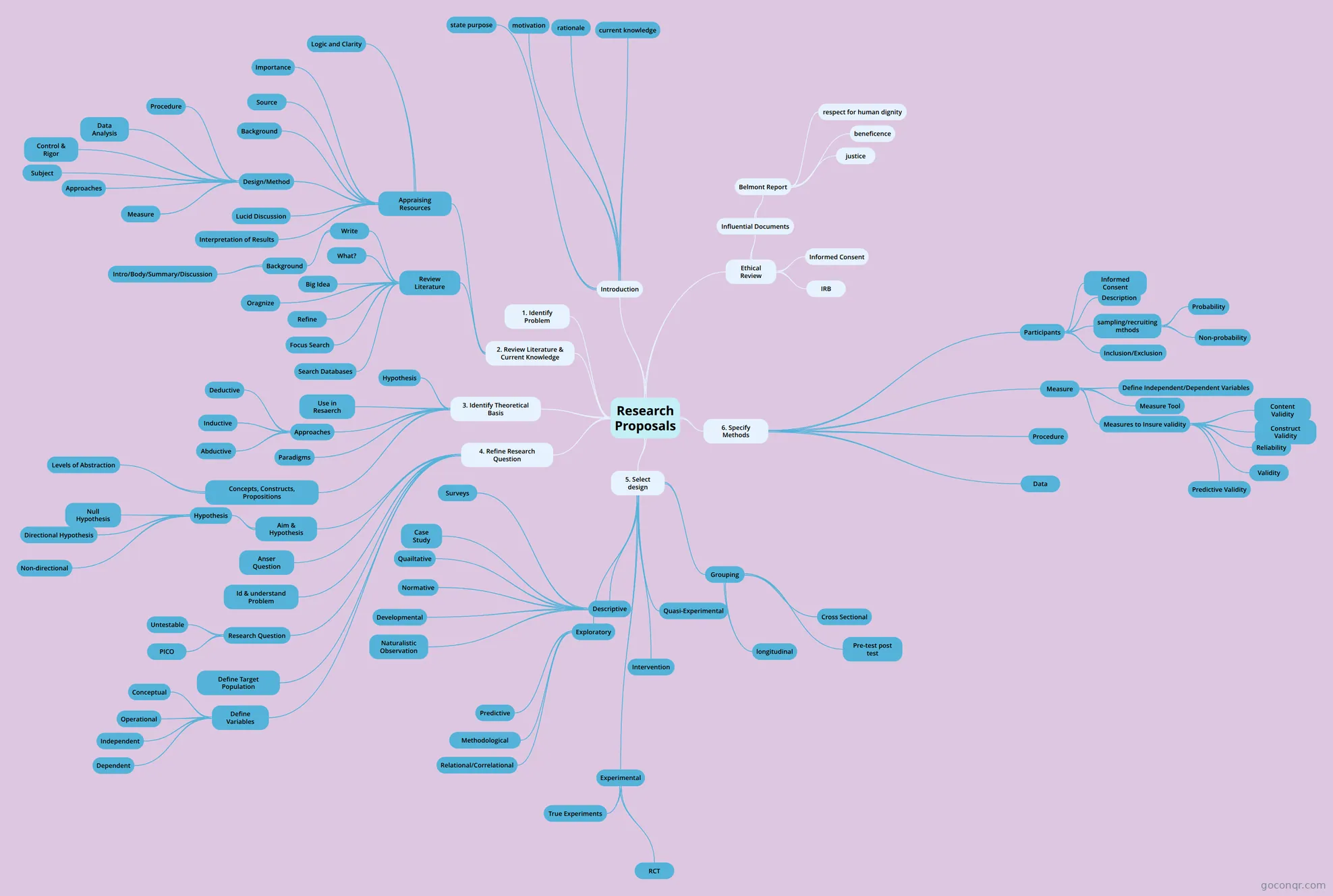 Mind map Research Proposals
-
40 questionsEBP Final Which of the following are the three criteria for establishing a causal relationship?
Quizzes
See all 55 quizzes-
67 questionsCross-Cultural Research Methods Which of the following statements is correct?
-
99 questions1. Naming, selecting and interpreting quantitative research designs, including meta-analysis. What are 'observational methods'
-
40 questionsEBP Final Which of the following are the three criteria for establishing a causal relationship?
-
66 questionsResearch exam 3 Which of the following is not required for an experimental study?
-
36 questions307 Q2 - Non-experimental designs In a non-experimental design the independent variables are controlled?
-
30 questions1-30 First CS Select the definition of "Research":
-
10 questionsGeneral Methodological Concepts of Research What is the difference between Interventional and Observational?
-
7 questionsTopic 6 Which are the types of research design and it sub-classes?
Mind maps
See all 569 mind maps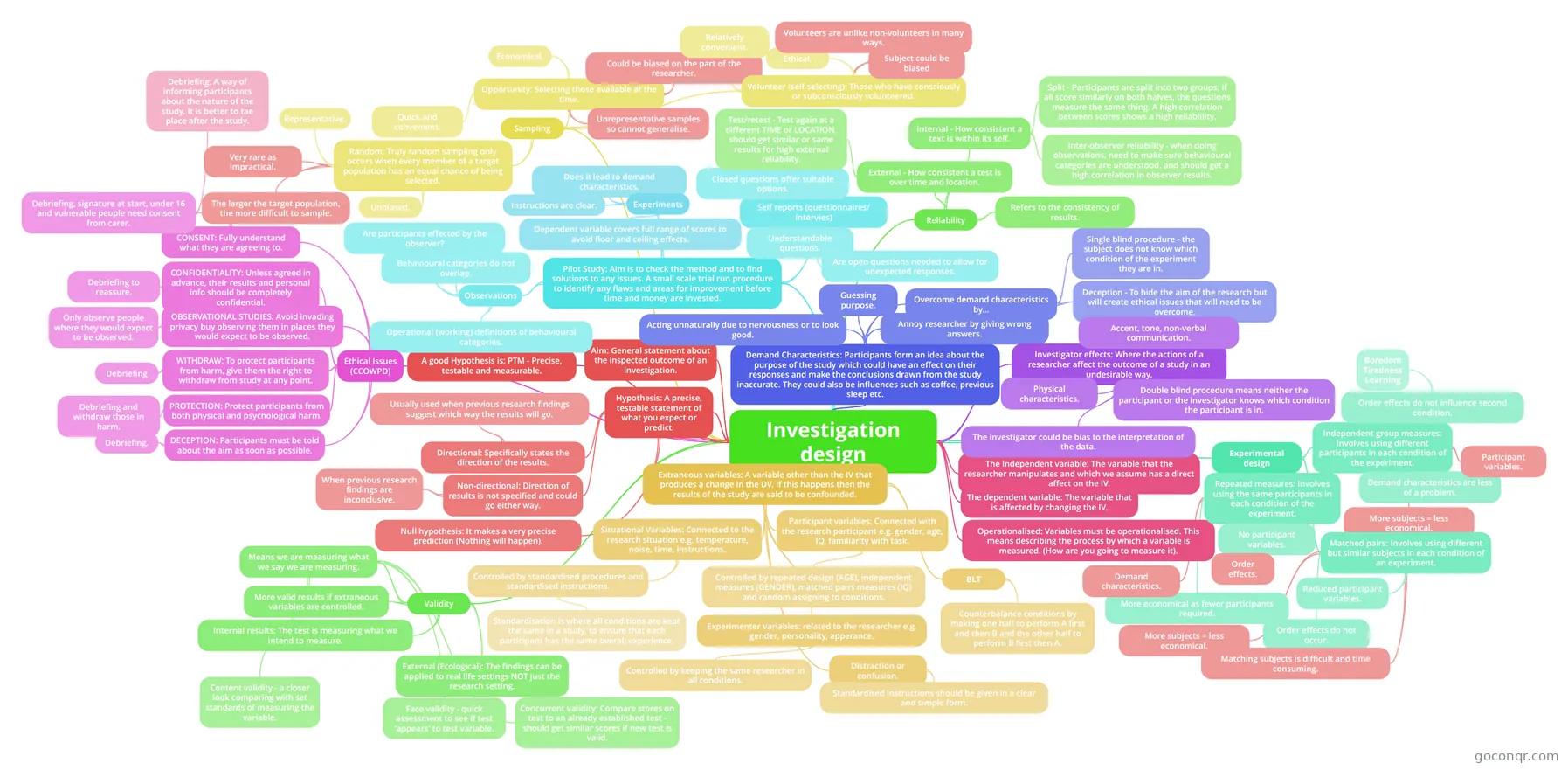
Flashcards
See all 94 flashcards-
11 cardsSRM W2 the "Wisconsin Idea"
-
79 cardsHSC 696 - Exam #2 most popular data collection technique
-
29 cards6 Planning the research project: Research design Five research designs
-
33 cardsEPR Week 2 What does the "Wheel of Science" contain ?
-
12 cardsMethods for researching Action Research Design
-
11 cardsQuasi-experimental designs One-group Posttest only design
-
3 cardsResearch paradigms and theories Key terms and concepts Ontology: the study of the nature of existence or reality Epistemology: the theory o...
-
12 cardsRDA2- Research Design Issues What is a way of studying using the three different quantitative designs?
Flowcharts
See all 47 flowcharts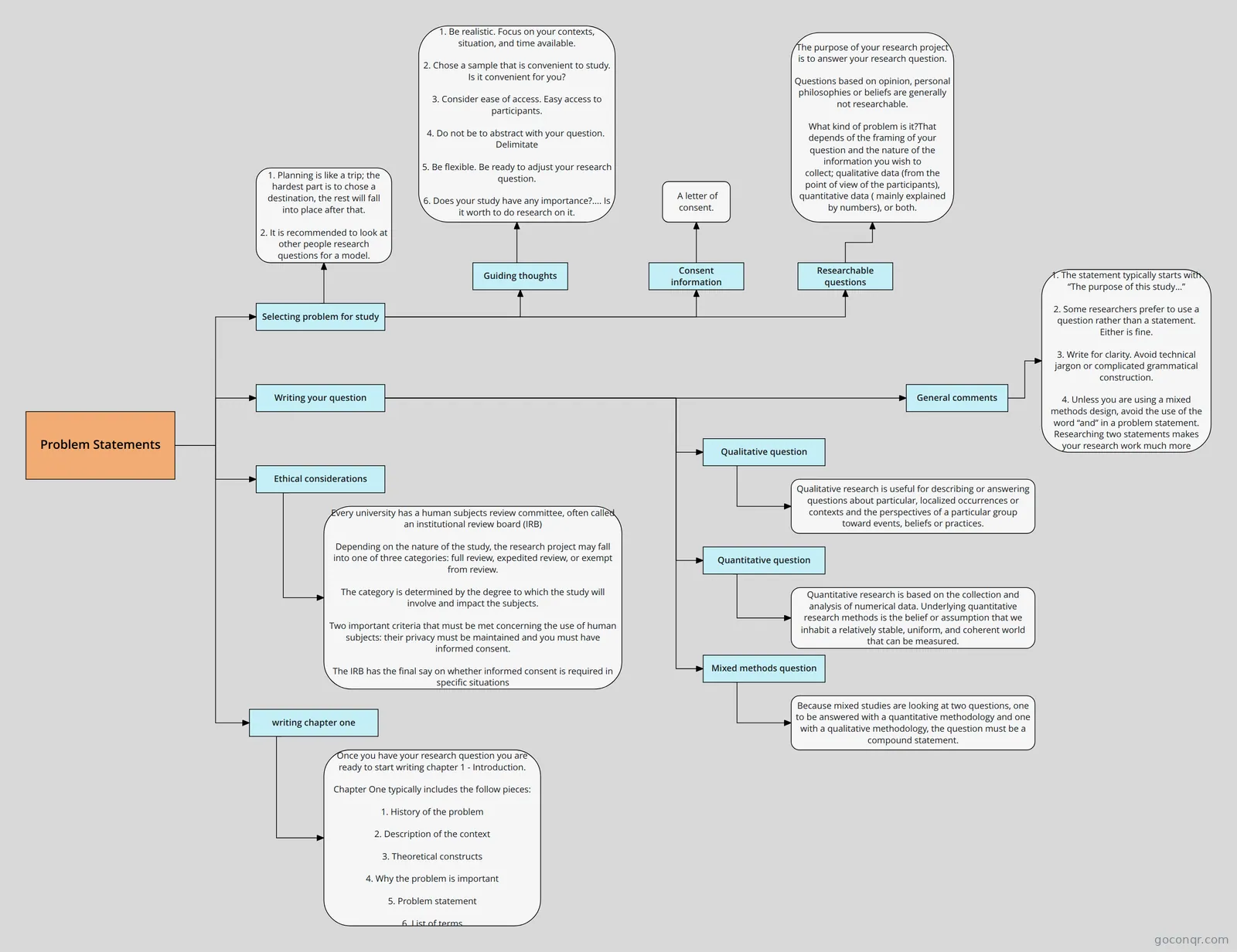
Notes
See all 22 notes-
Chapter 9 A. Basic Characteristics of Factorial Designs i. This is a research design that examines the influence of two or more independent variable...
-
Research Design What I will be concerned with is not only the habitual behaviors, occupational practices and demographic composition of the Mountain Guide community, but also the more subjective opinions, beliefs and life stories of ...
-
Chapter 11 - within-subjects design OUTLINE WITHIN SUBJECT DESIGNSEach subject takes part in more than one condition of the experiment. Can make it easier to see the effect of the independent variable In a between subjects design the effects can be hidden by an...
Slides
Topics in Research Design
More Research methods and academic skills topics
About Research Design
GoConqr OriginalWhat the resources cover
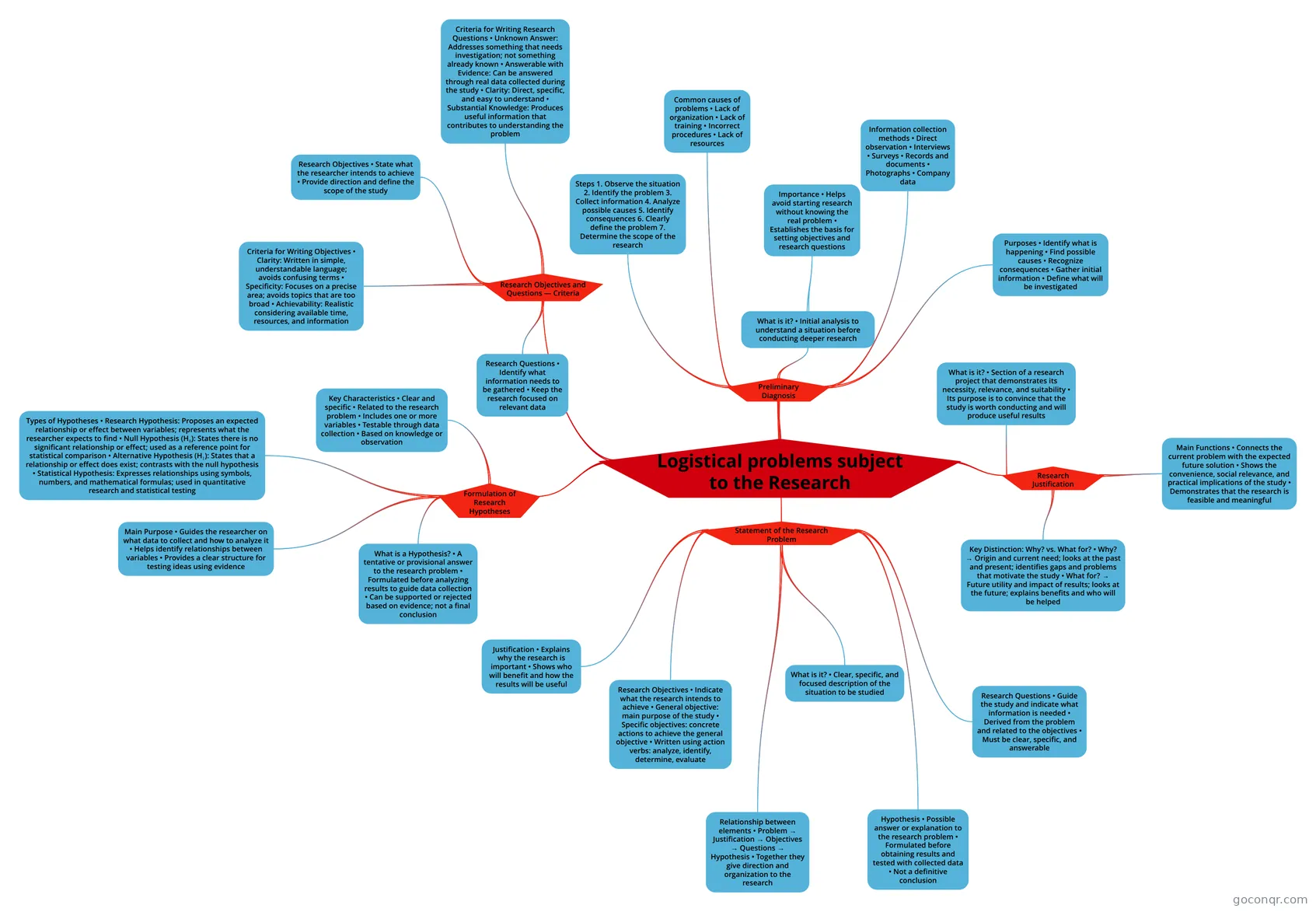
The page follows a study from first idea to finished design. Early material deals with the problem and the question. The slide set RESEARCH PROBLEM explains why a research problem creates reader interest and focuses attention. Several flowcharts on identifying a research problem, and one on writing a research question, sit alongside it.
Next come the designs themselves. Mind maps such as Types of Research Design, Quantitative Research Designs and Selecting a Study Design compare exploratory, experimental and other approaches. Others look at Small-n and Large-n comparative work, with a map on the weaknesses of methods covering concept stretching and selection bias.
Where to start
Begin with the flashcard deck SRM W2, which covers concepts, units of analysis, variables, hypotheses and the Belmont Report on ethics. Then open the Research Design Decision Tree map to see how choices connect.
- Read the research problem slides and flowcharts.
- Browse the design maps to compare approaches.
- Move to experimental, quasi-experimental and within-subjects material.
- Finish with observation, bias and validity.
Using quizzes and maps together
Read a map first, then test yourself. The quiz Introduction to Study Design asks which studies can show causation, which pairs well with the deck on experimental and observational studies. The flowcharts Threats to Internal Validity and Quasi-experimental Design help you check answers you got wrong. Note the gaps, return to the map, and try the quiz again.
Where this unit sits
Research Design belongs to the Planning and Designing Research strand of Research methods and academic skills. Teachers can use the notes, flowcharts and quizzes as ready-made starting points for a class, and students can use them to plan their own projects.
Choose one resource that matches where you are in your project, open it, and build your own flashcards from what you find.
Frequently asked questions
Which resource should I open first?
Start with the flashcard deck SRM W2. It covers concepts, units of analysis, variables, hypotheses and research ethics, including the Belmont Report. Once those terms feel familiar, the Research Design Decision Tree mind map shows how design choices connect.
What do the mind maps on this page cover?
They compare types of design, including exploratory and experimental, and quantitative, qualitative and mixed methods. Others cover small-n and large-n studies, observation methods, single-subject designs, randomised trials and sampling techniques. Some also set out the weaknesses of methods, such as selection bias.
Are the resources free to use?
Yes. Every resource listed here is free to open, study and take, with no account needed. They were made by GoConqr users, not by GoConqr itself, so styles and depth vary from one resource to another.
Who are these resources written for?
They are mainly at university level, so they suit university students planning or revising a study. Teachers can also use them as ready-made material for classes. A small share is aimed at school level, but most of the page is university work.
Which quizzes can I try on research designs?
Try Introduction to Study Design for experimental versus observational studies, or Lecture: Correlational Designs. There are also quizzes on observation, questionnaires, non-experimental designs and general methodological concepts. Over 50 quizzes are on the page, so you can choose by topic.
What if I can't find the topic I need?
Use the related maps, flowcharts and flashcards on the page to cover nearby ground first. A free account lets you make your own quizzes, mind maps, flashcards and notes, and saves your quiz scores, so you can fill the gap yourself.