
Research Design mind maps
569 mind maps by 482 users · Page 1 of 15
This Research Design page gathers mind maps on study designs, observation, variables and bias. University students can use them to revise research methods, while teachers can find material for teaching these topics. There are over 500 maps, mostly at university level, made by GoConqr users. Choose a map to start exploring.
Select topic
- Identifying a Research Problem46
- Research Questions, Aims and Objectives21
- Research Hypotheses and Variables7
- Research Paradigms and Approaches34
- Purposes of Research13
- Qualitative Research15
- Quantitative Research17
- Mixed Methods Research28
- Experimental and Quasi-Experimental Designs63
- Non-Experimental Research Designs21
- Case Study Research10
- Sampling and Data Collection17
- Validity and Bias in Research13
Mind maps
-
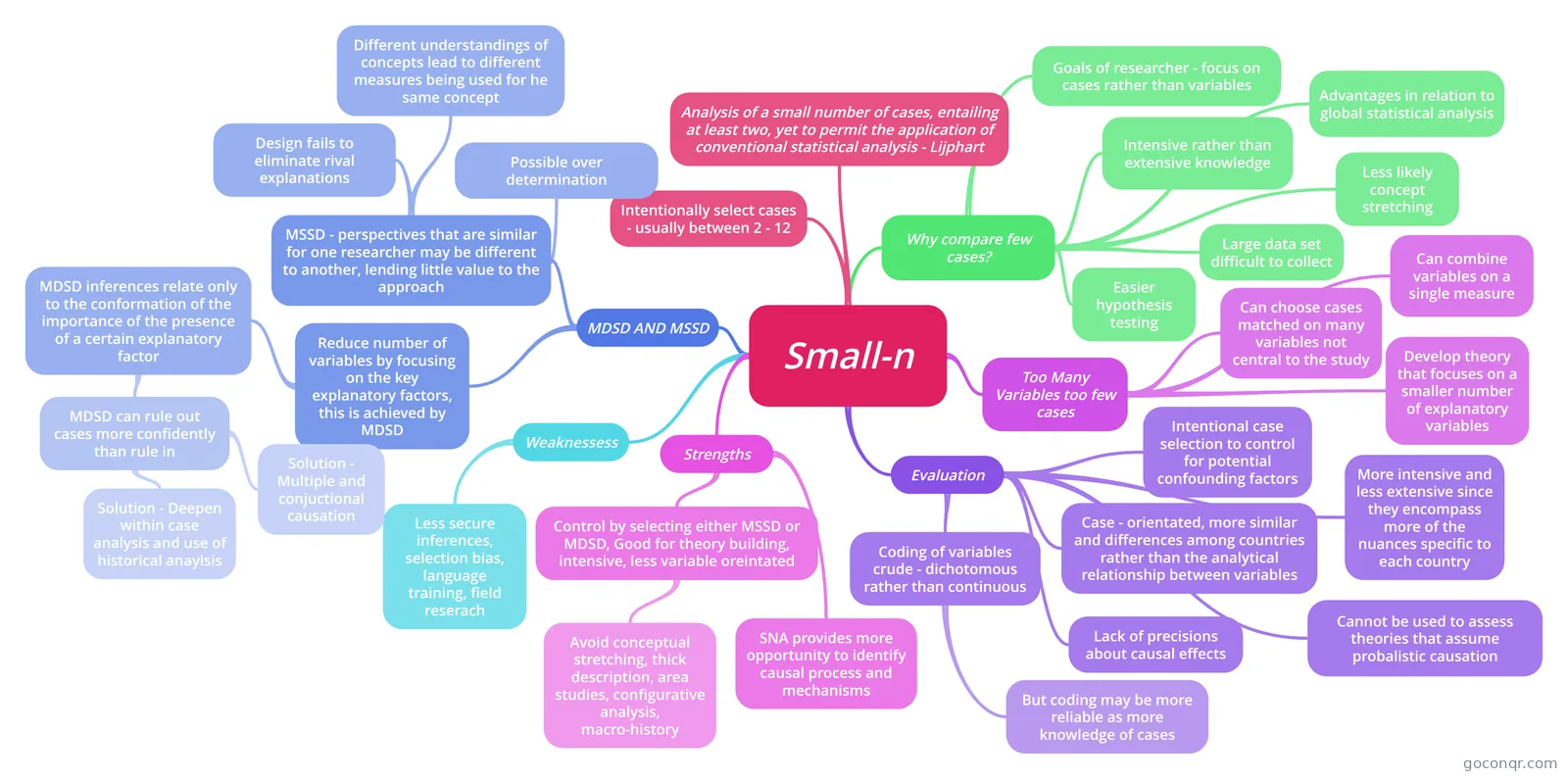 Small-n
-
Types of Research Design
-
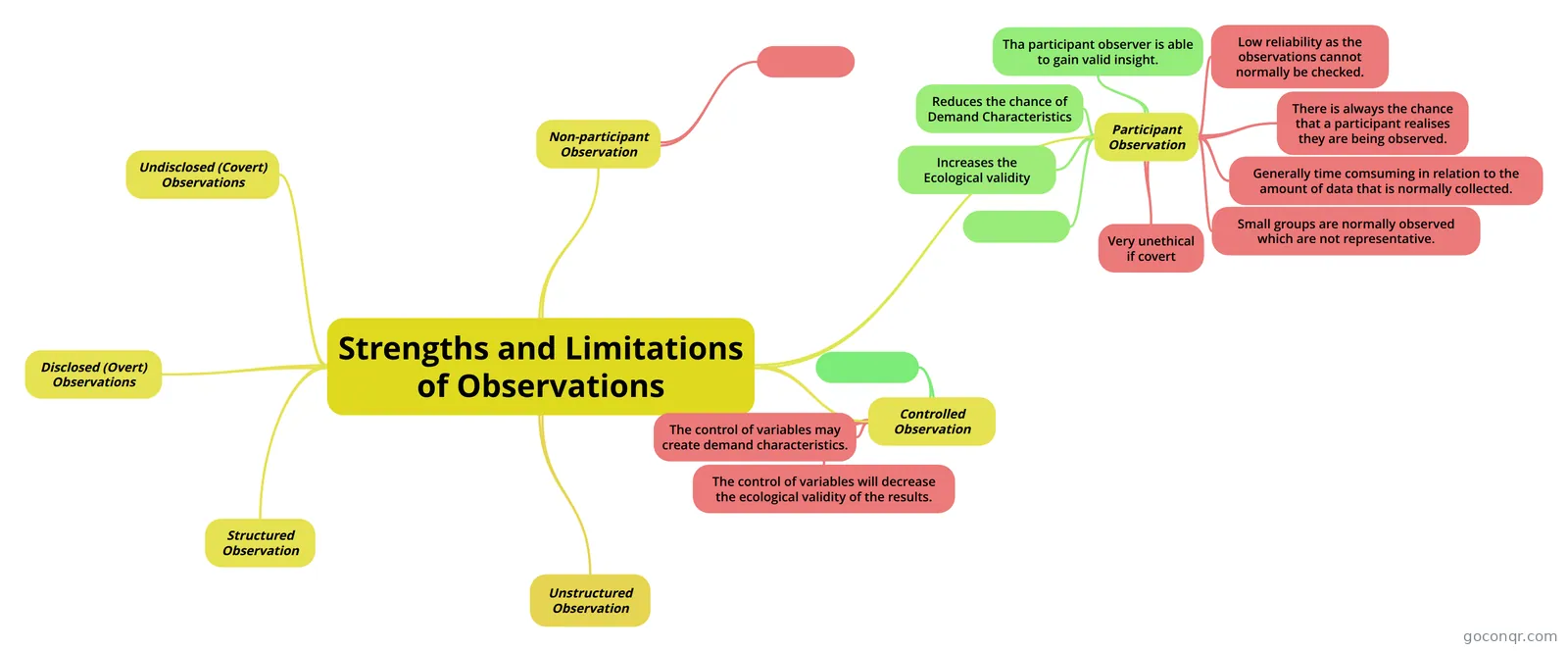 Strengths and Limitations of Observations
-
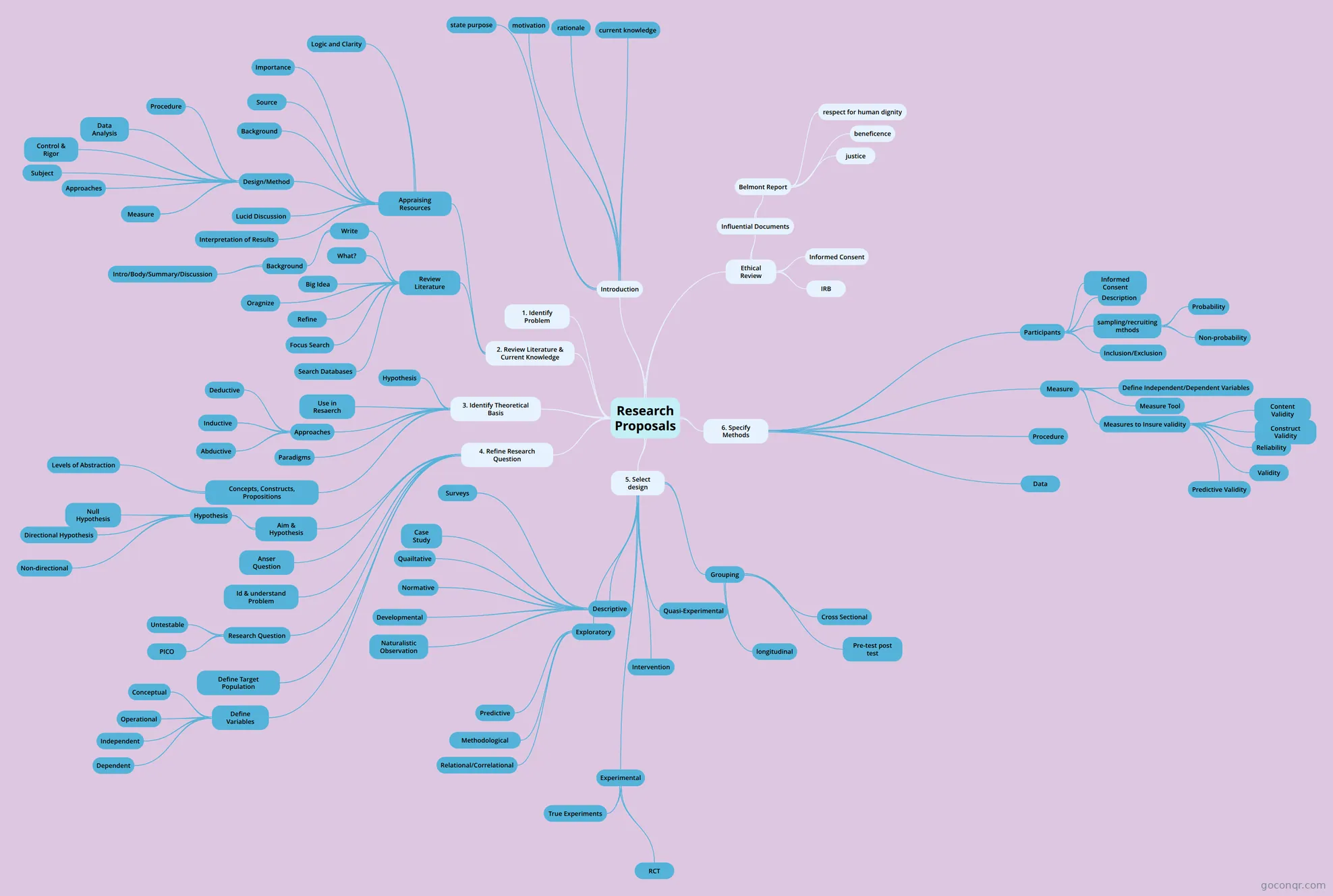 Research Proposals
-
RESEARCH ABOUT THE IMPORTANCE OF GIVING ANGLO-SAXON CULTURAL CAPITAL IN ORDER TO IMPROVE THE LANGUAGE PROFICIENCY IN STUDENTS OF AN EFL PROGRAM
-
ESTABLISHING THE COMPARABILITY OF MULTICOUNTRY DATA
-
formulation of a research problem
-
Logistical problems that are the subject of the research
-
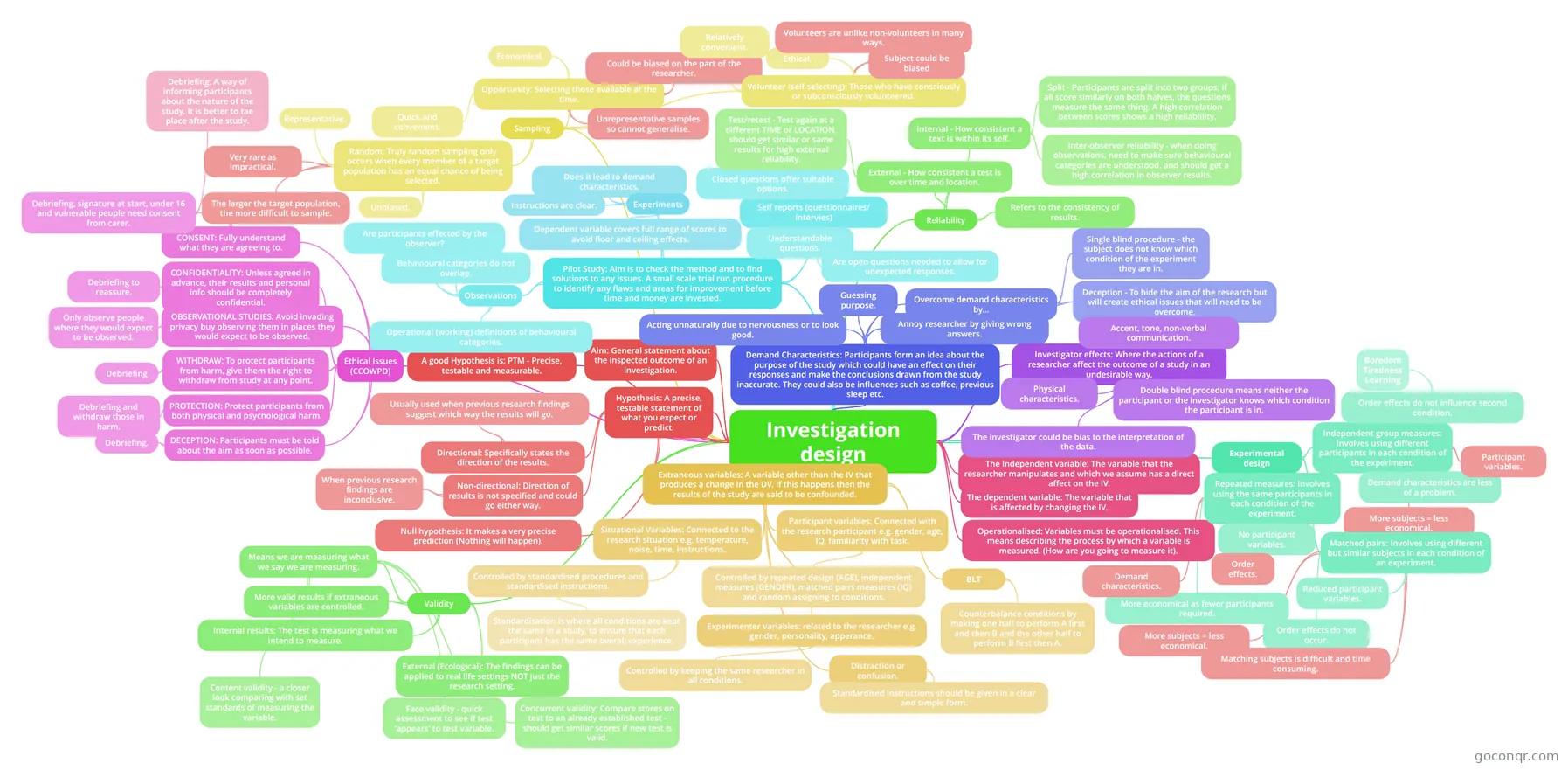 Investigation design Psychology
-
Social Research (SR) Design This chapter is an abstract about what a social research design is.
-
Positivist
-
transversal study
-
SINGLE-SUBJECT DESIGNS
-
RQ1: According to Colombian university students, how does the discussion evolve in their perception about how and who builds the image of homosexuals in Colombian TV? RQ2: To what degree do students from ‘Lenguas y Culturas’ agree to those points of view?
-
Chapter 3
-
Single Case, Quasi-Experimental, and Developmental Research
-
Research design
-
overview of research designs
-
research instruments
-
UNIT 2
-
UNIT 2
-
Study Design and Implementation for Novice Researchers
-
Research Design
-
WHAT ARE THE TYPES OF MIXED METHODS DESIGNS?
-
Logistical Problems, The Subject Of The Investigation.
-
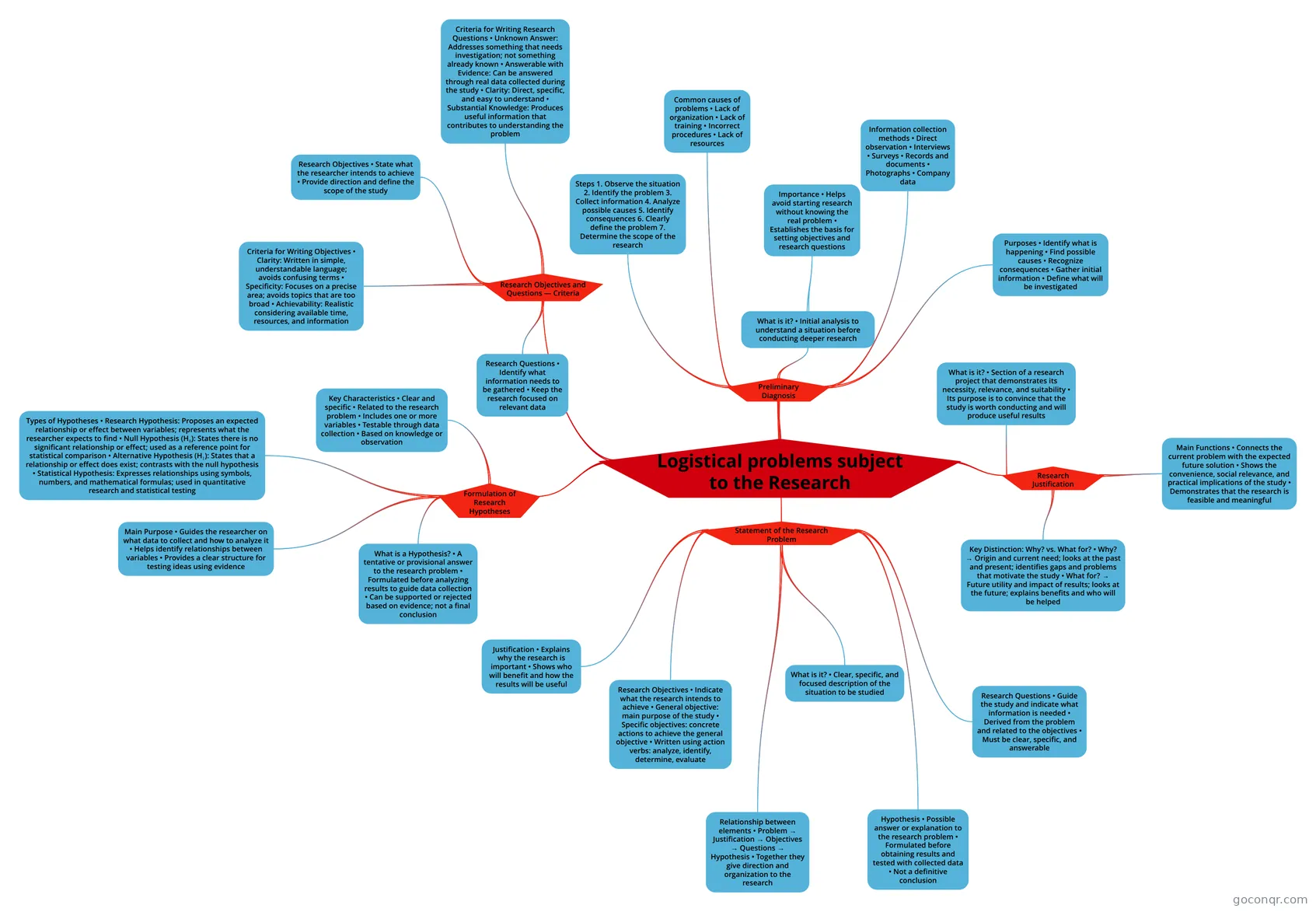 Logistical problems subject to the Research
-
Designing the study to collect numerical data
-
Research Design
-
Randomised Control Trial
-
Chapter 4
-
Types of Research Design
-
Types of Research Design
-
RESEARCH METHODOLOGY
-
A HandBook For Social Science Field Research
-
Types of Research Design
-
Types of Research Design
-
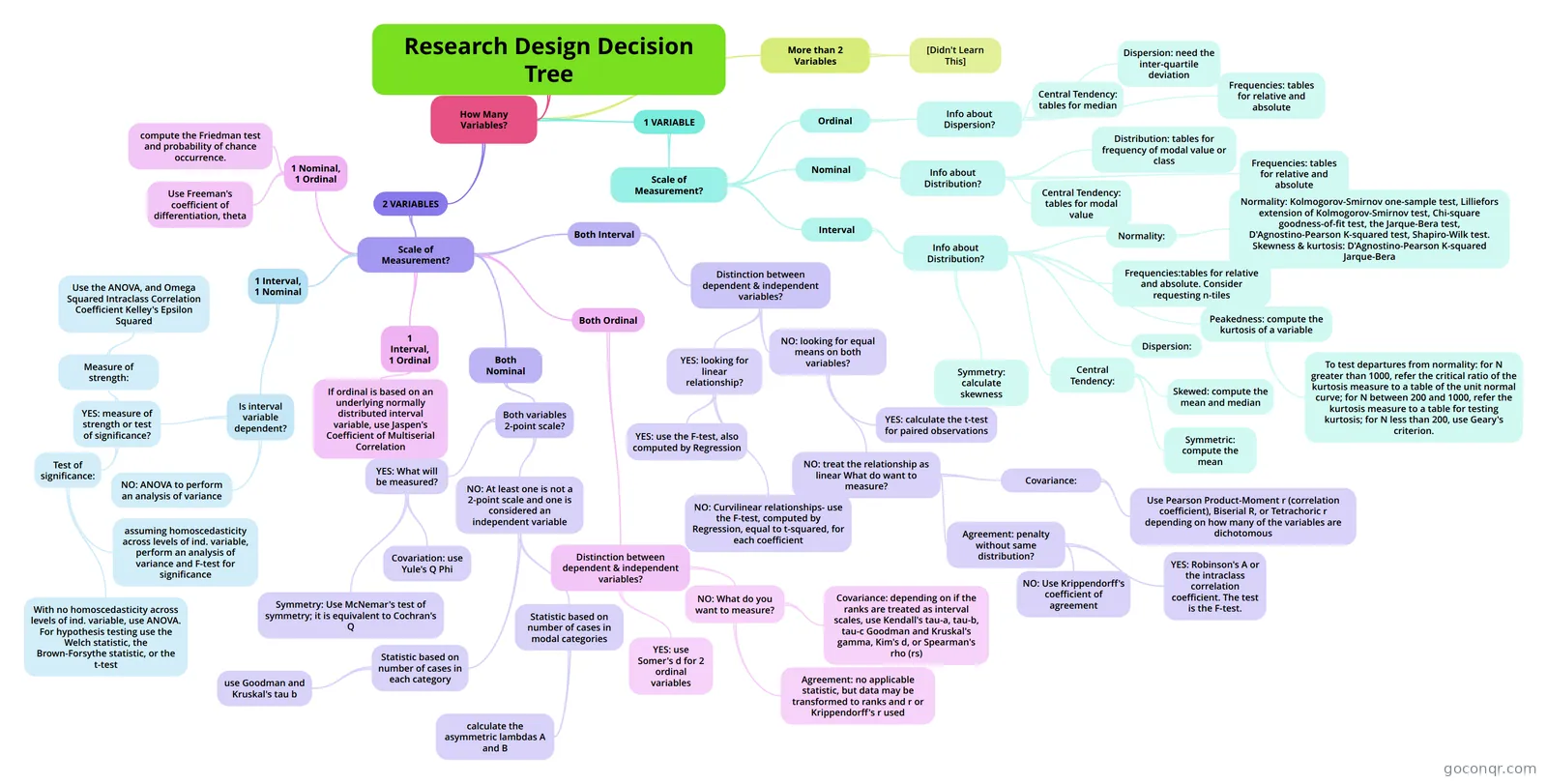 Research Design Decision Tree
-
Research
-
Chapter 7. Conception or choice of design research
-
RESEARCH DESIGN
More Research Design resources
About research design mind maps
GoConqr OriginalUsing Research Design mind maps
Start with Types of Research Design for an overview of exploratory and experimental approaches. Its branches give you a way to see how the approaches relate before looking at a more specific map.
For a closer look at choices in a study, Research Design Decision Tree branches by the number of variables and their scales of measurement. Investigation design includes independent and dependent variables. Trace the branches, then try explaining the connections in your own words without looking at the map.
Compare and check
Use Strengths and Limitations of Observations to review different forms of observation. Then explore Weaknesses of Methods, which includes selection bias and omitted variable bias. Compare what each map brings out and note any points you want to revisit.
When you want to test your understanding rather than follow connections, switch to a quiz on the Research Design unit page. Pick a map and follow a branch that interests you.
Frequently asked questions
Which mind map is a useful starting point?
Types of Research Design is a useful starting point if you want an overview. It includes exploratory and experimental research design, so you can follow the branches before moving to a more focused map. Research Design Decision Tree is another option when you want to look at choices involving variables.
What do the Research Design mind maps cover?
The maps cover topics including study designs, variables, observation and bias. For example, Quantitative Research Designs includes descriptive, observational and experimental studies. Strengths and Limitations of Observations covers forms of observation, while Weaknesses of Methods includes selection bias and omitted variable bias.
Are these mind maps free to use?
Yes. Every resource listed here is free to open and study without an account. The maps were made by GoConqr users rather than GoConqr. A free account also lets you save quiz scores and make your own quizzes, mind maps, flashcards and notes.