
Semantics mind maps
575 mind maps by 359 users · Page 1 of 15
This Semantics page on GoConqr gathers user-made mind maps on word meaning, sense relationships and semantic analysis. It is for university students and professional candidates practising semantic concepts, and teachers looking for revision material. The collection has over 500 maps, mostly at university level. Pick a map to start exploring.
Select topic
- Types and Theories of Meaning33
- Sense, Reference and Thought55
- Lexical Semantics63
- Semantic Features and Componential Analysis11
- Lexical Relations69
- Lexical and Structural Ambiguity14
- Semantic Change9
- Sentence Meaning and Compositionality35
- Thematic Roles and Predicates44
- Sentence Relations and Truth17
- Modality, Quantification and Logic14
- Semantics, Pragmatics and Context44
Mind maps
-
Semantics Semantics mind map
-
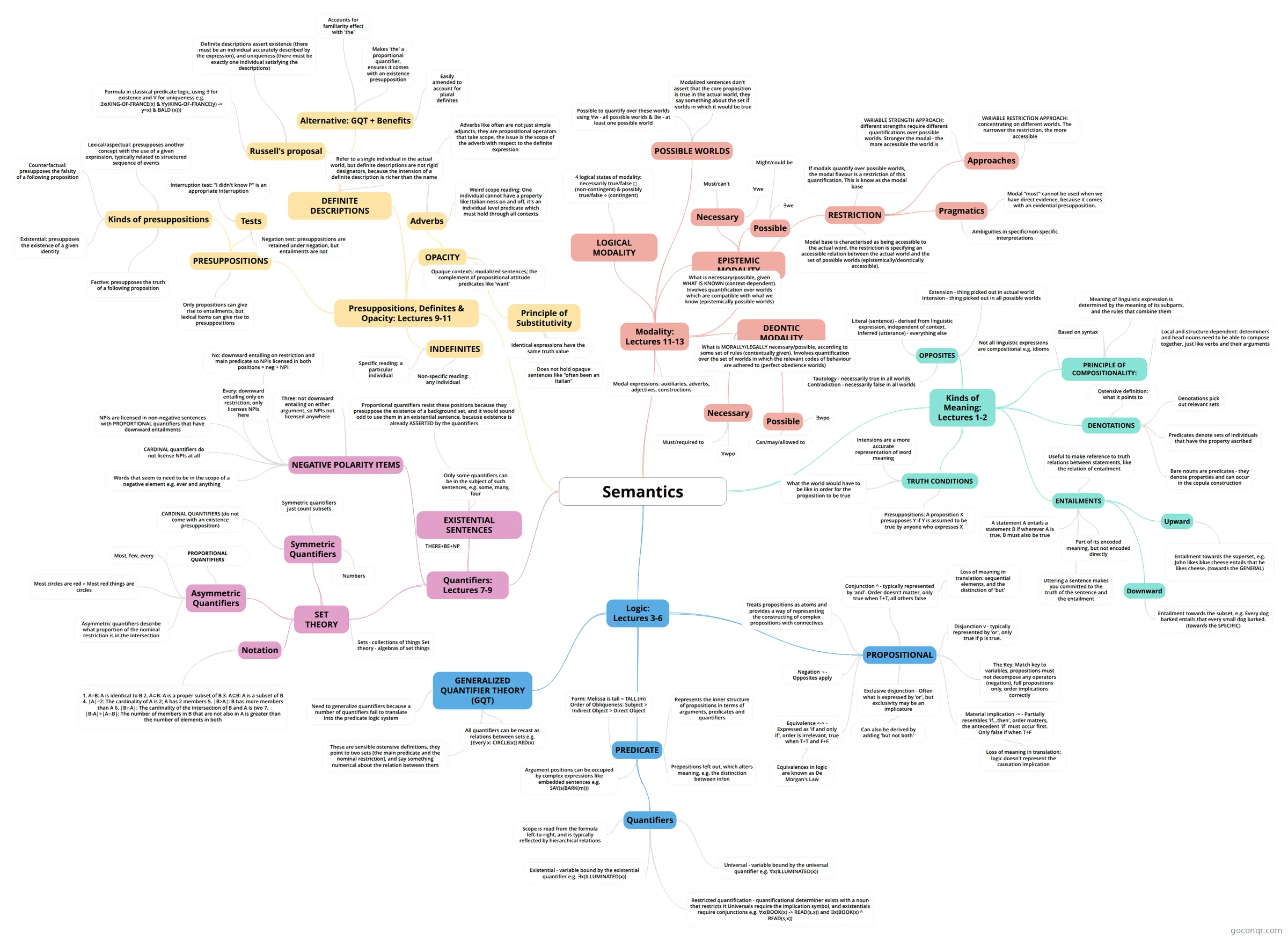 Semantics Semantics mind map
-
Meaning, Thought and Reality
-
Semantics_2
-
The semantics of grammatical categories
-
Word meaning.
-
TYPES OF MEANING
-
Semantics in Linguistics
-
SEMANTICS IN LINGUISTIC
-
REGISTER
-
Semantics in Linguistics
-
Sentence Semantics 1: Situations
-
PRAGMATICS
-
SEMANTIC CHANGES
-
Semantics
-
Semantics
-
Introduction to Formal Semantics
-
SEMANTICS IMPORTANT ASPECTS ABOUT SEMANTICS. MADE BY: Laura Amaya, María José Malaver and María Fernanda Vaca.
-
LEXICAL RELATIONS
-
CATEGORIZATION
-
Context and Inference
-
Chapter 2 Meaning, thought and reality
-
Semantics
-
SEMANTICS AND PRAGMATICS
-
 The study of meaning different approaches to the investigation of meaning. what language is and how a child acquires it.
-
Semantics_1
-
Sentence Relation and Truth
-
LEXICAL RELATION
-
Importance of semantics
-
Semantics vs. Pragmatics
-
Participants
-
Meaning, thought and reality
-
Semantic relations The 11 semantic relationships that exist in the English language are defined.
-
Chapter #4
-
SEMANTICS AND PRAGMATICS
-
Meaning, Thought and Reality
-
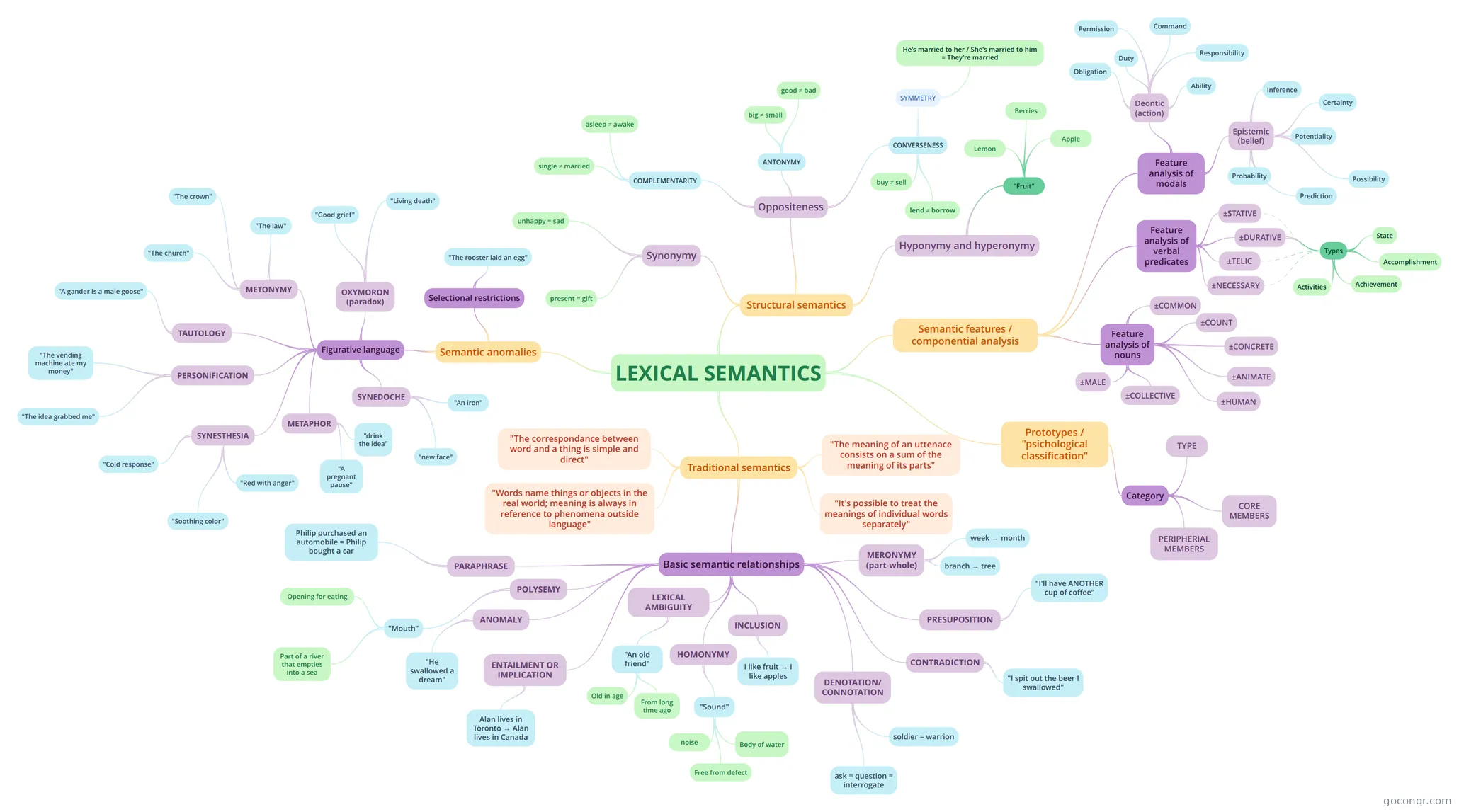 LEXICAL SEMANTICS A mind map that briefly explains the lexical semantics of modern English according to the book "The structu...
-
Basic semantics
-
Sentence Semantics 2: Participants
-
Componential analysis of the meaning
More Semantics resources
About semantics mind maps
GoConqr OriginalWhat these semantics mind maps cover
The maps connect ideas across word meaning, sense relationships and logic. Concepts in Semantics introduces terms such as synonym, while Semantic features brings together synonymy, antonymy and other relationships. Logic in semantic analysis looks at semantic relations between sentences and the use of connectors.
Choose a map and revise
Start with Concepts in Semantics if you want to see a term alongside an example. For a more focused review, use Sense Relationship to compare similar and opposite meanings, then explore the distinctions shown in Semantic features.
Follow the branches of a map, then cover its examples and try to recall them. Compare your answers with the map before moving to another topic. If you want to test recall in a different format, switch to a quiz on the Semantics unit page; flashcards offer another way to revisit terms. Choose a map that matches the topic you are revising.
Frequently asked questions
Which mind map is a good place to start?
Concepts in Semantics is a useful starting point for reviewing terminology because it includes a definition and example of a synonym. For a closer look at relationships between words, Sense Relationship covers similar and opposite meanings, while Semantic features brings several relationships together.
Do the maps cover more than word meaning?
Yes. Alongside maps on word meaning, the listing includes Logic in semantic analysis, which covers relations between sentences and the use of connectors. Other maps address meaning, thought and reality, as well as context and inference. You can choose according to the topic you want to revisit.
Are these mind maps free to use?
Yes. Every resource listed on this page is free to open and study without an account. The maps were made by GoConqr users. A free account also lets you save quiz scores and make your own quizzes, mind maps, flashcards and notes.