
Situation Ethics mind maps
39 mind maps by 28 users
This Situation Ethics page gathers mind maps on working principles, Christian love, criticisms and ethical questions. School students can use them to practise connecting ideas, while teachers can find material for lessons. The collection is mainly for secondary-level study, with over 30 maps made by more than 20 users. Choose a map to begin.
Mind maps
-
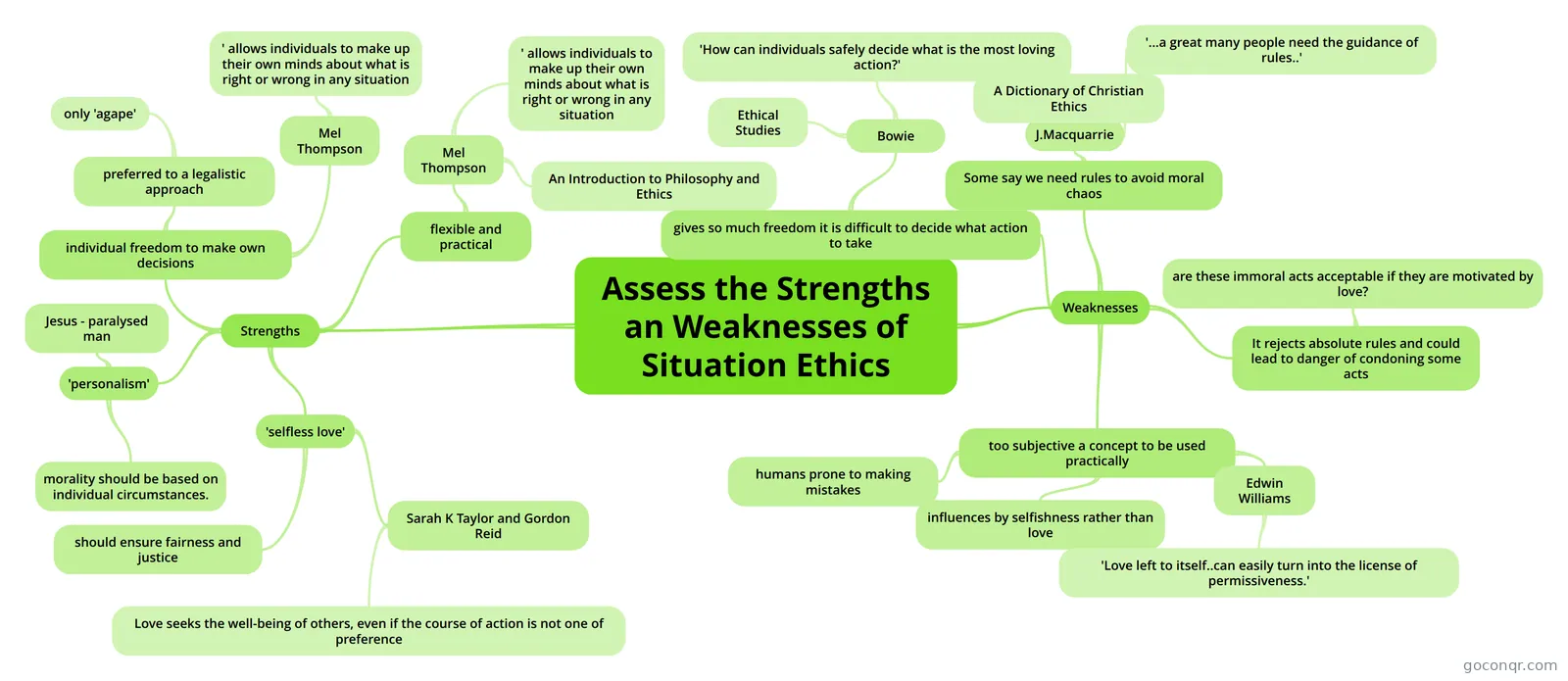 Assess the Strengths an Weaknesses of Situation Ethics
-
SITUATION ETHICS
-
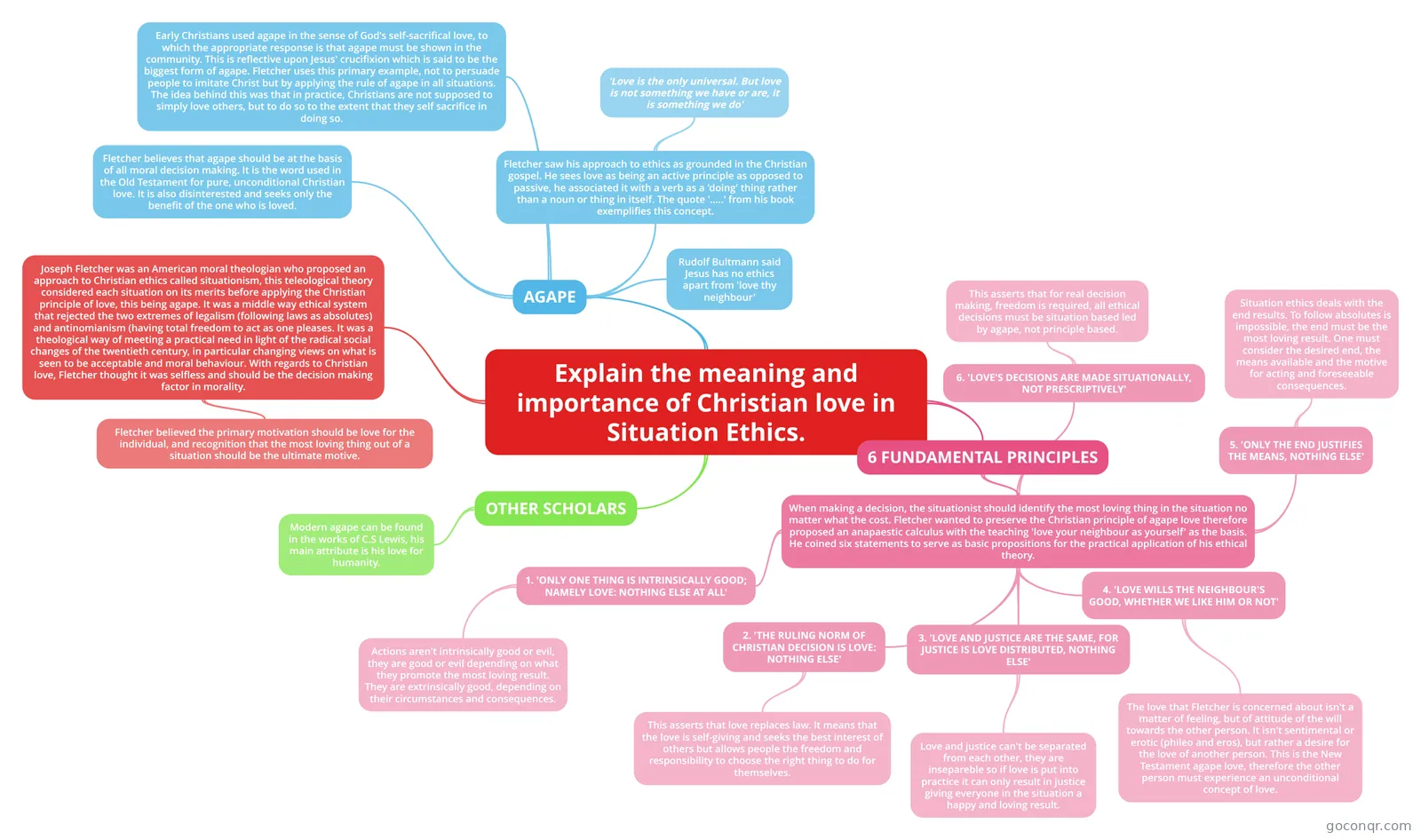 Explain the meaning and importance of Christian love in Situation Ethics.
-
Explain the meaning and importance of Christian love in Situation Ethics.
-
Situation Ethics 2
-
Situation Ethics Criticisms
-
Situation Ethics
-
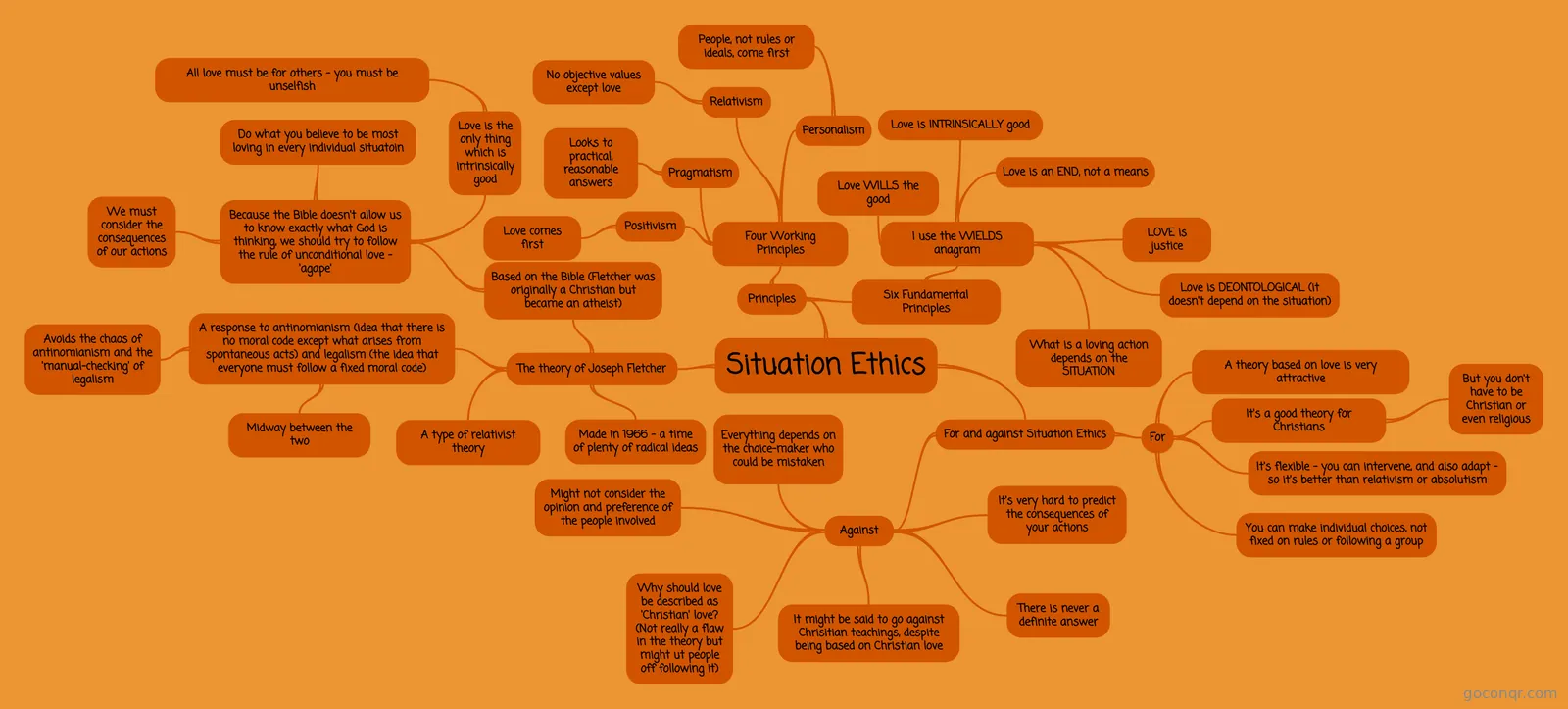 Situation Ethics
-
The Six Fundamental Propositions
-
situation ethics
-
Situation Ethics and Animals
-
Situation Ethics
-
Embryo Research, Cloning & Designer Babies - Situation Ethics
-
(Sit. Ethics)Exam Paper Revision: Situation, Conscience and Relitivism
-
WHY FLETCHER REJECTED ANTINOMIANISM AND LEGALISM
-
Situation Ethics 1966
-
Situation Ethics
-
Christians and Situation Ethics
-
Relativism: Situation ethics
-
Situation Ethics Key Words and their meanings
-
Situation Ethics Six Fundamental Principles
-
Situation Ethics: The Bible
-
Situation Ethics Strengths
-
Situation Ethics
-
The 6 fundamental principles
-
Situation Ethics
-
Situation Ethics Differences with Christianity
-
Euthanasia and situation ethics
-
Situation Ethics: Six Fundamental Priciples
-
1_Situation Ethics AO2
-
Situation Ethics
-
The secondary precepts and the importance of keeping the precepts
-
Four Working Principles
-
LEGALSIM_1
-
Six fundamental principles and love
-
Four working principles and conscience
-
Situation Ethics
-
Situation ethics
-
Situation Ethics
More Situation Ethics resources
About situation ethics mind maps
GoConqr OriginalUsing Situation Ethics mind maps
Start with Four Working Principles if you want to organise the principles before looking at wider questions. Follow it with Situation Ethics Key Words and their meanings, which includes legalism and antinomianism. The branches can help you see how terms connect rather than learning them in isolation.
Other maps explore Christian love, the Bible and the fundamental principles. You can also compare Situation Ethics Strengths with Situation Ethics Criticisms, keeping a note of the points each map raises.
From maps to practice
After studying a map, cover its branches and try to recall the connections. Then check the map and revisit any terms you missed. Maps on animals and euthanasia offer further topics to explore.
When you want to check your recall in a different way, switch to a quiz on the unit page. Use flashcards or notes when you want another way to review an idea. Pick a map and follow its branches.
Frequently asked questions
Which mind map should I start with?
Try Four Working Principles if you want a starting point for organising the main principles. Then look at Situation Ethics Key Words and their meanings to review terms such as legalism and antinomianism. Comparing the maps can help you practise connecting the terms with the principles.
What topics do the mind maps cover?
The maps include Christian love, the Bible, working principles and fundamental principles. There are also separate maps on strengths and criticisms, as well as maps on animals and euthanasia. Choose a topic you are studying, then use the branches to review how its ideas fit together.
Are these mind maps free to use?
Yes. Every resource listed here is free to open and study without an account. The maps were made by GoConqr users. A free account also lets you save quiz scores and make your own quizzes, mind maps, flashcards and notes.