
Statistics and Quantitative Data Analysis mind maps
69 mind maps by 68 users · Page 1 of 2
This GoConqr page gathers mind maps on Statistics and Quantitative Data Analysis, from coding and data presentation to correlation. It offers university students and professional candidates ways to practise interpreting data, and teachers material to use in their teaching. There are more than 60 user-made mind maps, mostly at university level. Pick a map to explore.
Select topic
- Stages of Statistical Research15
- Data Collection, Preparation and Questionnaire Analysis10
- Descriptive Statistics and Data Presentation12
- Qualitative Data Analysis12
- Statistical Inference and Hypothesis Testing22
- Analysis of Variance (ANOVA)6
- Correlation and Regression6
- Factor Analysis and Structural Equation Modeling8
- Causal Inference Methods5
Mind maps
-
STEPS TO ANALIZE QUANTITATIVE DATA
-
Analysis of the Data
-
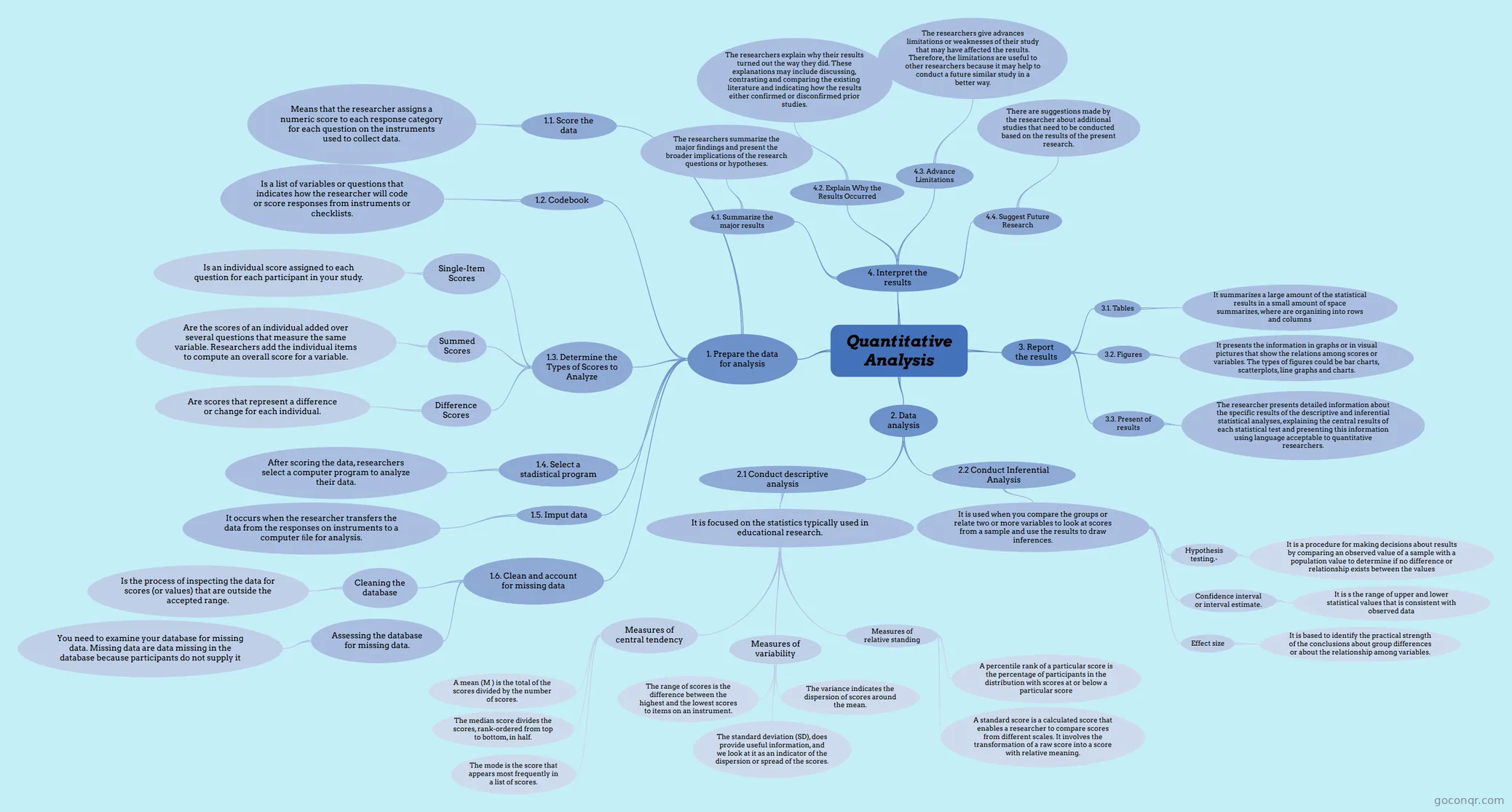 Quantitative Analysis Relizado por: Karal Vélez Quiñónez y Josselyn Jiménez Jiménez Referencias: Creswell, J. W. (2002). Educatio...
-
Portfolio Task 7 - Data Analysis
-
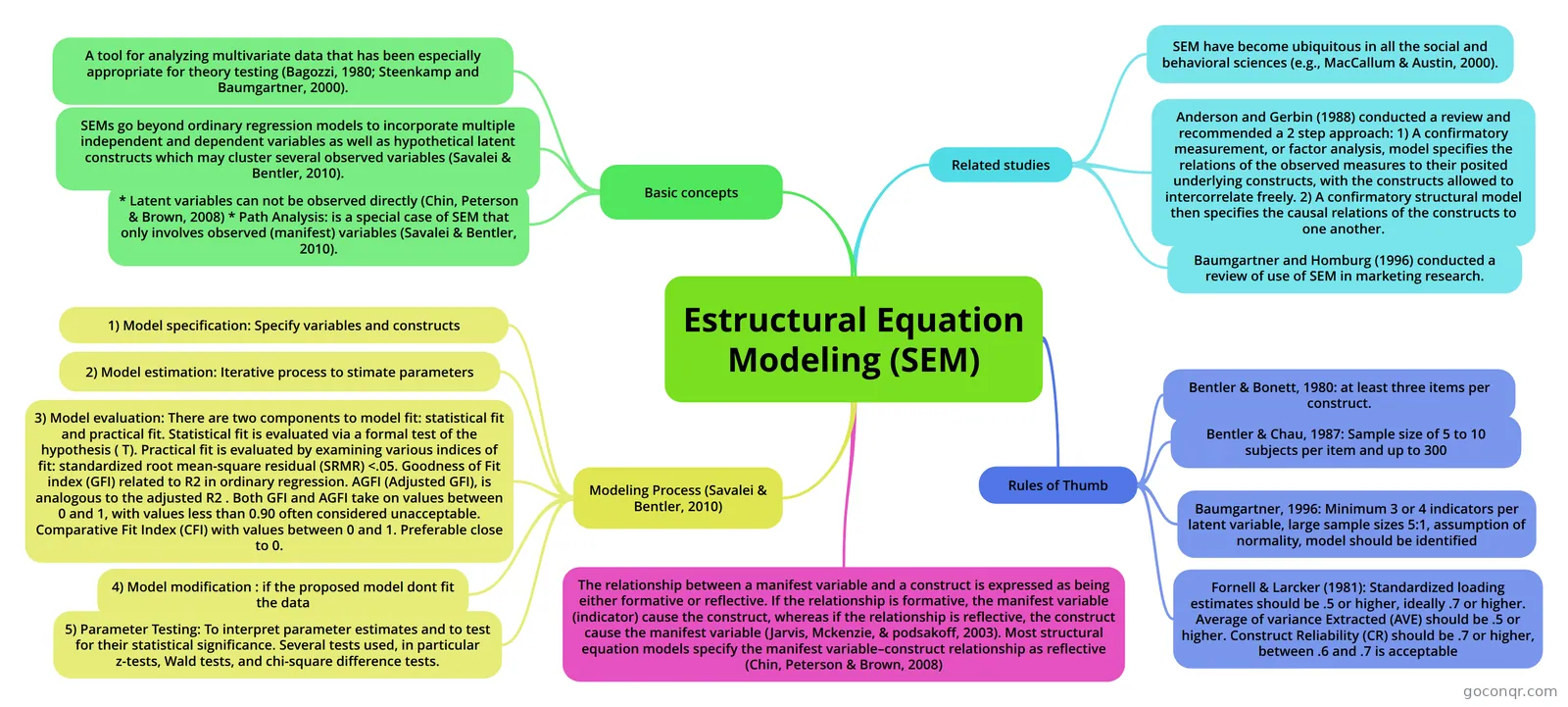 Estructural Equation Modeling (SEM)
-
steps to start a statistical research
-
Untitled
-
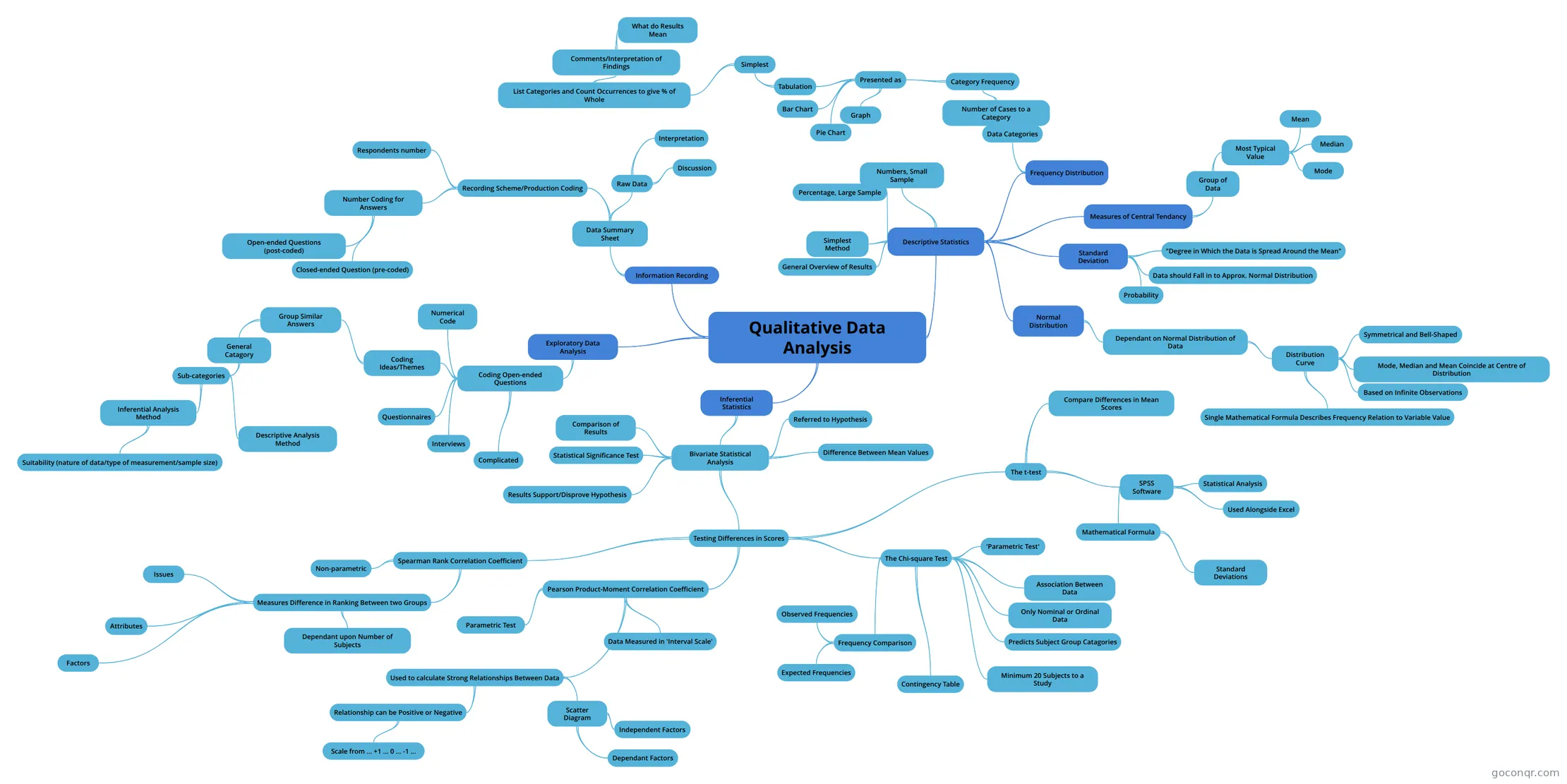 Qualitative Data Analysis
-
Chapter 8
-
Research Methods- Date analysis.
-
Data analysis
-
Analyzing and Interpreting Data
-
quantative data analysis & interpretation
-
ANALYZING AND INTERPRETING DATA
-
DATA ANALYSIS, INTERPRETATION, AND PRESENTATION
-
Week 3: Factor analysis
-
THE STATISTICAL MAKING PROCESS
-
ANALIZING DATA
-
Mar Res Theo Chapt 14. Understanding quantitative data
-
Stages for the start of statistical research
-
Task 7 -DATA ANALYSIS, QUALITATIVE DATA
-
Stages of Static Research
-
Data analysis and presentation
-
Steps to start a statistical research
-
Evaluate the ways of analysing data used in your investigation
-
EDUCATIONAL RESEARCH
-
Phases of the statistical elaboration process
-
ANALYZING AND INTERPRETING DATA
-
Data Analysis
-
STAGES OF AN INVESTIGATION STATISTICS
-
Data analysis, interpretation, and presentation
-
Steps to start a statistical research mapa mental las etapas para el inicio de una investigación estadística (Planeación, recolección, organizaci...
-
Editing and Coding
-
COLLECTING AND ANALYSING DATA WITH SPECIALISED SOFTWARE
-
Qualitative Content Analysis
-
Making Sense of Findings 2.4
-
Enter text here
-
Evaluate the ways of analysing data used in your investigation
-
Tests of Correlation
-
Introduce el texto aquí
More Statistics and Quantitative Data Analysis resources
About statistics and quantitative data analysis mind maps
GoConqr OriginalStatistics and Quantitative Data Analysis mind maps
These maps show different parts of the analysis process. Editing and Coding connects raw data with concerns such as recording answers. Qualitative Content Analysis covers selecting a unit of analysis, grouping and categorising. Tests of Correlation gives you a map focused on correlation.
How to revise with the maps
Start with Editing and Coding if you want to see how answers are prepared for analysis. Follow its branches, then try to explain the connections without looking. Return to the map to check what you missed.
For another perspective, compare it with Qualitative Data Analysis, which includes coding open-ended questions and descriptive statistics. When you want to check recall rather than follow connections, switch to a quiz on the unit page. Flashcards can also help you revisit individual ideas.
Choose a branch that needs more attention and work through it at your own pace.
Frequently asked questions
Which mind map is a useful place to start?
Editing and Coding is a useful starting point if you want to look at how raw answers become information for analysis. Its branches cover editing concerns and recording answers. You can follow those connections before moving to a map focused on qualitative analysis.
What do the mind maps cover?
The maps cover data analysis and presentation, coding, qualitative content analysis, factor analysis and tests of correlation. Some focus on particular stages or techniques, while others bring several ideas together. Qualitative Data Analysis, for example, includes descriptive statistics and coding open-ended questions.
Are the mind maps free to use?
Yes. Every resource listed here is free to open and study without an account. The maps were made by GoConqr users, not by GoConqr. A free account also lets you save quiz scores and make your own quizzes, mind maps, flashcards and notes.