
Storage, Query Processing and Transactions mind maps
37 mind maps by 23 users
This GoConqr page gathers mind maps on transaction basics, concurrency control, database organisation and parallelism. University students can use them to practise these topics, while teachers can find ready-made material. There are over 30 mind maps, mostly at university level. Pick a map to start exploring.
Mind maps
-
Transactions Revision mind map for transaction processing.
-
CHAPTER 5 : DATABASE TRANSACTION MANAGEMENT
-
Transactions
-
Basic of Data Transaction
-
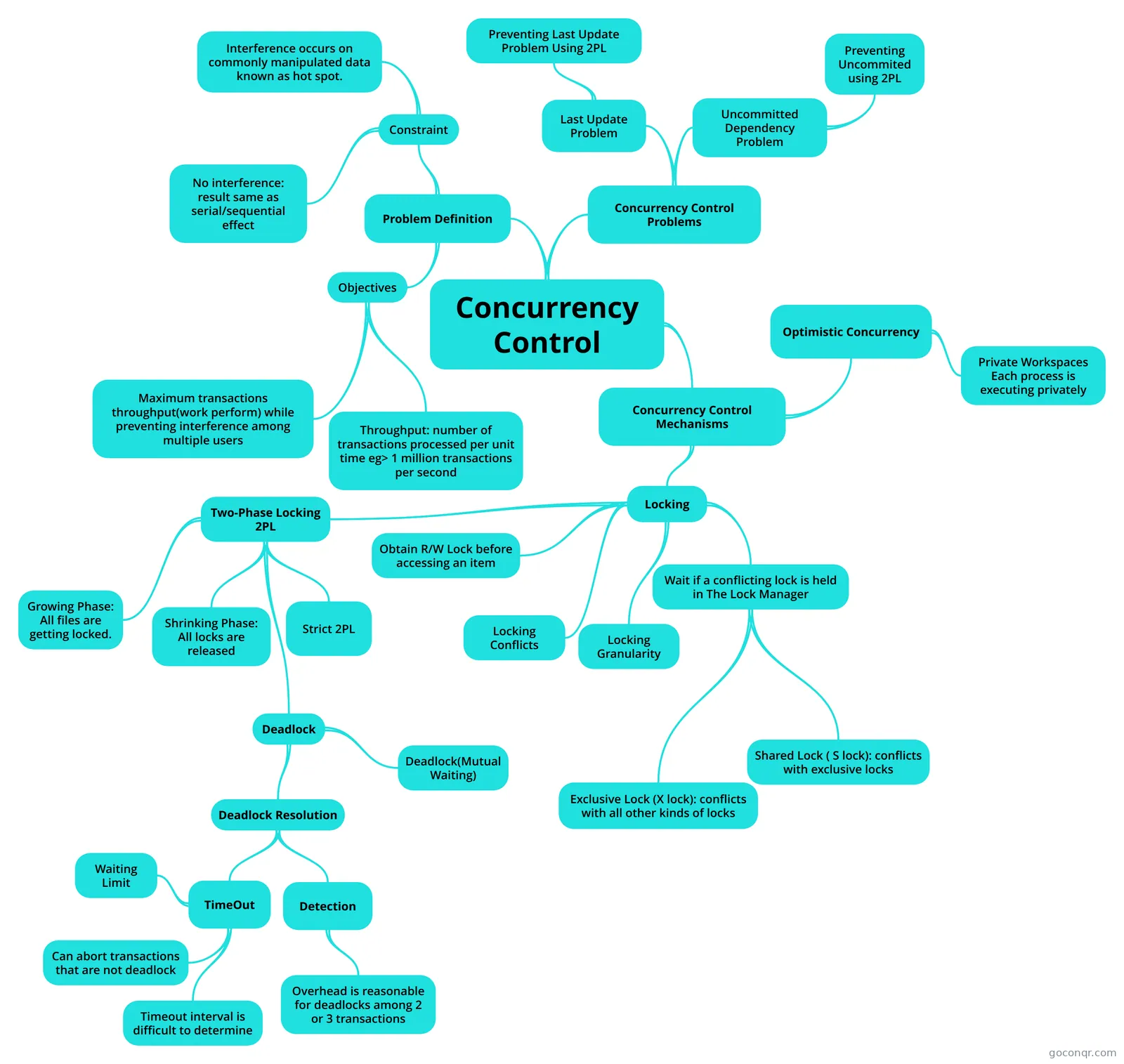 Concurrency Control to deliver the best of best presentation.
-
Intraoperation Parallelism
-
Concurrency Control
-
CONCURRENCY CONTROL
-
CONCURRENCY CONTROL_1
-
CONCURRENCY CONTROL
-
Data Integrity
-
Concurrency Control
-
Validation Tech. & Snapshot Isolation Concurrency Control
-
Validation Tech. & Isolation Snapshot
-
Validation Tech. & Isolation Snapshot Done
-
Validation Tech. & Isolation Snapshot Done
-
Validation Tech. & Isolation Snapshot Done
-
Validation Tech. & Isolation Snapshot New
-
Recovery control
-
Lectura 7
-
Logical and Physical Database Organizations
-
concurrency control
-
CONCCURRENCY CONTROL
-
System is started
-
concurrency control
-
Database
-
Validation Tech. & Isolation Snapshot New
-
Enter text here
-
Concurrency Control
-
Query
-
Query
-
Validation Tech. & Isolation Snapshot
-
Query
-
Enter text here
-
Interoperation Parallelism
-
Gelintar
-
Concurrency Control
More Storage, Query Processing and Transactions resources
About storage, query processing and transactions mind maps
GoConqr OriginalStorage, query processing and transactions mind maps
These maps take different routes through the unit. Basic of Data Transaction introduces a transaction as a unit of work. Data Integrity brings together SQL, referential integrity and transaction support. Other maps cover recovery control, database organisation and parallelism.
How to revise with a map
Start with Basic of Data Transaction if you want a starting point for transaction terminology. Then look at a Concurrency Control map: one sets out issues such as lost updates and uncommitted data, while another shows locking and deadlock topics.
Read the branches, then cover them and try to recall how the ideas connect. Reopen the map to check what you missed. When you want question practice, switch to a quiz on the unit page; use flashcards there when you want to review individual terms. You can also compare a transaction map with Intraoperation Parallelism to move into parallel query work.
Choose a map and trace its branches.
Frequently asked questions
Which mind map is a useful place to start?
Basic of Data Transaction is a starting point for transaction terminology. It describes a transaction as a unit of work and includes database operations and transaction support. After that, the Concurrency Control maps offer more detail on interference, locking and related problems.
What topics do the mind maps cover?
The listing includes maps on transaction basics, concurrency control, data integrity and recovery. There are also maps on logical and physical database organisations, query topics, validation and snapshot isolation, and intraoperation and interoperation parallelism. The maps take different approaches, so their branches and level of detail vary.
Are these mind maps free to use?
Yes. Every resource listed here is free to open and study without an account. A free account also lets you make your own mind maps, quizzes, flashcards and notes, and save quiz scores. The resources were made by GoConqr users rather than by GoConqr.