
Study Designs and Research Methods mind maps
70 mind maps by 51 users · Page 1 of 2
This page gathers over 60 Study Designs and Research Methods mind maps, covering observational studies, trials and confounding. The resources are mainly at university level, for university students practising how to distinguish study designs and teachers looking for ready-made material. Pick a map and explore its branches.
Mind maps
-
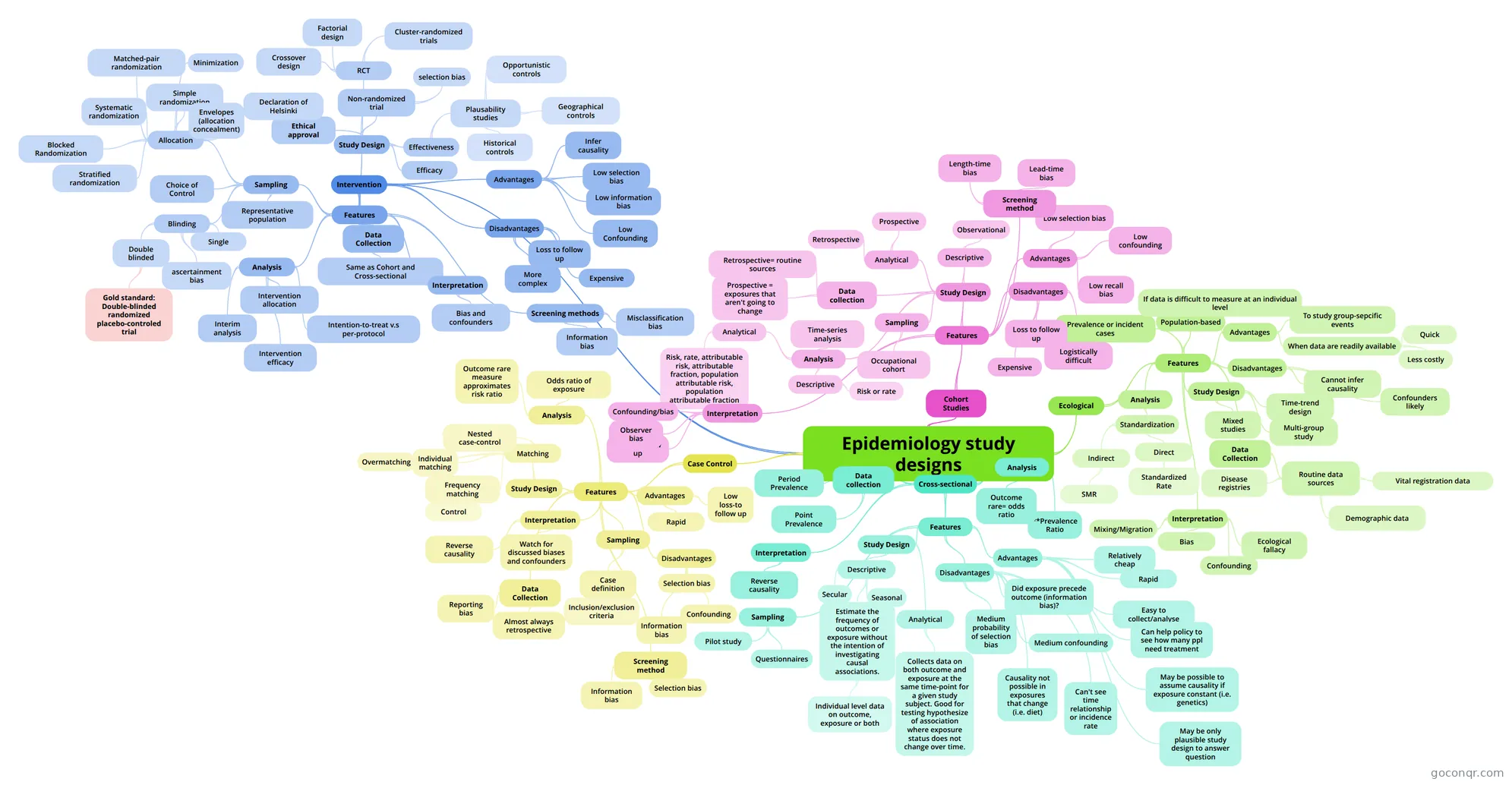 Epidemiology study designs
-
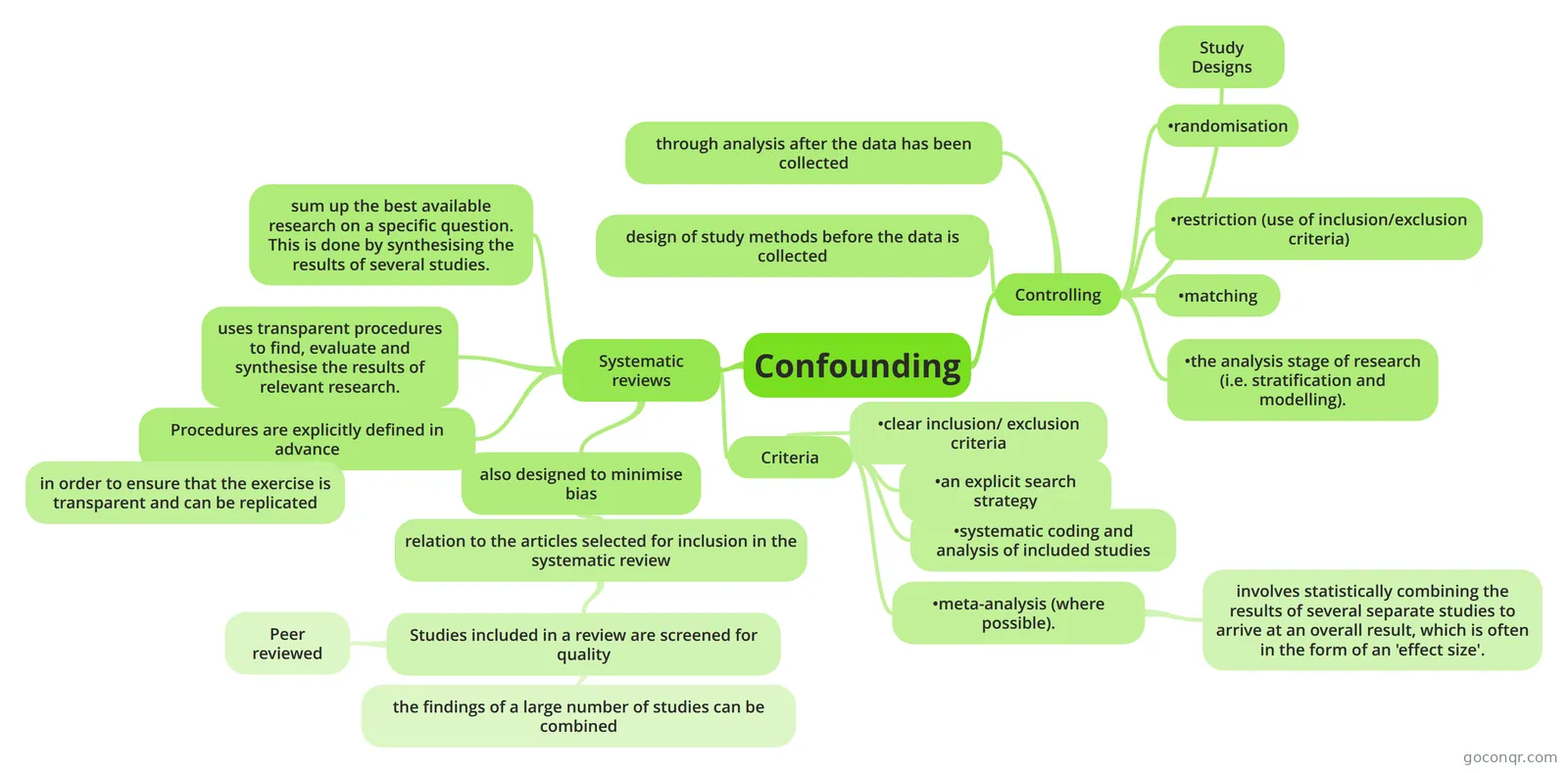 Confounding
-
Observational studies
-
Epidemiological Studies
-
Human Subject Research
-
knowledge, attitudes, and substance use practices among street children in western kenya
-
Systematic review
-
Observational Study Design
-
Logistic Regression in Case–Control Studies
-
Knowledge, Attitudes, and Substance Use Practices Among Street Children in Western Kenya
-
Knowledge, Attitudes, and Substance Use Practices Among Street Children in Western Kenya
-
STUDY DESIGN
-
Knowledge, Attitudes, and Substance Use Practices Among Street Children in Western Kenya
-
Topic 9 (i) Introduction to Evidence Based Practice & Judging Evidence
-
Other studies
-
Poisson Regression Models for Cohort Studies
-
Knowledge, attitudes and substance use practices among street children in western Kenya
-
knowledge, attitudes, and substance use practices among street children in western kenya
-
Single studies
-
BIAS ERROR
-
Case reports and case series
-
Randomised control trials
-
A definition of causal effect
-
TIPES OF STUDY IN MEDICAL RESEARCH
-
clinical trails
-
Observational Study Designs
-
RCT
-
Case-control
-
RCT
-
3. COHORT & CASE CONTROL
-
Epidemiology
-
Case-Control Studies ‘Research in Reverse’
-
Case-control
-
AS2: Wk 7, Cohort Studies
-
Cohort studies
-
Levels of Evidence
-
Experimental Studies
-
Clinical Trial
-
Methods for studying the distribution of health
-
Cross-sectional
More Study Designs and Research Methods resources
About study designs and research methods mind maps
GoConqr OriginalStudy Designs and Research Methods mind maps
These user-made maps let you follow topics through linked branches. Observational studies includes cohort and case-control studies, while RCT sets out experimental and control groups and the comparison of outcomes. Confounding covers ways to control it, including matching and stratification.
Start with Observational studies if you want to see how more than one design fits under the same heading. Then open RCT and trace its branches to see how a trial is organised. Use the maps to note terms you want to revisit and compare the way each topic is laid out.
Move between formats
Once you have followed a map, try recalling its main branches without looking. If you want a different way to revisit a design, switch to flashcards on the unit page; use a quiz when you want to check your recall. Choose a map to begin your revision.
Frequently asked questions
Which mind map could I start with?
Try Observational studies if you want a map that brings cohort and case-control studies together. Follow its branches, then look at RCT for a different design. You can return to either map when you want to revisit the terms or see how its ideas are organised.
What topics do the mind maps cover?
The maps cover designs such as observational studies, randomised control trials, cohort studies and case-control studies. There are also maps on confounding, case reports and case series, and levels of evidence. You can choose a broad topic or focus on a particular design.
Are these mind maps free to use?
Yes. Every resource listed here is free to open and study without an account. The maps were made by GoConqr users, not by GoConqr. A free account also lets you save quiz scores and make your own quizzes, mind maps, flashcards and notes.