
Sugar, Oils, Chocolate, Coffee and Tea
5 resources created by 5 users
This Sugar, Oils, Chocolate, Coffee and Tea page on GoConqr gathers community-made mind maps, flashcards, flowcharts, notes and a quiz, from cocoa fermentation and chocolate bar production to beet sugar, palm oil and coffee processing. It's built for university students and professional candidates, school students, and teachers after ready-made material. There are over 30 resources here, including more than 10 mind maps and 6 flashcard decks. Pick a topic, test yourself, then make your own maps.
Top Sugar, Oils, Chocolate, Coffee and Tea resources
-
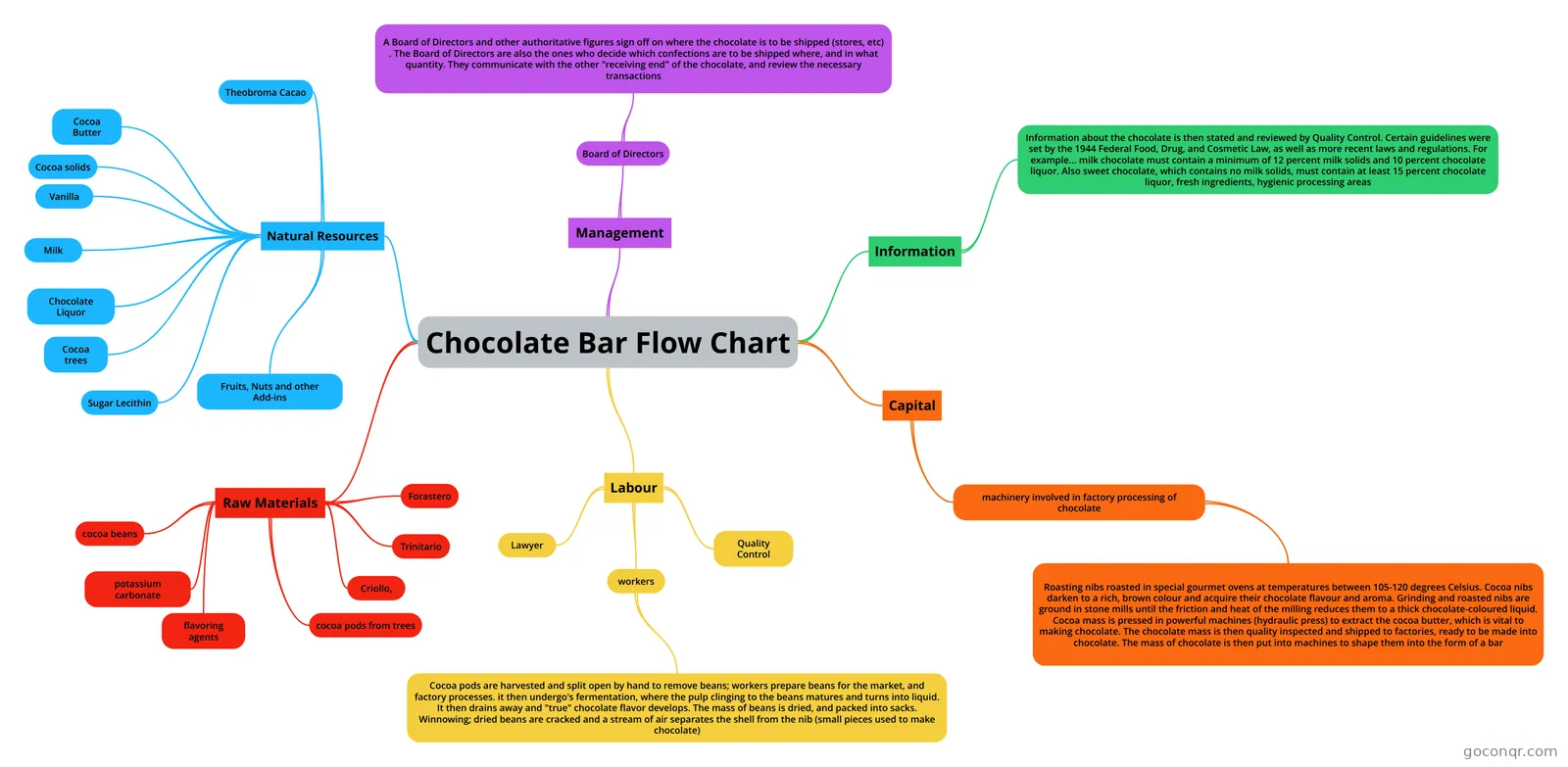 Mind map Chocolate Bar Flow Chart Chocolate production flow chart
-
49 questionsAgricultural Superintendent Determine the volume of oil in cubic metres from the data available: Temperature: 30°C Quantity : 600.000 m...
-
17 cardsInstant Coffee Processing 3 types of coffee from a process view
-
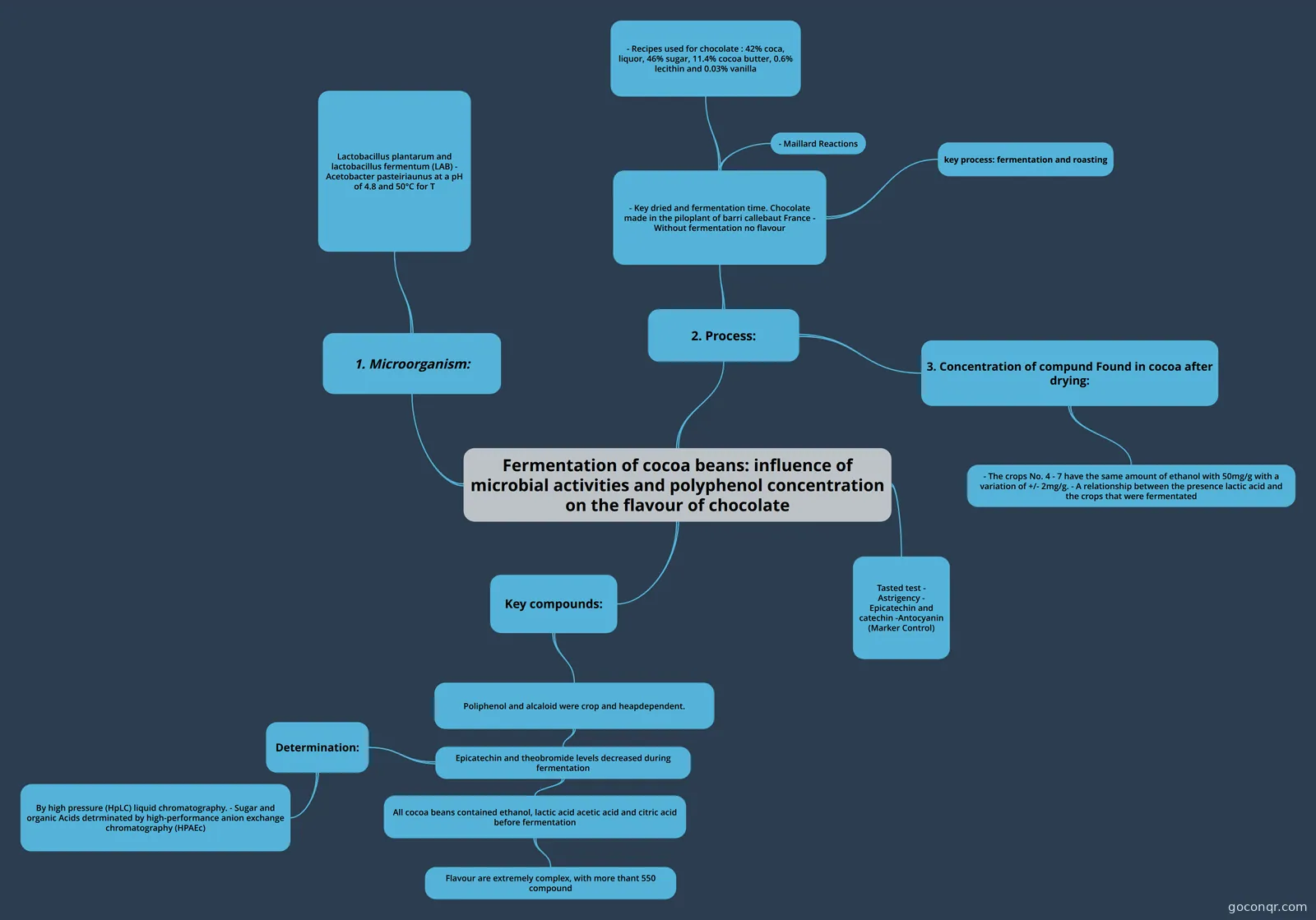 Mind map Fermentation of cocoa beans: influence of microbial activities and polyphenol concentration on the flavour of chocolate fermentation of cocoa beans
-
Mind map Chocolate Productive Chain (Final) Maria Jose Rubio Paolo Pasquini
Quizzes
Mind maps
Flashcards
More Food industry and safety topics
About Sugar, Oils, Chocolate, Coffee and Tea
GoConqr OriginalWhat this unit covers
This unit sits in the Food Commodities strand of Food industry and safety. It follows several products from raw material to finished food. Chocolate gets the most attention, with maps such as Chocolate Bar Flow Chart, Chocolate Bar Production and two versions of a chocolate productive chain. Sugar, oils, coffee and tea fill out the rest.
Where to start
Begin with the Chocolate Bar Flow Chart mind map. It lays out inputs such as natural resources, labour, capital and management, then names ingredients like cocoa butter, cocoa solids, vanilla, lecithin and milk. Next, open the Ingredient Interaction flashcards. They ask what goes into a Cadbury Dairy Milk Caramel, why beans are blended in milk chocolate and what phenolic compounds are.
- Read a flow chart or mind map to see the whole process.
- Move to a flashcard deck to fix the key terms.
- Return to a more detailed map for the science.
Coffee, tea, sugar and oils
For coffee, the Instant Coffee Processing flashcards cover the types of coffee, coffee cherries, green coffee and wet and dry processing. The Cleaning and Sorting Coffee Bean mind map explains sieving, gravity methods and sorting by size, density and colour. The COFFEE deck walks through nine steps, from planting the seed to grading.
Tea is covered by a mind map on harvesting and processing. It contrasts fine plucking, the bud and the second and third leaves, with coarse plucking. It also notes that the work is labour intensive and that mechanical harvesters exist.
Sugar and oils are shown through Sugar Production, a Beet sugar flowchart, Frying Oils, Sunflower oil production and Fresh Palm Fruit Bunches. The Gelatinisation mind map adds starch science.
Using the quiz with the maps
The Agricultural Superintendent quiz asks you to work out the volume of oil from temperature, quantity and density, and to judge whether a tank is big enough. Study the oil maps first, then try the quiz to see what you remember. The map on fermentation of cocoa beans suits more advanced study, with its focus on polyphenols and flavour.
When you are ready, pick one product and build your own map or flashcards to match.
Frequently asked questions
Which resource should I open first?
Start with the Chocolate Bar Flow Chart mind map. It gives a broad view of inputs, ingredients and management in chocolate making. Then try the Ingredient Interaction flashcards to check terms such as cocoa mass, bean varieties and phenolic compounds.
What does the quiz cover?
The Agricultural Superintendent quiz is a calculation-based test about oil. One question asks you to find the volume in cubic metres from temperature, quantity and density. Another asks whether a tank's capacity is sufficient. It pairs well with the palm oil and sunflower oil maps.
Which products are covered besides chocolate?
The page also lists resources on coffee, tea, sugar and oils. Examples include Instant Coffee Processing, Cleaning and Sorting Coffee Bean, Sugar Production, a Beet sugar flowchart, Frying Oils and Sunflower oil production. A mind map on starch gelatinisation is included too.
Who are these resources for?
They suit university students and professional candidates, school students and teachers. Most resources lean towards university and professional study, while some are simpler. Students can use them to revise processes and terms, and teachers can use them as ready-made material.
Are the resources free, and who made them?
Every resource listed here is free to open, study and take, with no account needed. They were made by GoConqr users, not by GoConqr itself. A free account saves your quiz scores and lets you make your own quizzes, mind maps, flashcards and notes.
Do the resources name any exams?
No. None of the listed resources mention a specific exam. They are best used as general study aids for understanding how food commodities are grown, processed and made into products.