
Ingredients and Food Additives
56 resources created by 42 users
This Ingredients and Food Additives page on GoConqr gathers community-made mind maps, flashcards, notes, a slide set and a quiz, from preservatives, colorants and emulsifiers to the functions of flour, sugar and fats. It's built for school students revising a topic, university students and professional candidates filling gaps, and teachers after ready-made material. There are over 50 resources here, including more than 30 mind maps and over 20 flashcard decks, pitched from GCSE Food Technology to university level. Pick a map, test yourself, then make your own.
Top Ingredients and Food Additives resources

Mind maps
See all 33 mind mapsTopics in Ingredients and Food Additives
More Food industry and safety topics
About Ingredients and Food Additives
GoConqr OriginalWhat the resources cover
The page splits into two threads: what additives are and do, and what ordinary ingredients do in a recipe. Most of the material is mind maps, backed by flashcard decks, a note, a slide set and one quiz.
Additives first
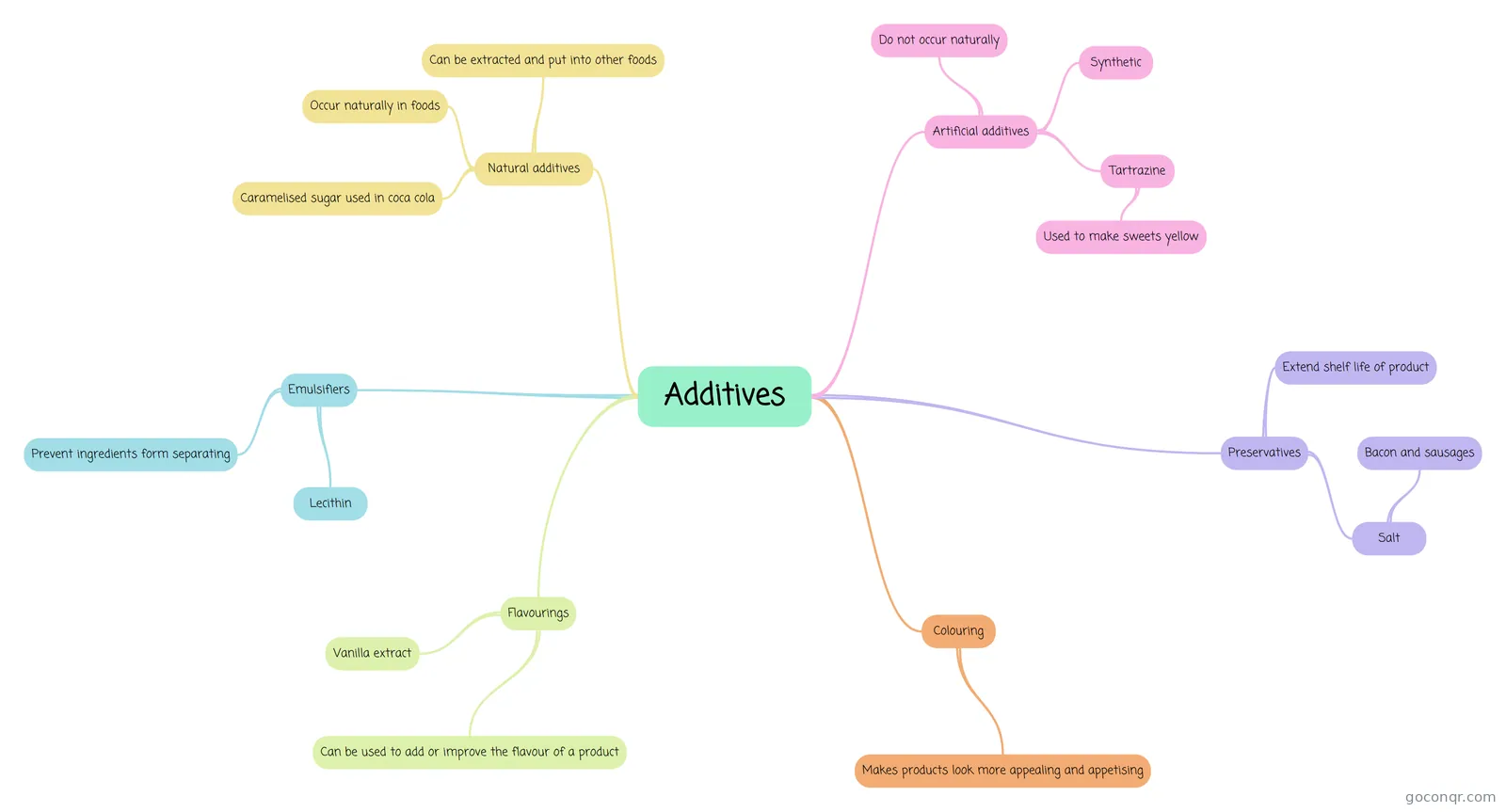
Start with the mind map Additives, which separates natural additives from artificial ones and gives examples such as caramelised sugar used in Coca Cola. Then try Types of additives and their uses, which covers preservatives, antioxidants and more, including where preservatives turn up, such as bacon, sausages, cooked meats and pies. Another map, FOOD ADDITIVES, lists thickeners, stabilizers, dyes, flavourings, salts, sugar, vinegar and sulphur dioxide.
- The flashcard deck Food Additives works through numbered acids, stabilisers and colours, and asks what the numbers mean.
- Food Colorants and The Role of Colour in Food looks at why colour matters to consumers.
- Food Chem Exam #4 covers processing aids, defoamers, clarifying agents and the big eight food allergens.
For rules and debate, look at the maps on how food additives are regulated in Europe, the controls that ensure safe use, and the controversies.
Ingredients and their jobs
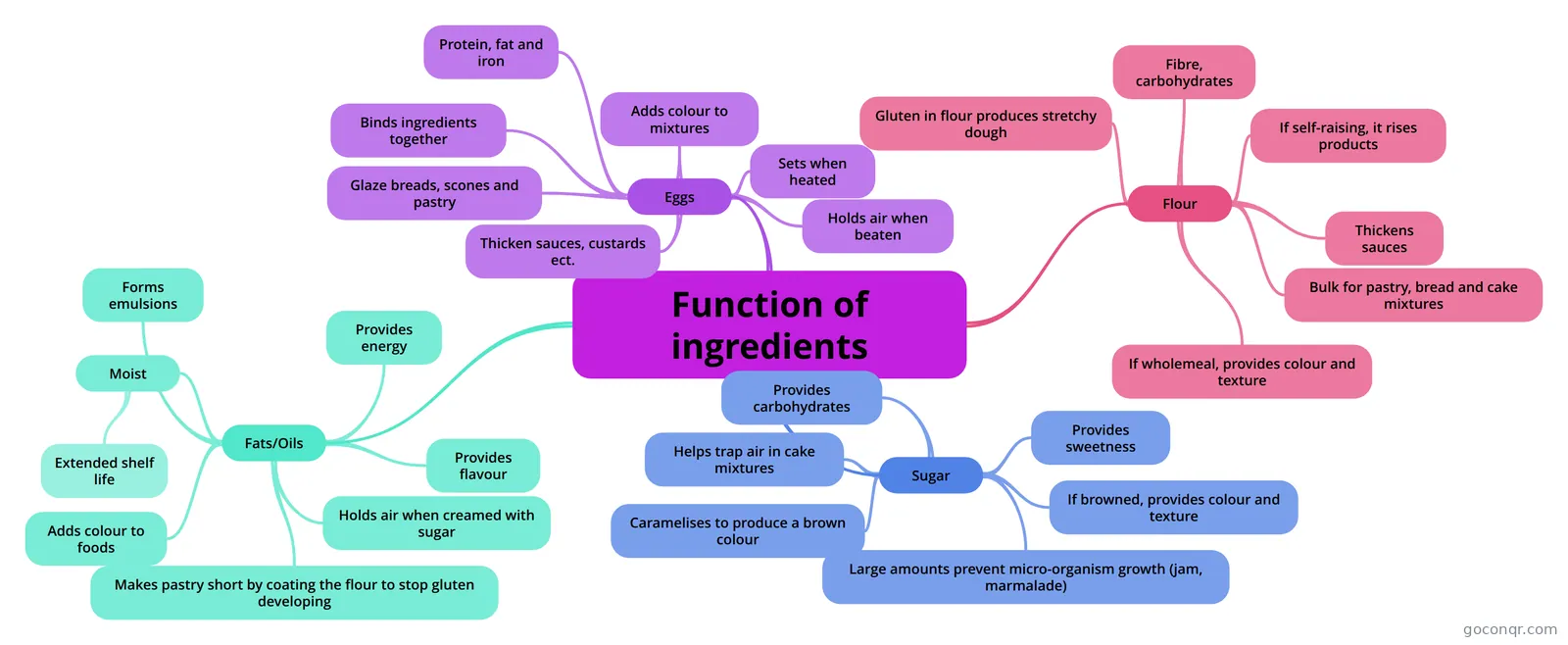
The Function of ingredients map explains what flour, fibre and carbohydrates do, from thickening sauces to giving bulk in pastry, bread and cakes. Wheat Flour goes deeper on gluten, structure, colour and moisture absorption. The map Food Tech- functions of ingredients. adds proteins, eggs, fish, meats, fats and oils, starch and sugar. There are also maps on sugar, sugar substitutes, emulsifiers and the functional properties of fats.
Using maps and the quiz together
Read a map, cover it, and write down what you remember. Then flip through the matching flashcards. Finish with the A2 Food Technology Mega Revision Quiz and note the topics where you slipped, then go back to those maps.
Where it fits
This unit sits in the Food Processing and Preservation strand of Food industry and safety. Open any resource and start where you feel least sure, or make your own maps and flashcards to fill the gaps.
Frequently asked questions
Which resource should I open first?
Begin with the mind map Additives. It splits additives into natural and artificial types and gives examples, so it sets up the vocabulary. After that, move to Types of additives and their uses, then the Food Additives flashcards to check the numbers and colours.
Is there a quiz on this page?
Yes, there is one quiz, the A2 Food Technology Mega Revision Quiz. It works best after you have read a few of the maps, because it shows which topics need another look. The rest of the page is mind maps, flashcards, a note and a slide set.
Which exams do these resources suit?
The listed resources mention GCSE Food Technology, and more than half of the material is at secondary level. About four in ten resources are at university level, so there is also content for university students and professional candidates, as well as teachers.
What do the ingredient maps explain?
They explain what each ingredient does in a recipe. Function of ingredients covers flour, fibre and carbohydrates, while Wheat Flour looks at gluten and structure. Other maps cover sugar, sugar substitutes, emulsifiers and the functional properties of fats.
Are the resources free, and who made them?
Every resource listed here is free to open and study, with no account needed. They were made by GoConqr users, not by GoConqr itself. A free account also saves your quiz scores and lets you create your own maps, flashcards, notes and quizzes.
Where can I read about additive regulation?
Three mind maps deal with it: how food additives are regulated in Europe, controls to ensure the safe use of additives, and controversies of additives. Together they cover the rules and the arguments, and they pair well with the additives flashcards.