
Food Packaging and Labelling
52 resources created by 50 users
This Food Packaging and Labelling page on GoConqr gathers community-made mind maps, flashcards, notes and a slide set, from why food is packaged and the materials used to traffic light labels and current labelling regulations. It's built for school students revising a topic, university students and professional candidates filling gaps, and teachers after ready-made material. There are over 40 resources here, including more than 30 mind maps and over 10 flashcard decks. Browse the maps first, then build your own set of flashcards.
Top Food Packaging and Labelling resources
-
Mind map Food Packaging
-
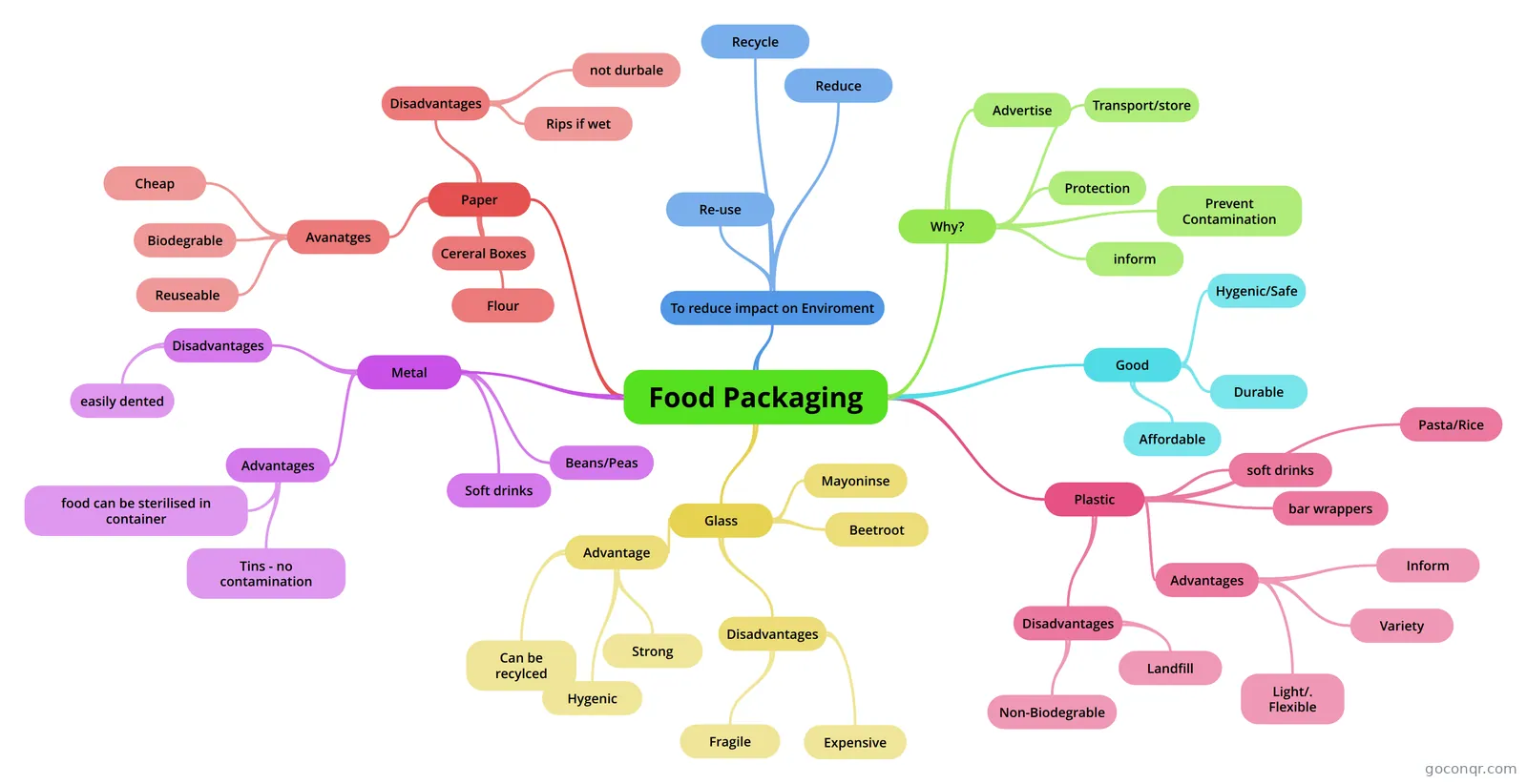 Mind map Food Packaging
-
19 cards4.7 – Packaging materials List 7 functions of food packaging.
-
13 cardsFood Labelling and Health Claims What is the purpose of food labelling?
-
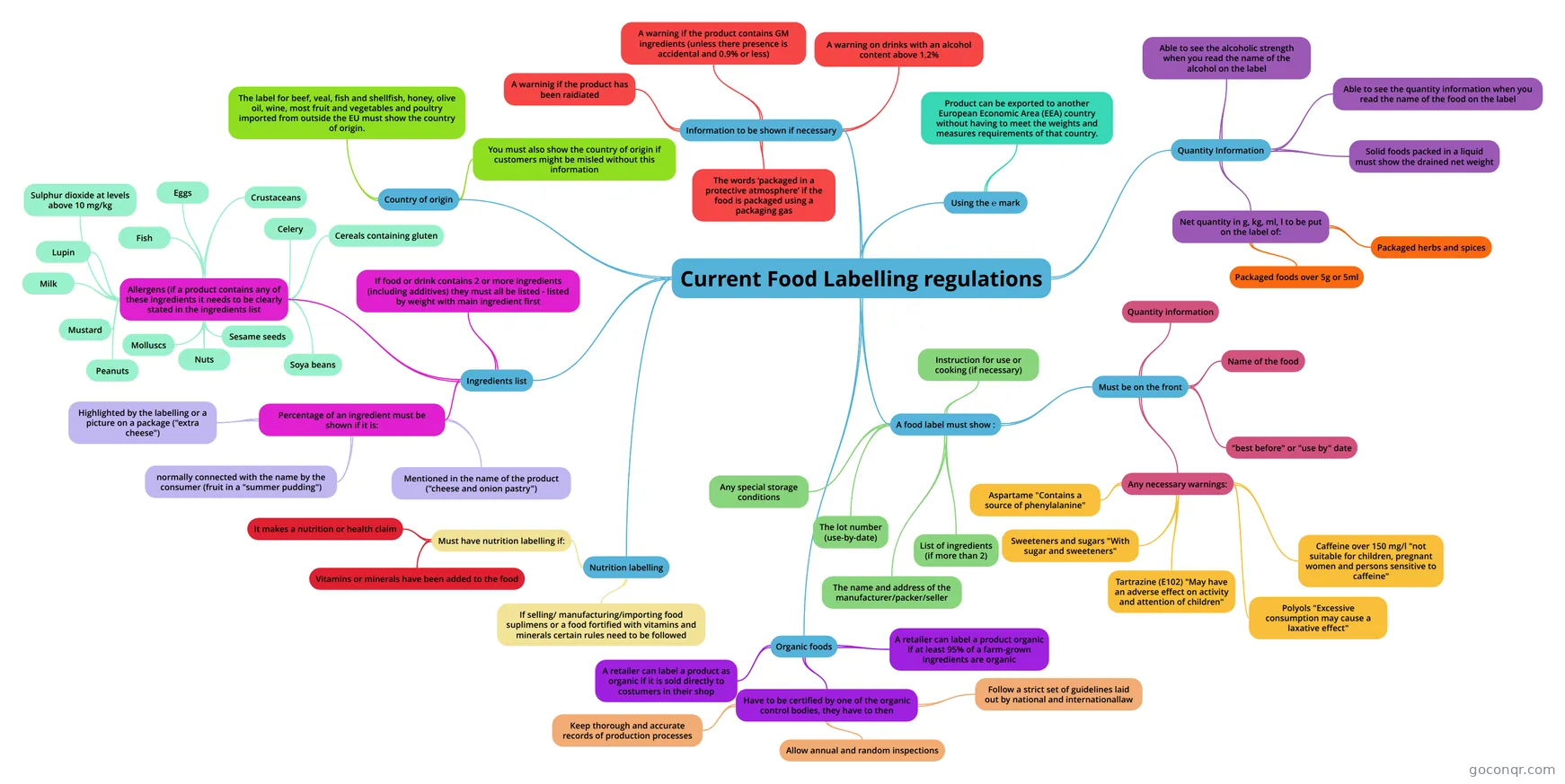 Mind map Current Food Labelling regulations
-
Mind map F+N 5.5
-
Mind map Food Packaging
-
Mind map why do we package food
Quizzes
Mind maps
See all 36 mind mapsFlashcards
See all 11 flashcards-
19 cards4.7 – Packaging materials List 7 functions of food packaging.
-
13 cardsFood Labelling and Health Claims What is the purpose of food labelling?
-
6 cardsfood
-
18 cardsPackaging What foods would be used for glass packaging?
-
3 cardsUntitled The Food Labelling Regulations 1996, as amended, govern the labelling of most types of food which is sold t...
-
8 cardsPackaging Why do we use food packaging?
-
6 cardsKey Terms Key Terms of packaging
-
7 cardspackaging What's food packaging?
Flowcharts
Notes
-
Food Technology- Packaging WHY DO WE USE PACKAGING?*keep food in hygienic conditions*Protects contents from damage*Prevents tampering*Can be used during reheating*Conveys information to the consumer*Attracts costumer PRIMARY PACKAGING:Contains ...
-
Food Packaging - created from Mind Map Why? Protection inform Advertise Transport/store Prevent Contamination Good Hygenic/Safe Durable Affordable Plastic Advantages Disadvantages soft drinks bar wrappers Pasta/Rice Inform Variety Light/. Flexible Non-Biod...
Slides
Topics in Food Packaging and Labelling
More Food industry and safety topics
About Food Packaging and Labelling
GoConqr OriginalWhat this unit covers
The unit splits into two linked halves: packaging and labelling. On the packaging side, several mind maps ask why food is packaged. The answers include protection, preventing contamination, easier transport and storage, giving information and attracting customers. They also list materials such as metal, glass, paper and plastic, and weigh up the advantages and disadvantages of plastic.
On the labelling side, you will find maps on the rules a food label must follow, including the name of the food, a best before or use by date and necessary warnings. Other maps look at traffic light labels, EU regulations and food standards of identity.
Where to start
- Open one of the Food Packaging mind maps. They are short and give you the main functions of packaging in one view.
- Read the note Food Technology- Packaging, which lists reasons for packaging such as hygiene, preventing tampering and conveying information.
- Move to Current Food Labelling regulations and Traffic light labels for the labelling rules.
- Finish with the wider topics: Biodegradable food packaging, Smart, Intelligent & Active and Future Proofing Food Packaging.
Using maps and flashcards together
Maps show how ideas connect, while flashcards make you recall them. After a map on packaging functions, try the deck 4.7 – Packaging materials, which asks you to list seven functions and explain how protective packaging reduces food wastage. Then use the Food Labelling and Health Claims deck to test who is responsible for labelling in the United Kingdom and what information a label must carry.
The slide set Food Labeling suits a quick walk-through before you test yourself. Several resources are case-style maps, such as Welch's fruit snacks, Ecolean Packaging and Pie Packaging Ideas. They are useful for seeing the ideas applied to real products.
Where it sits
This unit belongs to the Food Processing and Preservation strand of Food industry and safety. Packaging protects food from spoilage and damage, and labelling tells people what they are buying, so the two topics fit well together.
Everything here was made by GoConqr users. Pick a map that matches your topic, and make your own version as you revise.
Frequently asked questions
Which resource should I open first?
Start with one of the Food Packaging mind maps. They set out why food is packaged, the main materials and what makes packaging good: safe, hygienic, durable and affordable. Once that feels familiar, move on to the labelling maps and the flashcard decks.
What do the labelling resources cover?
They cover what a food label must show, such as the name of the food, a best before or use by date and any necessary warnings. There are also maps on traffic light labels, EU regulations and food standards of identity, plus flashcard decks on labelling and health claims.
Are there resources on newer packaging ideas?
Yes. Look at the maps Biodegradable food packaging, Smart, Intelligent & Active, Ecolean Packaging and Future Proofing Food Packaging. They go beyond the basic functions and look at developments in how food is packaged.
Do I need to pay or sign up to use these?
No. Every resource listed here is free to open, study and take, with no account needed. They were made by GoConqr users rather than by GoConqr itself, so it is worth comparing a few maps on the same topic.
Who are these resources useful for?
They suit school students revising a topic, university students and professional candidates filling gaps, and teachers looking for ready-made material. Most of the resources are at school level, with a smaller share aimed at university and professional study.
What if I can't find the topic I need?
Try a nearby title first, since packaging and labelling ideas overlap across many maps. If nothing fits, a free account lets you make your own mind map, flashcards or notes and save your quiz scores.