
Apuntes
The kidneys - Excretion
Contenido del apunte (1)
Página 1
The Kidneys.
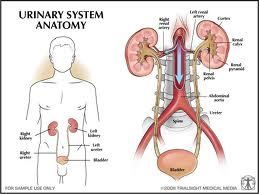
The kidney's are part of the urinary system and provide 3 main functions.
1) Removal of Urea from the blood. Urea is produced in the liver from excess amino acids.
2) Adjustment of salt levels in the blood.
3) Adjustment of water content in the blood.
The kidney's work by filtering stuff out of the blood at high pressure. They the re absorb the useful things, the end product is urine.
Nephron
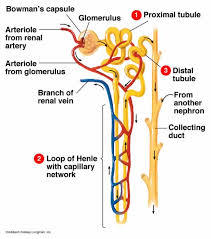
The kidney contains thousands of nephrons, as blood passes through them the follow happens:
Ultrafiltration.
Blood flows into the glomerulus via the renal artery, the glomerulus is a bundle of capillaries at the start of the nephron.
High pressure builds up and squeezes, water, urea, salt and glucose, out of the blood and into the Bowman's capsule.
The membranes between the glomerulus and bowman's act as a filter, the filter only allowing small molecules through, larger molecules such as proteins and blood cells stay in the blood.
What is left in the bowman's capsule, is a filtered liquid known as glomerular filtrate.
Reabsorption
As the glomerular filtrate flows along the nephron, certain useful substances are reabsorbed back into the blood. Others are released as waste.
All the glucose in the filtrate is re absorbed back into the blood via active transport against the concentration gradient, through the proximal convoluted tubule.
Any salt that is required is re absorbed, excess isn't
From the collecting duct any water needed is reabsorbed back into the blood stream.
Wastes
Remaining substances, such as water, salts and urea combine to form urine, urine continues out of the nephron through the ureter to the bladder, it is stored here until it is released via the urethra.
Osmoregulation
Osmoregulation is the balance of water content in the body, a balance between what comes in and what goes out.
Water is taken on by the food and drink we eat, it is then lost from the body in three main ways: Sweating, Breathing and Urination.
The Kidney's play a role in the role of osmoregulation, they do this by regulating the amount of water that is excreted.
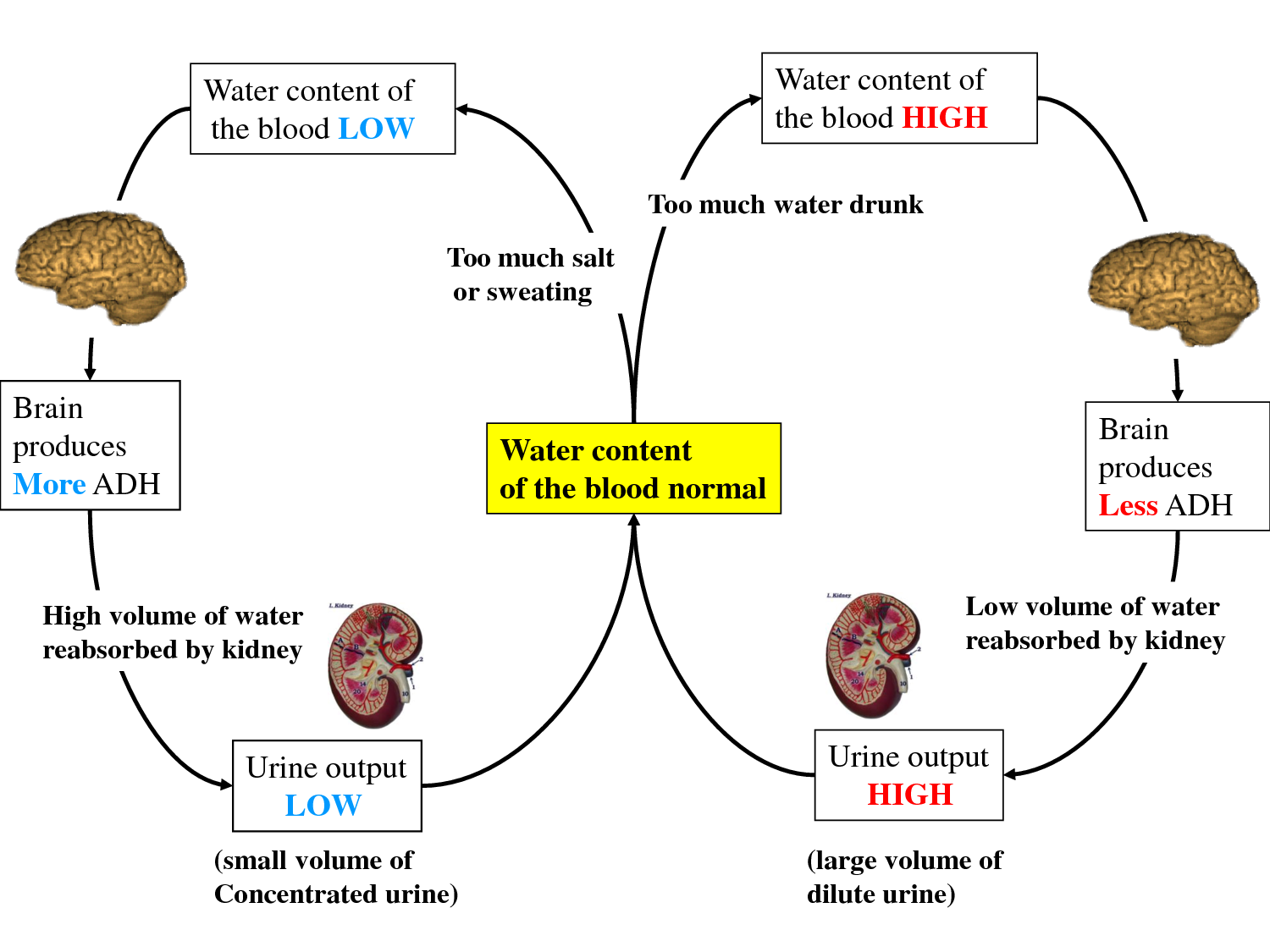
If a person has been sweating and loses water or has not drunk enough water, the kidney's can re absorb more water, this means that less is lost in urine, maintaining water balance.
ADH
ADH
Water balance maintenance in the kidney's is regulated by a hormone called Anti-diuretic hormone ADH.
ADH makes the nephrons more or less permeable, so more water can be reabsorbed or excreted.
The brain controls the release of ADH from the pituitary gland. It does this by monitoring the amount of water in the blood content.
If a loss of water is detected more ADH is released, If a gain in water is detected less ADH is released.
Negative Feedback
The process of osmoregulation is controlled by a process called negative feedback. If water content is too high a mechanism is triggered to bring it back to normal, if the water content is too low, a mechanism is triggered to bring it back to normal. Negative feedback is a mechanism to return things to normal.
New Page
Información
- Descripción
- IGCSE Biology Paper 1B Apunte sobre The kidneys - Excretion, creado por lingox el 07/05/2014.
- Creado por
- lingox
- Visitas
- 119
- Etiquetas
- Valoración